
A tripod head connects your camera to the tripod, helping keep your shots steady. It lets you easily aim and adjust your camera smoothly, so your pictures stay sharp and blur-free. There are different types—like ball heads for quick adjustments, or tilt heads for precise angles. Choosing the right one depends on your camera, style, and needs. If you want to understand more about how each type works and makes your photos better, keep exploring.

Get the latest gadgets delivered free — and shop member deals
- Fast, free delivery on millions of items
- Access to Prime Big Deal Days deals on October 6–7
- Prime Video, Amazon Music and more included
Key Takeaways
- A tripod head connects your camera to the tripod, helping keep your shots steady.
- Different heads allow you to adjust your camera smoothly or precisely, depending on your needs.
- Ball heads are quick to move and versatile, while pan-and-tilt heads offer more control for specific angles.
- Choose a head that can support your camera and lens weight safely for stable, clear photos.
- Picking the right head improves your shooting experience and protects your camera from accidental falls.
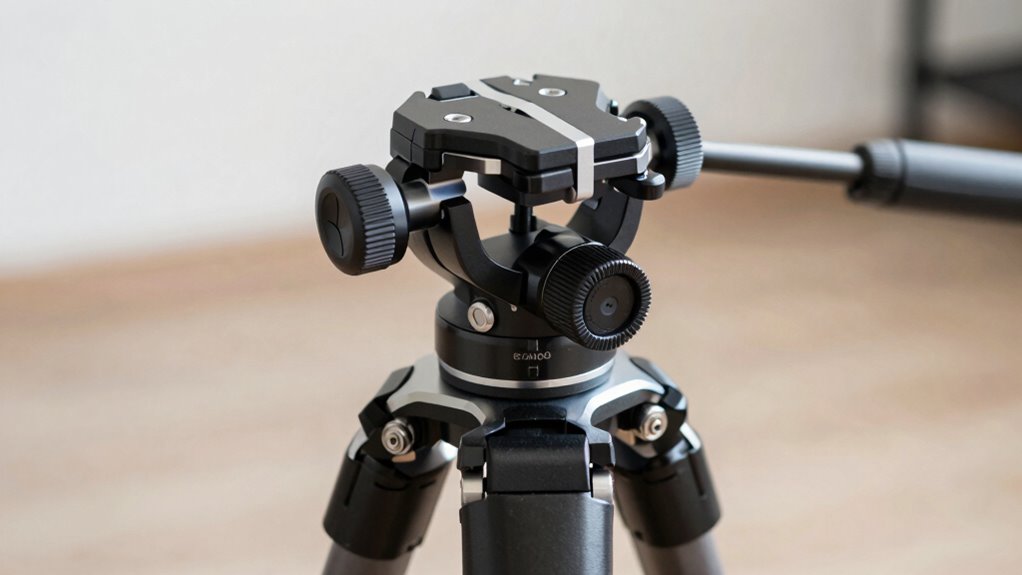
Have you ever wondered how photographers achieve perfectly stable and precisely aimed shots? The secret often lies in the tripod head they use. A tripod head is the part of the stand that connects your camera to the tripod and allows you to adjust its position smoothly and accurately. It might seem simple, but choosing the right one can make a significant difference in your photography. When considering a tripod head, two key factors come into play: camera stability and weight capacity. Camera stability is essential because it keeps your shots sharp and blur-free, especially in low-light conditions or when using long exposures. A good tripod head locks your camera in place securely, preventing any unwanted movement that could ruin your shot. Meanwhile, weight capacity is equally important since it determines how much weight the head can support without slipping or becoming unstable. You want a tripod head that matches or exceeds the weight of your camera and lens combination to guarantee maximum stability and safety.
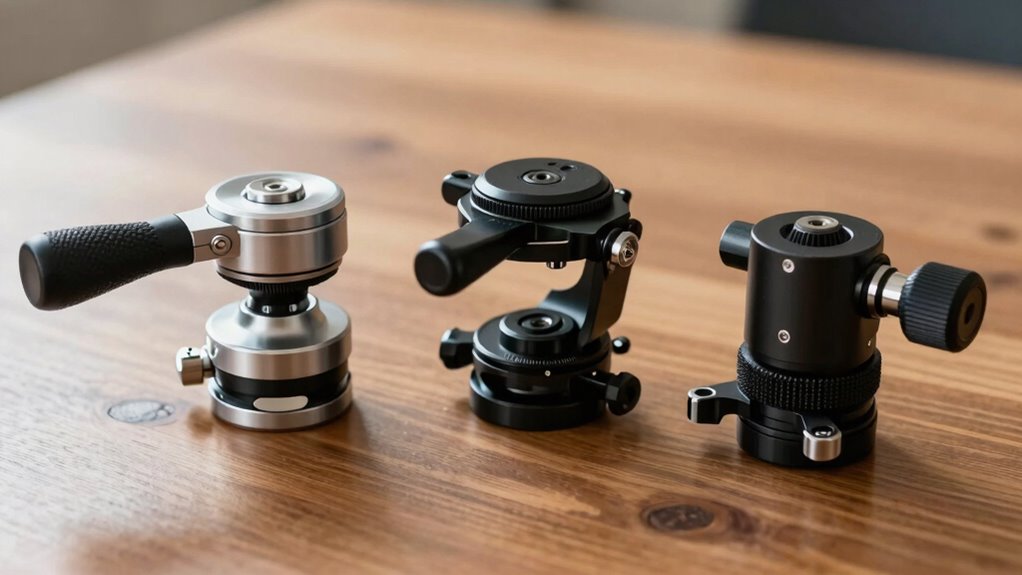
There are different types of tripod heads, each designed for specific needs. The most common are ball heads, which allow you to quickly adjust your camera in multiple directions with a single knob. They’re versatile and popular for general photography, offering a good balance of stability and ease of use. Pan-and-tilt heads, on the other hand, feature separate controls for horizontal and vertical movements, making them ideal for landscape or architectural shots where precise positioning matters. Fluid heads are specialized for videographers, providing smooth, controlled movements that mimic natural motion. Understanding the different types of tripod heads can help you select the best one for your specific photography style and requirements. Additionally, a good grasp of tripod head features can further assist in selecting the most suitable option for your needs, ensuring smooth operation and durability over time.
Choosing a tripod head that matches your shooting style and gear ensures you get the most out of your equipment and helps prevent any accidents or damage caused by instability or overload.
As an affiliate, we earn on qualifying purchases.
Frequently Asked Questions
Are Tripod Heads Compatible With All Camera Models?
Most tripod heads are compatible with a wide range of camera models, but you should check camera compatibility before buying. Different tripod head types, like ball heads or pan-tilt heads, often use standard mounts, making them versatile. However, some specialized cameras or larger setups might need specific mounts or adapters. Always verify your camera’s mounting screw and size match the tripod head’s quick-release plate or mounting interface.
How Do I Choose the Right Tripod Head for Landscape Photography?
Imagine a sturdy tripod standing tall as you frame a mountain sunrise. To choose the right tripod head, consider tripods with ball heads for quick adjustments or pan-and-tilt heads for precise control. Visualize balancing your camera smoothly on the head, adjusting to level horizons. For landscape photography, prioritize stability and flexibility, selecting a head type that allows easy composition and steady shots—your key to capturing breathtaking scenes effortlessly.
What Is the Weight Limit for a Typical Tripod Head?
A typical tripod head can support between 10 to 40 pounds, but this varies based on the model. To guarantee tripod stability and proper weight distribution, you should choose a head that exceeds your camera and lens weight. If your gear is heavier, opt for a heavier-duty head. Always check the manufacturer’s weight limit to prevent accidents and maintain stability during shoots.
Can I Upgrade My Tripod Head Later?
Yes, you can upgrade your tripod head later, like changing a gear in a well-oiled machine. Just make certain your new head maintains tripod stability and fits your quick release compatibility. Upgrading lets you upgrade your photography toolkit, offering smoother movements or better load capacity. Think of it as swapping out a worn-out engine for a turbocharged one — your camera will thank you for the upgrade.
How Do I Prevent My Tripod Head From Loosening?
To prevent your tripod head from loosening, regularly check and tighten the quick release mechanisms to guarantee tripod stability. Avoid over-tightening, which can damage components. Use a small amount of thread lock or rubber pads if needed. Make it a habit to inspect and tighten connections before each use, especially during long shoots, so your camera stays secure, and your shots remain steady and clear.
As an affiliate, we earn on qualifying purchases.
Conclusion
So, now that you understand tripod heads, you’re practically a photography wizard. Think of them as the secret to capturing crystal-clear shots that could make even a professional jealous. With the right head, your photos won’t just be good—they’ll be legendary, turning your simple moments into timeless masterpieces. Remember, choosing the perfect tripod head isn’t just a decision; it’s the key to revealing your full creative potential. Get ready to take your photography to infinity and beyond!
As an affiliate, we earn on qualifying purchases.
As an affiliate, we earn on qualifying purchases.
Halloween Picks
halloween
As an affiliate, we earn on qualifying purchases.