
TL;DR
Portable space heaters warm a small area without heating an entire building, which can make one room more comfortable while you lower central heating. A typical 1,500-watt electric model uses 1.5 kilowatt-hours for each hour it runs; the right choice depends on room conditions, the warmth you want, and safe use.
A cold desk can make your whole morning feel longer, even when the rest of the house is comfortable. Portable space heaters offer a simple fix: warm a small area without heating an entire building. They can be useful in a chilly home office, a drafty bedroom while you’re awake, or a room your central system never quite reaches.

Get the latest gadgets delivered free with Prime
- Fast, free delivery on millions of items
- Prime Video, Amazon Music and more included
- Member-only deals all year
This guide explains how the main heater types feel in everyday use, how to estimate the electricity bill, and which safety details deserve your attention. You’ll also see why a small heater can sometimes save money—and why running one all day in a poorly insulated room may do the opposite.
The useful question isn’t just “How many watts?” It’s where you’ll use the heater, how long you’ll run it, and whether the room suits it. Get those details right, and choosing becomes much easier.
A typical 1,500-watt heater uses 1.5 kilowatt-hours per hour while it runs; estimate cost with your own electricity rate.
Fan and ceramic heaters warm a room quickly, infrared heaters warm people and objects more directly, and oil-filled radiators provide quieter, gradual heat.
Use the manufacturer’s room-size guidance, then account for drafts, insulation, ceiling height, and the comfort you want.
Place electric heaters on a stable surface with manual-specified clearance, and plug them directly into a suitable wall outlet unless the manual allows otherwi…
Electric heaters don’t produce carbon monoxide during operation; fuel-burning models can, so use them only in approved conditions and keep suitable alarms work…
Choose a heater that matches how you use the room
Portable space heaters are devices that provide heat to a limited indoor area instead of warming a whole home. Electric models use a heating element to turn electricity into heat; fuel-burning models use kerosene or propane and need strict attention to the maker’s instructions and ventilation. That definition sounds simple, but the way warmth reaches you varies a lot by design.
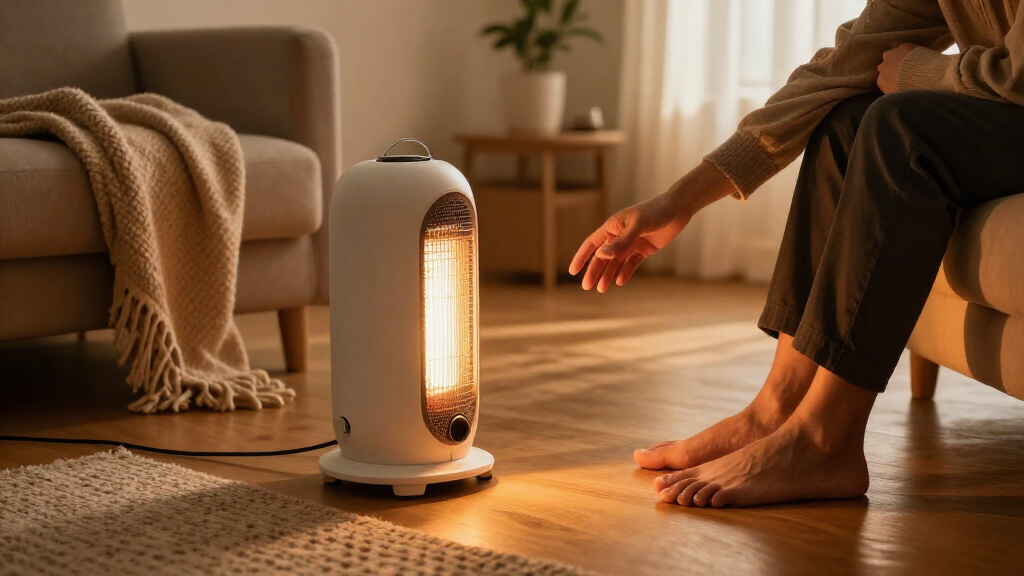
A fan-forced or ceramic heater pushes warm air into a room quickly, much like a small hair dryer with a thermostat. It can suit a chilly home office where you want the air around your chair to feel warmer within minutes, though the fan makes noise and can stir up dust. An infrared heater warms people and objects more directly, so it may feel pleasant beside a sofa even before the whole room warms up.
An oil-filled radiator heats slowly and quietly, then continues to release warmth after you switch it off. It may fit a reading nook where steady, gentle heat matters more than a fast blast. “Oil-filled” describes the sealed heat-transfer fluid inside the unit; it doesn’t mean you need to top it up.
Match the type to your routine, not a promise on the box. If you make calls in a quiet room, a fan’s hum may grate. If you move around the space, radiant warmth can feel less even. Check the manufacturer’s room guidance too: wattage alone cannot account for drafts, insulation, ceiling height, or cold outdoor weather.
Products Worth Considering

Bose Lifestyle Ultra Wireless Home Speaker, White Smoke

Bose QuietComfort Headphones (2nd Gen), Wireless Noise-Cancelling Over-Ear Headphones, Black

Bose Home Speaker 500 Smart Bluetooth Speaker, Black
As an affiliate, we earn on qualifying purchases.
Estimate the running cost before the cold snap
Portable space heaters can add up quickly if you leave them running, because the cost depends on power, run time, and your electricity rate. A common 1,500-watt electric heater draws 1.5 kilowatts while it runs. At four hours of continuous use, that adds up to 6 kilowatt-hours; multiply 6 by your local price per kilowatt-hour to estimate the charge.
For example, if your electricity rate is 25 cents per kilowatt-hour, those four hours cost about $1.50. Use your own bill’s rate for a better estimate, since prices vary by location and plan. A lower setting may draw less power on some models, but controls differ; check the manual rather than assuming that “low” always means half the cost.
A thermostat can cut consumption by switching the heater off when the room reaches its set temperature. It doesn’t make the device more efficient at converting electricity into heat while it runs. The thermostat simply helps control how long the unit stays on. A digital display or app may estimate usage, but treat that reading as a convenience unless the maker explains its accuracy.
Targeted heating can make financial sense if you warm an occupied room and reduce central heating elsewhere. If you use a heater in an empty room, or leave it running for hours with a window cracked open, that advantage can vanish. Think of it as lighting one desk lamp instead of every room: the benefit comes from limiting what you heat and when.
Use this quick checklist to pick the right model
Choose a heater by checking its safety certification, room guidance, controls, and fit with your daily routine. A model’s extra features can make it easier to live with, but they can’t fix an undersized heater or make careless placement safe. For instance, a programmable schedule can warm your office before work, but a schedule doesn’t help if the unit sits beside a curtain.
- Start with the room. Check the manufacturer’s room-size guidance and think about drafts, insulation, ceiling height, and how cold the room gets. A compact, insulated study and a large room with a leaky window may need very different approaches.
- Match the heat style to your routine. Choose a fan or ceramic model for quick warmth, infrared for more direct warmth on a person or object, or an oil-filled radiator for gradual, quiet heat.
- Check basic safety features. Look for recognized safety certification, a tip-over shutoff, overheat protection, and a stable base. These features reduce certain risks; they do not make unsafe or unattended use risk-free.
- Check the controls and care. A thermostat may help regulate the room, while a timer or remote can add convenience. Keep the inlet and outlet clear and follow the maker’s cleaning instructions.
- Plan where it will plug in. An electric heater should connect directly to a suitable wall outlet unless its manual explicitly permits another setup. Don’t buy a unit that only fits if you need an unapproved extension cord.
Imagine you’re buying a heater for a small rental office. You might value a quiet radiator during video calls, while someone who steps into a cold workshop for brief periods may favor fast fan heat. The best model is the one that fits the space and the way you’ll use it, not the one with the longest feature list.
Place your heater where people and plugs stay safe
Use a portable heater on a stable, level surface, follow the clearances in its manual, and keep it away from combustible materials. Curtains, bedding, clothing, furniture, and stray laundry can turn a convenient heat source into a serious fire risk. A clear patch of floor near your desk may look less cozy than a heater tucked beside the sofa, but that space gives the unit room to operate as directed.
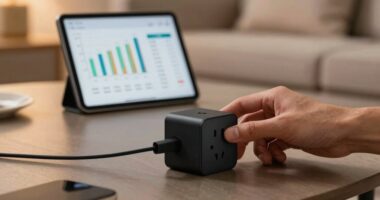
Plug an electric heater directly into a suitable wall outlet; avoid extension cords and power strips unless the manufacturer explicitly permits them. A heater draws substantial power, and a cord or connection that overheats can become a hazard. Don’t use a heater if its plug or cord is damaged, or if the outlet looks hot or discolored.
Keep children and pets out of reach. If your dog curls up close to the warm air or your toddler can grab the controls, move the unit to a safer place or choose another way to heat the room. Switch it off and unplug it when you leave the room or go to sleep unless both the product instructions and local safety guidance clearly allow otherwise. Keep working smoke alarms in the home.
A tip-over shutoff and overheat protection are safeguards, not permission to put a heater beside a bed or leave it unattended.
Take warning signs seriously. If the heater repeatedly trips a breaker, smells like burning, sparks, or has a hot or discolored plug or outlet, switch it off and disconnect it if safe. Stop using it and have the equipment or circuit inspected; the breaker may be warning you about a real electrical problem.
Know when a fuel-burning heater changes the safety picture
Electric space heaters do not produce carbon monoxide during operation, while fuel-burning models can create carbon monoxide if used or vented improperly. That distinction matters when you’re choosing a heater for a garage, cabin, or other chilly space: a model that burns propane or kerosene requires the locations, ventilation, and operating conditions its manufacturer approves.
Never use an outdoor-only heater indoors. Outdoor products don’t become safe for a room just because a door is open or the space feels large. Use fuel-burning heaters only as their instructions allow, and install working carbon monoxide alarms anywhere fuel-burning appliances may create a hazard. An alarm is an added layer of protection, not a substitute for following the manual.
Consider a homeowner who wants heat during a power outage. A fuel-burning unit may seem tempting, but the right answer depends on its design and approved setting, not on how cold the room feels. The same rule applies to a portable heater found in a shed: check its label and instructions before using it anywhere enclosed.
Product standards, labels, and available certifications vary by country, so check current local requirements and consumer-safety advice when you buy. Manufacturer claims about smart features or “energy-saving” modes also deserve a practical reading: they may improve convenience, but they don’t erase the electricity or fuel needed to make heat.
Make the warmth last without wasting heat
A space heater makes a room comfortable more effectively when you pair it with sensible heat management. It cannot compensate indefinitely for an open window, strong draft, or a door that lets warm air pour into a cold hallway. Close the door when practical, block obvious drafts safely, and keep the heater’s air inlets and outlets clear so it can circulate heat as designed.
Here’s a familiar evening: you sit at a desk in a chilly corner while the living room stays warm. A heater near the occupied area may help you lower central heating, but a model that blows warm air across the room could disturb papers or make a video call noisy. An infrared unit aimed at the seating area might feel better, while a quiet oil-filled model could suit a long study session.
Heating air can make a room feel drier because warmer air has lower relative humidity at the same amount of water vapor. The heater isn’t removing water from the air, though dry skin or a scratchy throat can still feel real. If you notice that sensation, check the room’s humidity and follow sensible guidance for your home rather than assuming the heater is extracting moisture.
Maintenance helps performance: clear dust from air inlets and outlets using the manufacturer’s cleaning directions, and don’t cover the unit to hide it away. If you need warmth in several rooms at once, compare the heater’s cost with your central system or a heat pump. Portable heat is most useful when you can focus it on a space you’re actually using.
Frequently Asked Questions
Are portable space heaters safe to leave on overnight?
Safe practice is to switch a heater off before sleeping unless its instructions and local safety guidance clearly allow overnight use. Keep it well away from bedding, curtains, and other combustible materials, and maintain working smoke alarms.
How much does it cost to run a 1,500-watt heater?
A 1,500-watt heater uses 1.5 kilowatt-hours for every hour it runs continuously. Multiply 1.5 by the hours used, then multiply that total by your electricity price per kilowatt-hour. Four hours, for example, uses 6 kilowatt-hours.
Can a portable heater warm a whole room?
It can often make one suitably sized room more comfortable, but results depend on its output, room size, insulation, ceiling height, and drafts. Use the manufacturer’s room guidance as a starting point and account for the room’s actual conditions.
Which type is better: ceramic, infrared, or oil-filled?
It depends on how you use the room. Ceramic and fan models provide quick warmth, infrared models warm people and objects more directly, and oil-filled radiators provide gradual, quieter heat. For example, a quiet radiator may suit a long study session, while a fan model may help when you want a fast warm-up.
Can I plug a space heater into a power strip or extension cord?
Usually, you should plug an electric heater directly into a suitable wall outlet. Use an extension cord or power strip only if the manufacturer explicitly permits it, and stop using the heater if its cord, plug, or outlet becomes hot, damaged, or discolored.
Do portable space heaters produce carbon monoxide?
Electric heaters do not produce carbon monoxide during operation. Fuel-burning heaters can, so use them only as their manufacturer allows, with required ventilation, and keep working carbon monoxide alarms wherever fuel-burning appliances may pose a hazard.
Conclusion
Pick a heater for the room you’ll actually use, estimate its running cost from your local rate, and follow the manual’s placement and electrical instructions. Targeted warmth works best when it stays targeted: one occupied room, a clear patch of floor, and a heater suited to the way you live.
Before the next cold evening, check the outlet, the clearance, and the label. Then let the warm corner do its quiet work.