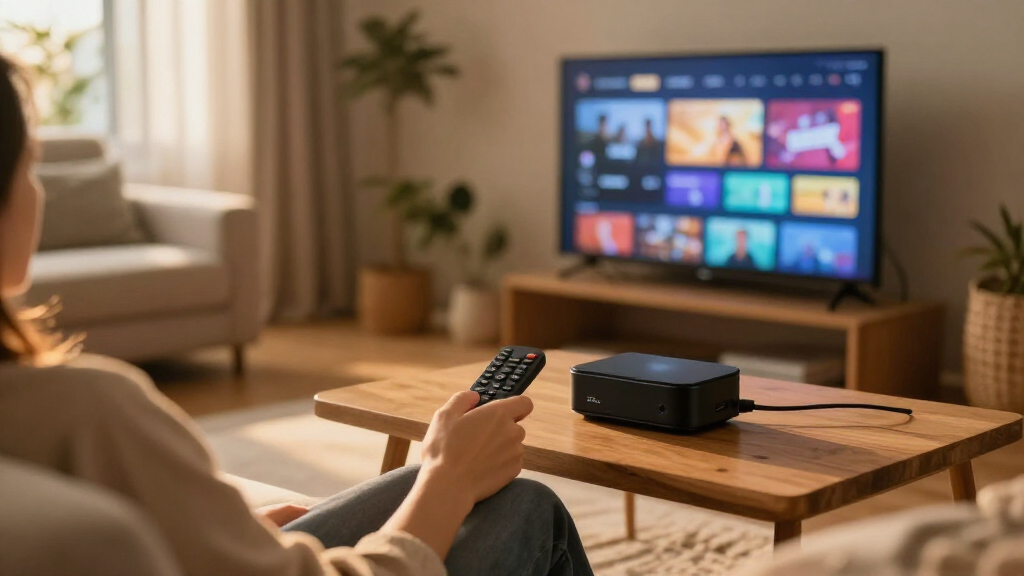
The Amazon Fire TV Stick 4K Max (2nd Gen) is my best overall pick among the best TV streaming devices, thanks to its 4K support and broad feature set in a compact stick. The Roku Streaming Stick 4K is a simpler fit for viewers who want straightforward streaming, while the NVIDIA Shield TV Pro suits buyers who prioritize a more capable premium box. The main tradeoffs are interface preferences, connection options, and whether your TV and services can make use of features such as Dolby Vision or faster Wi-Fi. A smaller stick can keep installation tidy, while a box may offer more flexibility for demanding setups. Read on for the full breakdown and a guide to matching a device to your viewing habits.

Get the latest gadgets delivered free with Prime
- Fast, free delivery on millions of items
- Prime Video, Amazon Music and more included
- Member-only deals all year
Complete the kit



Key Takeaways
- The Fire TV Stick 4K Max (2nd Gen) leads the lineup as a strong all-around stick, while buyers who dislike Amazon’s interface may prefer a Roku or Android TV option.
- Roku’s choices emphasize accessible streaming, but the Ultra LT models and Streaming Stick 4K serve different setups: a box-style player versus a compact HDMI stick.
- Premium hardware only pays off when your setup can use it. The Fire TV Cube and NVIDIA Shield TV Pro make more sense for buyers seeking expanded capability than for basic streaming.
- 4K support is not the same as better picture quality on every TV. Your display, streaming plan, and chosen service all affect whether advanced video formats matter.
- Sticks and boxes solve different installation problems. Sticks reduce clutter behind a TV, while box-style devices can suit viewers who want a separate player and more connection flexibility.
| Amazon Fire TV Stick 4K Max (2nd Gen) |  | Best Overall | Maximum video output: 2160p at 60 fps | HDR formats: Dolby Vision, HDR10, HDR10+, HLG | Audio: Dolby Atmos, 7.1 surround sound, stereo, HDMI audio pass-through | VIEW LATEST PRICE | See Our Full Breakdown |
| Roku Ultra LT (2023) 4K HDR Streaming Player |  | Best for Ethernet and Private Listening | Model number: 4801RW | Maximum resolution: 3840 × 2160 (4K UHD); also supports 720p | HDR formats: HDR, Dolby Vision | VIEW LATEST PRICE | See Our Full Breakdown |
| ONN Android TV 4K UHD Streaming Device |  | Best for Google Casting on a Budget | Model number: 100026240 | Resolution: 3840 × 2160 pixels (4K UHD) | Operating system: Android TV | VIEW LATEST PRICE | See Our Full Breakdown |
| Xiaomi Mi Box S 4K Streaming Media Player |  | Best for Google Assistant in a Box-Style Player | Model: MDZ-22-AB | Resolution: 4K (3840 × 2160) | HDR: Supported | VIEW LATEST PRICE | See Our Full Breakdown |
| Amazon Fire TV Stick HD Streaming Device |  | Best Compact Full HD Pick | Resolution: Full HD | Wi-Fi: Wi-Fi 6 | Connectivity: HDMI, Bluetooth | VIEW LATEST PRICE | See Our Full Breakdown |
| Xiaomi TV Box S (3rd Gen) 4K UHD Streaming Media Player |  | Best for Google TV and Broad HDR Support | Operating system: Google TV | Resolution: 4K (3840 × 2160) up to 60 fps | HDR formats: Dolby Vision, HDR10+ | VIEW LATEST PRICE | See Our Full Breakdown |
| Roku Ultra LT 4K Streaming Device with Dolby Vision, Dual-Band Wi-Fi, Voice Remote, HDMI Cable, and USB Extension Cord |  | Best for a Straightforward Roku Setup | Operating system: Roku OS | Resolution: 4K UHD (3840 × 2160) | HDR: Dolby Vision and HDR | VIEW LATEST PRICE | See Our Full Breakdown |
| Amazon Fire TV Stick 4K Streaming Device with Alexa+ Remote |  | Best Compact Pick for Wi-Fi 6 | Video: 4K with HDR10+ | Connectivity: Wi-Fi 6, Bluetooth | Setup: Connects to a TV’s HDMI port | VIEW LATEST PRICE | See Our Full Breakdown |
| Amazon Fire TV Cube (3rd Gen) 4K Streaming Media Player with Alexa and Wi-Fi 6E |  | Best for Hands-Free Alexa and Home Theater Connections | Processor: Octa-core: 4 × 2.2 GHz and 4 × 2.0 GHz | Resolution: Up to 4K at 60 fps | HDR formats: Dolby Vision, HDR10, HDR10+, HLG | VIEW LATEST PRICE | See Our Full Breakdown |
| Amazon Fire TV Stick 4K Select Streaming Device |  | Best Entry-Level 4K Fire TV Stick | Output resolution: Up to 2160p at 60 fps | Video formats: HDR10, HDR10+, HLG, H.265, H.264, VP9, AV1 | Processor: Quad-core 1.7 GHz | VIEW LATEST PRICE | See Our Full Breakdown |
| Amazon Fire TV Stick 4K Plus with Wi-Fi 6 and Alexa Voice Remote |  | Best for Alexa Homes | Maximum resolution: 2160p at up to 60 fps | HDR formats: Dolby Vision, HDR10, HDR10+, HLG | Audio: Dolby Atmos, 7.1 surround sound, stereo, HDMI audio pass-through up to 5.1 | VIEW LATEST PRICE | See Our Full Breakdown |
| Roku Streaming Stick 4K with Voice Remote |  | Best Compact Roku Pick | Model: 3820R2 | Resolution: 4K UHD, up to 2160p at 60 fps | HDR formats: Dolby Vision, HDR10, HDR10+ | VIEW LATEST PRICE | See Our Full Breakdown |
| Xiaomi TV Stick 4K (2nd Gen) Streaming Device |  | Best for Google TV and Casting | Model: MDZ-33-AA-2 | Resolution: 4K (3840 × 2160 pixels) | Processor: 6nm quad-core CPU, 2.5 GHz | VIEW LATEST PRICE | See Our Full Breakdown |
| Roku Ultra LT 4K Streaming Device with Voice Remote |  | Best for Ethernet and Private Listening | Resolution: 4K | HDR formats: Dolby Vision, HDR10+ | Connectivity: HDMI, Wi-Fi, Ethernet | VIEW LATEST PRICE | See Our Full Breakdown |
| NVIDIA Shield TV Pro 4K HDR Streaming Media Player |  | Best for Home Media Libraries | Processor: NVIDIA Tegra X1+ | RAM: 3 GB | Storage: 16 GB | VIEW LATEST PRICE | See Our Full Breakdown |
| TV streaming device | Connectivity | Resolution |
|---|---|---|
| Amazon Fire TV Stick 4K Max | — | — |
| Roku Ultra LT | Bluetooth, Ethernet, HDMI, Wi-Fi | — |
| ONN Android TV 4K UHD Streamin | HDMI, Wi-Fi | 3840 × 2160 pixels (4K UHD) |
| Xiaomi Mi Box S 4K Streaming M | Wi-Fi | 4K (3840 × 2160) |
| Amazon Fire TV Stick HD Stream | HDMI, Bluetooth | Full HD |
| Xiaomi TV Box S | — | 4K (3840 × 2160) up to 60 fps |
| Roku Ultra LT 4K Streaming Dev | — | 4K UHD (3840 × 2160) |
| Amazon Fire TV Stick 4K Stream | Wi-Fi 6, Bluetooth | — |
| Amazon Fire TV Cube | — | Up to 4K at 60 fps |
| Amazon Fire TV Stick 4K Select | — | — |
| Amazon Fire TV Stick 4K Plus w | — | — |
| Roku Streaming Stick 4K with V | Wi-Fi; HDMI | 4K UHD, up to 2160p at 60 fps |
| Xiaomi TV Stick 4K | Wi-Fi 6, Bluetooth, HDMI, USB | 4K (3840 × 2160 pixels) |
| Roku Ultra LT 4K Streaming Dev | HDMI, Wi-Fi, Ethernet | 4K |
| NVIDIA Shield TV Pro 4K HDR St | Gigabit Ethernet, dual-band AC Wi-Fi, Bluetooth 5.0 | — |
More Details on Our Top Picks
Amazon Fire TV Stick 4K Max (2nd Gen)
I’d rank the Fire TV Stick 4K Max first for viewers who want a feature-rich 4K stick without moving to a larger player. Dolby Vision, HDR10+, and Dolby Atmos cover a wide range of compatible TVs and sound systems, while Wi-Fi 6E and 16GB of storage give it more headroom than the Full HD Fire TV Stick HD. The included Alexa remote can also control compatible TVs and audio devices, reducing remote juggling.
The tradeoff is that the newest wireless standard only helps with a compatible router, and 4K benefits require a compatible TV and fast internet. Compared with the Roku Ultra LT, this stick is more compact and has more listed storage, while Roku offers Ethernet for wired networking. Some streaming services also require separate subscriptions.
Pros:- Supports 4K at up to 60 fps with Dolby Vision and HDR10+
- Wi-Fi 6E and 16GB storage
- Alexa remote can control compatible TVs and audio devices
- Supports Dolby Atmos and a range of streaming and gaming services
Cons:- Wi-Fi 6E benefits require a compatible router
- 4K streaming needs a compatible TV and high-speed internet
- Some services require separate subscriptions
Best for: Viewers with a 4K Dolby Vision or HDR10+ TV who want a compact device, Alexa voice control, and room for apps.
Not ideal for: People with a Full HD-only TV, an older router who expect Wi-Fi 6E benefits, or a preference for wired Ethernet.
- Maximum video output:2160p at 60 fps
- HDR formats:Dolby Vision, HDR10, HDR10+, HLG
- Audio:Dolby Atmos, 7.1 surround sound, stereo, HDMI audio pass-through
- Processor:Quad-core 2.0 GHz
- Storage:16 GB
- Wi-Fi:Tri-band Wi-Fi 6E (2.4, 5, and 6 GHz)
- Bluetooth:Bluetooth 5.2 + BLE
- Dimensions:99 × 30 × 14 mm housing; 108 × 30 × 14 mm including connector
Our verdict“Choose the Fire TV Stick 4K Max if you want a compact, well-equipped 4K streamer and can make use of its compatible TV and network features.”
Roku Ultra LT (2023) 4K HDR Streaming Player
The Roku Ultra LT suits viewers who value connection flexibility and private listening more than a stick-sized design. It supports 4K, HDR, and Dolby Vision, and its Ethernet port offers a wired alternative when Wi-Fi is unreliable or a router sits near the TV. The voice remote controls the television and player, with private listening available through wired headphones or a wireless pair.
Compared with the Fire TV Stick 4K Max, Roku gives buyers Ethernet and headphone-listening options, while the Fire TV Stick has a smaller form factor and explicitly lists Wi-Fi 6E and 16GB storage. This Roku is a separate player rather than a stick, so it takes more space near the set. There is also a product-condition caveat: the listing describes the unit as new and factory sealed but says the box has water damage. I’d factor that packaging issue into a gift purchase.
Pros:- Supports 4K UHD, HDR, and Dolby Vision
- Offers both Wi-Fi and Ethernet connectivity
- Voice remote controls the TV and streaming player
- Supports private listening with wired or wireless headphones
Cons:- Larger player format takes more space than a streaming stick
- Listing states that the product box has water damage
- Product data does not specify a Wi-Fi generation or storage capacity
Best for: Viewers who want a 4K Dolby Vision player with Ethernet and an easy way to listen privately through headphones.
Not ideal for: Buyers who need a discreet HDMI stick, want explicitly listed newer wireless features, or require pristine packaging for a gift.
- Model number:4801RW
- Maximum resolution:3840 × 2160 (4K UHD); also supports 720p
- HDR formats:HDR, Dolby Vision
- Connectivity:Bluetooth, Ethernet, HDMI, Wi-Fi
- Video codecs:H.264, H.265/HEVC, VP9
- Audio format listed:Dolby Digital
- Dimensions:6 × 4 × 2 in
- Color:Black
Our verdict“Pick the Roku Ultra LT if Ethernet and headphone listening matter more to you than a compact stick design or pristine retail packaging.”
ONN Android TV 4K UHD Streaming Device
The ONN Android TV 4K device is a straightforward fit for households that use Google services and often cast video from phones or tablets. Chromecast built in makes sending supported content to the TV simple, while the Google Assistant remote adds voice search without relying on Alexa. Its included HDMI cable also avoids the need to source a separate connection cable.
Compared with the Xiaomi Mi Box S, this ONN model lists 2GB of RAM and 8GB of storage, but both provide Google Assistant and Chromecast casting. The product data only lists H.264 and H.265/HEVC codecs, so it offers less documented codec breadth than the Fire TV Stick 4K Max, which also lists VP9 and AV1. It is designed for use in the United States and needs Wi-Fi for streaming, making region and network fit key limits.
Pros:- Supports 4K UHD output
- Chromecast built in for casting from Android or iOS devices
- Voice remote includes Google Assistant
- HDMI cable is included
Cons:- Designed for use in the United States and not listed as region-compatible elsewhere
- Requires Wi-Fi for streaming
- Product data does not list HDR support
Best for: US-based viewers who use Google Assistant and want to cast video from Android or iOS devices to a 4K TV.
Not ideal for: Buyers outside the United States, homes without reliable Wi-Fi, or viewers seeking listed HDR support or extensive codec coverage.
- Model number:100026240
- Resolution:3840 × 2160 pixels (4K UHD)
- Operating system:Android TV
- Connectivity:HDMI, Wi-Fi
- RAM:2 GB
- Storage:8 GB
- Video codecs:H.264, H.265/HEVC
- Region compatibility:United States
Our verdict“Choose the ONN device if you’re in the United States and want a basic 4K Android TV streamer with Google casting built in.”
Xiaomi Mi Box S 4K Streaming Media Player
The Xiaomi Mi Box S offers a box-style route to 4K streaming for viewers who want Chromecast built in and Google Assistant rather than an Alexa-centered setup. It supports HDR and lists popular services such as Netflix, Vudu, and YouTube. Compared with the ONN Android TV device, it shares the Google casting appeal but has older-looking connection details, including a Micro USB connector, and its listing is less clear about memory.
That uncertainty matters: the specifications say 8GB of RAM and 8GB of storage, while the product title and description do not resolve the memory discrepancy. I would not choose it for a buyer who needs confidence about available app memory. The Fire TV Stick 4K Max provides clearer storage details, more listed HDR formats, and Wi-Fi 6E, but the Mi Box S remains a reasonable match for someone who prefers Google’s assistant and casting features.
Pros:- Supports 4K Ultra HD and HDR
- Chromecast built in for compatible casting
- Google Assistant voice control
- Supports services including Netflix, Vudu, and YouTube
Cons:- Product data lists Micro USB connectivity
- Memory specifications are unclear, with 8GB RAM and 8GB storage listed
- Wi-Fi is the only listed network connection
Best for: Viewers who want a box-style 4K HDR streamer with Google Assistant and Chromecast casting for supported apps.
Not ideal for: Buyers who need clear, dependable memory specifications, newer listed connectivity, or a stick that plugs directly into HDMI.
- Model:MDZ-22-AB
- Resolution:4K (3840 × 2160)
- HDR:Supported
- Connectivity:Wi-Fi
- Connector:Micro USB
- RAM listed:8 GB
- Storage capacity:8 GB
- Video codecs:H.265 (HEVC), VP9
Our verdict“Consider the Mi Box S if Google casting and Assistant are your priorities and you’re comfortable with unclear memory details and Micro USB connectivity.”
Amazon Fire TV Stick HD Streaming Device
The Fire TV Stick HD is the sensible choice when a television tops out at Full HD or the priority is a compact, portable streamer rather than 4K playback. It supports Wi-Fi 6 and comes with an Alexa remote that can search by voice, control compatible TV and soundbar power and volume, and support Bluetooth headphone listening. That makes it more capable than a bare-bones HD stick for everyday TV use.
Its main compromise is resolution: the Fire TV Stick 4K Max adds 4K, Dolby Vision, HDR10+, Dolby Atmos, and 16GB of listed storage, so it is a better fit for a 4K home theater. The HD model’s compact size is useful for travel, but its USB-C power setup depends on compatible TV power availability. Streaming subscriptions may also be required, so app access does not mean every service is included.
Pros:- Compact design connects through an HDMI port
- Supports Full HD streaming and Wi-Fi 6
- Alexa remote controls compatible TV and soundbar power and volume
- Bluetooth headphone support allows private listening
Cons:- Full HD resolution does not take advantage of a 4K TV
- USB-C power through the TV depends on compatible power availability
- Some streaming services require separate subscriptions
Best for: People with a Full HD television, or travelers who want a small Alexa-controlled device for streaming on compatible TVs.
Not ideal for: Owners of 4K HDR TVs who want the benefits of higher resolution and advanced HDR or audio formats.
- Resolution:Full HD
- Wi-Fi:Wi-Fi 6
- Connectivity:HDMI, Bluetooth
- Power:USB-C cable powered by TV
- Remote:Alexa Voice Remote with TV power and volume buttons
- Smart home control:Compatible with Alexa-enabled devices
Our verdict“Buy the Fire TV Stick HD for a Full HD set or portable setup, but choose the Fire TV Stick 4K Max for a 4K HDR television.”
Xiaomi TV Box S (3rd Gen) 4K UHD Streaming Media Player
The Xiaomi TV Box S (3rd Gen) is a strong fit for viewers who want Google TV’s app discovery and Google Cast in a compact box, rather than Amazon’s Alexa-centered Fire TV interface. It supports 4K at up to 60 fps, Dolby Vision, and HDR10+, giving compatible TVs access to multiple HDR formats, while Dolby Audio and DTS:X cover a range of audio setups. The included HDMI cable and voice remote make it a ready-to-connect option.
Compared with the Amazon Fire TV Cube (3rd Gen), Xiaomi’s box is much smaller and simpler, but it lacks the Cube’s hands-free Alexa, Ethernet, and HDMI input. Its 2 GB of RAM and USB 2.0 port also limit headroom and accessory speeds. Choose it for Google TV and format support, not advanced connectivity.
Pros:- Google TV, Google Assistant, and Google Cast support
- 4K playback up to 60 fps with Dolby Vision and HDR10+
- Dolby Audio and DTS:X support
- Includes a voice remote and HDMI cable
Cons:- 2 GB of RAM offers limited memory headroom
- USB 2.0 is slower than newer USB standards
- No Ethernet or HDMI input listed
Best for: Viewers who prefer Google TV, use Google Cast, and want Dolby Vision and HDR10+ support in a small media box
Not ideal for: Smart-home users who want hands-free voice control, wired Ethernet, or an HDMI input for another device
- Operating system:Google TV
- Resolution:4K (3840 × 2160) up to 60 fps
- HDR formats:Dolby Vision, HDR10+
- Audio:Dolby Audio, DTS:X
- Processor:Quad-core CPU, up to 2.5 GHz
- Memory and storage:2 GB RAM, 32 GB storage
- Wireless connectivity:Dual-band Wi-Fi (2.4 GHz/5 GHz), Bluetooth 5.2
- Ports:HDMI 2.1, USB 2.0
Our verdict“Choose the Xiaomi TV Box S if Google TV and broad HDR support matter more to you than wired networking or hands-free smart-home control.”
Roku Ultra LT 4K Streaming Device with Dolby Vision, Dual-Band Wi-Fi, Voice Remote, HDMI Cable, and USB Extension Cord
The Roku Ultra LT suits viewers who want a familiar, app-focused streaming interface without relying on Alexa features or a Google TV account experience. It delivers 4K UHD and Dolby Vision, and its voice remote can handle compatible TV functions as well as streaming searches. Compared with the Amazon Fire TV Stick 4K Select, this is a separate box rather than a compact HDMI stick, which can be preferable when you want the player placed away from the TV’s port.
The tradeoff is a more limited connection picture: the listed specs include dual-band Wi-Fi but no Ethernet, and streaming requires an internet connection. It also lacks the Roku Ultra LT (2023) option in this roundup’s comparison set that explicitly lists Ethernet and headphones. Its strengths are accessible Roku navigation and Dolby Vision, not advanced networking or smart-home control.
Pros:- 4K UHD playback with Dolby Vision
- Voice remote controls streaming and compatible TV functions
- Dual-band Wi-Fi support
- Includes an HDMI cable and USB extension cord
Cons:- Requires Wi-Fi for streaming and lists no Ethernet port
- Larger than HDMI-stick options such as the Fire TV Stick 4K Select
- No hands-free Alexa or Google Assistant control is listed
Best for: Viewers who want Roku’s straightforward streaming interface, Dolby Vision, and a remote that can control basic TV functions
Not ideal for: Households seeking Ethernet, hands-free voice control, or a stick that occupies less space behind the TV
- Operating system:Roku OS
- Resolution:4K UHD (3840 × 2160)
- HDR:Dolby Vision and HDR
- Video codec:HEVC (H.265)
- Wireless connectivity:Dual-band 802.11ac Wi-Fi
- Memory:2 GB RAM
- Voice assistant compatibility:Siri, Google Assistant
- Included accessories:Voice remote, HDMI cable, USB extension cord
Our verdict“Pick the Roku Ultra LT if you value Roku’s simple interface and Dolby Vision more than Ethernet or a compact stick design.”
Amazon Fire TV Stick 4K Streaming Device with Alexa+ Remote
The Amazon Fire TV Stick 4K with Alexa+ Remote makes sense for viewers who want 4K streaming in a small HDMI-connected device and have a Wi-Fi 6 network. Its remote combines Alexa+ voice search with TV power and volume controls, so routine viewing can take fewer steps than using a separate TV remote. Bluetooth headphone support is another practical plus for private listening.
Compared with the Fire TV Cube (3rd Gen), this stick takes up less space and avoids paying for a hands-free smart speaker-style setup, but it gives up the Cube’s Wi-Fi 6E, Ethernet, HDMI input, and Alexa control without pressing a button. It also depends on an HDMI port and TV power, and some content requires subscriptions. This is the more sensible Fire TV choice when compactness matters more than ports and smart-home reach.
Pros:- 4K video with HDR10+ support
- Wi-Fi 6 connectivity
- Alexa+ remote includes TV power and volume controls
- Supports Bluetooth headphones for private listening
Cons:- Requires an available HDMI port and a compatible TV
- Lacks the Fire TV Cube’s Ethernet and HDMI input
- Some content and services require separate subscriptions
Best for: Fire TV households with a Wi-Fi 6 router that want a compact 4K streamer, TV controls on the remote, and Bluetooth headphone listening
Not ideal for: Viewers who need Ethernet, HDMI passthrough, hands-free Alexa, or a streaming device with more connection options
- Video:4K with HDR10+
- Connectivity:Wi-Fi 6, Bluetooth
- Setup:Connects to a TV’s HDMI port
- Power:Direct power from the TV
- Remote:Voice remote with TV power and volume controls
- Voice assistant:Alexa+
- Smart-home control:Compatible with Alexa-enabled devices
Our verdict“Choose this Fire TV Stick if you want a compact 4K player with Wi-Fi 6 and remote-based Alexa, but do not need the Cube’s extra connections.”
Amazon Fire TV Cube (3rd Gen) 4K Streaming Media Player with Alexa and Wi-Fi 6E
The Fire TV Cube (3rd Gen) is the most connection-rich option in this group for viewers building a Fire TV-centered home theater. Its octa-core processor, Wi-Fi 6E and Ethernet, and support for Dolby Vision and Dolby Atmos make it better suited to a busy setup than the basic Fire TV Stick 4K Select. Hands-free Alexa can search across apps and control compatible equipment without picking up the remote; electronic microphone disconnection gives privacy-conscious users a way to cut off the mics.
That flexibility comes with more hardware and setup demands. The Cube is a 513 g box rather than a small HDMI stick, and its Wi-Fi 6E benefits depend on a compatible router, 6 GHz connection, and WPA3. It also has only 16 GB of storage and 2 GB of memory. Choose it for voice control and ports, not minimum size or simplicity.
Pros:- Hands-free Alexa can control compatible TVs, audio gear, and smart-home devices
- Wi-Fi 6E and Ethernet provide multiple networking options
- Supports Dolby Vision, HDR formats, and Dolby Atmos
- HDMI input and output plus USB-A add connection flexibility
Cons:- Wi-Fi 6E benefits require compatible router hardware and settings
- Larger and heavier than the Fire TV Stick 4K options
- 16 GB storage and 2 GB memory are modest for a premium media box
Best for: Fire TV users with a compatible Wi-Fi 6E router who want hands-free Alexa, wired Ethernet, and HDMI connections for a home theater
Not ideal for: Viewers who want a lightweight HDMI stick, have no need for smart-home voice control, or lack a compatible Wi-Fi 6E network
- Processor:Octa-core: 4 × 2.2 GHz and 4 × 2.0 GHz
- Resolution:Up to 4K at 60 fps
- HDR formats:Dolby Vision, HDR10, HDR10+, HLG
- Audio:Dolby Atmos, 7.1 surround sound, HDMI audio pass-through up to 5.1
- Memory and storage:2 GB memory, 16 GB storage
- Wireless connectivity:Tri-band Wi-Fi 6E, Bluetooth 5.0 + LE
- Ports:HDMI 2.1 input and output, USB-A 2.0, 10/100 Mbps Ethernet
- Voice control:Hands-free Alexa; Alexa Voice Remote included
Our verdict“Choose the Fire TV Cube if hands-free Alexa and home-theater connections justify its larger footprint and more demanding network requirements.”
Amazon Fire TV Stick 4K Select Streaming Device
The Fire TV Stick 4K Select is a straightforward way to add 4K streaming and Alexa search to a TV with an open HDMI port. It supports HDR10, HDR10+, and HLG, and its small 1.5 oz body keeps the setup unobtrusive. Compared with the Fire TV Stick 4K with Alexa+ Remote, it lists dual-band Wi-Fi 5 rather than Wi-Fi 6, but it still covers core 4K playback and offers broad codec support, including AV1.
The pared-back hardware is the tradeoff: it has 8 GB of storage, uses micro-USB for power, and does not list Dolby Vision. It also needs Wi-Fi and a separate power source, while some apps and 4K content require subscriptions or may vary by region. For buyers who want a basic Fire TV stick and do not need the newer stick’s Wi-Fi 6 or headphone feature, the Select keeps the essentials without extra hardware.
Pros:- Supports 4K output with HDR10, HDR10+, and HLG
- Alexa Voice Remote and Fire TV app voice control are supported
- Compact, lightweight HDMI-stick design
- Supports AV1, H.265, H.264, and VP9 video formats
Cons:- Does not list Dolby Vision support
- 8 GB of storage limits space for apps
- Uses dual-band Wi-Fi 5 rather than Wi-Fi 6
Best for: Viewers who want a compact Fire TV device for 4K and HDR10+ streaming on a Wi-Fi 5 network
Not ideal for: Buyers who want Dolby Vision, Wi-Fi 6, Bluetooth headphone listening, or larger onboard storage
- Output resolution:Up to 2160p at 60 fps
- Video formats:HDR10, HDR10+, HLG, H.265, H.264, VP9, AV1
- Processor:Quad-core 1.7 GHz
- Storage:8 GB
- Wireless connectivity:Dual-band, dual-antenna MIMO Wi-Fi (802.11a/b/g/n/ac)
- Bluetooth:Bluetooth 5.0 and Bluetooth Low Energy
- Ports:HDMI output, micro-USB for power
- Weight:1.5 oz (42 g)
Our verdict“Pick the Fire TV Stick 4K Select for basic 4K Fire TV streaming if Dolby Vision and Wi-Fi 6 are not priorities.”
Amazon Fire TV Stick 4K Plus with Wi-Fi 6 and Alexa Voice Remote
The Fire TV Stick 4K Plus is a strong fit for viewers who want 4K HDR playback and Alexa controls without moving to a set-top box. Dolby Vision, HDR10+, and Dolby Atmos cover a broad range of compatible TVs and audio gear, while Wi-Fi 6 can help on a busy home network with a matching router. The remote can also control compatible TV power and volume, so everyday viewing takes fewer steps.
Compared with the Roku Streaming Stick 4K, this model makes more sense for Alexa users and homes already centered on Fire TV; Roku is the simpler alternative for viewers who prefer its platform. The tradeoff is 8 GB of storage, plus the need for compatible hardware to use 4K or Wi-Fi 6. Cloud gaming also calls for separate subscriptions and a compatible controller.
Pros:- 4K playback with Dolby Vision and HDR10+ support
- Wi-Fi 6 support for compatible routers
- Alexa voice search and controls for compatible TV power and volume
- Supports Dolby Atmos and several common video formats, including AV1
Cons:- Only 8 GB of storage
- 4K and Wi-Fi 6 benefits depend on compatible TV and router hardware
- Cloud gaming requires separate subscriptions and a compatible controller
Best for: Viewers with an Alexa-based smart home, a 4K HDR television, and a Wi-Fi 6 router who want voice search and TV controls in one remote.
Not ideal for: People who want a platform-neutral interface, have a basic HD television, or expect cloud gaming without extra subscriptions and a controller.
- Maximum resolution:2160p at up to 60 fps
- HDR formats:Dolby Vision, HDR10, HDR10+, HLG
- Audio:Dolby Atmos, 7.1 surround sound, stereo, HDMI audio pass-through up to 5.1
- Processor:Quad-core 1.7 GHz
- Storage:8 GB
- Wi-Fi:Dual-band Wi-Fi 6, 2.4 GHz and 5 GHz
- Bluetooth:Bluetooth 5.2 + BLE
- Dimensions:99 × 30 × 14 mm housing; 108 × 30 × 14 mm including connector
Our verdict“Choose the Fire TV Stick 4K Plus if Alexa integration and Wi-Fi 6 matter more to you than a larger storage pool or a platform-neutral experience.”
Roku Streaming Stick 4K with Voice Remote
The Roku Streaming Stick 4K keeps the setup unobtrusive: its slim HDMI design leaves nearby ports easier to reach than a bulky player, while the included voice remote simplifies searching. It handles 4K, Dolby Vision, and HDR10+, and access to free live TV channels adds another viewing route alongside subscription apps. Its long-range Wi-Fi receiver is useful when the television sits some distance from the router.
Compared with the Roku Ultra LT 4K Streaming Device, this stick is the tidier choice for a wall-mounted TV or a limited entertainment area, but it gives up Ethernet and the Ultra LT’s remote headphone jack. Its 16 GB storage listing is more generous than the Fire TV Stick 4K Plus’s 8 GB, though this remains an internet-dependent streaming device, not a way to watch 4K on an HD-only television.
Pros:- Compact HDMI stick leaves adjacent ports accessible
- Supports 4K UHD, Dolby Vision, and HDR10+
- Long-range Wi-Fi receiver
- Voice remote and access to free live TV channels
Cons:- Requires a 4K-compatible TV to display 4K resolution
- Needs an internet connection for streaming
- Does not offer the Ethernet connection or remote headphone jack listed for the Roku Ultra LT
Best for: Roku users with a 4K HDR TV who want a low-profile device, voice search, and free live TV access without a separate box.
Not ideal for: Viewers who need wired Ethernet, private listening from the remote, or streaming on a television without 4K support.
- Model:3820R2
- Resolution:4K UHD, up to 2160p at 60 fps
- HDR formats:Dolby Vision, HDR10, HDR10+
- Connectivity:Wi-Fi; HDMI
- Voice control:Yes
- RAM:1 GB
- Storage capacity:16 GB
- Dimensions:3.7 × 0.8 × 0.45 in
Our verdict“Pick this Roku stick if you want a compact 4K setup and do not need the wired networking or private-listening extras of the Roku Ultra LT.”
Xiaomi TV Stick 4K (2nd Gen) Streaming Device
The Xiaomi TV Stick 4K (2nd Gen) is the pick here for viewers who want Google TV, Google Cast, and a portable HDMI stick rather than Roku or Fire TV. Its Wi-Fi 6 support and 2.5 GHz quad-core processor give it a capable base for 4K streaming, while Dolby Vision, HDR10+, Dolby Atmos, and DTS:X support suit compatible displays and audio systems. Casting from a phone or tablet is a useful extra when a show or clip is easier to find on another screen.
Compared with the Roku Streaming Stick 4K, Xiaomi offers Google Cast and DTS:X support, while Roku has a more clearly stated long-range Wi-Fi receiver and access to free live TV. The Xiaomi’s 8 GB storage is limited, and its plug-in form still needs USB power as well as an HDMI port. Check that its supported apps match your viewing habits before choosing it.
Pros:- Google TV with Google Cast support
- 4K resolution with Dolby Vision and HDR10+
- Dolby Atmos and DTS:X audio support
- Wi-Fi 6 and Bluetooth voice remote
Cons:- 8 GB of storage limits room for apps
- Requires both an HDMI port and USB power
- Supported services listed are limited to Google TV, Hulu, Netflix, Prime Video, and YouTube
Best for: Google TV households that cast from Android phones or tablets and want a portable 4K stick with modern HDR and audio format support.
Not ideal for: Viewers who need more device storage, want a set-top box with extra ports, or rely on services not listed among its supported apps.
- Model:MDZ-33-AA-2
- Resolution:4K (3840 × 2160 pixels)
- Processor:6nm quad-core CPU, 2.5 GHz
- RAM:2 GB
- Storage:8 GB
- Connectivity:Wi-Fi 6, Bluetooth, HDMI, USB
- Video codec:H.265
- Warranty:1 year
Our verdict“Choose the Xiaomi TV Stick 4K if Google Cast and Google TV are priorities, but favor the Roku Streaming Stick 4K if its listed free live TV access better fits your routine.”
Roku Ultra LT 4K Streaming Device with Voice Remote
The Roku Ultra LT suits viewers who want the flexibility of a dedicated player rather than a stick hidden behind the TV. It supports 4K, Dolby Vision, and HDR10+, and can connect by Wi-Fi or Ethernet—a practical advantage when wireless reception is unreliable or a wired connection is available. The voice remote handles compatible TV power and volume, while its headphone jack supports private listening without sending sound through the TV speakers.
Against the Roku Streaming Stick 4K, the Ultra LT trades the stick’s small footprint for wired networking and a remote built for listening features. That makes it a better fit for a fixed home setup, not a cramped HDMI cluster. Its private-listening options depend on headphones or the Roku mobile app, and 4K playback still requires a compatible television. The included HDMI cable also makes setup more direct than a stick-only connection.
Pros:- Supports 4K, Dolby Vision, and HDR10+
- Offers both Wi-Fi and Ethernet connectivity
- Remote includes voice control and compatible TV power and volume controls
- Private listening through the remote headphone jack or Roku mobile app
Cons:- Larger separate-player design takes more room than the Roku Streaming Stick 4K
- Private listening requires headphones or the Roku mobile app
- 4K playback requires a compatible 4K TV
Best for: Roku households with a 4K HDR television that need Ethernet or want to listen privately through headphones or the Roku app.
Not ideal for: People with limited space behind the TV or anyone who values a compact HDMI stick over a separate player.
- Resolution:4K
- HDR formats:Dolby Vision, HDR10+
- Connectivity:HDMI, Wi-Fi, Ethernet
- Voice assistants:Siri, Google Assistant
- Remote features:Voice control, TV power and volume, headphone jack
- Dimensions:6 × 2 × 2 in
- Included accessories:Voice remote, Premium High Speed HDMI cable
- Color:Purple
Our verdict“Choose the Roku Ultra LT over the Roku Streaming Stick 4K if Ethernet and private listening matter more than the stick’s smaller footprint.”
NVIDIA Shield TV Pro 4K HDR Streaming Media Player
The NVIDIA Shield TV Pro is the most capable home-media hub in this group, especially for viewers who keep their own video library. Its built-in Plex Media Server, Chromecast 4K, and two USB 3.0 ports make it more flexible than the Fire TV Stick 4K Plus or Roku Streaming Stick 4K, both of which use a simpler stick format. It also supports Dolby Vision and Dolby Atmos, and AI upscaling can sharpen compatible HD content for a 4K display.
That added capability comes with a larger commitment: this is a player for a planned entertainment setup, not a minimal plug-in upgrade. Its 16 GB internal storage is modest for a media hub, though USB ports allow connected accessories or storage expansion. A game controller is sold separately, so buyers should not treat its gaming potential as ready to use out of the box.
Pros:- 4K HDR playback with Dolby Vision and Dolby Atmos
- AI upscaling can improve the presentation of HD content on a 4K display
- Built-in Plex Media Server and Chromecast 4K
- Two USB 3.0 ports for accessories or storage expansion
Cons:- Game controller is sold separately
- 16 GB internal storage may be limiting without external storage
- More features and connections than casual streaming-only users may need
Best for: Home-theater enthusiasts who run a Plex library, want Chromecast 4K and USB expansion, and care about upscaling older HD video.
Not ideal for: Casual viewers who only need a basic streaming stick or buyers who expect a game controller to be included.
- Processor:NVIDIA Tegra X1+
- RAM:3 GB
- Storage:16 GB
- Video:4K HDR with Dolby Vision and AI upscaling
- Audio:Dolby Atmos and Dolby Digital Plus
- Ports:2 USB 3.0
- Connectivity:Gigabit Ethernet, dual-band AC Wi-Fi, Bluetooth 5.0
- Built-in features:Plex Media Server, Chromecast 4K, voice control
Our verdict“Choose the Shield TV Pro if Plex, USB expansion, and AI upscaling justify a more involved setup than a Roku or Fire TV stick.”
How We Picked
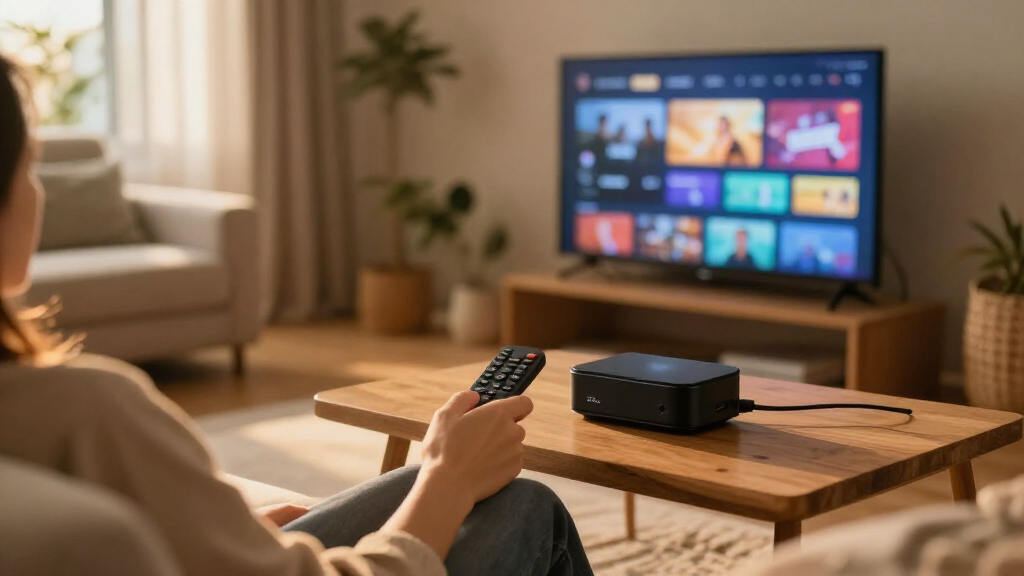
I compared these 15 devices by how well they serve the everyday job of streaming shows and movies, then looked at the practical differences that can shape a purchase: supported picture formats, wireless and wired connectivity, remote usability, form factor, and compatibility with common TV setups. A feature counted most when it could change what a buyer sees or how easily they can start watching—not simply because it appeared on a spec sheet.
The ranking favors devices that balance broad usefulness with manageable setup and a clear reason to choose them. Compact sticks rank well for uncomplicated installations, while box-style and premium options need to justify their added hardware through connectivity or capability. I also weighed ecosystem fit: Fire TV, Roku, and Android TV-style interfaces suit different habits, so no single platform is right for everyone. Models with overlapping features rank by the audience they serve best, and each pick has tradeoffs rather than being treated as a universal winner.
Factors to Consider When Choosing Best TV Streaming Devices
Before choosing a device, I’d match it to the TV, room, and people who will use it. A format name or headline feature matters only if it changes your own viewing experience.
Match Video Features to Your TV
Start with the display you already own, not the streamer’s feature list. A 4K device can still play content on a lower-resolution TV, but it cannot make that screen show native 4K detail. Dolby Vision support is useful only when the TV supports it and the service offers compatible content. Also check the HDMI port and any receiver or soundbar between the device and TV, since older gear can limit the signal. Buyers who plan to replace a TV soon may value a more capable streamer now, while owners of a basic HD set can often avoid paying for video features they cannot use. The common mistake is treating every supported format as an automatic picture upgrade.
Choose a Platform You’ll Enjoy Using
The interface shapes the experience every time you turn on the TV, so think about how you find shows and which services you use most. A platform that places your favorite apps within easy reach may be more useful than one with a longer feature list. Consider who will operate the remote: a minimalist layout can help occasional viewers, while voice controls may suit people who search by title or actor. Check whether the services you rely on are available in your region and on the particular device. If your household already uses a voice assistant or smart-home ecosystem, compatibility may make controls feel more natural. A technically capable streamer can still be a poor fit if its menus and recommendations frustrate the people using it.
Decide Between a Stick and a Box
A stick plugs directly into HDMI and is often the tidiest solution for a wall-mounted TV or a second screen. Its compact body can be awkward when HDMI ports are crowded or the TV is pressed close to a wall, so check clearance before buying. A box sits separately and may be easier to reach when changing cables or organizing equipment, but it takes space and adds another device to the shelf. Think about where the Wi-Fi signal comes from, too: a TV tucked into a cabinet can have a different connection experience from one in open air. Do not assume a box automatically gives you the connections you need; verify the actual ports on the specific model. Choose around your furniture and wiring, not just the product’s shape.
Treat Network Support as a Setup Question
Streaming quality depends on a stable home network as well as the device. Faster Wi-Fi standards can help in a compatible network, but they cannot fix weak broadband, a distant router, or interference from crowded wireless channels. If your router is nearby and your streams rarely buffer, you may gain little from paying extra for networking features. For a player that supports wired networking, Ethernet can be a useful option when Wi-Fi is unreliable, especially near a router or network switch. Check that your router supports the connection standard you plan to use before treating it as a reason to upgrade. A well-placed router may improve multiple devices at once, making it a better fix than replacing a streamer.
Pay for Capability You’ll Actually Use
Premium streamers make the most sense when you can name the capability you need, such as a particular connection, a more flexible media setup, or a stronger fit with your home ecosystem. For basic access to popular streaming services, an entry-level or midrange stick may cover the essential job. Extra performance can feel wasted if your viewing is limited to a few apps and your TV does not support advanced video formats. On the other hand, replacing a device every few years can cost more effort than choosing a model with room for changing needs. Compare the complete setup, including cables, network gear, and any adapters you may need. The best purchase is not the one with the longest feature list; it is the one whose useful features match your routine.
Check Household and Regional Compatibility
Streaming devices can vary by app availability, voice features, and service support across countries, so verify your exact region before ordering. If several people share the TV, check whether the interface makes it easy to move between profiles and whether the remote controls the TV’s basic functions. A device that works smoothly with one household’s subscriptions may be less convenient for another household with different services. Parents may also want to review available viewing controls rather than assuming every platform handles them the same way. If you are buying for someone else, familiar menus and a remote with clear controls can matter more than advanced playback features. This quick compatibility check can prevent a capable device from becoming an awkward fit.
Frequently Asked Questions
Should I buy a 4K streaming device if my TV is only HD?
You can use a 4K streamer with an HD TV, but the TV will remain the limit on displayed resolution. That may still be reasonable if you expect to upgrade the screen soon or want a particular platform or remote. For a TV that will stay HD, prioritize easy navigation, app support, and reliable connectivity over 4K or Dolby Vision features. Check that the device works with your TV’s HDMI connection. A lower-cost HD-focused option may be a better match if picture-format upgrades have no practical use in your setup.
Is a streaming stick or a box better for a wall-mounted TV?
A stick usually keeps a wall-mounted setup neater because it plugs into the TV and avoids a separate shelf device. However, the space behind the screen can be tight, and nearby HDMI ports may leave little room for the stick body. Check the TV’s port placement and whether the device includes an extension cable before deciding. A box can be easier to position when ports are blocked, but you will need a place for it and a clear path for its cables. The right choice depends more on your TV’s physical layout than on streaming quality alone.
Will a more expensive streamer stop buffering?
Not necessarily. Buffering often comes from a weak internet connection, router placement, interference, or a busy home network rather than the streaming device itself. Before upgrading, try moving the router, reducing obstacles, or using Ethernet if both your setup and device support it. A better wireless radio can help in some homes, but it cannot improve the broadband service coming into the house. If other devices also struggle in the same room, address the network first. Upgrade the streamer when its own limitations—not general network trouble—are the likely cause.
Do I need Dolby Vision support in a streaming device?
Dolby Vision support matters only if your TV supports the format and you watch content that offers it through a compatible service. If either the display or content is missing, the feature will not provide its intended benefit. Check your TV’s supported formats rather than relying on the model name or general 4K capability. Also consider how the streamer connects through an AV receiver or soundbar, since the rest of the chain can affect supported formats. For a standard HD TV or a display without Dolby Vision, interface and app fit are likely more useful priorities.
When should I choose a premium box instead of a compact stick?
A premium box is a better fit when you need a capability that a basic stick does not provide, or when your setup calls for a separate player with more room for connections and placement. It may also appeal to viewers who want a more flexible media device rather than a simple way to open streaming apps. For ordinary viewing on one TV, a compact stick can be easier to install and less intrusive. Identify the specific job the box would do before paying for its extra hardware. If you cannot name a feature you will use, a simpler streamer is likely the more sensible choice.
Conclusion
For the broadest mix of features and convenience, I’d start with the Amazon Fire TV Stick 4K Max (2nd Gen) as the best overall pick. The ONN Android TV 4K UHD Streaming Device is my value-minded choice for buyers who want a 4K box-style player without stepping into premium territory, while the Roku Streaming Stick 4K is a strong option for beginners who prefer a compact setup and a straightforward streaming routine. For a premium setup, consider the NVIDIA Shield TV Pro or Amazon Fire TV Cube only if their added capabilities suit your needs. If you want a basic HD streamer for a secondary TV, the Amazon Fire TV Stick HD is the more targeted choice. Match the device to your TV, network, and preferred interface, and the right pick becomes much clearer.