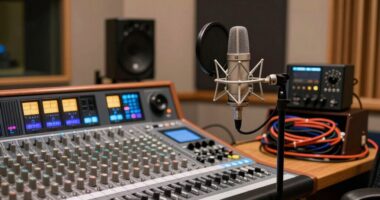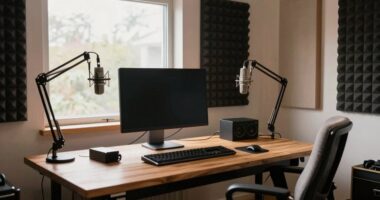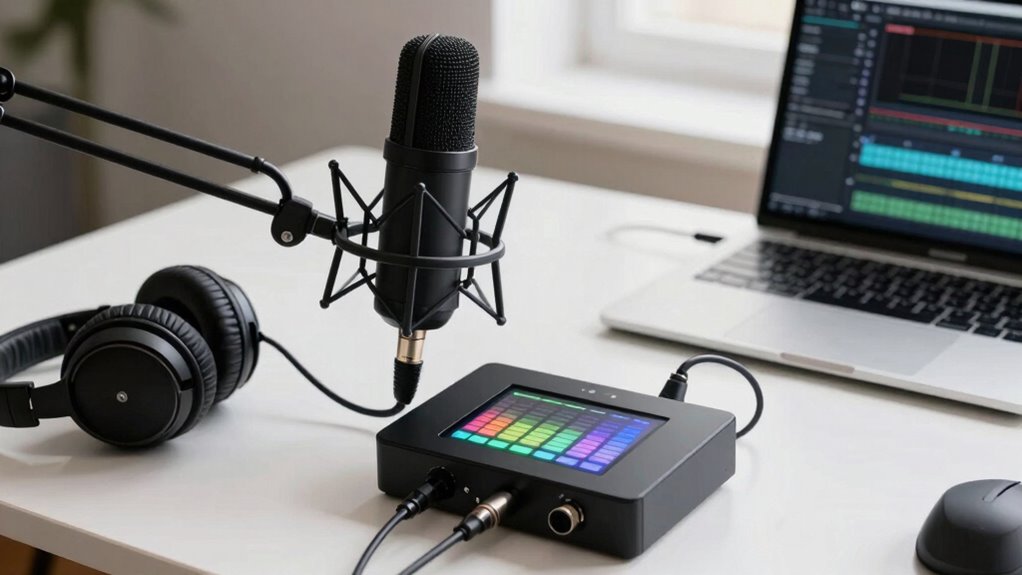
Most beginners start by choosing a microphone first, then find an interface that fits, but that often leads to sound quality issues and setup problems. Instead, you should identify your recording environment, goals, and budget first. Then, select an interface that matches your preferred microphone type, like USB or XLR, based on your needs. If you keep these steps in mind, you’ll set up with gear that works for you. Stay tuned to learn more about making smarter choices.

Get the latest gadgets delivered free with Prime
- Fast, free delivery on millions of items
- Prime Video, Amazon Music and more included
- Member-only deals all year
Key Takeaways
- Prioritize sound quality and environment before choosing equipment to ensure suitable microphone and interface options.
- Understand your recording goals to select the right microphone type (condenser or dynamic) and interface features.
- Match gear to your space—quiet rooms need simple USB mics, noisy areas require dynamic mics with noise reduction.
- Focus on proper microphone placement and setup rather than just equipment to improve audio clarity.
- Set a realistic budget to avoid overspending on unnecessary features, ensuring equipment aligns with your podcasting needs.
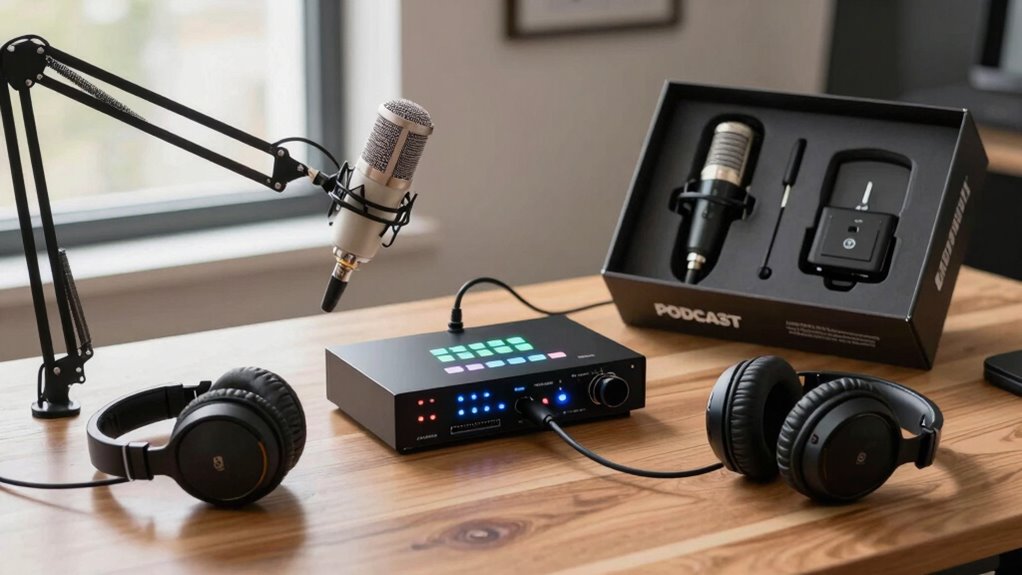
Many people jump into buying podcast starter bundles without understanding the proper order, often ending up with equipment or software they don’t need or won’t use. This approach can lead to frustration, wasted money, and subpar audio quality. Instead, you should focus on your priorities first—mainly, what kind of sound you want to produce and how much you’re willing to spend. Starting with this perspective helps you make smarter choices, especially regarding budget considerations. When you understand your budget, you can choose the right microphone and interface to match your goals without overspending on unnecessary features.
A common mistake is buying a microphone and interface before considering sound quality and your recording environment. Many assume that a more expensive setup automatically means better audio quality, but that’s not always true. The key is matching your equipment to your intended use and space. For example, if you record in a quiet, treated room, you might get away with a simple USB microphone. If you record in a noisy or untreated space, investing in a dedicated microphone with an audio interface that offers good noise reduction and preamp quality becomes essential. By focusing on your environment and desired audio quality, you make smarter, more cost-effective choices. Additionally, understanding audio quality fundamentals can help you better assess what gear is necessary for your setup.
Match your microphone and interface to your recording environment for better sound quality and cost-effective setup.
When choosing your microphone, think about your recording style. Do you need a condenser mic to capture detailed sound, or a dynamic mic to block out background noise? Your choice impacts your audio quality considerably. Next, consider an interface that matches your microphone’s connection type and provides clean, reliable sound conversion. Many beginners buy an interface that’s too advanced or unnecessary for their setup, which can lead to confusion and added expense. Focus on a simple, well-reviewed interface that offers good preamps and enough inputs for your needs. This way, you optimize your audio quality without overspending.
Finally, don’t forget that your audio quality depends heavily on proper setup and environment, not just the gear. Invest time in learning how to position your microphone properly, reduce background noise, and use basic sound treatment if needed. You can also explore sound treatment techniques to improve your recording space without costly renovations. Once you understand what’s necessary for your specific situation, you can avoid the trap of buying gear backward—thinking that a fancy microphone and interface alone will fix everything. Instead, prioritize your goals, environment, and budget considerations first. This approach leads to better-sounding podcasts, less wasted money, and a more enjoyable recording experience.
best podcast microphone for beginners
As an affiliate, we earn on qualifying purchases.
As an affiliate, we earn on qualifying purchases.
Frequently Asked Questions
How Do I Choose the Right Microphone for My Podcast?
To choose the right microphone for your podcast, consider microphone types like dynamic or condenser, which suit different environments. Dynamic mics are great for noisy settings, while condensers capture more detail. Also, prioritize a pop filter, as it reduces plosive sounds and improves audio quality. Test different options, and pick one that offers clear sound, suits your recording space, and fits your budget for the best podcasting experience.
What Features Should I Look for in an Audio Interface?
Imagine you’re recording your podcast, and there’s a frustrating delay between speaking and hearing your voice—that’s audio latency. Look for an interface that minimizes latency and offers phantom power, essential for condenser mics. For example, a good interface with low latency and phantom power guarantees clear sound without delay. These features help you capture professional-quality audio effortlessly, making your podcast sound polished and engaging.
Is a Headset Better Than Studio Monitors for Podcasting?
A headset can be better for podcasting if you prioritize headphone comfort and convenience, especially for long recording sessions. It offers integrated microphone placement, making setup simpler and reducing background noise. However, studio monitors provide clearer sound quality, essential for editing. Consider your needs: if mobility and comfort are key, go for a quality headset; if precise audio editing matters most, studio monitors are the better choice.
How Important Is Soundproofing in a Home Studio Setup?
Soundproofing is essential in a home studio, as it keeps unwanted noise from sneaking in and ruining your recordings. You need to prioritize soundproofing techniques and acoustic treatments to create a focused environment. Without proper soundproofing, you’ll be fighting an uphill battle, and your audio quality will suffer. Investing in good soundproofing guarantees your voice stays clear and professional, making your podcast stand out from the crowd.
What Software Is Recommended for Editing Podcast Audio?
You should try software like Audacity or Adobe Audition for editing podcast audio. They let you add background music and sound effects seamlessly, enhancing your show’s quality. Audacity is free and beginner-friendly, while Adobe Audition offers advanced features. With these tools, you can easily cut, mix, and improve audio, ensuring your podcast sounds professional and engaging. Adding background music and sound effects helps create an enthralling listening experience.
As an affiliate, we earn on qualifying purchases.
Conclusion
Think of buying podcast gear like planting a garden. If you start with the right seeds—your mic and interface—you set the stage for a thriving, beautiful bloom. But if you jump straight to the watering can, you might end up overwhelmed or stunted. So, choose your tools wisely, and nurture your setup step by step. With patience and the right foundation, your podcast can flourish into something truly vibrant and rewarding.
USB vs XLR microphone for podcast
As an affiliate, we earn on qualifying purchases.
As an affiliate, we earn on qualifying purchases.
noise reducing microphone for recording
As an affiliate, we earn on qualifying purchases.
As an affiliate, we earn on qualifying purchases.
Halloween Picks
halloween
As an affiliate, we earn on qualifying purchases.