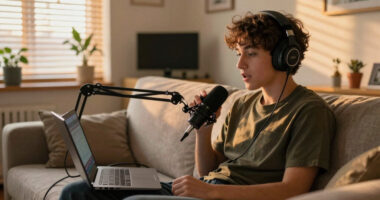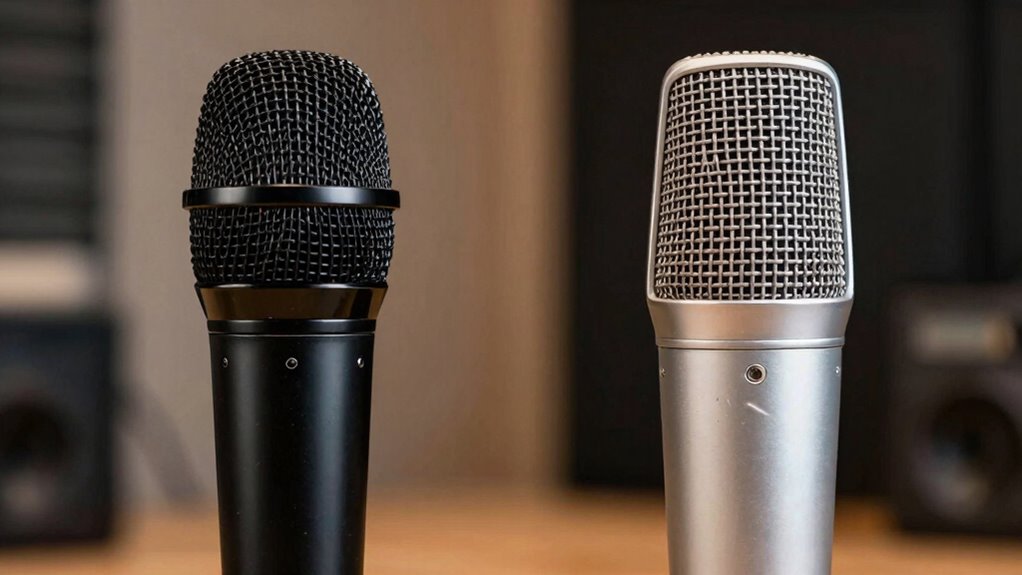

Dynamic microphones are rugged, affordable, and handle loud sounds well, making them ideal for live performances and rough environments. They focus on louder sources and don’t require external power, but they offer a more limited frequency response. Condenser microphones are more sensitive, capturing subtle details and a broader range of sounds, perfect for studio work. They tend to be more fragile and expensive. If you’re curious about how these differences affect your setup, you’ll find useful details ahead.

Get the latest gadgets delivered free with Prime
- Fast, free delivery on millions of items
- Prime Video, Amazon Music and more included
- Member-only deals all year
Key Takeaways
- Dynamic microphones are rugged, durable, and ideal for live performances, while condensers are more fragile but offer detailed studio recordings.
- Condenser mics provide broader frequency response and capture subtle nuances, unlike dynamic mics which focus on louder sounds.
- Dynamic mics do not require external power, whereas condensers need phantom power or external sources.
- Cost-wise, dynamic microphones are generally more affordable and easier to maintain than condensers.
- Each type is suited to different environments: dynamic for rough, loud settings; condensers for controlled, detailed recordings.
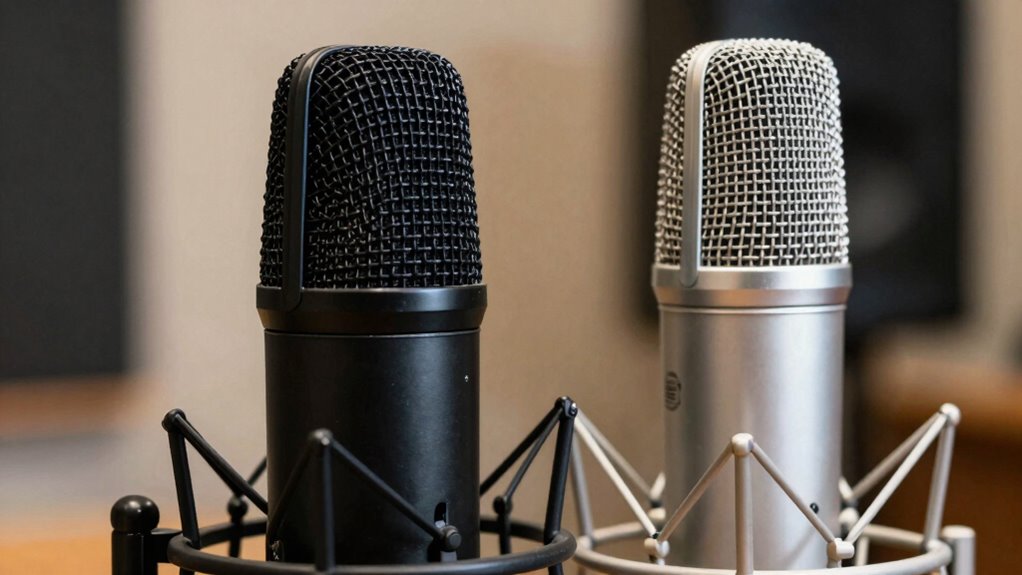
When choosing the right microphone for your audio needs, understanding the key differences between dynamic and condenser microphones is essential. Both types serve different purposes and excel in specific scenarios. If you’re aiming for a vintage sound or preparing for a live performance, knowing which microphone to pick can make a noticeable difference in your final result. Dynamic microphones are rugged, simple, and designed to handle loud sounds without distortion. They’re often used in live settings because they can withstand rough handling and high sound pressure levels. Their durability makes them ideal for vocalists with powerful voices or for capturing instruments like drums and guitar amps. When you’re performing live, you want a microphone that can take the abuse of frequent movement and still deliver clear sound. Dynamic mics tend to have a limited frequency response compared to condensers, which gives them a more focused, sometimes “vintage” tone, especially when used on certain vocals or instruments. This vintage sound can add character and warmth, making them a popular choice for live setups where a classic, nostalgic vibe is desired. Additionally, their simple design often makes them more accessible for beginners and easier to maintain over time. The cost-effectiveness of dynamic microphones also makes them a practical option for many users new to audio recording or performance.
Condenser microphones, on the other hand, are more sensitive and provide a broader frequency response. They excel in capturing subtle details and nuances, making them the go-to option for studio recordings, vocals, and acoustic instruments. If your goal is to reproduce sounds precisely and with depth, condensers are usually the better choice. They require external power, like phantom power, and are less durable in rough environments, which is why they’re less favored for live performances. That said, their ability to pick up delicate sounds helps create a more natural and transparent reproduction of the source. When recording vocals or acoustic instruments, condensers can capture the full richness and complexity, which contributes to a more polished and professional sound. Moreover, their broad frequency response allows for a detailed and accurate representation of audio sources, making them indispensable in professional recording settings.
best dynamic microphones for live performances
As an affiliate, we earn on qualifying purchases.
As an affiliate, we earn on qualifying purchases.
Frequently Asked Questions
How Do Microphone Polar Patterns Affect Recording Quality?
Your microphone’s polar pattern directly impacts recording quality by controlling pickup pattern accuracy and polar pattern versatility. Cardioid patterns focus on sound sources in front, reducing background noise, while omnidirectional patterns pick up sound equally from all directions, ideal for ambient recordings. Adjusting the polar pattern lets you tailor your mic’s sensitivity, ensuring clearer recordings with less unwanted noise. Choosing the right pattern enhances clarity and suits your recording environment.
What Maintenance Is Required for Condenser Microphones?
Oh, the joy of maintaining a condenser microphone! You’ll want to keep it clean and dry, avoiding dust and moisture that can harm its delicate components. Regularly check its compatibility with accessories like pop filters or shock mounts to guarantee durability. It’s not rocket science—just gentle handling and occasional cleaning. With proper care, your condenser mic stays reliable, offering great sound and lasting durability, despite the fragile reputation it sometimes gets.
Can Dynamic Mics Handle High Sound Pressure Levels?
Yes, dynamic microphones can handle high sound pressure levels, making them ideal for live performances. They excel at capturing vocal clarity even in loud environments, as they are less sensitive to volume peaks. This durability and high SPL capacity guarantee your vocals stay clear without distortion, providing reliable sound reinforcement during energetic shows. So, if you need a mic that can handle loud vocals without sacrificing clarity, dynamic mics are a solid choice.
Are There Specific Environments Better Suited for Each Mic Type?
You’ll find dynamic mics ideal for live performances because they handle high sound pressure levels and reduce background noise, ensuring vocal clarity even in loud environments. Condenser mics excel in studio settings where capturing nuanced sound details is essential, but they’re less suitable for live use due to their sensitivity. For the best vocal clarity in live settings, choose a dynamic mic, while condensers work better in controlled studio environments.
How Do Budget Constraints Influence Microphone Choice?
Budget limitations considerably influence your microphone choice. If affordability is a priority, you’ll likely lean toward dynamic microphones, which tend to be more budget-friendly and durable. Condenser mics, while offering higher quality, often come with a higher price tag and additional requirements like phantom power. Consider your specific needs and environment to find a microphone that balances affordability with performance, ensuring you get the best value within your budget constraints.
condenser studio microphone for vocals
As an affiliate, we earn on qualifying purchases.
As an affiliate, we earn on qualifying purchases.
Conclusion
In the world of microphones, choosing between dynamic and condenser is about matching your needs. Dynamic mics deliver durability and directness, perfect for powerful performances. Condenser mics offer clarity and nuance, ideal for capturing detail. Decide based on your environment and expectations. Whether you prefer the rugged reliability or the refined finesse, remember: your choice shapes your sound. So, step confidently into your studio or stage, and let your mic make the magic.
affordable handheld dynamic microphone
As an affiliate, we earn on qualifying purchases.
As an affiliate, we earn on qualifying purchases.
professional condenser microphone for recording
As an affiliate, we earn on qualifying purchases.
As an affiliate, we earn on qualifying purchases.
Halloween Picks
halloween
As an affiliate, we earn on qualifying purchases.