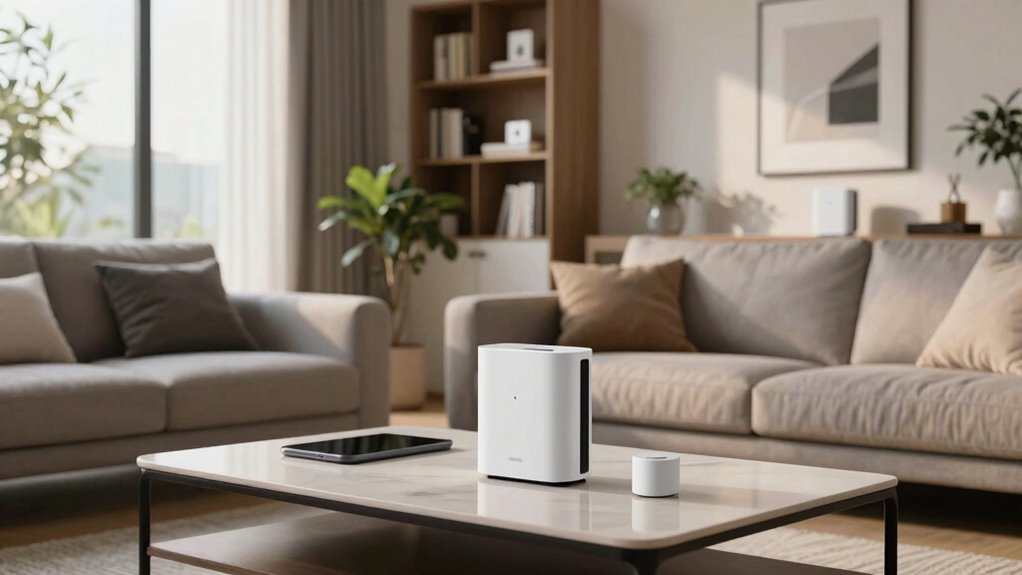

The hidden decider when choosing a mesh Wi-Fi system for large homes is how well it manages interference and integrates with your smart devices. Look for systems with advanced algorithms that reroute traffic, support for Wi-Fi 6, and interference-resistant design to maintain a stable connection. compatibility with your existing gadgets and security features are also key. If you want to discover more about selecting the best mesh system for your space, keep exploring the details.

Get the latest gadgets delivered free with Prime
- Fast, free delivery on millions of items
- Prime Video, Amazon Music and more included
- Member-only deals all year
Key Takeaways
- Compatibility with existing smart home devices ensures seamless integration and reduces setup hassles.
- Support for Wi-Fi 6 enhances speed and capacity for multiple connected devices.
- Advanced interference management features maintain stable connections amid thick walls and multiple gadgets.
- Dynamic channel selection and intelligent traffic rerouting improve reliability and reduce dead zones.
- Robust security features protect connected devices from cyber threats in large, complex environments.
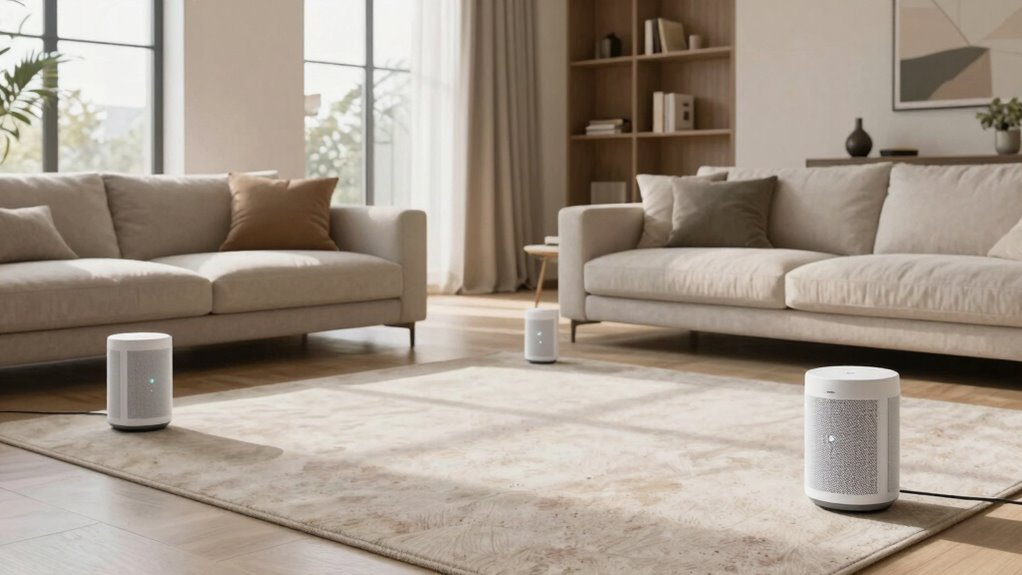
If you live in a large home, traditional Wi-Fi routers often struggle to provide reliable coverage across every room. You’ve probably experienced dead zones or buffering when streaming or gaming, which can be frustrating. That’s where a mesh Wi-Fi system can make a difference, but choosing the right one isn’t just about brand or price. The real decider is understanding how well it handles Smart Home Integration and Signal Interference.
Smart Home devices are becoming more common, and your Wi-Fi system needs to support them seamlessly. A good mesh system should easily connect with your smart lights, thermostats, security cameras, and voice assistants without constant disconnects or slowdowns. Check whether the system offers robust compatibility with your existing devices and supports the latest standards like Wi-Fi 6, which enhances speed and capacity for multiple gadgets. This integration ensures that your smart home runs smoothly, without you having to constantly troubleshoot connectivity issues. Additionally, a system with advanced security features can help protect your connected devices from cyber threats.
A reliable mesh system seamlessly connects your smart devices, ensuring smooth operation and reducing connectivity issues throughout your home.
Signal Interference can be a major obstacle, especially in large homes filled with thick walls, metal appliances, or multiple wireless devices operating on the same frequency. Some mesh systems are better than others at minimizing this interference. Look for models that support dual-band or tri-band technology, which can automatically switch between frequencies to avoid congestion. Also, consider whether the system offers features like dynamic channel selection, which helps it avoid crowded channels and maintain a stable connection throughout your home. An interference-resistant design is crucial for maintaining consistent performance in challenging environments.
The hidden factor often overlooked is how the mesh system manages these potential issues behind the scenes. A system with advanced algorithms can intelligently reroute traffic, avoiding interference and congestion caused by other devices or structural barriers. This means fewer dead zones, faster speeds, and a more reliable connection for all your devices, including those critical smart home components. Additionally, interference-resistant technology is essential for maintaining consistent performance in complex environments. Understanding how these interference mitigation features work can help you choose a system that stays reliable even in challenging conditions. To further enhance your network’s resilience, many systems also include real-time diagnostics that monitor network health and suggest optimizations.
Products Worth Considering

Bose Smart Ultra Dolby Atmos Soundbar

LG UltraGear 27-Inch QHD OLED Gaming Monitor, 240Hz, 0.03ms, G-SYNC Compatible, FreeSync Premium Pro, HDMI 2.1, Black

Samsung Galaxy Tab A11+ 11-Inch Tablet, 6GB RAM, 128GB Storage, Expandable, Gray
As an affiliate, we earn on qualifying purchases.
Frequently Asked Questions
How Do Mesh Wi-Fi Systems Handle Network Security?
Mesh Wi-Fi systems handle network security by using strong network encryption like WPA3, which protects your data from hackers. They often include parental controls, allowing you to manage internet access for different devices, keeping your family safe. You can also set up guest networks to isolate visitors from your main devices. Regular firmware updates further enhance security, ensuring your system stays protected against new threats.
Can Mesh Wi-Fi Systems Be Expanded After Initial Setup?
Yes, mesh Wi-Fi systems are designed to be expanded after initial setup. You can add additional nodes or devices to improve coverage, provided they’re compatible with your existing system. Check device compatibility before purchasing new units, and expect minimal installation complexity, often just plugging in and syncing new nodes. This flexibility allows you to tailor your network to your home’s needs, ensuring seamless connectivity across large spaces.
What Is the Typical Lifespan of a Mesh Wi-Fi System?
A typical mesh Wi-Fi system lasts about 3 to 5 years, but its lifespan depends on how well you maintain it. Regular firmware updates keep your system secure and improve performance, extending its longevity. Staying updated with the latest wireless standards guarantees compatibility with new devices and better speeds. Over time, hardware may become outdated, but proper care and updates can maximize your system’s lifespan and performance for years.
Do Mesh Systems Support Multiple Device Connections Simultaneously?
Surprisingly, mesh systems support multiple device connections simultaneously, making you think they’re magical. In reality, they’re designed for device compatibility and extensive signal range, so your gadgets can connect without a hitch. Whether you’ve got a handful of smartphones, smart home devices, or streaming gear, a good mesh Wi-Fi system manages them all, ensuring smooth performance across your large home. Irony aside, they handle your busy network effortlessly.
Are There Specific Brands Better Suited for Large Homes?
Yes, brands like Netgear, Eero, and Asus are better suited for large homes because of their reliability and coverage optimization. These brands offer mesh systems designed to handle extensive spaces and multiple devices simultaneously, ensuring consistent performance. You’ll find their systems often include advanced features like easy setup and scalable coverage, making them ideal choices for large households seeking dependable Wi-Fi connectivity across every corner.
Conclusion
So, next time you’re dazzled by those shiny mesh Wi-Fi systems, remember the real decider isn’t just the coverage or the price—it’s how well they hide the fact that even the best can stumble in large, complex homes. Ironically, the more you invest in seamless connectivity, the more you’ll appreciate the simple truth: sometimes, the best signal comes from the least flashy, most humble setup. Who knew that hiding the decider would be the cleverest move of all?