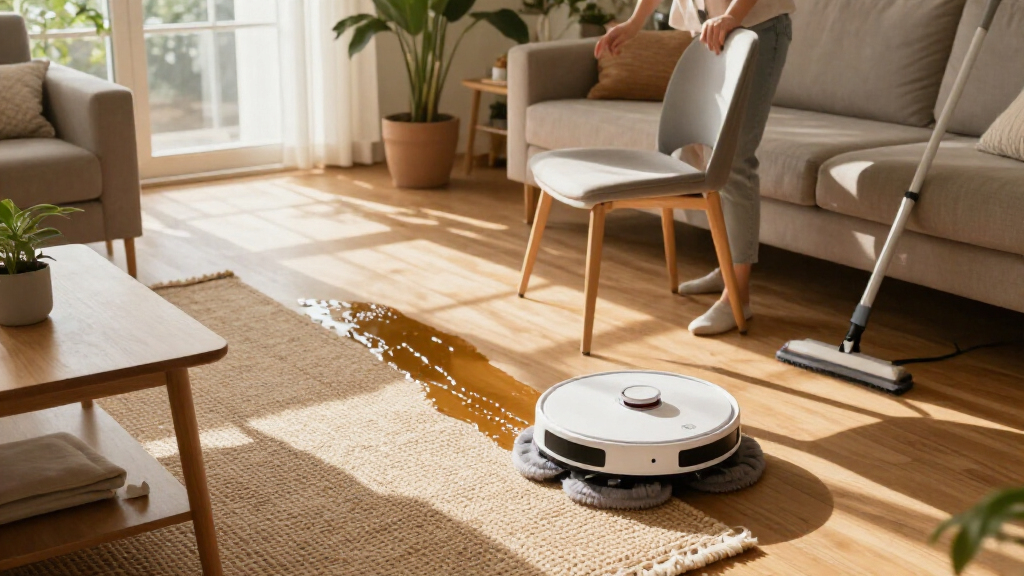

Choosing the right robot vacuum and mop combos can be difficult given the sheer volume of models claiming to offer hands-free cleaning. My top recommendation is the iRobot Roomba Plus 415X for its seamless integration of vacuuming and mopping with minimal user intervention, though the Roborock Q7 M5+ offers superior navigation for complex layouts. The main tradeoff in this category lies between automation level and upfront cost; higher-end models handle dirt disposal and mop washing automatically, while budget options require frequent manual cleaning. Below, I break down the specific strengths and weaknesses of each model to help you decide which device fits your home’s unique needs.

Get the latest gadgets delivered free with Prime
- Fast, free delivery on millions of items
- Prime Video, Amazon Music and more included
- Member-only deals all year
Complete the kit



Key Takeaways
- Models with self-washing docks, like the Roomba Plus 415X, significantly reduce the weekly maintenance burden compared to manual wash models, but they require more floor space for the dock.
- Suction power alone does not dictate cleaning performance; Roborock and Dreame models often outperform higher-Pa rivals due to superior LiDAR mapping and obstacle avoidance algorithms.
- Entry-level combos under the $300 threshold, such as the Tikom G8000 Max, typically lack advanced obstacle avoidance, making them suitable only for open, clutter-free rooms.
- The iRobot ecosystem offers the best app stability and reliability for long-term use, whereas some newer brands offer better hardware specs but suffer from inconsistent firmware updates.
- For homes with mixed hard floors and high-pile rugs, models with auto-lifting mops are non-negotiable to prevent wetting carpets, a feature missing in many budget-friendly picks.
| iRobot Roomba Plus 415X Robot Vacuum and Mop Combo with AutoWash Dock |  | Best Overall | Suction Power: 20,000 Pa | Dock Features: AutoWash (Empty, Wash, Heat Dry) | Debris Capacity: Up to 90 days | VIEW LATEST PRICE | See Our Full Breakdown |
| iRobot Roomba Plus 405 Combo Robot Vacuum and Mop with AutoWash Dock |  | Best Value Premium | Suction Power: 70x vs Roomba 600 series | Dock Features: AutoWash (Empty, Wash, Dry) | Debris Capacity: Up to 75 days | VIEW LATEST PRICE | See Our Full Breakdown |
| Roborock Q7 M5+ Robot Vacuum and Mop with Self-Emptying Dock |  | Best for Carpet-Heavy Homes | Suction Power: 10,000 Pa | Dust Bag Capacity: 2.7 L | Battery Life: 150 minutes | VIEW LATEST PRICE | See Our Full Breakdown |
| iRobot Roomba Plus 415 Robot Vacuum and Mop Combo |  | Best for Pet Hair Management | Suction Power: 2.8x vs Roomba Plus 405 | Dock Features: AutoWash with Water Refill | Brushes: Tangle-free Rubber + Edge Brushes | VIEW LATEST PRICE | See Our Full Breakdown |
| Tikom G8000 Max Robot Vacuum and Mop Combo |  | Best Budget Starter | Suction Power: 5000 Pa | Height: 2.99 inches | Battery Life: 150 minutes | VIEW LATEST PRICE | See Our Full Breakdown |
| Roborock Q7 L5 Robot Vacuum and Mop Combo |  | Best for Reliable Navigation on Mixed Surfaces | Suction power: 8,000 Pa | Navigation: LiDAR | Water tank capacity: 270 ml | VIEW LATEST PRICE | See Our Full Breakdown |
| eufy C28 Robot Vacuum Cleaner and Mop Combo, 15,000 Pa, HydroJet Roller Mop |  | Best for Hands-Free Maintenance | Suction power: 15,000 Pa | Special Features: Auto Mop Washing, HydroJet System | Dustbin Capacity: 3 liters (Station) | VIEW LATEST PRICE | See Our Full Breakdown |
| H6 Pro Robot Vacuum and Mop with 6000 Pa Suction and LiDAR Navigation |  | Best Value with Self-Emptying | Suction power: 6,000 Pa | Navigation: 360° LiDAR with multi-level mapping | Dust collection station capacity: 3 L | VIEW LATEST PRICE | See Our Full Breakdown |
| iRobot Roomba Plus 678 Robot Vacuum and Mop Combo with AutoWash Dock |  | Best Premium Cleaning Performance | Vacuum suction: Up to 30,000 Pa | AI pre-treatment spray: 40,000 Pa | Mop pressure: 15 N | VIEW LATEST PRICE | See Our Full Breakdown |
| ROPVACNIC S1 Robot Vacuum and Mop Combo, 5200 Pa |  | Best Budget Starter | Suction power: 5,200 Pa | Functions: Vacuuming and mopping | Water adjustment: Four-stage | VIEW LATEST PRICE | See Our Full Breakdown |
| Shark Stratos Robot Vacuum and Mop Combo with 60-Day Self-Emptying Base |  | Best for Hair Tangle Resistance | Suction/Mopping: Sonic scrubbing (100x/min) | Self-Empty Capacity: Up to 60 days | Water Refill Cycle: Up to 30 days | VIEW LATEST PRICE | See Our Full Breakdown |
| iRobot Roomba 105 Combo Robot Vacuum and Mop with AutoEmpty Dock |  | Best for Hands-Off Maintenance | AutoEmpty Capacity: Up to 75 days | Suction Power: 70X vs Roomba 600 | Mop Scrubbing: SmartScrub (2X deeper) | VIEW LATEST PRICE | See Our Full Breakdown |
| iRobot Roomba 115 Combo Robot Vacuum and Mop with AutoEmpty Dock |  | Best for Small to Mid-Sized Homes | Suction Power: 15,000 Pa | Coverage: Up to 900 sq ft | Dock Bag: 2.5 L | VIEW LATEST PRICE | See Our Full Breakdown |
| Roborock Qrevo S Pro Robot Vacuum and Mop |  | Best for Deep Mop Hygiene | Suction Power: 18,500 Pa | Dust Bag: 2.7 L | Mop Wash Temp: 167°F | VIEW LATEST PRICE | See Our Full Breakdown |
| DREAME D20 Air Plus Robot Vacuum and Mop |  | Best for Maximum Suction Power | Suction Power: 20,000 Pa | Dust Bag: 4 Liters | Storage Duration: Up to 120 days | VIEW LATEST PRICE | See Our Full Breakdown |
| robot vacuum and mop combo | Suction Power | Navigation | Battery Life |
|---|---|---|---|
| iRobot Roomba Plus 415X Robot | 20,000 Pa | LiDAR with Obstacle Recognition | — |
| iRobot Roomba Plus 405 Combo R | 70x vs Roomba 600 series | ClearView LiDAR | — |
| Roborock Q7 M5+ Robot Vacuum a | 10,000 Pa | PreciSense LiDAR | 150 minutes |
| iRobot Roomba Plus 415 Robot V | 2.8x vs Roomba Plus 405 | LiDAR + Obstacle Recognition | — |
| Tikom G8000 Max Robot Vacuum a | 5000 Pa | — | 150 minutes |
| Roborock Q7 L5 Robot Vacuum an | 8,000 Pa | LiDAR | 150 minutes |
| eufy C28 Robot Vacuum Cleaner | 15,000 Pa | — | 140 minutes |
| H6 Pro Robot Vacuum and Mop wi | 6,000 Pa | 360° LiDAR with multi-level mapping | — |
| iRobot Roomba Plus 678 Robot V | — | ClearView Pro Dual-Line LiDAR | — |
| ROPVACNIC S1 Robot Vacuum and | 5,200 Pa | — | 120 minutes |
| Shark Stratos Robot Vacuum and | — | 360° LiDAR | — |
| iRobot Roomba 105 Combo Robot | 70X vs Roomba 600 | ClearView LiDAR | — |
| iRobot Roomba 115 Combo Robot | 15,000 Pa | LiDAR | 173 minutes |
| Roborock Qrevo S Pro Robot Vac | 18,500 Pa | LiDAR | 180 minutes |
| DREAME D20 Air Plus Robot Vacu | 20,000 Pa | LiDAR | 150 minutes |
More Details on Our Top Picks
iRobot Roomba Plus 415X Robot Vacuum and Mop Combo with AutoWash Dock
This model stands out as the most complete package in the lineup, largely due to its AutoWash Dock which handles debris emptying, mop washing, and heat drying. While the Roborock Q7 M5+ offers strong suction, it lacks the automated mop maintenance that makes this Roomba significantly less demanding for daily use. The 20,000 Pa suction is robust enough for deep carpet cleaning, yet the 10 mm mop lift ensures rugs stay dry, a critical feature for mixed-floor homes. The tradeoff is the reliance on the specific dock ecosystem; if you prefer a standalone unit without bulky docks, this might feel excessive. However, for those who want a true ‘set it and forget it’ experience, the 90-day debris capacity and heated pad drying justify the footprint.
Pros:- Fully automated dock washes and heat-dries mop pads to prevent odors
- High 20,000 Pa suction handles pet hair and deep carpet debris effectively
- Smart mop lifting keeps rugs dry during combo cleaning runs
Cons:- Requires significant floor space for the large AutoWash dock
- Ongoing cost for proprietary mop pads and cleaning solutions
Best for: Busy households with mixed flooring who want minimal maintenance and automated mop hygiene.
Not ideal for: Renters with limited space or those who prefer manual mop control over automated washing systems.
- Suction Power:20,000 Pa
- Dock Features:AutoWash (Empty, Wash, Heat Dry)
- Debris Capacity:Up to 90 days
- Mop Lift Height:10 mm
- Navigation:LiDAR with Obstacle Recognition
- Brush Type:Tangle-free Rubber Brushes
- Drying Temp:113°F
Our verdict“This is the top pick for anyone prioritizing convenience and hygiene over manual intervention.”
iRobot Roomba Plus 405 Combo Robot Vacuum and Mop with AutoWash Dock
Sitting below the 415X in the Roomba hierarchy, the Plus 405 Combo offers the same AutoWash Dock convenience at a slightly less feature-heavy tier. It delivers 70x more suction than the legacy 600 series, which is substantial, but lacks the raw power of the 20,000 Pa found in the Roomba Plus 415X. The key differentiator here is the balance between cost and automation; you still get heat-dried mop pads and LiDAR mapping, avoiding the manual emptying required by simpler bots like the Tikom G8000 Max. It is an excellent choice for users who want the premium iRobot ecosystem without paying for the highest suction spec. The tradeoff is that while the navigation is smart, the suction may struggle with very thick pile carpets compared to its higher-priced sibling.
Pros:- Includes full AutoWash dock for hands-off mop and debris management
- LiDAR navigation provides accurate room mapping and targeted cleaning
- Adjustable suction levels allow for quieter operation on hard floors
Cons:- Lower suction power compared to the 415X model
- Dock capacity assumptions vary significantly with household size
Best for: Users who want automated mop washing and debris emptying but don’t need maximum suction power.
Not ideal for: Homes with thick shag carpets or heavy debris loads that require high-Pa suction.
- Suction Power:70x vs Roomba 600 series
- Dock Features:AutoWash (Empty, Wash, Dry)
- Debris Capacity:Up to 75 days
- Navigation:ClearView LiDAR
- Mop Type:DualClean Spinning Pads
- Suction Levels:4
- Mop Wash Capacity:Up to 4 weeks
Our verdict“A smart compromise that delivers premium automation features without the top-tier price tag.”
Roborock Q7 M5+ Robot Vacuum and Mop with Self-Emptying Dock
The Roborock Q7 M5+ focuses heavily on vacuuming performance, offering 10,000 Pa suction and a large 2.7-liter dust bag. Unlike the iRobot models, its dock only empties debris; it does not wash mop pads, meaning you must manually clean them after mopping sessions. This makes it less convenient than the Roomba Plus 415X for hybrid cleaning but potentially better for pure vacuuming power per dollar. The LiDAR navigation is precise, and the anti-tangle brushes handle pet hair well. However, the 2.4 GHz Wi-Fi limitation can be a hurdle for modern mesh networks. It is a strong contender if you prioritize suction and dust capacity over automated mop hygiene.
Pros:- High 10,000 Pa suction effectively cleans carpets and rugs
- Large 2.7L dust bag allows for weeks of hands-free vacuuming
- PreciSense LiDAR ensures efficient and logical cleaning paths
Cons:- No mop pad washing or drying in the dock
- App connectivity is restricted to 2.4 GHz Wi-Fi networks
Best for: Pet owners with mostly carpeted floors who need high suction and infrequent dust emptying.
Not ideal for: Users with extensive hard floors who want automated mop pad washing and drying.
- Suction Power:10,000 Pa
- Dust Bag Capacity:2.7 L
- Battery Life:150 minutes
- Navigation:PreciSense LiDAR
- Mopping:Adjustable Water Flow
- Wi-Fi:2.4 GHz Only
- Brushes:Dual Anti-Tangle
Our verdict“Choose this for superior vacuuming power and dust capacity, accepting the manual mop maintenance.”
iRobot Roomba Plus 415 Robot Vacuum and Mop Combo
The Roomba Plus 415 sits between the 405 and 415X, offering 2.8x more suction than the 405 and the same AutoWash Dock capabilities. It features tangle-free rubber brushes and extending edge brushes, which are particularly effective for pet owners compared to the bristle brushes found in older models. While it shares the 10 mm mop lift and LiDAR navigation of the 415X, it lacks the highest suction rating. Compared to the Roborock Q7 M5+, the 415 provides automated mop washing, which is a significant hygiene advantage. The tradeoff is the premium price for a mid-range suction spec; however, the brush design and dock automation make it a reliable choice for homes with shedding pets.
Pros:- Specialized tangle-free rubber brushes minimize pet hair wrap
- AutoWash dock automates mop pad cleaning and heat drying
- Significant suction boost over the base Roomba Plus 405 model
Cons:- Suction power is lower than the top-tier 415X
- Dependent on iRobot’s proprietary dock consumables
Best for: Households with shedding pets that need automated mop cleaning and tangle-resistant brushes.
Not ideal for: Budget-conscious buyers who can manually wash mop pads and don’t mind lower suction.
- Suction Power:2.8x vs Roomba Plus 405
- Dock Features:AutoWash with Water Refill
- Brushes:Tangle-free Rubber + Edge Brushes
- Mop Lift:10 mm
- Navigation:LiDAR + Obstacle Recognition
- Drying Temp:113°F
- Cleaning Modes:Vacuum, Mop, Combo, Sequential
Our verdict“An excellent pet-focused option that balances suction upgrades with full dock automation.”
Tikom G8000 Max Robot Vacuum and Mop Combo
The Tikom G8000 Max is the most affordable entry in this list, offering 5000 Pa suction and a slim 2.99-inch profile. Unlike the iRobot and Roborock models, it uses a simple dustbin and water tank system, requiring manual emptying and refilling. This makes it a poor choice for large homes compared to the Roborock Q7 M5+‘s self-emptying dock. However, its low height allows it to clean under furniture that taller robots might miss. The 45 dB noise level is also quieter than many high-power competitors. It is ideal for small apartments or secondary homes where budget and simplicity outweigh the need for advanced automation or high suction power.
Pros:- Slim 2.99-inch height fits under low furniture
- Quiet 45 dB operation suitable for daytime cleaning
- Low upfront cost compared to premium self-emptying models
Cons:- No self-emptying or self-washing dock; requires manual maintenance
- Lower 5000 Pa suction struggles with deep carpet debris
Best for: Small apartment dwellers or first-time robot vacuum users on a strict budget.
Not ideal for: Large homes or those with thick carpets, as the 5000 Pa suction and small bin are limiting.
- Suction Power:5000 Pa
- Height:2.99 inches
- Battery Life:150 minutes
- Dustbin Capacity:450 ml
- Water Tank:300 ml
- Noise Level:45 dB
- Filter:HEPA
Our verdict“A functional, low-cost starter robot for small spaces where manual maintenance is acceptable.”
Roborock Q7 L5 Robot Vacuum and Mop Combo
This model stands out for its 8,000 Pa suction and proven LiDAR navigation, which delivers consistent mapping across multiple floors. Unlike the iRobot Roomba Plus 678, which focuses heavily on heated mop washing, the Roborock Q7 L5 prioritizes efficient vacuuming and simultaneous mopping without requiring a massive dock footprint. The anti-tangle brushes are a practical choice for households with shedding pets, reducing the maintenance frequency compared to standard bristle designs. However, the 270 ml water tank is modest, meaning it may struggle with large open-plan areas requiring heavy mopping. It also limits connectivity to 2.4 GHz Wi-Fi, which can be a hurdle for homes with modern mesh networks that default to 5 GHz. This is a solid, no-nonsense option for those who value navigation accuracy over advanced mop maintenance.
Pros:- Strong 8,000 Pa suction handles dust and pet hair effectively.
- LiDAR navigation provides accurate multi-floor mapping.
- Simultaneous vacuuming and mopping saves time.
- Anti-tangle brushes reduce manual brush cleaning.
Cons:- Small 270 ml water tank requires frequent refills for large areas.
- Connectivity is limited to 2.4 GHz Wi-Fi bands.
- Integrated tank design can make cleaning the components slightly more tedious.
Best for: Users with multi-level homes who need reliable mapping and moderate mopping without a bulky base station.
Not ideal for: Owners of large single-story homes who need extended mopping coverage or those with 5 GHz-only Wi-Fi networks.
- Suction power:8,000 Pa
- Navigation:LiDAR
- Water tank capacity:270 ml
- Battery life:150 minutes
- Noise level:60 dB
- Wi-Fi:2.4 GHz only
- Surface recommendations:Carpet, laminate, tile, vinyl, wood, marble
Our verdict“This pick makes the most sense for buyers prioritizing smart navigation and dual-function cleaning over heavy-duty mop maintenance.”
eufy C28 Robot Vacuum Cleaner and Mop Combo, 15,000 Pa, HydroJet Roller Mop
The eufy C28 redefines convenience with its HydroJet roller mop and all-in-one station that self-washes, dries, and empties debris for up to 75 days. Compared to the Roborock Q7 L5, which requires manual tank refills and brush cleaning, this model dramatically reduces user intervention. The 15,000 Pa suction is significantly higher than most competitors, making it better suited for deep-pile carpets where the H6 Pro might leave debris behind. However, the bulky auto-empty station demands significant floor space, a drawback for apartment dwellers. Additionally, while the DuoSpiral brush handles long hair well, the complexity of the self-cleaning system means more points of failure if the station clogs. This is ideal for those who want to forget about maintenance for weeks at a time.
Pros:- Self-washing and drying mop roller reduces manual cleaning.
- Auto-empty station handles up to 75 days of debris.
- 15,000 Pa suction provides deep cleaning on carpets.
- DuoSpiral brush effectively resists pet hair tangling.
Cons:- The auto-empty station is bulky and space-intensive.
- Complex self-cleaning mechanisms may require occasional troubleshooting.
- Battery life of 140 minutes is average for this power class.
Best for: Busy households with pets who want minimal daily interaction and have ample space for a large dock.
Not ideal for: Residents of small apartments where floor space is at a premium.
- Suction power:15,000 Pa
- Special Features:Auto Mop Washing, HydroJet System
- Dustbin Capacity:3 liters (Station)
- Battery Life:140 minutes
- Cleaning Path Width:11.02 inches
- Control Method:App, Push Button, Voice
- Surface Recommendation:Hard floor, Wooden floor, Short wool carpet
Our verdict“This model is the best choice for users willing to sacrifice floor space for maximum hands-off cleaning automation.”
H6 Pro Robot Vacuum and Mop with 6000 Pa Suction and LiDAR Navigation
This option stands out for offering a 3 L self-emptying station at a price point that typically excludes such features. While the 6,000 Pa suction is lower than the eufy C28’s 15,000 Pa, it remains sufficient for daily maintenance on hard floors and low-pile carpets. The LiDAR navigation ensures efficient pathing, unlike basic random-movement bots. However, the 250 ml robot dustbin and 310 ml water tank are small, requiring frequent robot-side checks if the self-empty cycle fails or if mopping large areas. Compared to the ROPVACNIC S1, it offers superior navigation and auto-empty convenience, but lacks the raw power of premium models. It is a balanced entry into automated cleaning for those who want self-emptying without the premium price tag.
Pros:- Includes a self-emptying station for extended hands-free use.
- LiDAR navigation provides accurate multi-floor mapping.
- Combines sweeping, vacuuming, and mopping functions.
- Supports app scheduling and no-go zones.
Cons:- 6,000 Pa suction is modest for deep cleaning carpets.
- Small onboard dustbin and water tank limits single-run efficiency.
- Self-empty claim may vary significantly based on daily debris volume.
Best for: Budget-conscious buyers who want self-emptying convenience and reliable navigation without paying for premium suction.
Not ideal for: Owners of thick shag carpets or homes with heavy debris that require high suction power.
- Suction power:6,000 Pa
- Navigation:360° LiDAR with multi-level mapping
- Dust collection station capacity:3 L
- Robot dustbin capacity:250 ml
- Water tank capacity:310 ml
- Runtime:Up to 150 minutes
- Voice assistant compatibility:Alexa and Google Assistant
Our verdict“This pick offers the best balance of automated convenience and navigation accuracy for mid-range budgets.”
iRobot Roomba Plus 678 Robot Vacuum and Mop Combo with AutoWash Dock
The iRobot Roomba Plus 678 represents the high end of this category, featuring 30,000 Pa suction and an AI pre-treatment spray system. Unlike the Roborock Q7 L5, which relies on passive mopping, this model uses heated roller scrubbing and pressurized spray to tackle dried-on stains. The AutoWash dock uses hot water and heated air to sanitize the mop, a feature absent in most competitors. However, the lack of specified battery life is a notable omission for a premium device, and the complexity of the AI obstacle detection may require initial calibration time. It also lacks the explicit multi-floor mapping details found in the H6 Pro, focusing instead on per-floor optimization. This is for those who demand the highest level of hygiene and stain removal, regardless of cost or complexity.
Pros:- 30,000 Pa suction and AI pre-treatment spray target stubborn stains.
- Heated roller washing and drying in the dock ensures hygiene.
- PrecisionVision AI obstacle avoidance adapts to dynamic environments.
- Automatic mop lifting prevents carpet wetness.
Cons:- Battery life and charging time specifications are not provided.
- High complexity may lead to a steeper learning curve.
- Premium pricing structure compared to value-focused alternatives.
Best for: Users seeking maximum stain removal capabilities and automated sanitization for high-traffic or pet-heavy homes.
Not ideal for: Buyers on a tight budget or those who prefer simple, low-maintenance devices without complex AI features.
- Vacuum suction:Up to 30,000 Pa
- AI pre-treatment spray:40,000 Pa
- Mop pressure:15 N
- Dock roller wash:176°F hot water
- Navigation:ClearView Pro Dual-Line LiDAR
- Obstacle avoidance:PrecisionVision AI
- Threshold clearance:Up to 3.5 cm
Our verdict“This model is the definitive choice for those who prioritize deep stain removal and automated mop sanitization above all else.”
ROPVACNIC S1 Robot Vacuum and Mop Combo, 5200 Pa
This entry-level option provides basic vacuum and mop functionality with 5,200 Pa suction, suitable for light daily maintenance. Compared to the H6 Pro, it lacks LiDAR navigation and a self-emptying station, relying instead on obstacle sensing and random-path algorithms that may be less efficient in large rooms. The four-stage water adjustment is a useful feature for protecting delicate wood floors, a control level often missing in cheaper bots. However, the 120-minute battery life is the shortest in this lineup, limiting its coverage area per charge. It is strictly recommended for low-pile carpets and hard floors, making it unsuitable for homes with thick rugs. This is a pragmatic choice for students or small apartment dwellers who need basic cleaning without the premium price or tech.
Pros:- Adjustable water flow protects sensitive flooring.
- Brushless design and side brushes handle light pet hair.
- Simple control options via app, remote, and voice.
- Affordable entry point into robot vacuuming.
Cons:- Lacks LiDAR navigation, leading to less efficient cleaning paths.
- Short 120-minute battery life limits coverage area.
- Limited suction power struggles with embedded debris or thick carpets.
Best for: First-time robot vacuum buyers with small, mostly hard-floor apartments and limited budgets.
Not ideal for: Homes with thick carpets, large areas, or users who require precise navigation and auto-emptying.
- Suction power:5,200 Pa
- Functions:Vacuuming and mopping
- Water adjustment:Four-stage
- Battery life:120 minutes
- Control options:App, remote, touchpad, voice
- Surface recommendation:Hardwood floors, low-pile carpets
- Filter type:Multi-layer high-efficiency filtration
Our verdict“This model serves as a functional, low-cost entry point for users with simple cleaning needs and small living spaces.”
Shark Stratos Robot Vacuum and Mop Combo with 60-Day Self-Emptying Base
This model stands out for its self-cleaning brushroll, a feature that directly addresses the most common frustration with robot vacuums: hair wrap. While the Roborock Qrevo S Pro also offers anti-tangle technology, Shark’s specific brushroll design is engineered to cut hair as it collects, reducing maintenance frequency significantly. The 60-day self-emptying base is convenient, though the 30-day water refill cycle means you will need to top up the tank more often than you empty the dust bin. Compared to the iRobot Roomba 105, the Shark offers more robust sonic scrubbing, making it better suited for stuck-on messes on hard floors. However, the requirement to manually set carpet zones in the app for vacuum-only cleaning adds a layer of setup complexity that some users may find tedious.
Pros:- Self-cleaning brushroll actively reduces hair wrap on the main brush.
- Sonic scrubbing provides aggressive cleaning for hard floors.
- HEPA filtration with Anti-Allergen Complete Seal captures fine particles.
- LiDAR navigation maps rooms accurately for targeted cleaning.
Cons:- Water tank requires refilling every 30 days, which is more frequent than some competitors.
- Carpet avoidance during mopping requires manual zone setting in the app.
- Base is bulky and may require significant floor space.
Best for: Households with long-haired residents or shedding pets who want to minimize manual brush cleaning.
Not ideal for: Users who prefer a completely hands-off water system; the monthly refill requirement is frequent.
- Suction/Mopping:Sonic scrubbing (100x/min)
- Self-Empty Capacity:Up to 60 days
- Water Refill Cycle:Up to 30 days
- Navigation:360° LiDAR
- Filtration:HEPA with Anti-Allergen Seal
- Control:App, Alexa, Google Voice
- Surfaces:Carpet and Hard Floors
Our verdict“This pick is ideal for those who prioritize low-maintenance brush care and powerful scrubbing over fully automated water management.”
iRobot Roomba 105 Combo Robot Vacuum and Mop with AutoEmpty Dock
The Roomba 105 distinguishes itself with a 75-day AutoEmpty Dock, offering longer intervals between dust bin changes than the Shark Stratos. This makes it a strong contender for users who dislike frequent maintenance tasks. Its SmartScrub technology provides double the scrubbing power of standard mop modes, ensuring hard floors are genuinely cleaned rather than just dampened. However, the reliance on a 2.4 GHz Wi-Fi network can be a hurdle for modern homes with mesh networks that default to 5 GHz. While the Roborock Qrevo S Pro offers more advanced mop washing at high temperatures, the Roomba’s simplicity and reliable carpet detection make it a safer bet for mixed-floor homes where rug protection is a priority.
Pros:- AutoEmpty Dock holds up to 75 days of debris.
- SmartScrub delivers deep cleaning on hard surfaces.
- Effective carpet detection prevents rugs from getting wet.
- Intuitive app interface with clear scheduling options.
Cons:- Strictly requires a 2.4 GHz Wi-Fi network for initial setup.
- Limited to iRobot-branded cleaning solutions.
- Mop pad is not washed automatically by the dock.
Best for: Busy professionals who prioritize long-term autonomy and reliable carpet protection over advanced mop features.
Not ideal for: Tech enthusiasts with complex Wi-Fi setups; the 2.4 GHz requirement can cause connection issues.
- AutoEmpty Capacity:Up to 75 days
- Suction Power:70X vs Roomba 600
- Mop Scrubbing:SmartScrub (2X deeper)
- Navigation:ClearView LiDAR
- Wi-Fi:2.4 GHz only
- Modes:Vacuum, Mop, Combo
- Edge Cleaning:20% better vs 600 series
Our verdict“This model is best for those who want a reliable, low-maintenance cleaner that keeps carpets dry and dust bins full for months.”
iRobot Roomba 115 Combo Robot Vacuum and Mop with AutoEmpty Dock
The Roomba 115 offers a compact footprint and a 2.5 L dock bag that supports up to three months of hands-free emptying, surpassing the Roomba 105 in dust capacity. With 15,000 Pa suction, it handles debris effectively, though its 900 sq ft coverage per charge limits its appeal for larger, open-concept spaces. Compared to the DREAME D20 Air Plus, which boasts higher suction and a larger dust bag, the Roomba 115 focuses on consistent, reliable cleaning rather than raw power. The No Mop Zones feature is intuitive and effective for protecting rugs. However, the need to replace filters and brushes every 3–6 months adds ongoing costs that should be factored into the long-term value proposition.
Pros:- AutoEmpty dock bag holds 2.5 L, lasting up to 3 months.
- 15,000 Pa suction provides strong cleaning performance.
- No Mop Zones effectively protect carpets and rugs.
- Compact design fits easily under low furniture.
Cons:- Coverage is limited to 900 sq ft per charge.
- Filters and brushes require replacement every 3–6 months.
- Setup requires 2.4 GHz Wi-Fi.
Best for: Apartment dwellers or owners of homes under 1,000 sq ft who want maximum dust capacity in a compact unit.
Not ideal for: Large homes; the 900 sq ft coverage limit requires multiple charges for full cleaning.
- Suction Power:15,000 Pa
- Coverage:Up to 900 sq ft
- Dock Bag:2.5 L
- Battery Life:173 minutes
- Navigation:LiDAR
- Mop Pad:Washable Microfiber
- Wi-Fi:2.4 GHz
Our verdict“This is the smart choice for smaller homes where dust capacity and rug protection are more important than maximum suction power.”
Roborock Qrevo S Pro Robot Vacuum and Mop
The Roborock Qrevo S Pro leads this group in mop maintenance, thanks to its 167°F mop washing and warm-air drying, features absent in the iRobot Roomba 105. This high-temperature washing kills bacteria and prevents mildew smells, a common issue with standard mop robots. Its 18,500 Pa suction and 10 mm mop lifting ensure carpets stay dry and debris is lifted effectively. However, the 60 dB noise level is noticeable during operation, which might be disruptive in quiet environments. While the DREAME D20 Air Plus offers higher suction, the Roborock’s comprehensive dock functionality—handling dust, water, and mop hygiene—makes it the most complete all-in-one solution for users willing to pay for premium automation.
Pros:- Mops are washed at 167°F and dried with warm air.
- 18,500 Pa suction handles heavy debris effectively.
- 10 mm mop lifting prevents carpet wetness.
- Anti-tangle brush system minimizes hair wrap.
Cons:- Noise level of 60 dB can be disruptive.
- Supports only 2.4 GHz Wi-Fi.
- Dock is large and requires significant floor space.
Best for: Users who prioritize hygienic mop cleaning and want a fully automated dock that washes and dries pads.
Not ideal for: Noise-sensitive households; the 60 dB operating level is louder than many competitors.
- Suction Power:18,500 Pa
- Dust Bag:2.7 L
- Mop Wash Temp:167°F
- Mop Lift:10 mm
- Noise Level:60 dB
- Battery Life:180 minutes
- Navigation:LiDAR
Our verdict“This premium pick is for those who want the highest level of mop hygiene and are willing to accept a larger footprint and higher noise level.”
DREAME D20 Air Plus Robot Vacuum and Mop
The DREAME D20 Air Plus boasts 20,000 Pa suction, the highest in this lineup, making it formidable for deep-pile carpets and heavy debris. Its 4-liter dust bag supports up to 120 days of emptying, outperforming the Roomba 115 in capacity. However, it lacks the advanced mop washing capabilities of the Roborock Qrevo S Pro, meaning mop pads must be cleaned manually or with less frequent automation. The 150-minute battery life is decent but trails behind the Roborock’s 180 minutes. This model is best viewed as a vacuum-first device with mopping as a secondary function. Users seeking aggressive carpet cleaning and long-term dust storage will find it compelling, provided they are comfortable with manual mop maintenance.
Pros:- 20,000 Pa suction is the strongest in this group.
- 4-liter dust bag lasts up to 120 days.
- Anti-tangle brushes handle pet hair well.
- Adjustable water flow allows for customized mopping.
Cons:- No automatic mop washing or drying in the dock.
- Battery life of 150 minutes is average.
- Limited to 2.4 GHz Wi-Fi.
Best for: Owners of large, carpeted homes who need maximum suction power and minimal dust bin emptying.
Not ideal for: Users who want fully automated mop washing; the D20 lacks the high-temp cleaning of premium rivals.
- Suction Power:20,000 Pa
- Dust Bag:4 Liters
- Storage Duration:Up to 120 days
- Battery Life:150 minutes
- Navigation:LiDAR
- Wi-Fi:2.4 GHz only
- Surfaces:Carpet, Wood, Tile
Our verdict“This is the power user’s choice for maximum suction and dust capacity, ideal for those who can tolerate manual mop care.”
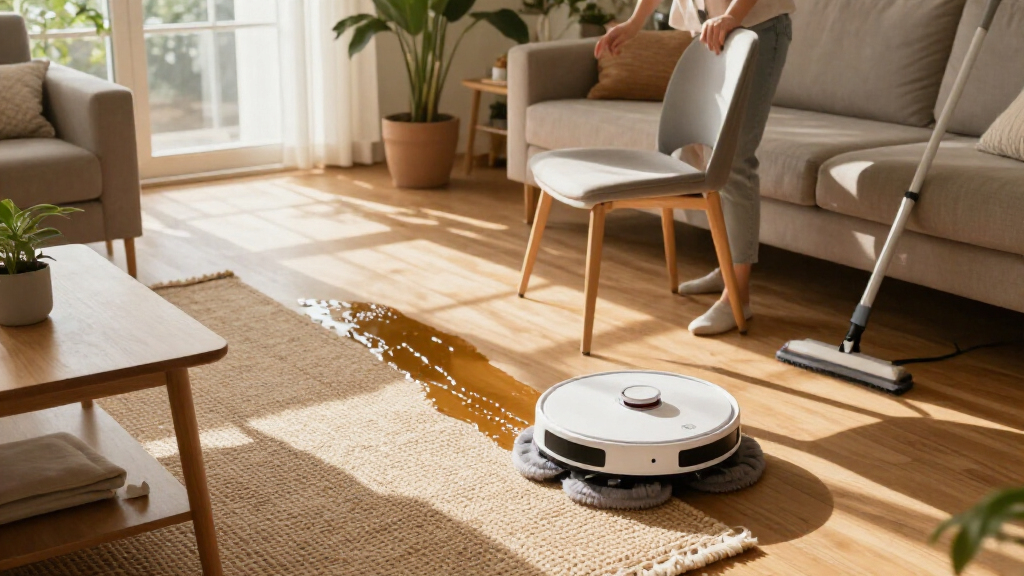
How We Picked
I evaluated these fifteen units based on a strict set of criteria centered on real-world usability and long-term reliability. The primary metric was cleaning efficacy on mixed surfaces, specifically how well each unit transitions from vacuuming carpets to mopping hard floors without leaving streaks or damp patches. I also prioritized navigation intelligence, favoring models with LiDAR or advanced camera systems that can map homes accurately and avoid common obstacles like cables and pet bowls, which are frequent pain points for users of random-bounce robots.
Beyond performance, I assessed the total cost of ownership and maintenance effort. This included analyzing the frequency of filter replacements, the ease of emptying dustbins, and whether the dock handles mop washing and drying or if the user must manually clean dirty pads. Products were ranked higher if they offered genuine time savings rather than just impressive spec sheets that require constant user intervention to achieve promised results.
Factors to Consider When Choosing Robot Vacuum And Mop Combos
Selecting a robot vacuum and mop combo requires looking past marketing buzzwords to understand how the technology fits your lifestyle. The following factors will help you determine which features are worth the investment and which are marketing fluff.
Navigation Systems: LiDAR vs. Vision vs. Random
Navigation is the brain of the robot, dictating how thoroughly and efficiently it cleans. LiDAR systems use laser scanning to create precise maps, making them ideal for large, multi-room homes with complex layouts. Vision-based systems (often using cameras) excel at identifying specific objects like socks or pet waste but can struggle in low-light conditions. Random bounce navigation, found in the cheapest models, is inefficient and often misses spots, leading to patchy cleaning. If your home has a lot of furniture or narrow passages, investing in LiDAR or hybrid navigation is a wise choice to ensure consistent coverage.
The Reality of Mopping Mechanics
Not all mopping systems are created equal. Static pads simply drag a damp cloth across the floor, which is sufficient for light dust and spills but ineffective on dried stains. Vibrating or rotating mops apply pressure to scrub surfaces, offering a much deeper clean. The latest trend, roller mops that wash themselves in the dock, provides the highest level of hygiene but comes with a higher price tag and dock size. Consider whether your floors need vigorous scrubbing or just a light refresh when choosing between these mechanisms.
Dock Automation: Washing, Drying, and Emptying
Self-emptying docks have become standard, but self-washing and self-drying docks are the true differentiators in 2027. A dock that washes the mop prevents mold and bad odors, a common complaint with older models. However, these advanced docks require access to water lines or frequent manual refilling of large tanks. If you have a smaller apartment or limited space, a simpler self-emptying dock might be more practical than a bulky all-in-one station that demands significant floor real estate.
Obstacle Avoidance and Pet Safety
For households with pets, obstacle avoidance is not just a convenience; it is a necessity. AI-powered object recognition allows robots to identify and avoid cables, shoes, and pet waste. Lower-end models often lack this feature, leading to frustrating interruptions where the robot gets stuck or, worse, smears pet accidents across the floor. If you have animals, prioritize models with dual-camera or structured light sensors, even if it means paying a premium for peace of mind.
App Ecosystem and Smart Home Integration
The app is your primary interface with the device, so its stability and features matter. Look for apps that allow no-go zones, room-specific cleaning schedules, and real-time status updates. Some brands, like iRobot and Roborock, offer robust integrations with Alexa, Google Home, and Matter, allowing for seamless voice control. Check recent user feedback on app reliability, as frequent crashes or connectivity drops can render even the most powerful hardware useless.
Frequently Asked Questions
Do robot mops actually clean floors, or do they just smear dirt around?
Modern robot mops with active scrubbing mechanisms or self-washing docks can genuinely clean floors by removing light stains and dust. However, they are not a replacement for traditional deep mopping with a bucket and mop, especially for heavy grease or dried-on grime. The key is using a model that washes its mop pad during the cycle; if the robot drags the same dirty pad across the entire house, it will simply redistribute dirt. For best results, use a combo unit that vacuums first to remove debris before mopping.
Can these robots handle high-pile shag rugs without getting stuck?
Most robot vacuums struggle with very high-pile shag rugs because their wheels can sink into the fibers, causing them to become stranded. Some premium models feature chassis lifting or auto-lift mops to navigate medium-pile carpets, but even these may fail on dense shag. If you have high-pile rugs, it is better to use virtual no-go zones in the app to keep the robot off them, or choose a model with exceptionally high suction and large wheels, though results may vary.
How much maintenance is required for the self-washing docks?
While self-washing docks automate the mop cleaning process, they are not maintenance-free. You must regularly empty the dirty water tank, refill the clean water tank, and clean the dock tray to prevent mold and slime buildup. Some models also require periodic replacement of filters or cleaning brushes inside the dock. Expect to spend a few minutes each week tending to the dock to ensure it continues to function hygienically.
Is LiDAR navigation better than camera-based navigation for dark rooms?
Yes, LiDAR navigation is generally more reliable in dark rooms because it does not rely on ambient light to map the space. Camera-based systems can lose tracking or struggle to create accurate maps in dimly lit areas, such as hallways or bedrooms at night. However, LiDAR turrets make the robot taller, which might prevent it from fitting under low furniture. For homes with dark corners, LiDAR or hybrid systems offer more consistent navigation performance.
Should I buy a combo unit or separate vacuum and mop robots?
For most users, a combo unit is more efficient because it handles both tasks in a single pass, saving time and floor space occupied by the dock. Separate robots are only worth considering if you have very specific needs, such as a dedicated robot for heavy-duty carpet vacuuming and another for delicate hard-floor mopping. However, this approach doubles the cost and requires two separate mapping and maintenance routines, making it less convenient for the average household.
Conclusion
Selecting the right robot vacuum and mop combo depends largely on your home’s layout and your tolerance for maintenance. For the best overall experience with minimal intervention, the iRobot Roomba Plus 415X stands out for its reliable ecosystem and effective self-washing capabilities. If you prioritize navigation precision in larger homes, the Roborock Q7 M5+ is the superior choice due to its advanced mapping. For those on a tighter budget who still want decent performance, the Tikom G8000 Max offers excellent value, provided your home is relatively clutter-free. Beginners should lean toward the iRobot Roomba 105 Combo for its simplicity and user-friendly app, while tech enthusiasts seeking the latest hardware should consider the eufy C28 for its high suction and innovative roller mop.
Halloween Picks
halloween
As an affiliate, we earn on qualifying purchases.