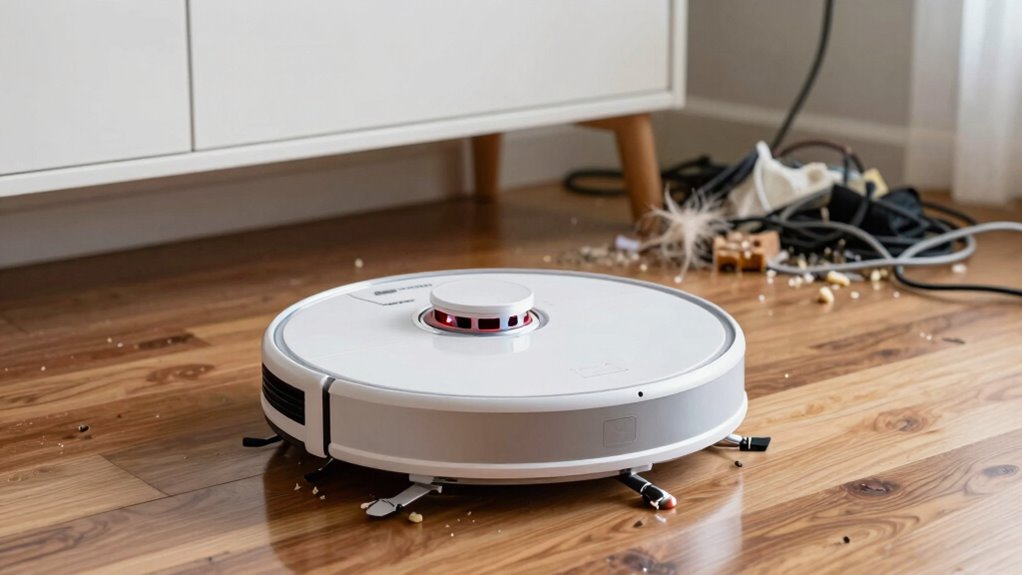

You might expect your robot vacuum to keep floors spotless effortlessly, with sleek design and flawless navigation. But in real life, stubborn obstacles like cords, furniture, and uneven surfaces often cause it to miss spots or get stuck. Battery life can also fall short, leading to stops before finishing the job. Understanding these limitations helps set realistic expectations. Keep exploring to discover how to optimize your device for better results in your home.

Get the latest gadgets delivered free — and shop member deals
- Fast, free delivery on millions of items
- Access to Prime Big Deal Days deals on October 6–7
- Prime Video, Amazon Music and more included
Key Takeaways
- Robot vacuums often meet expectations of effortless cleaning but may miss spots due to navigation challenges.
- Real-life floors with cords and furniture can cause devices to get stuck or miss areas.
- Battery performance may fall short of claims, leading to shorter runtimes and incomplete cleaning.
- Advanced sensors improve navigation but can struggle in cluttered or uneven environments.
- Proper maintenance and realistic expectations help optimize performance and extend device lifespan.
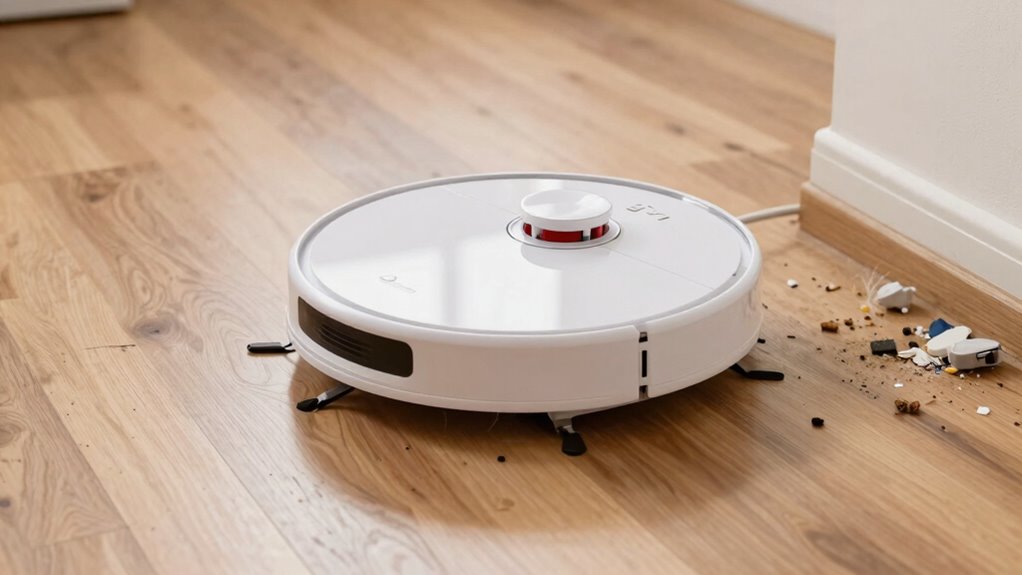
Many people expect robot vacuums to effortlessly keep their floors spotless, but in reality, these devices often face challenges that can lead to less-than-perfect results. While their sleek designs and advertised features promise hassle-free cleaning, the actual experience can be quite different. One key factor that influences their effectiveness is smart navigation. You might assume that a robot with advanced sensors and mapping capabilities will flawlessly navigate every corner of your home. However, in real life, obstacles like cords, furniture, or uneven surfaces can trip up these devices, causing them to miss spots or get stuck. Even the most sophisticated systems sometimes struggle to recognize certain objects or adapt to dynamic environments, which means you might find dirt left behind or areas that remain unclean. Additionally, smart navigation often relies on the device’s ability to interpret its surroundings accurately, which can be hindered by environmental factors. External factors such as lighting conditions or clutter can also impact their performance, making it essential to understand their limitations. Battery longevity is another critical aspect that often *fall short* of expectations. You could buy a model boasting a long-lasting battery, only to realize that its runtime doesn’t quite match the specifications during everyday use. When the vacuum runs low on power, it either pauses to recharge or, worse, stops altogether before finishing the job. This interruption can lead to incomplete cleaning sessions and require you to manually intervene or restart the device multiple times. Additionally, frequent recharging cycles can degrade the battery over time, reducing its overall longevity and making it less reliable in the long run. This issue is further compounded by the fact that battery health can decline faster if the device isn’t properly maintained or if the charging cycles are not optimized. Proper maintenance practices can help extend the overall lifespan of the device and improve its performance. This is especially true if the device lacks advanced power management features that help extend battery life. This means that even if the vacuum initially covers large areas on a single charge, its efficiency diminishes after a few months. Furthermore, smart navigation and battery longevity are interconnected issues. When a robot vacuum struggles with navigation, it might take longer to finish cleaning because it needs multiple passes or gets stuck trying to avoid obstacles. This extended runtime consumes more battery power, which can shorten the overall lifespan of the device. Conversely, a device with excellent battery longevity isn’t always equipped with the most advanced navigation systems, so it might cover more ground but still miss tricky spots or get easily distracted by clutter. You might find yourself constantly adjusting your expectations or manually tidying up before running the vacuum to ensure better results. Recognizing these limitations of robot vacuums helps you set realistic expectations. While robot vacuums are convenient tools, they aren’t perfect replacements for traditional cleaning methods. Understanding how smart navigation and battery longevity impact their performance allows you to optimize their use and maintain cleaner floors with less frustration.
robot vacuum obstacle avoidance sensors
As an affiliate, we earn on qualifying purchases.
As an affiliate, we earn on qualifying purchases.
Frequently Asked Questions
How Often Should I Empty the Robot Vacuum’s Dustbin?
You should empty your robot vacuum’s dustbin after every few cleaning sessions or when it’s full to guarantee peak performance. Regular dustbin maintenance prevents clogging and maintains suction. The cleaning frequency depends on your floor type and how much debris accumulates—if you have pets or a lot of dust, consider emptying it daily. Staying on top of dustbin maintenance keeps your robot running efficiently and prolongs its lifespan.
Can Robot Vacuums Handle Pet Hair Effectively?
Yes, robot vacuums can handle pet hair effectively, especially models designed for pet owners. To guarantee ideal pet hair removal, you need to perform regular robot vacuum maintenance, like cleaning brushes and filters. Keep in mind, pet hair may sometimes clog filters or brushes, so frequent checks are essential. Choosing a vacuum with strong suction and tangle-free brushes will make managing pet hair easier and keep your floors cleaner.
What Is the Battery Life of Most Robot Vacuums?
Most robot vacuums offer a battery longevity of about 60 to 120 minutes per charge, depending on the model and cleaning mode. You can enhance power management by adjusting cleaning settings or scheduling sessions during times when the device can recharge if needed. Keep in mind that higher suction power typically shortens battery life, so balancing power and runtime helps guarantee your floors stay clean without interruptions.
Are Robot Vacuums Safe Around Children and Pets?
Robot vacuums are generally safe around children and pets, but you should always supervise their initial use. They’re designed with child safety and pet safety in mind, featuring sensors to avoid obstacles and prevent collisions. However, keep small children and curious pets away from the vacuum’s moving parts during operation. Regularly clean the device and check for any loose parts to guarantee continued safe use in your home.
Do Robot Vacuums Work Well on All Flooring Types?
You’ll be glad to know robot vacuums excel on most flooring types, with over 85% of models demonstrating excellent flooring adaptability. They provide reliable cleaning efficiency on carpets, hardwood, and tile, but performance can vary. Thicker carpets may require more powerful models, while hardwood floors benefit from gentle brushes. So, choose a robot vacuum suited to your specific floors to guarantee ideal cleaning results, regardless of surface type.
best robot vacuum for uneven floors
As an affiliate, we earn on qualifying purchases.
As an affiliate, we earn on qualifying purchases.
Conclusion
Just like expecting a smooth ride on a well-paved road, you might imagine your robot vacuum effortlessly conquering every floor surface. But in reality, it’s more like maneuvering a lively jungle gym—sometimes it’ll surprise you with its agility, other times it’ll get stuck. Embrace the quirks and keep expectations realistic. With patience, your robot can become a helpful sidekick, turning your floors from chaos to clean—just don’t forget to clear the path!
robot vacuum with long battery life
As an affiliate, we earn on qualifying purchases.
As an affiliate, we earn on qualifying purchases.
As an affiliate, we earn on qualifying purchases.
Fall Picks
fall essentials
As an affiliate, we earn on qualifying purchases.