
TL;DR

Get the latest gadgets delivered free with Prime
- Fast, free delivery on millions of items
- Prime Video, Amazon Music and more included
- Member-only deals all year
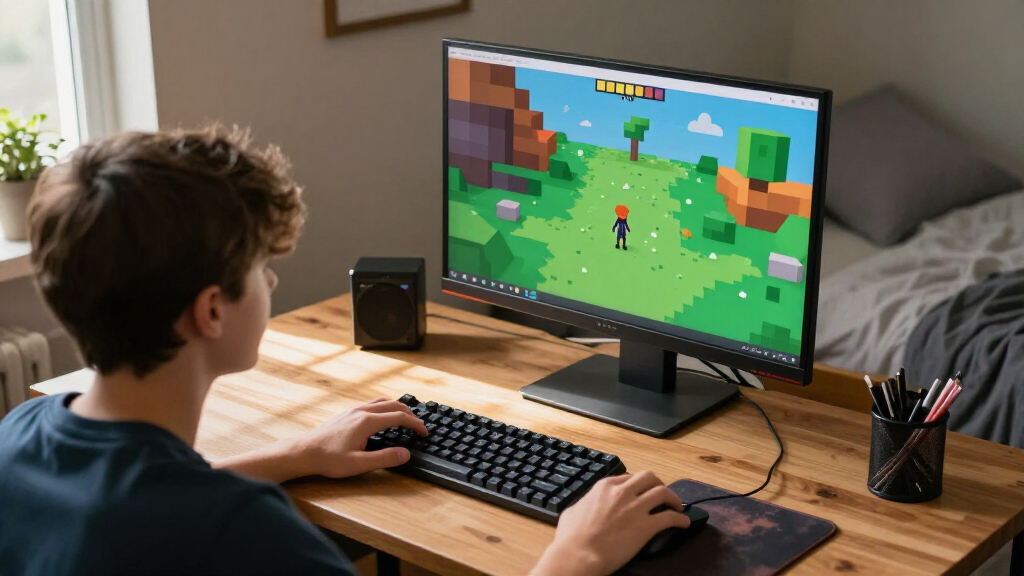
A developer’s GitHub project page describes Hedra, a low-poly 3D open-world RPG and game engine he says he began building at about 15, while in high school, to learn OpenGL. The repository lists procedural worlds, quests, classes and a range of custom engine systems, but does not establish the game’s release status or whether it is currently playable.
A developer’s GitHub page describes Hedra, a low-poly, 3D open-world RPG and custom game engine he says he began writing from scratch at about 15, while in high school, initially to learn OpenGL. The project’s scope grew over several years into a procedurally generated game with its own rendering, world-generation and modding systems, though the page does not establish whether Hedra is currently released or playable by the public.
The project page presents Hedra as an RPG in which players can choose a class, explore procedurally generated worlds, gain skills and complete generated quests. Listed game features include four classes with two specializations each, more than 100 items, bosses, trading, companions, pets, fishing and crafting. The developer also lists different dimensions, maps and a soundtrack among the game’s features.
The repository describes a custom engine built around modern OpenGL, with animation and model loading, lighting and visual effects, sound, a user interface, and support for Linux and Windows. It also lists Python scripting through IronPython, a modding system, localization support and Steam integration. These are features claimed in the project documentation; the page does not independently verify their completeness or current condition.
The developer says the codebase contains about 100,000 lines of code. The same page elsewhere refers to “a million lines of code,” an internal inconsistency that makes the code-size figure uncertain. The repository also describes a test suite with more than 1,000 test cases, a build process based on compiling a C# solution, and automated deployment to a Steam beta branch. Those details describe the project’s stated development setup, not proof of a public release.
A Solo Project With Its Own Engine
Hedra’s documented scope goes beyond a small game prototype: it combines an RPG, procedural world generation and a bespoke engine. For readers interested in game development, the project offers a concrete example of how a learning exercise can expand into work across rendering, asset handling, scripting and gameplay systems.
The account is also a reminder that a substantial feature list does not by itself tell readers whether a game is finished, accessible or supported. The repository explains technical choices and lists planned or implemented systems, but offers limited information here about a release, player access or the project’s present development status. Those distinctions matter when evaluating what the project represents beyond its engineering ambition.
As an affiliate, we earn on qualifying purchases.
From OpenGL Practice to RPG
The developer says he started Hedra in high school, around age 15, as a way to learn OpenGL. He describes scope growth over the following years as the project developed into both a game and an engine. The repository is marked “pre-ai” in its URL, but the supplied project description does not explain that label or provide a dated development timeline.
Hedra’s world is described as voxel-based and generated at runtime. The developer says it applies Marching Cubes to turn discrete voxel data into a continuous surface. The world itself is not saved as a conventional world file, according to the page; instead, the game saves player contents and a world seed, then recreates the rest. The name “Hedra,” the developer says, derives from tetrahedra and an earlier implementation of Marching Tetrahedra.
The project is organized as a game mod built on a base engine, according to its documentation. The stated design goal was to keep a mod API in use and encourage access for mod creators. The page also describes a past multiplayer setup using peer-to-peer communication and a server for UDP hole punching, while noting that networking remnants may remain in the engine.
“I started this project when I was in highschool (around 15 yo) in order to learn how OpenGL worked.”
— Hedra developer, in the GitHub project description
As an affiliate, we earn on qualifying purchases.
Release Status and Scope Still Unclear
The supplied project page does not say whether Hedra has a public release, when it was last updated, or whether its listed features work in a current build. It includes a note that screenshots remain to be added, while also referring readers to a separate screenshots location. The material does not clarify whether that gap reflects an incomplete page or a lack of available images.
There are also limits to the project’s quantitative claims. The repository gives conflicting code-size descriptions—about 100,000 lines in one place and “a million lines” in another—and does not identify a measurement method. It is not clear which listed systems are complete, in active development or remnants of earlier work, including the former multiplayer feature.
procedural world generation software
As an affiliate, we earn on qualifying purchases.
As an affiliate, we earn on qualifying purchases.
Repository Offers Build Details
The project page says the build process involves checking out submodules, running dependency scripts and compiling the C# solution. It points readers to GitHub Actions workflows for examples on Linux and Windows. The available material does not announce a launch, a new build or a future release date.
For a clearer picture of Hedra’s current state, readers would need a dated update from the developer, a working build or release page, and current screenshots or gameplay information. Until those are available, the project is best understood as a documented game-and-engine project whose development history and technical design are described by its creator.
As an affiliate, we earn on qualifying purchases.
Key Questions
What is Hedra?
Hedra is described on its GitHub page as a low-poly, procedurally generated 3D open-world RPG built on a custom engine.
When did its developer start making it?
The developer says he began the project at about 15 years old, while in high school, as a way to learn OpenGL. The page does not give a calendar year.
Is Hedra available to play?
The supplied project description does not confirm a public release or provide enough information to determine whether a current playable build is available.
How does Hedra generate its world?
The developer describes a voxel-based world generated from a seed and processed with Marching Cubes to create continuous surfaces. The page says the game saves player contents and the seed, then creates the rest of the world at runtime.
What does the project page say about its size?
It gives two different descriptions: about 100,000 lines of code in one section and “a million lines” in another. The discrepancy is unresolved in the supplied material.
Source: hn
Halloween Picks
halloween
As an affiliate, we earn on qualifying purchases.