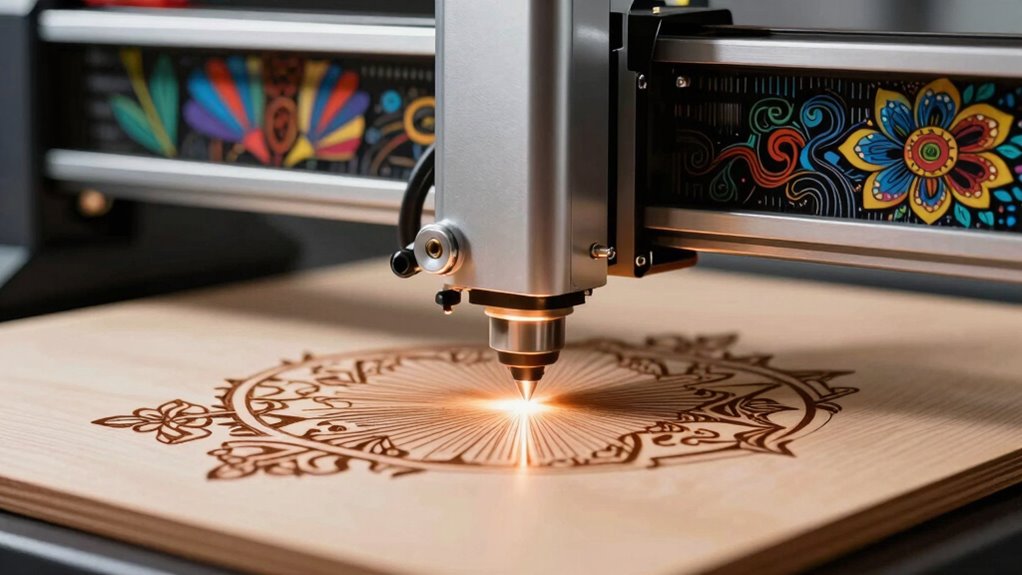

A laser engraver is brilliant when you need detailed, high-quality designs for items like jewelry, glassware, or wood signs, especially if you want consistent, intricate results. It’s perfect for small-scale projects, customized pieces, and complex patterns. However, it’s overkill for simple designs, basic stamping, or bulk production that could be done faster and cheaper with traditional methods. If you want to discover more about when it’s the right choice, keep exploring.

Get the latest gadgets delivered free with Prime
- Fast, free delivery on millions of items
- Prime Video, Amazon Music and more included
- Member-only deals all year
Key Takeaways
- Laser engravers excel for detailed, small-scale projects like jewelry or glassware, but are overkill for simple, bulk designs.
- They are ideal for customizing unique items; traditional methods may be more cost-effective for basic, repetitive tasks.
- When high precision and intricate details are required, laser engraving offers unmatched quality; for basic designs, manual tools suffice.
- Material compatibility is crucial; laser engravers work best with certain plastics, woods, and metals, but can be hazardous or ineffective otherwise.
- Consider space, budget, and production volume—laser engravers are powerful but may be unnecessary for low-volume or straightforward projects.
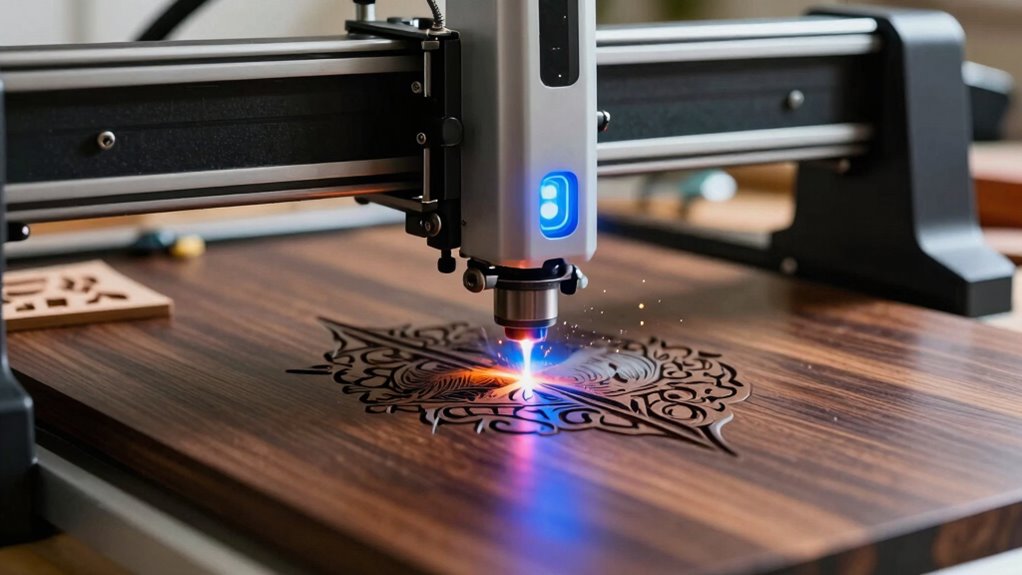
Laser engravers can transform simple designs into stunning, detailed creations, making them a brilliant tool for artists, hobbyists, and small businesses alike. They allow you to add intricate details to a variety of materials, opening up endless creative possibilities. However, before diving in, it’s crucial to understand that not all materials are suitable for laser engraving. Material compatibility is key—some surfaces, like certain plastics, woods, and metals, respond beautifully, while others, such as PVC or certain coated materials, can release harmful fumes or damage your machine. Knowing what works best ensures you get high-quality results without risking damage to your equipment or health.
Safety precautions are equally critical. Laser engravers produce intense light and heat, which can be hazardous if not handled properly. Always operate your machine in a well-ventilated area, and use appropriate protective gear, such as safety goggles designed to block laser wavelengths. Never leave the engraver unattended during operation, and double-check your settings before starting a project. Proper maintenance, including regular cleaning and calibration, not only prolongs your machine’s lifespan but also keeps safety features functioning correctly. Additionally, understanding the material limitations can help prevent accidents and ensure optimal results. It’s also important to stay updated on laser safety standards to ensure you’re following best practices. Being aware of potential hazards related to laser engraving can further help you avoid accidents and health issues.
Always operate your laser engraver in a well-ventilated area and wear protective goggles for safety.
Using a laser engraver is brilliant when you want precision and detail that other tools can’t match. For example, if you’re customizing jewelry, engraving on glassware, or creating detailed wood signs, the laser’s finesse makes your work stand out. Its ability to produce consistent, replicable results saves time and effort compared to manual methods. Plus, you can handle complex designs and tiny text without sacrificing clarity. This makes it an ideal choice for small-scale production or one-of-a-kind pieces. Additionally, understanding the machine’s capabilities can help you optimize your workflow and achieve the best possible results. Knowing the material compatibility is essential to avoid costly mistakes and ensure your projects turn out as expected.
However, laser engraving can be overkill if your project involves simple designs or materials that don’t benefit from the machine’s capabilities. For instance, if you’re just stamping a basic pattern on leather or etching a straightforward logo on paper, manual tools or cheaper alternatives could suffice and be more cost-effective. Also, for bulk projects that require mass production, traditional methods like screen printing or stamping might be more efficient, especially when your budget or space is limited.
In essence, a laser engraver is a powerful tool best suited for detailed, high-precision work on compatible materials. It’s brilliant when you need accuracy, consistency, and intricate designs, but overkill when your project is simple or the material isn’t suitable. Always prioritize safety and understand your material limitations to get the most benefits from your machine and avoid unnecessary risks.
Frequently Asked Questions
What Safety Precautions Are Necessary When Operating a Laser Engraver?
You should prioritize laser safety when operating a laser engraver. Always wear protective eyewear to shield your eyes from harmful laser rays, and make certain the workspace is well-ventilated to avoid inhaling fumes. Keep the area clear of flammable materials, and never leave the machine unattended during operation. Regularly inspect the equipment for damage, and follow manufacturer instructions to prevent accidents and ensure safe, effective use.
How Does Material Choice Affect Laser Engraving Results?
Did you know that selecting the right material improves engraving precision by up to 50%? Your choice of material considerably impacts laser results because of its compatibility and how it reacts to engraving techniques. Hardwoods, acrylics, or metals all react differently, affecting clarity and depth. To get the best outcome, match your material with suitable engraving techniques, adjusting power and speed for ideal detail and surface finish.
What Is the Typical Cost Range for Laser Engraving Machines?
You can find laser engravers ranging from $200 to over $10,000, depending on features and size. For laser engraver affordability, small DIY models cost around $200–$500, perfect for hobbyists. Mid-range machines, $1,000–$5,000, suit small businesses, while high-end industrial options can exceed $10,000. A thorough cost comparison helps you choose the right machine for your needs, balancing budget and capabilities effectively.
Can Laser Engravers Be Used for Commercial Production?
Yes, laser engravers are suitable for commercial production, especially for applications like artistic customization and personalized items. They enable you to produce detailed, high-quality designs quickly and efficiently, making them ideal for small to medium-scale manufacturing. With the right setup, you can streamline your workflow and meet customer demands for unique, customized products, turning your laser engraver into a powerful tool for expanding your business and enhancing your product offerings.
How Do I Maintain and Clean My Laser Engraver Effectively?
Think of your laser engraver as a garden needing regular care. Follow cleaning routines like wiping lenses and vents with soft cloths, and keep the mirrors and lenses dust-free. Maintenance tips include checking for alignment issues and lubricating moving parts. By staying consistent with these practices, you guarantee your engraver operates smoothly and prolongs its lifespan, much like tending a garden to keep it vibrant and healthy.
Conclusion
Whether you’re crafting delicate jewelry or blazing through thick wood, a laser engraver can be your most brilliant tool or overkill if misused. Picture the gentle glow illuminating intricate details, or the harsh, scorched remnants of overreach. When used wisely, it transforms your vision into shimmering reality. But push too far, and it leaves behind scars—remnants of what could have been finesse, instead of finesse itself. Choose your moments, and let your creativity shine through with precision and purpose.
Halloween Picks
halloween
As an affiliate, we earn on qualifying purchases.