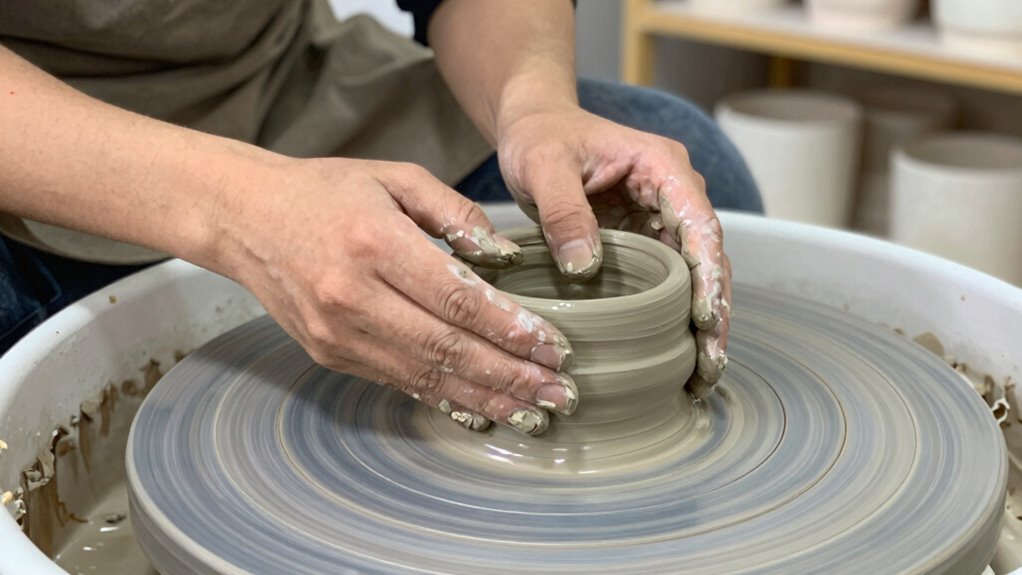

The biggest mistake that kills the fun fast is rushing through the foundational steps, like proper wedging, centering, or patience with glazing. When you skip or rush these, your pieces can become uneven, cracked, or frustrating to finish, making the process less enjoyable. If you’re enthusiastic to create, it’s tempting to skip ahead, but taking your time helps you enjoy each stage and avoid setbacks. Keep going, and you’ll discover how mastering basics makes pottery more fun and rewarding.

Get the latest gadgets delivered free with Prime
- Fast, free delivery on millions of items
- Prime Video, Amazon Music and more included
- Member-only deals all year
Key Takeaways
- Rushing through techniques like glazing or wheel work leads to frustration and poor results.
- Neglecting proper wheel maintenance causes uneven pottery and increases frustration.
- Skipping foundational steps like proper wedging and centering results in unstable creations.
- Impatience with the process diminishes enjoyment and hampers skill development.
- Ignoring routine care and preparation causes repeated mistakes and reduces fun.
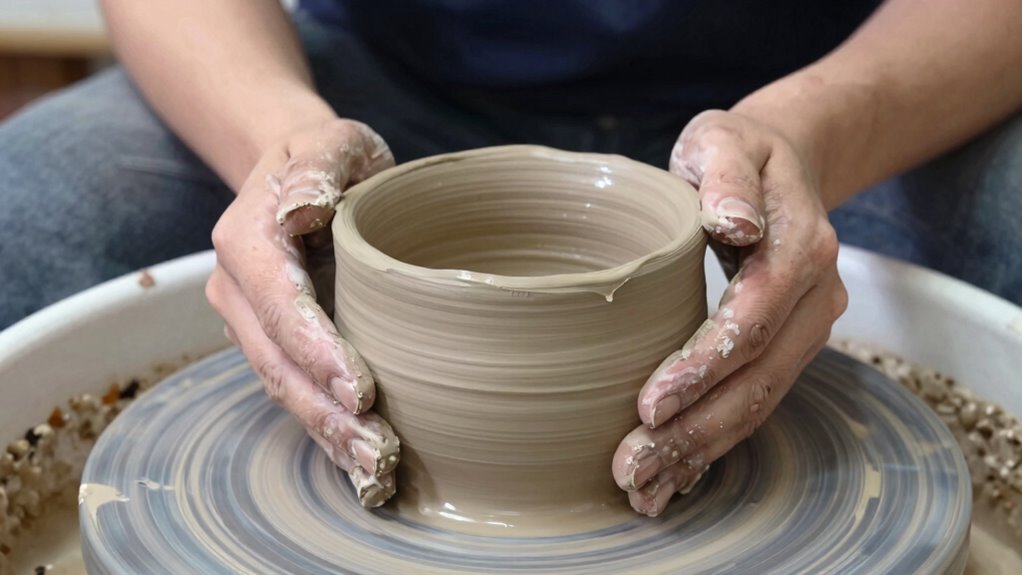
Starting with pottery can be exciting, but many beginners make a common mistake that can hinder their progress: rushing the process. You might feel enthusiastic to see your first piece finished, but pushing too quickly often leads to frustration. One of the biggest pitfalls is trying to master advanced techniques, like glazing, before you’ve developed a solid foundation. Proper glazing techniques require patience and practice; rushing into it can cause uneven coverage, drips, or even ruined pieces. Instead, focus on understanding how different glazes interact with your clay and firing process. Take your time testing small samples to see how glazes behave—this will save you from disappointment and wasted effort later on.
Another vital aspect beginners overlook is wheel maintenance. Your pottery wheel isn’t just a tool; it’s the heart of your craft. When you neglect basic wheel maintenance, such as keeping it clean and ensuring the motor runs smoothly, you risk inconsistent results and even equipment failure. A well-maintained wheel makes centering clay easier and helps you develop better control over your shaping. Rushing through wheel setup or skipping regular cleaning can lead to wobbling, uneven walls, or collapsed forms. Taking a few minutes to maintain your wheel each session pays off in the long run, making your learning curve smoother and more enjoyable. Additionally, understanding the importance of wheel maintenance can significantly improve your overall pottery skills and prevent costly repairs. Developing good habits around equipment care ensures your tools last longer and perform reliably, which is crucial for consistent results. Being mindful of proper maintenance routines can help you avoid common pitfalls and keep your equipment functioning optimally. Moreover, investing time in equipment upkeep can prevent unnecessary downtime and frustration, allowing you to focus more on improving your craft.
Many newbies also fall into the trap of rushing through the steps of creating a piece. They want to finish quickly, skipping essential stages like proper wedging or taking enough time to center their clay. This impatience often results in lopsided or cracked pieces. Remember, good pottery starts with good preparation. Spend time wedging your clay thoroughly to remove air bubbles, and don’t rush the centering process. It might seem slow at first, but developing a steady hand and understanding your tools pays off in the quality of your work. Patience during these foundational steps helps prevent issues like warping or cracking as your piece dries and fires.
In the end, the key is patience. Don’t be tempted to skip steps or rush your glazing and wheel maintenance routines. Mastering these fundamental skills takes time, but they’re essential for keeping the process fun and rewarding. When you approach your pottery with care and attention, you’ll find your skills improve faster, and the joy of creating will stay alive. The more you practice patience and precision, the more you’ll enjoy every stage of your pottery journey.
As an affiliate, we earn on qualifying purchases.
Frequently Asked Questions
How Do I Fix Cracked Pottery During the Firing Process?
If your pottery cracks during firing, first check your glazing techniques—uneven or thick glazes can cause stress. Adjust your application to be smoother and more even. Also, make certain you’re firing at the correct temperature; over- or under-firing can weaken the clay. Cooling slowly helps prevent cracks. By refining your glazing techniques and controlling the firing temperature, you can minimize cracks and enjoy beautiful, durable pottery.
What Tools Are Essential for Beginner Pottery?
Did you know that over 60% of beginners find the right tools make all the difference? For handbuilding techniques, essential tools include a rib, needle tool, and wooden modeling tools. You should also prioritize tool maintenance—cleaning and storing them properly guarantees longevity and smooth work. Investing in quality tools helps you master techniques faster and keeps your pottery sessions enjoyable, preventing frustration and encouraging creativity.
How Can I Prevent My Clay From Drying Out Too Quickly?
To prevent your clay from drying out too quickly, focus on clay preservation and moisture management. Keep your clay covered with plastic or damp cloth when not in use, and regularly mist it with water to maintain the right moisture level. Work efficiently, and avoid exposing your clay to drafts or direct sunlight. These steps help keep your clay workable longer, making your pottery experience more enjoyable and successful.
What Are Common Glazing Mistakes to Avoid?
To avoid common glazing mistakes, focus on proper glazing techniques and color blending. Make sure your pieces are clean and free of dust before applying glaze. Use even coats and avoid thick layers that can cause drips or uneven firing. Practice blending colors smoothly to achieve desired effects, and always test your glazes on sample pieces first. This approach helps prevent running, cracking, and dull finishes, making your pottery more vibrant and professional-looking.
How Long Does It Take to Become Proficient in Pottery?
You can become proficient in pottery within a few months of consistent practice and taking pottery classes. During this time, you’ll gain technical skills and find your artistic inspiration. Keep practicing regularly, attend workshops, and experiment with different techniques to improve faster. With dedication, you’ll start creating satisfying pieces and enjoying the craft deeply, transforming your initial curiosity into a genuine passion for pottery.
As an affiliate, we earn on qualifying purchases.
Conclusion
Remember, every potter’s journey is like tending a fragile seed. If you rush or ignore the basics, you risk crushing that delicate potential before it can bloom. Mistakes are just watering cans—necessary for growth but only if you learn to handle them gently. Embrace patience and care, and you’ll find your pottery flourish like a well-tended garden. Keep nurturing your craft, and soon, your creations will stand tall, beautiful symbols of perseverance and passion.
As an affiliate, we earn on qualifying purchases.
As an affiliate, we earn on qualifying purchases.
Halloween Picks
halloween
As an affiliate, we earn on qualifying purchases.