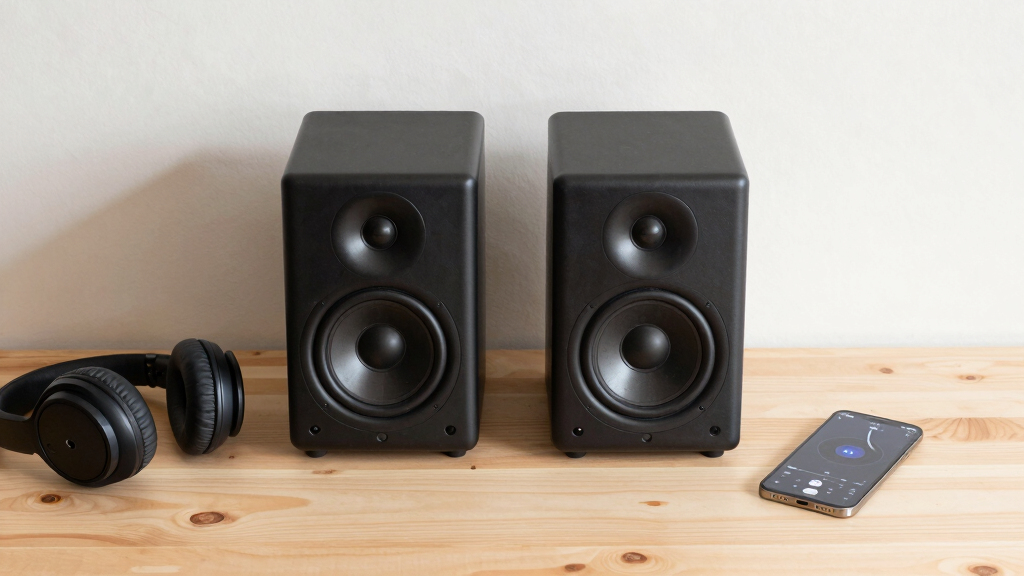

Finding the best studio monitor speakers for creators depends on your specific needs and budget. The Yamaha HS4 stands out as a top overall pick thanks to its balanced sound and reliability. For those seeking affordability without sacrificing quality, the PreSonus Eris 3.5 offers excellent value. Creators working in small spaces should consider the compact Mackie CR3.5, while the JBL 305P MkII provides impressive bass response for the price. The main challenge is balancing sound accuracy, size, and budget—continue reading for the full breakdown of each option.

Get the latest gadgets delivered free with Prime
- Fast, free delivery on millions of items
- Prime Video, Amazon Music and more included
- Member-only deals all year
Complete the kit



Key Takeaways
- Top picks are distinguished by a balance of accuracy and affordability, with high-value options like PreSonus Eris 3.5 standing out.
- Size matters: smaller speakers like Mackie CR3.5 are great for limited spaces but may lack deep bass compared to larger models.
- Brand reputation and build quality significantly influence long-term reliability, with Yamaha and JBL leading in durability.
- Connectivity options vary, so choosing monitors with versatile inputs ensures compatibility with different setups.
- Price differences often reflect performance nuances; investing a bit more can yield noticeably better sound clarity and detail.
| Mackie CR3.5 Studio Monitors (Pair), 3.5″ Woofers, Tone Knob, Black | 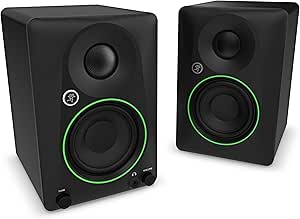 | Best Compact Option for Small Spaces | Speaker Size: 3.5 inches | Woofer Diameter: 3.5 inches | Tweeter Diameter: 1 inch | VIEW LATEST PRICE | See Our Full Breakdown |
| Yamaha HS4 Powered Studio Monitor (Pair, Black) |  | Best for Precise, Professional Studio Work | Packaging: Pair | Speaker Type: Monitor | Color: Black | VIEW LATEST PRICE | See Our Full Breakdown |
| Edifier MR4 Power Studio Monitor Speakers, 4 inch Active Near-Field Speakers |  | Best High-Quality Sound for Creators on a Budget | Power: Not specified | Speaker Type: Bookshelf | Speaker Size: 10 centimeters | VIEW LATEST PRICE | See Our Full Breakdown |
| PreSonus Eris 3.5 Powered Studio Monitors (Pair) |  | Best for Versatile, All-Around Creators | Speaker Size: 3.5 inches | Power Output: 50 watts | Frequency Response: 80 Hz–20 kHz | VIEW LATEST PRICE | See Our Full Breakdown |
| JBL 305P MkII 5″ 2-Way Active Studio Monitors (Pair) |  | Best for Critical Listening and Professional Use | Size: 5-inch woofer | Amplifiers: Dual 41-Watt Class-D | Inputs: XLR/TRS | VIEW LATEST PRICE | See Our Full Breakdown |
| Yamaha HS5 W 5-Inch Powered Studio Monitor (White, 2-Pack) Bundle |  | Best Overall for Professional Creators | Speaker Type: Monitor | Color: White | Mounting Type: Tabletop | VIEW LATEST PRICE | See Our Full Breakdown |
| Yamaha HS5 Powered Studio Monitor, Pair |  | Best for Accurate Studio Monitoring in Small Spaces | Speaker Type: Woofer | Power Output: 70 watts | Frequency Response: 54 Hz – 30 kHz | VIEW LATEST PRICE | See Our Full Breakdown |
| PreSonus Eris E7 XT 2-Way Active Studio Monitor |  | Best for Versatile Professional Mixing | Driver Size: 6.5 inches | High-Frequency Transducer: 1.25-inch silk-dome | Waveguide: EBM waveguide | VIEW LATEST PRICE | See Our Full Breakdown |
| studio monitor speakers for creator | Speaker Size | Enclosure Material | Speaker Type | Frequency Response |
|---|---|---|---|---|
| Mackie CR3.5 Studio Monitors | 3.5 inches | Metal, Plastic | — | — |
| Yamaha HS4 Powered Studio Moni | 4.5 inches | — | Monitor | 60 Hz – 22 kHz |
| Edifier MR4 Power Studio Monit | 10 centimeters | — | Bookshelf | 20 KHz |
| PreSonus Eris 3.5 Powered Stud | 3.5 inches | — | — | 80 Hz–20 kHz |
| JBL 305P MkII 5" 2-Way Active | — | MDF | — | — |
| Yamaha HS5 W 5-Inch Powered St | 5 inches | Metal, Plastic, Wood | Monitor | — |
| Yamaha HS5 Powered Studio Moni | — | — | Woofer | 54 Hz – 30 kHz |
| PreSonus Eris E7 XT 2-Way Acti | — | Stainless Steel | — | — |
More Details on Our Top Picks
Mackie CR3.5 Studio Monitors (Pair), 3.5″ Woofers, Tone Knob, Black
The Mackie CR3.5 pair stands out for their compact size, making them ideal for tight desktop setups or small studios where space is at a premium. Unlike larger monitors like the JBL 305P MkII, these deliver a surprisingly clear and punchy sound despite their diminutive 3.5-inch drivers. They excel in versatility, with multiple input options and switchable modes, plus a handy tone control knob to tailor sound. However, their limited driver size means they lack the deep bass response of bigger monitors, and they don’t feature wireless connectivity, requiring external devices and power sources. They are best suited for casual creators, students, or anyone needing quality sound in a tight space without the need for booming bass or wireless features.
Pros:- Compact size ideal for small desktops and studios
- Multiple input options and switchable modes for versatility
- Tone control knob for easy sound adjustments
- Includes isolation pads and all necessary cables
Cons:- Limited to 3.5-inch drivers, restricting bass depth
- No built-in Bluetooth or wireless connectivity
- Requires external power source
Best for: Creators with limited space who need reliable, clear sound for editing or casual listening.
Not ideal for: Audio professionals requiring deep bass or high-volume playback, or those wanting wireless connectivity for convenience.
- Speaker Size:3.5 inches
- Woofer Diameter:3.5 inches
- Tweeter Diameter:1 inch
- Enclosure Material:Metal, Plastic
- Color:Black Vinyl Wrap
- Connectivity:RCA, TRS
Our verdict“A solid choice for creators needing space-saving monitors that deliver clear, customizable sound without extra wireless features.”
Yamaha HS4 Powered Studio Monitor (Pair, Black)
The Yamaha HS4 monitors are valued for their accurate sound representation, making them well-suited for detailed music production and editing. Compared with the smaller Mackie CR3.5, the HS4’s 4.5-inch woofer provides a broader frequency response and better low-end response, though they still remain relatively compact. Their balanced XLR, TRS, and RCA inputs support flexible setups, and Yamaha’s renowned sound clarity helps professionals catch nuances in their mixes. However, the 26-watt power output limits their suitability for larger rooms or loud environments. These monitors are best for dedicated producers or editors working in controlled spaces, who prioritize accuracy over volume or wireless convenience.
Pros:- Trusted professional-grade sound quality
- Compact size ideal for limited space
- Flexible input options including XLR, TRS, and RCA
- Wide frequency response for detailed monitoring
Cons:- Limited to 26W output power, not suitable for large rooms
- No waterproof or wireless features
- Requires external power source
Best for: Professional creators and sound engineers working in small to medium studios needing precise audio reproduction.
Not ideal for: Casual users or those working in large, noisy spaces who require higher volume or wireless features.
- Packaging:Pair
- Speaker Type:Monitor
- Color:Black
- Speaker Size:4.5 inches
- Woofer Diameter:11.43 centimeters
- Frequency Response:60 Hz – 22 kHz
Our verdict“Ideal for professionals seeking accurate, detailed sound in a compact, versatile package for small studio environments.”
Edifier MR4 Power Studio Monitor Speakers, 4 inch Active Near-Field Speakers
The Edifier MR4 delivers impressive sound clarity with its 4-inch woofers and silk dome tweeters, making it a strong contender for creators needing balanced and detailed audio. Compared to the PreSonus Eris 3.5, the MR4 offers a slightly larger driver, which can enhance bass response and overall sound richness, especially in smaller rooms. Its multiple connection options, including RCA and TRS, facilitate easy integration into various setups. Although the specifications lack details on power output and waterproofing, the high signal-to-noise ratio and adjustable sound controls help users tailor their experience. These monitors are well-suited for musicians, artists, or hobbyists who want high-quality sound without the high price tag, but they may fall short for those needing rugged waterproof features or extended portable use.
Pros:- High-quality sound with clear highs and deep bass
- Multiple connection options including RCA and TRS
- Adjustable high and low-frequency controls
- Good signal-to-noise ratio for clean audio
Cons:- Limited power output details, making it hard to gauge volume capacity
- No waterproof or rugged design for outdoor use
- Battery life is not applicable; it’s wired only
Best for: Budget-conscious creators seeking high-quality sound with flexible connections for studio or casual use.
Not ideal for: Users needing waterproof features or high-volume output for large or noisy environments.
- Power:Not specified
- Speaker Type:Bookshelf
- Speaker Size:10 centimeters
- Frequency Response:20 KHz
- Connectivity Protocol:Auxiliary Audio
- Sound Quality:High
Our verdict“Great for creators wanting high-quality sound on a budget with flexible connectivity options in small or home studios.”
PreSonus Eris 3.5 Powered Studio Monitors (Pair)
The PreSonus Eris 3.5 monitors are favored for their balance of power and size, making them suitable for a wide range of uses from music production to streaming. Their 50W amplification provides a noticeable boost over smaller monitors like the Mackie CR3.5, offering clearer sound and more volume. The integrated headphone output and adjustable high- and low-frequency controls give creators the ability to fine-tune their listening experience. Compared with the Yamaha HS4, these are a bit more affordable and versatile, though they still share the limitation of small drivers which might restrict deep bass. They are best for desktop producers, streamers, or gamers who want reliable, powerful sound without occupying much space, but less suitable for large, professional mixing environments.
Pros:- Powerful 50W amplification for clear, loud sound
- Compact and space-efficient design
- Multiple input options plus headphone output
- Adjustable EQ for room tuning
Cons:- Limited driver size may restrict bass depth
- No wireless or Bluetooth connectivity
- Requires external power source
Best for: Creators needing a versatile, budget-friendly monitor with enough power for small to medium rooms.
Not ideal for: Professionals requiring ultra-precise sound or deep bass response, or those needing wireless features.
- Speaker Size:3.5 inches
- Power Output:50 watts
- Frequency Response:80 Hz–20 kHz
- Mounting Type:Desktop, Bookshelf
- Features:Headphone output, Adjustable controls
Our verdict“A versatile, budget-friendly monitor ideal for creators needing reliable sound for a variety of applications in small spaces.”
JBL 305P MkII 5″ 2-Way Active Studio Monitors (Pair)
The JBL 305P MkII stands out for its accurate sound reproduction, making it a favorite among professional creators and sound engineers. The dual 41-watt Class-D amplifiers power a 5-inch woofer and a high-frequency driver that deliver a wide, detailed stereo image and precise imaging. Compared to smaller monitors like the Mackie CR3.5, the 305P MkII offers a larger footprint with enhanced bass and a broader sweet spot, thanks to JBL’s Image Control Waveguide technology. Room calibration features such as Boundary EQ and HF Trim help tailor the sound environment. The main tradeoff involves their size and cost—these are less suitable for tight spaces or casual users. Ideal for serious mixing, mastering, and production in dedicated spaces.
Pros:- Excellent, precise sound reproduction with wide imaging
- Customizable room controls for optimal calibration
- Durable MDF enclosure with professional connectivity
- Powerful dual amplifiers for clarity and headroom
Cons:- Requires ample space for proper placement
- Higher price point may be overkill for casual use
- Larger size may not suit small desks
Best for: Professional creators and sound designers needing accurate, detailed monitoring in dedicated studio spaces.
Not ideal for: Casual content creators or those with limited space who do not require high-end accuracy or who prefer smaller monitors.
- Size:5-inch woofer
- Amplifiers:Dual 41-Watt Class-D
- Inputs:XLR/TRS
- Enclosure Material:MDF
- Power:100-hour reliability tested
Our verdict“Best suited for creators who need highly accurate, professional-grade monitoring in a dedicated studio environment.”
Yamaha HS5 W 5-Inch Powered Studio Monitor (White, 2-Pack) Bundle
This bundle stands out for its combination of high accuracy and versatility, making it ideal for professional mixing environments. The bi-amplified design enhances clarity and bass response, closely matching the flat response needed for precise audio work. Compared to the Yamaha HS5 alone, the bundle offers a stereo setup out of the box, which is a clear advantage for creators needing a ready-to-go pair. However, the higher price point and larger footprint mean it’s less suited for smaller or budget-conscious setups. The durable build ensures longevity in demanding studio environments, but setup space and cost are notable considerations.
Pros:- Accurate, flat frequency response ideal for mixing
- Bi-amplified design enhances clarity and bass
- Includes two monitors for a complete stereo setup
- Durable construction suitable for professional use
Cons:- Higher price may be prohibitive for casual users
- Requires adequate space for proper setup
Best for: Professional music producers and advanced creators needing reliable, studio-grade monitoring.
Not ideal for: Casual hobbyists or small home studios with limited space and budget constraints.
- Speaker Type:Monitor
- Color:White
- Mounting Type:Tabletop
- Speaker Size:5 inches
- Enclosure Material:Metal, Plastic, Wood
- Additional Features:Bass Boost, Hi Res Audio, USB Port
- Power Source:Corded Electric
- Dimensions:18″D x 23.7″W x 18.3″H
Our verdict“This bundle is perfect for professionals who prioritize accurate sound and are prepared to invest in a reliable, high-quality setup.”
Yamaha HS5 Powered Studio Monitor, Pair
This model makes the most sense for creators who need precise sound reproduction without the bulk of larger monitors. Its 54 Hz to 30 kHz frequency response ensures detailed high and low-frequency clarity, rivaling the larger PreSonus Eris E7 XT but with a more compact footprint. The bi-amplified system delivers clean, powerful output for critical listening, but it requires careful placement to avoid acoustic issues that could distort the flat response. Compared to the Eris E7 XT, it offers slightly less bass headroom, making it less suited for bass-heavy genres. Still, for tight spaces and budget-conscious pros, this offers a balanced mix of performance and size.
Pros:- High accuracy with a flat frequency response
- Bi-amplified for clear, high-performance sound
- Compact size suitable for small spaces
- Multiple input options (XLR, TRS)
Cons:- Requires careful placement for optimal sound
- Limited bass response compared to larger monitors
- Higher cost relative to entry-level monitors
Best for: Small studio owners and creators focused on detailed mixing and editing.
Not ideal for: Casual listeners or those needing portable or multi-purpose speakers, as they are designed strictly for studio environments.
- Speaker Type:Woofer
- Power Output:70 watts
- Frequency Response:54 Hz – 30 kHz
- Woofer Diameter:5 inches
- Tweeter Diameter:2.54 cm
- Mounting Type:Floor Standing
- Additional Features:Bi amplification
- Dimensions:24″D x 20″W x 32″H
Our verdict“Ideal for creators with small spaces who need precise, studio-grade monitoring without sacrificing space or clarity.”
PreSonus Eris E7 XT 2-Way Active Studio Monitor
The Eris E7 XT earns its spot for creators who need flexible, detailed sound across a broad frequency spectrum. Its 6.5-inch woven composite driver delivers deep bass, while the silk-dome high-frequency transducer with an EBM waveguide provides precise imaging and a wide sweet spot. Compared to the Yamaha HS5, the Eris E7 XT offers more bass and a broader acoustic tuning capability, making it more adaptable for various genres and mixing environments. However, its larger size and need for proper placement can be a challenge in smaller studios. Its versatile connectivity makes it ideal for collaborative setups or complex workflows, but it might be overkill for simple listening or beginner setups.
Pros:- Wide, controlled sweet spot for group listening
- Deep bass response from the ported enclosure
- Acoustic tuning controls for customized sound
- Versatile connectivity for complex setups
Cons:- Requires adequate space for proper placement
- Larger footprint may not suit small studios
- More expensive than entry-level monitors
Best for: Professional creators who need adaptable sound and broad coverage in their workflow.
Not ideal for: Casual users or those with very limited space, as the monitor requires room for optimal placement and is geared toward serious studio work.
- Driver Size:6.5 inches
- High-Frequency Transducer:1.25-inch silk-dome
- Waveguide:EBM waveguide
- Enclosure Material:Stainless Steel
- Maximum Sound Output:104 dB
- Connectivity:Versatile I/O
Our verdict“This monitor suits serious creators seeking a flexible, high-quality speaker that adapts well to diverse mixing needs.”

How We Picked
Our evaluation focused on performance, build quality, usability, and value. We prioritized monitors that deliver accurate sound reproduction, crucial for creators needing reliable mixing and editing. Durability and ease of use were also key considerations, along with compatibility with various devices. The ranking reflects a combination of user reviews, technical features, and overall versatility, ensuring each pick meets different creator needs without unnecessary compromises.| studio monitor speakers for creator | Enclosure Material | Speaker Type |
|---|---|---|
| Mackie CR3.5 Studio Monitors | Metal, Plastic | — |
| Yamaha HS4 Powered Studio Moni | — | Monitor |
| Edifier MR4 Power Studio Monit | — | Bookshelf |
| PreSonus Eris 3.5 Powered Stud | — | — |
| JBL 305P MkII 5" 2-Way Active | MDF | — |
| Yamaha HS5 W 5-Inch Powered St | Metal, Plastic, Wood | Monitor |
| Yamaha HS5 Powered Studio Moni | — | Woofer |
| PreSonus Eris E7 XT 2-Way Acti | Stainless Steel | — |
Factors to Consider When Choosing Best Studio Monitor Speakers For Creators
Choosing the right studio monitor speakers involves understanding several key factors that impact your workflow and sound quality. While high-end models offer premium sound, they often come with a higher price tag. Budget-friendly options can be effective for small projects or beginners but may lack depth and clarity. Considering the size of your space and the type of work you do will help narrow down your choices. Here are some essential factors to keep in mind:Sound Accuracy and Frequency Response
For creators, precise sound reproduction is vital. Look for monitors that provide flat frequency response to ensure your mixes translate well across different playback devices. Avoid speakers with exaggerated bass or treble, as they can mislead your mixing decisions. Investing in monitors with a wide frequency range allows for more detailed editing, especially if you work with vocals or intricate audio layers.
Size and Space Compatibility
The physical dimensions of your monitors matter, especially if you have a limited workspace. Smaller monitors like 3.5-inch models are easier to fit but may sacrifice some low-end response. Larger speakers provide richer bass but require more room to prevent sound reflections and muddiness. Consider your environment carefully to choose monitors that balance size with performance.
Connectivity and Compatibility
Check the input options—XLR, TRS, RCA—so your monitors can connect seamlessly to your audio interface or mixer. Versatile connectivity prevents the need for extra adapters and simplifies setup. Some models also include features like Bluetooth or multiple input channels, which can be helpful for versatile workflows or future upgrades.
Build Quality and Durability
Investing in well-built monitors ensures they last through heavy use. Look for sturdy cabinets, quality drivers, and reliable components. While premium models often cost more, they tend to offer better longevity and consistent performance. Cheaper options might save money upfront but could require replacement sooner if build quality is compromised.
Budget and Value
Set a budget that aligns with your needs, but remember that spending more can provide a noticeable boost in sound quality and durability. For beginners, affordable models can be sufficient, but as your skills grow, upgrading to higher-quality monitors can significantly improve your mixing accuracy. Evaluate whether the extra cost translates into better sound and longer-lasting performance for your specific use case.
Frequently Asked Questions
Should I prioritize size or sound quality when choosing studio monitors?
Both size and sound quality are important, but your choice depends on your workspace and needs. Smaller monitors are more practical for limited spaces and portable setups, but they may lack deep bass and full-range response. Larger monitors generally deliver better sound accuracy and bass extension, making them ideal for professional editing. Assess your room size and intended use to strike the right balance between convenience and performance.
Can I use regular speakers as studio monitors?
While regular speakers might seem like a cost-effective solution, they usually lack the flat frequency response required for accurate mixing and editing. Studio monitors are specifically designed to deliver neutral sound without coloration, helping you make precise decisions. Using consumer-grade speakers can lead to mixes that don’t translate well, especially when it comes to bass and midrange accuracy.
Is it worth investing in premium studio monitors?
Investing in premium monitors can make a significant difference if you require high fidelity, detailed sound, and long-term durability. While they come at a higher cost, they often provide a more accurate and transparent listening experience, essential for professional work. For hobbyists or casual creators, mid-range options might suffice, but serious creators will benefit from the clarity and reliability of premium models.
How important is room treatment when using studio monitors?
Room acoustics play a crucial role in how your monitors sound. Even the best speakers can produce misleading audio if your space has poor acoustics. Adding bass traps, diffusers, and absorbers helps control reflections and standing waves, ensuring you hear a more accurate sound. Combining good monitors with proper room treatment provides the best results for mixing and editing.
Should I buy monitors with multiple input options?
Monitors with multiple inputs offer greater flexibility, especially if you use different devices or want to connect multiple sources simultaneously. This feature simplifies setup and allows for quick switching without unplugging cables. If you tend to upgrade your equipment or work with various audio sources, choosing monitors with versatile input options is a smart move.
Conclusion
For creators seeking the best overall balance of quality and affordability, the Yamaha HS4 stands out. Beginners or those on a budget will find the PreSonus Eris 3.5 to be a reliable choice. Professionals or serious hobbyists aiming for premium sound should consider the JBL 305P MkII or the Yamaha HS5 W bundle. Small-space users or mobile creators will benefit from compact options like the Mackie CR3.5, while those who prioritize deep bass might lean toward larger models like the PreSonus Eris E7 XT. Your ideal pick depends on your environment, budget, and sound fidelity needs—use this guide to match your setup with the right speakers.
Evergreen bestsellers Picks

Vitamix Propel Series 510 Professional-Grade Blender, 3 Programs, Black

DeLonghi Rivelia Automatic Espresso Machine Bundle with Grinder and Frother, Beige

Bose QuietComfort True Wireless Earbuds with Active Noise Cancellation, Black
As an affiliate, we earn on qualifying purchases.