
Choosing the best generator for hurricane season means finding a reliable, versatile power source that can handle emergency needs and unpredictable outages. The Westinghouse 12500 Watt Dual Fuel Portable Generator stands out for its high wattage and remote start, making it ideal for backup power. The WEN 6800-Watt Dual Fuel RV-Ready Generator offers portability and safety features perfect for camping or emergency use. The main challenge is balancing power output, fuel flexibility, noise levels, and ease of use. Continue reading to see a detailed breakdown of the top options and what makes each suited for different needs.

Get the latest gadgets delivered free with Prime
- Fast, free delivery on millions of items
- Prime Video, Amazon Music and more included
- Member-only deals all year
Complete the kit


Key Takeaways
- Top picks balance high power output with portability and ease of use, crucial during hurricane outages.
- Dual fuel capability remains a key feature, providing flexibility with gasoline and propane for extended use.
- Remote start and transfer switch compatibility add convenience and safety for home backup scenarios.
- Noise levels vary significantly, impacting usability in residential neighborhoods during emergencies.
- Price ranges reflect different levels of power, features, and build quality, so consider your primary use case carefully.
| Westinghouse 12500 Watt Dual Fuel Portable Generator with Remote Electric Start |  | Best Overall for Power and Flexibility | Peak Watts: 12500 | Running Watts: 9500 | Fuel Type: Gasoline and Propane | VIEW LATEST PRICE | See Our Full Breakdown |
| WEN 6800-Watt Dual Fuel RV-Ready Electric Start Portable Inverter Generator with CO Watchdog |  | Best for Sensitive Electronics and Portability | Engine Displacement: 224cc | Surge Watts (Gasoline): 6800 | Rated Watts (Gasoline): 5100 | VIEW LATEST PRICE | See Our Full Breakdown |
| Westinghouse 4650 Peak Watt Portable Generator, RV Ready, Gas Powered with CO Sensor |  | Best for Compact, Reliable Backup | Peak Wattage: 4650 Watts | Running Wattage: 3600 Watts | Fuel Tank Capacity: 4 Gallons | VIEW LATEST PRICE | See Our Full Breakdown |
| WEN 4,750-Watt 120V/240V Dual Fuel Portable Generator with Wheel Kit and Electric Start |  | Best for Versatile Backup Power | Power: 4,750 surge / 3,800 running watts | Voltage: 120V/240V | Engine: 224cc 4-stroke OHV | VIEW LATEST PRICE | See Our Full Breakdown |
| Westinghouse 12000 Peak Watt Dual Fuel Portable Inverter Generator with Remote Electric Start and Transfer Switch Ready |  | Best for Whole-Home Backup and Quiet Operation | Peak Power: 12,000W | Running Power: 9,000W | Fuel Type: Gasoline and Propane | VIEW LATEST PRICE | See Our Full Breakdown |
| PowerSmart 3800 Watt Dual Fuel Inverter Generator for Camping or Home Use |  | Best for Quiet, Extended Backup Power on a Budget | Starting Watts (Gasoline): 3800 | Running Watts (Gasoline): 3300 | Starting Watts (Propane): 3500 | VIEW LATEST PRICE | See Our Full Breakdown |
| DuroStar DS13000MX 13,000-Watt Dual Fuel Portable Generator with Electric Start |  | Best for High Power and Whole-Home Backup | Power Output: 13,000 Watts | Fuel Types: Gasoline, Propane | Start Type: Electric Start | VIEW LATEST PRICE | See Our Full Breakdown |
| Westinghouse 14500 Peak Watt Dual Fuel Portable Generator with Remote Electric Start and Transfer Switch Compatibility | 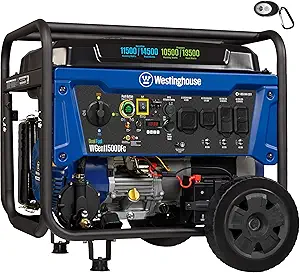 | Best for Long Runtime and Sensitive Electronics | Peak Watts: 14,500 | Running Watts: 11,500 | Fuel Tank Capacity: 9.5 gallons | VIEW LATEST PRICE | See Our Full Breakdown |
| Westinghouse 14500 Peak Watt Tri-Fuel Portable Generator with Remote Electric Start |  | Best for Versatility and Extended Fuel Options | Peak Watts: 14,500 | Running Watts: 11,500 (gasoline), 13,500 (propane), 12,000 (natural gas) | Engine: 550cc 4-Stroke OHV | VIEW LATEST PRICE | See Our Full Breakdown |
| Oxseryn Power Equipment 4400 Watts Inverter Generator Gas Powered |  | Best for Portable, Quiet Home and RV Backup | Peak Watts: 4400 | Running Watts: 3400 | Fuel Tank Capacity: 2 gallons | VIEW LATEST PRICE | See Our Full Breakdown |
| generators for hurricane season | Fuel Tank Capacity |
|---|---|
| Westinghouse 12500 Watt Dual F | 6.6 gallons |
| WEN 6800-Watt Dual Fuel RV-Rea | 2.9 gallons |
| Westinghouse 4650 Peak Watt Po | 4 Gallons |
| WEN 4,750-Watt 120V/240V Dual | — |
| Westinghouse 12000 Peak Watt D | — |
| PowerSmart 3800 Watt Dual Fuel | — |
| DuroStar DS13000MX 13,000-Watt | — |
| Westinghouse 14500 Peak Watt D | 9.5 gallons |
| Westinghouse 14500 Peak Watt T | 9.5 gallons |
| Oxseryn Power Equipment 4400 W | 2 gallons |
More Details on Our Top Picks
Westinghouse 12500 Watt Dual Fuel Portable Generator with Remote Electric Start
This generator stands out for its impressive peak wattage and dual fuel capability, making it a versatile choice for hurricane season. Compared to the Westinghouse iGen12000DFc, it offers slightly higher peak power, but at the cost of increased size and weight, which can make transportation more difficult. Its remote start feature adds convenience during emergencies, and the long runtime of up to 12 hours ensures sustained power. However, its bulkiness and higher price may deter those with limited storage space or tight budgets. This model is best suited for homeowners needing reliable, high-capacity backup that can run on either gasoline or propane.
Pros:- Dual fuel capability for versatile fuel options
- Remote start with key fob for quick, convenient operation
- Long runtime of up to 12 hours on a full tank
- Multiple outlets including transfer switch and RV-ready
Cons:- Heavy and bulky, making transportation and storage challenging
- Higher price compared to smaller or less powerful models
- Requires regular maintenance for optimal performance
Best for: Homeowners seeking a powerful, flexible generator capable of running major appliances during outages
Not ideal for: Small households or individuals with limited storage space, due to its size and weight
- Peak Watts:12500
- Running Watts:9500
- Fuel Type:Gasoline and Propane
- Engine:457cc 4-Stroke OHV
- Run Time:Up to 12 hours
- Fuel Tank Capacity:6.6 gallons
Our verdict“This generator is ideal for those who prioritize power and flexibility over portability and cost.”
WEN 6800-Watt Dual Fuel RV-Ready Electric Start Portable Inverter Generator with CO Watchdog
This WEN inverter generator provides clean, stable power, making it a strong choice for protecting sensitive electronics during outages. While its surge wattage of 6800 is lower than the Westinghouse iGen12000DFc, it excels with quiet operation at 64 decibels and built-in safety features like a CO watchdog sensor, which the larger models lack. Its dual-fuel capability and electric start provide convenience, but the limited runtime of about 6-9 hours on a 2.9-gallon tank means it’s better suited for shorter outages or mobile applications. Its portability, with wheels and a telescoping handle, makes it a practical option for RVs, camping, and backup power for small homes.
Pros:- Provides clean, stable power safe for sensitive electronics
- Dual-fuel capability with easy switch between gasoline and propane
- Electric start with backup recoil for convenience
- Built-in wheels and telescoping handle for portability
Cons:- Limited run time of approximately 6-9 hours depending on load and fuel
- Relatively heavy and bulky for some users
- Additional parallel connection kit sold separately
Best for: RV owners and those needing quiet, clean power for sensitive electronics during outages
Not ideal for: Homes requiring sustained, high-capacity power during prolonged outages due to limited runtime
- Engine Displacement:224cc
- Surge Watts (Gasoline):6800
- Rated Watts (Gasoline):5100
- Fuel Tank Capacity:2.9 gallons
- Run Time:up to 6.1 hours
- Noise Level:64 decibels
Our verdict“This inverter generator is best for users who prioritize quiet operation, portability, and electronics safety over extended runtime.”
Westinghouse 4650 Peak Watt Portable Generator, RV Ready, Gas Powered with CO Sensor
Compared to larger models like the Westinghouse iGen12000DFc, this generator offers a more manageable size with respectable power output for smaller homes or RVs. Its 4650 peak watts and 14-hour runtime on 4 gallons make it suitable for essential appliances, but it lacks the extensive outlets and advanced features of bigger units. The built-in CO sensor adds safety, although its weight and limited outlet options mean it requires some assistance for movement. This generator makes the most sense for users who need a dependable, space-efficient backup or RV power source without sacrificing safety features.
Pros:- High peak and running wattage suitable for basic needs
- Long run time of up to 14 hours on a single tank
- Includes safety features like CO sensor and outlet covers
- Durable engine with cast iron sleeve
Cons:- Lacks wheel kit, making mobility less convenient
- Heavy for its size, requiring assistance to move
- Limited outlet options for complex setups
Best for: Small households, RV travelers, or those with limited storage seeking reliable backup power
Not ideal for: Large homes or users needing to run multiple high-wattage appliances simultaneously
- Peak Wattage:4650 Watts
- Running Wattage:3600 Watts
- Fuel Tank Capacity:4 Gallons
- Run Time:Up to 14 hours
- Safety Features:CO Sensor, low oil shutdown
Our verdict“This generator is well-suited for small-scale backup needs with a focus on safety and portability.”
WEN 4,750-Watt 120V/240V Dual Fuel Portable Generator with Wheel Kit and Electric Start
This WEN generator offers a solid balance of power and portability, making it suitable for emergency backup during hurricane season. Its 4,750 surge watts and 3,800 running watts on gasoline, along with dual fuel capability, provide enough capacity for essential appliances. The electric start simplifies operation, and the included wheel kit enhances mobility. However, at nearly 100 pounds, it remains challenging for some users to move without assistance, and the absence of detailed price info makes it harder to evaluate value. It’s a good fit for those who want reliable power with added convenience, especially in mobile or outdoor scenarios.
Pros:- Dual fuel capability for flexible fuel sources
- Electric start for easy operation
- Includes wheel and handle kit for portability
- Long run time of up to 11 hours on a full tank
Cons:- Relatively heavy, making transportation difficult for some
- Requires regular engine maintenance
- Price not specified, complicating value assessment
Best for: Homeowners needing a portable yet capable generator for emergency or outdoor use
Not ideal for: Light users or those with very limited storage space due to its weight and size
- Power:4,750 surge / 3,800 running watts
- Voltage:120V/240V
- Engine:224cc 4-stroke OHV
- Tank Capacity:4 gallons
- Run Time:Up to 11 hours
Our verdict“This generator is well-suited for users seeking reliable, portable backup power with flexible fuel options.”
Westinghouse 12000 Peak Watt Dual Fuel Portable Inverter Generator with Remote Electric Start and Transfer Switch Ready
Compared to the Westinghouse WGen9500DF, the iGen12000DFc offers significantly higher peak wattage and advanced features like remote start, transfer switch readiness, and a digital data center. Its long runtime of 19 hours and quiet operation at 64 dBA make it ideal for whole-house backup or sensitive electronics. Nonetheless, its size and weight limit portability, and its higher price may be drawbacks for some users. This generator makes sense for those who want a robust, feature-rich unit capable of handling entire home loads with ease and minimal noise.
Pros:- High peak and running wattage suitable for whole-home backup
- Quiet operation at 64 dBA
- Long runtime of up to 19 hours on a large tank
- Remote start and transfer switch readiness
Cons:- Heavy and less portable due to size
- Higher price point for complex features
- Setup may be more complicated for less experienced users
Best for: Homeowners seeking a high-capacity, quiet, and feature-rich generator for whole-home backup
Not ideal for: Individuals needing a lightweight, portable solution for occasional power needs
- Peak Power:12,000W
- Running Power:9,000W
- Fuel Type:Gasoline and Propane
- Engine Displacement:457cc
- Runtime at 25% load:19 hours
- Tank Capacity:7.9 gallons
Our verdict“This generator is best for users who prioritize power, quiet operation, and smart features over portability and budget.”
PowerSmart 3800 Watt Dual Fuel Inverter Generator for Camping or Home Use
This inverter generator stands out for its quiet operation at just 59 dBA, making it ideal for neighborhood-friendly backup during hurricanes. Compared with the larger Westinghouse 14500 Peak Watt models, it doesn’t deliver as much raw power, but its long runtime—up to 24 hours on propane—compensates for smaller fuel capacity, making it suitable for extended outages. Its dual fuel capability offers flexibility, though with a smaller tank, it’s less suitable for continuous use without refueling. The inclusion of safety features like overload and CO sensors adds peace of mind, especially in home settings. However, its limited run time on gasoline and heavier weight can impact portability for those needing quick, frequent moves.
Pros:- Quiet operation at 59 dBA, neighbor-friendly
- Up to 24 hours runtime on propane for extended use
- Multiple outlets for versatile power needs
- Includes safety features like overload and CO sensors
Cons:- Limited to 8 hours runtime on gasoline at 25% load
- Small fuel tank restricts continuous use without refueling
- Heavier weight reduces portability
Best for: Small households or campers needing quiet, reliable backup with extended runtime on propane
Not ideal for: Large households or job sites requiring sustained high power, due to its limited fuel capacity and lower wattage
- Starting Watts (Gasoline):3800
- Running Watts (Gasoline):3300
- Starting Watts (Propane):3500
- Running Watts (Propane):3100
- Noise Level:59 dBA
- Runtime at 25% load:8 hours
- Gas Tank Capacity:1.3 gallons
- Outlets:120V 30A L5-30R, 120V 20A 5–20R, 12V 8A DC, dual 5V 2.1A USB
- Warranty:2 years
Our verdict“This generator makes sense for users prioritizing quiet operation and long runtime on propane over raw power or portability.”
DuroStar DS13000MX 13,000-Watt Dual Fuel Portable Generator with Electric Start
The DuroStar DS13000MX offers an impressive 13,000 watts, making it ideal for powering entire homes during hurricanes. Compared to the Westinghouse 14500 Peak Watt models, it provides slightly lower peak wattage but excels in raw power, suited for demanding appliances or multiple circuits. Its dual fuel capability allows for longer run times and flexibility, while the electric start offers convenience during emergencies. The all-metal construction suggests durability for long-term use, though its weight makes it less portable—more suited to stationary backup than frequent relocation. This generator’s high power output and robust build make it a solid choice for those who want reliable, whole-house capacity but are willing to handle its size and cost.
Pros:- Powerful 13,000-watt output suitable for whole-home backup
- Dual fuel capability extends operational flexibility
- Electric start with push-button convenience
- Durable all-metal construction for longevity
Cons:- Heavy and less portable, difficult to move during outages
- More expensive compared to smaller models
- Potentially noisy during operation
Best for: Homeowners seeking reliable, high-capacity backup power in severe storm seasons
Not ideal for: Campers or users needing lightweight, portable units for occasional use, due to its size and weight
- Power Output:13,000 Watts
- Fuel Types:Gasoline, Propane
- Start Type:Electric Start
- Transfer Switch Ready:Yes
- Outlet:50-Amp
- Construction:All-metal
Our verdict“This generator fits those who need serious power and durability over portability and ease of use.”
Westinghouse 14500 Peak Watt Dual Fuel Portable Generator with Remote Electric Start and Transfer Switch Compatibility
This model offers a strong balance of power and convenience, with up to 14,500 peak watts and 11,500 running watts. Compared with the smaller inverter options, it provides a significant boost in raw wattage, making it suitable for larger appliances and more comprehensive backup. Its long run time—up to 19 hours on gasoline—reduces refueling needs during extended outages, while remote electric start simplifies operation. Its dual fuel design adds flexibility, but the unit is heavy and less portable, requiring careful handling. Its low THD ensures safe operation of sensitive electronics, making it a good choice for home backup or job sites where stability matters. The tradeoff is that it’s bulkier and pricier, suited for those prioritizing power and endurance.
Pros:- Powerful dual fuel capability with long runtime
- Remote electric start for effortless operation
- Safe for sensitive electronics with low THD
- Long fuel capacity for extended outages
Cons:- Heavy and challenging to move
- Requires fuel management for dual fuel operation
- Higher price compared to smaller inverter models
Best for: Homeowners and small contractors needing reliable, long-lasting power with sensitive electronics in mind
Not ideal for: Campers or portable users who need lightweight, easy-to-carry units, given its weight and size
- Peak Watts:14,500
- Running Watts:11,500
- Fuel Tank Capacity:9.5 gallons
- Runtime:Up to 19 hours
- Fuel Types:Gasoline and Propane
- Start Type:Remote Electric Start
Our verdict“This generator is best suited for users who need extended, stable power with the convenience of remote start and sensitive electronics protection.”
Westinghouse 14500 Peak Watt Tri-Fuel Portable Generator with Remote Electric Start
The Westinghouse tri-fuel model offers up to 14,500 peak watts and 11,500 running watts, with the added benefit of natural gas compatibility. Compared with dual fuel units like the B0DXX1NNV2, it provides an even broader fuel choice, which can be advantageous for long-term outages or outdoor use. Its long runtime and low THD make it safe for sensitive electronics, while remote electric start adds convenience. The heavy-duty 550cc engine and durable construction suggest long-term reliability, but its weight and complexity may challenge users unfamiliar with multi-fuel setups. This generator makes sense for those who want maximum fuel options and extended operation, but it’s less ideal for lightweight portability or quick deployment.
Pros:- Tri-fuel capability for maximum fuel options
- Long runtime on gasoline, propane, or natural gas
- Low THD safe for sensitive electronics
- Remote electric start for ease of use
Cons:- Heavy and difficult to transport
- More complex setup for beginners
- Residual odor after factory testing possible
Best for: Homeowners or outdoor enthusiasts who want maximum fuel flexibility and extended runtime
Not ideal for: Users seeking a lightweight, easy-to-move generator for quick setups, due to its weight and setup complexity
- Peak Watts:14,500
- Running Watts:11,500 (gasoline), 13,500 (propane), 12,000 (natural gas)
- Engine:550cc 4-Stroke OHV
- Fuel Tank Capacity:9.5 gallons
- Runtime:Up to 19 hours
- Start Type:Remote Electric Start
Our verdict“This generator is designed for those needing maximum fuel options and long runtime, accepting the tradeoff of increased size and setup complexity.”
Oxseryn Power Equipment 4400 Watts Inverter Generator Gas Powered
The Oxseryn 4400-watt inverter generator offers a compact, lightweight option for emergency power, especially suited for RVs and small homes. Compared to larger models like the Westinghouse 14500 Watt series, it sacrifices some raw power for portability and quiet operation, with noise levels under 72 dBA. Its 14-hour runtime and multiple output ports enhance usability during outages or travel. Weighing only 56 lbs, it’s easy to carry, making it ideal for users who need quick deployment or frequent relocation. However, its lower wattage and fuel capacity mean it’s less suitable for powering larger appliances or whole-house systems during prolonged outages. It’s a solid choice for those prioritizing portability and low noise over maximum power.
Pros:- Lightweight at 56 lbs, easy to carry
- Low noise operation under 72 dBA
- Long runtime of up to 14 hours
- Multiple ports including RV-ready outlet
Cons:- Limited to 4400 peak watts, less suitable for large appliances
- Small fuel tank restricts extended use
- Possible residual smell from factory testing
Best for: RV owners and small households needing portable backup power with easy transport
Not ideal for: Homes with high power demands or long outages, due to its limited wattage and fuel capacity
- Peak Watts:4400
- Running Watts:3400
- Fuel Tank Capacity:2 gallons
- Runtime:Up to 14 hours
- Noise Level:Under 72 dBA
- Weight:56 lbs
Our verdict“This inverter generator makes the most sense for RV owners or small households needing portable, quiet power on the go.”

How We Picked
We evaluated generators based on performance, fuel versatility, ease of operation, build quality, and safety features. Priority was given to models with sufficient wattage to power essential appliances and tools during an outage, along with features like remote start, transfer switch compatibility, and noise control. We also considered user feedback and reliability to ensure each option offers consistent performance. The ranking reflects a balance of value, functionality, and suitability for hurricane season preparedness, with the top choices excelling across these factors.Factors to Consider When Choosing Best Generators For Hurricane Season
When selecting a generator for hurricane season, it’s vital to consider factors that impact reliability, safety, and convenience. A well-chosen generator can keep your essentials running, but the wrong one can fall short or become difficult to operate during stressful conditions. Carefully weighing these considerations helps ensure your investment offers peace of mind when it matters most.Power Output and Size
Determine your essential power needs by listing appliances and devices you want to run simultaneously. Larger generators provide more wattage but tend to be heavier and less portable. For hurricane preparedness, a model with at least 5,000 running watts is recommended to handle refrigerators, lights, and small electronics reliably. Consider a portable inverter if noise and fuel efficiency are priorities, but ensure it meets your wattage requirements.
Fuel Type and Runtime
Dual fuel generators offer flexibility, allowing you to switch between gasoline and propane, which can be vital during extended outages. Propane generally burns cleaner and lasts longer in storage, but gasoline provides quicker refueling. Think about how long you might need backup power and choose a model with a sufficient runtime—ideally 8–12 hours at half load—to avoid frequent refueling during storms.
Noise Levels and Portability
Noise can be a critical factor if you live in a neighborhood or want to keep your home peaceful during outages. Inverter generators typically operate more quietly but often at a higher price point. Portability features like wheels and handles matter if you need to move your generator around, especially if you’re shifting it to a safe spot away from storm debris. Balance noise and mobility based on your environment and usage scenario.
Safety and Ease of Use
Features like CO sensors, automatic shutoff, and remote start enhance safety and convenience. During emergencies, ease of operation reduces stress—look for models with electric start, especially if you need to start and stop frequently. Transfer switch compatibility is vital for safe home connection, preventing backfeeding and protecting utility workers. Always follow safety guidelines to prevent carbon monoxide poisoning and other hazards.
Price and Warranty
Budget constraints influence your choice, but investing in a reputable brand with good warranty coverage can save money in the long run. Higher-priced units often feature better durability, quieter operation, and more advanced safety features. Consider your expected usage frequency and environment to determine if a premium model offers enough added value, or if a more affordable option still meets your needs adequately.
Frequently Asked Questions
How much power do I need for essential appliances during a hurricane outage?
For basic essentials like a refrigerator, lights, and small electronics, a generator with around 5,000 to 7,500 watts should suffice. If you plan to run larger appliances or multiple devices simultaneously, look for models providing 10,000 watts or more. It’s wise to add up the wattage of all devices you want to power to select a generator that can comfortably handle that load without overworking.
Is a dual fuel generator worth the extra cost for hurricane preparedness?
Yes, a dual fuel generator provides increased flexibility by allowing you to switch between gasoline and propane, which can be critical during extended outages when fuel availability fluctuates. Propane burns cleaner and stores longer, making it a reliable backup option. While dual fuel models tend to be more expensive upfront, their versatility and longer shelf life for fuel make them a smart investment for hurricane season.
What safety features should I look for in a generator for storm use?
Key safety features include carbon monoxide sensors, automatic shutoff, and proper grounding. CO sensors detect dangerous fumes and turn off the generator automatically, preventing poisoning. An automatic shutoff can protect your generator from overloads, and proper grounding reduces the risk of electrical faults. Always operate generators outdoors in well-ventilated areas and follow safety instructions to prevent accidents.
How important is noise level when choosing a generator for hurricane season?
Noise level is particularly important if you live close to neighbors or want to maintain a peaceful environment during outages. Inverter generators typically produce less noise, making them suitable for residential areas, but they often come at a higher price. Consider your environment and whether noise might be a concern—if so, investing in a quieter inverter model can improve your overall experience during storm-related power outages.
Should I prioritize portability or power output for hurricane preparedness?
Ideally, you want a balance of both—sufficient power to run your essential appliances and portability to move the generator safely away from storm debris or to a secure location. Larger, high-wattage units tend to be heavier and less portable, but some models include wheels and handles to improve mobility. Think about your typical setup and whether you’ll need to move the generator frequently or keep it stationary during an outage.
Conclusion
For those seeking the best overall performance, the Westinghouse 12500 Watt Dual Fuel Portable Generator offers robust power with remote start and transfer switch compatibility, making it ideal for comprehensive home backup. Budget-conscious buyers will find the WEN 6800-Watt Dual Fuel RV-Ready Generator offers excellent value with sufficient wattage and portability. If convenience and safety are priorities, the Oxseryn Power Equipment 4400 Watts Inverter Generator provides quiet operation and RV readiness at a reasonable price. Beginners or occasional users should consider inverter models for ease of use, while those with larger power needs should opt for high-wattage, dual fuel options. Ultimately, matching your specific needs and environment will ensure your generator provides reliable, stress-free power during hurricane season.
Halloween Picks

Halloween Inflatable Haunted House Maze – 20×20 ft with Removable Roof and Blower

Kalolary 11 ft Halloween Inflatable Archway Ghost House Tunnel

HOPOCO Halloween Pumpkin Fog Machine with 12 LED Colors & 4 Light Modes
As an affiliate, we earn on qualifying purchases.