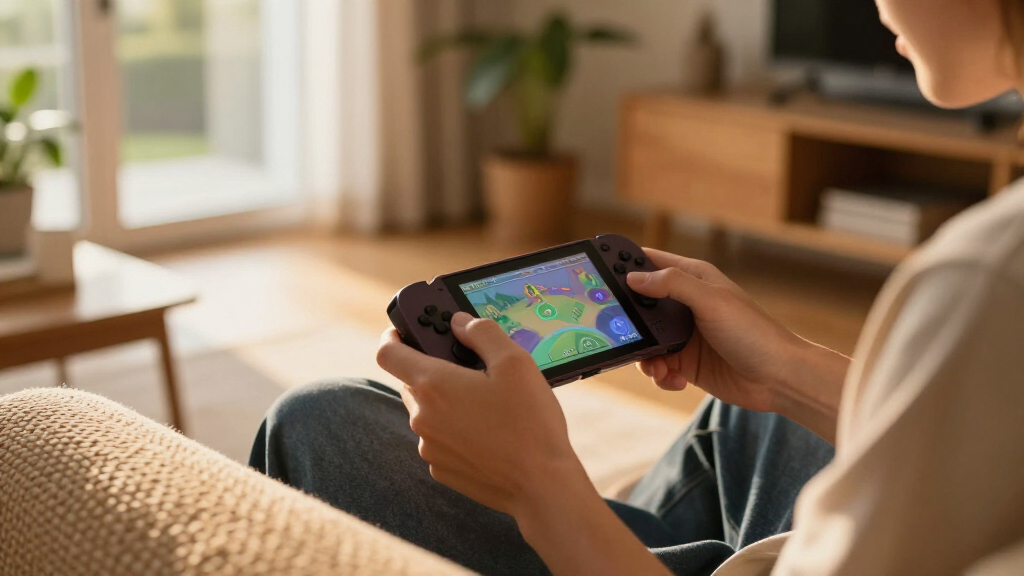

The best gaming handhelds balance performance, comfort, game access, and battery life rather than simply packing in the most powerful hardware. I’d put the Valve Steam Deck OLED first for its cohesive handheld experience, while the Lenovo Legion Go S stands out for its large, fast screen and the Retroid Pocket Flip 2 for Android and retro play. The main tradeoff is choosing between a PC library, simpler emulation or Android gaming, and cloud streaming—with different demands on setup, battery, and connectivity. A powerful Windows handheld can run a broad range of PC games, but it may take more tweaking than a purpose-built gaming interface. Keep reading for the full breakdown of where each of the 15 picks fits and what you give up with each.

Get the latest gadgets delivered free with Prime
- Fast, free delivery on millions of items
- Prime Video, Amazon Music and more included
- Member-only deals all year
Complete the kit



Key Takeaways
- The Steam Deck OLED is the strongest all-around fit for players who want a console-like way to play a supported PC library, rather than maximum hardware specifications.
- The Lenovo Legion Go S and the two ROG Xbox Ally models prioritize Windows gaming; their appeal depends on broad game access and screen performance, while usability may require more setup than SteamOS.
- The GPD Win 5 is the performance-first outlier, with unusually ambitious PC hardware that suits buyers willing to accept a larger, more demanding handheld setup.
- Android and cloud picks solve different problems: the Retroid Pocket Flip 2 suits portable Android and retro gaming, while the abxylute One Pro depends more heavily on a reliable internet connection.
- The retro-focused RG and My Arcade devices are simpler, narrower choices; they make more sense for dedicated classic-game play than as replacements for PC handhelds.
| RG56PRO Retro Handheld Game Console with EVA Hard Case, 128GB |  | Best for Retro Game Libraries | Operating system: Linux | Processor: Rockchip RK3562 quad-core, up to 2.0GHz | Display: 5.5-inch IPS LCD, 1280 × 720 | VIEW LATEST PRICE | See Our Full Breakdown |
| MSI Claw A8 Gaming Handheld, AMD Ryzen Z2 Extreme, 8-inch FHD+ 120Hz Display, 24GB LPDDR5x, 1TB NVMe SSD, White |  | Best Premium Windows Handheld | Operating system: Windows 11 Home | Processor: AMD Ryzen Z2 Extreme | Display: 8-inch FHD+ (1920 × 1200), 120Hz | VIEW LATEST PRICE | See Our Full Breakdown |
| Retroid Pocket Flip 2 Android Handheld Game Console, 5.5-Inch AMOLED 1080p Display, 8GB RAM, 128GB Storage, Black | 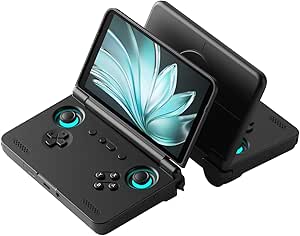 | Best Compact Android Handheld | Operating system: Android 13 | Processor: Qualcomm Snapdragon 865 | GPU: Adreno 650 | VIEW LATEST PRICE | See Our Full Breakdown |
| My Arcade Atari Pocket Player with 100 Games |  | Best for Simple Atari Nostalgia | Included games: 100: 80 Atari 2600 games and 20 bonus games | Display: 2.75-inch color LCD | Power: Four AA batteries or USB-C | VIEW LATEST PRICE | See Our Full Breakdown |
| Lenovo Legion Go S Handheld Gaming Console, Ryzen Z2 Go, 8-inch 120Hz Display, 16GB RAM, 512GB Storage, Glacier White |  | Best for a Large, Fast Windows Display | Platform: Windows | Processor: AMD Ryzen Z2 Go | Graphics: AMD Radeon | VIEW LATEST PRICE | See Our Full Breakdown |
| RG52MINI Retro Handheld Game Console with 5.5-Inch IPS Display |  | Best for Flexible Retro Play | Processor: Rockchip RK3562 quad-core Cortex-A53, 2.0 GHz | Memory: 2+4 GB RAM | Display: 5.5-inch IPS, 720 × 1280 | VIEW LATEST PRICE | See Our Full Breakdown |
| RF40H Handheld Retro Game Console with 4-Inch IPS Display |  | Best Compact Retro Pick | Display: 4-inch IPS, 720 × 720 | Operating system: Linux | Storage: 64 GB | VIEW LATEST PRICE | See Our Full Breakdown |
| ASUS ROG Xbox Ally 7-inch 1080p 120Hz Gaming Handheld |  | Best for Xbox and PC Game Stores | Processor: AMD Ryzen Z2 A | Operating system: Windows 11 | Display: 7-inch 1080p touchscreen, 120Hz, FreeSync Premium | VIEW LATEST PRICE | See Our Full Breakdown |
| Valve Steam Deck OLED 1TB Handheld Gaming Console |  | Best Overall for Steam Players | Platform: Steam Deck | Storage: 1TB NVMe SSD; compatible with microSD | Display: 7.4-inch HDR OLED, 1280 × 800 | VIEW LATEST PRICE | See Our Full Breakdown |
| GPD Win 5 Handheld Gaming PC, Ryzen AI Max+ 395, 32GB RAM, 2TB SSD, Radeon 8060S |  | Best for Maximum Listed PC Hardware | Processor: AMD Ryzen AI Max+ 395, 16-core | Graphics: Radeon 8060S, 40 CUs, RDNA 3.5 | Memory: 32GB LPDDR5X, 8000 MT/s | VIEW LATEST PRICE | See Our Full Breakdown |
| RG43H Pro Retro Handheld Game Console, 64GB |  | Best for Retro Gaming on a TV | Processor: Rockchip RK3562 quad-core | Systems: EmuELEC and RGBOX | Display: 4.3-inch IPS, 1024 × 768 | VIEW LATEST PRICE | See Our Full Breakdown |
| MSI Claw Gaming Handheld, Intel Arc G3 Extreme, 8-inch FHD+ 120Hz Display, 32GB RAM, 1TB SSD, Windows 11 Home, Void Purple |  | Best for a Large, Fast Screen and Ample Storage | Operating system: Windows 11 Home | Processor: Intel Arc G3 Extreme; 1.5GHz base, up to 4.7GHz | Display: 8-inch FHD+, 120Hz | VIEW LATEST PRICE | See Our Full Breakdown |
| MANGMI AIR X Android Handheld Game Console, 5.5-Inch FHD IPS Touchscreen, 4GB RAM, 64GB Storage, Black |  | Best Compact Android Handheld | Processor: Qualcomm Snapdragon 662 octa-core, up to 2.1GHz | Operating system: Android 14 | Display: 5.5-inch FHD IPS touchscreen, 1920 × 1080, 400 nits | VIEW LATEST PRICE | See Our Full Breakdown |
| abxylute One Pro Cloud Gaming Handheld, 7-Inch 1080p Touchscreen, 64GB |  | Best for Cloud Gaming and Remote Play | Platform: Android | Chipset: MediaTek Genio 510 | Display: 7-inch 1080p touchscreen | VIEW LATEST PRICE | See Our Full Breakdown |
| ASUS ROG Xbox Ally Gaming Handheld, 7-inch 120Hz Touchscreen, Ryzen Z2 A, 16GB RAM, 512GB SSD, Windows 11 Home, with DKZ Hub |  | Best for Broad PC Game-Store Access | Operating system: Windows 11 Home | Processor: AMD Ryzen Z2 A | Display: 7-inch 1080p IPS touchscreen, 120Hz, 500 nits | VIEW LATEST PRICE | See Our Full Breakdown |
| gaming handheld | Display | Storage | Connectivity | Processor |
|---|---|---|---|---|
| RG56PRO Retro Handheld Game Co | 5.5-inch IPS LCD, 1280 × 720 | 128GB | Wi-Fi, HDMI, USB Type-C | Rockchip RK3562 quad-core, up to 2.0GHz |
| MSI Claw A8 Gaming Handheld | 8-inch FHD+ (1920 × 1200), 120Hz | 1TB NVMe SSD | Thunderbolt 4, Bluetooth, Wi-Fi | AMD Ryzen Z2 Extreme |
| Retroid Pocket Flip 2 Android | 5.5-inch 1080p AMOLED, 500 nits, 60Hz | 128GB UFS 3.1 | Wi-Fi 6, Bluetooth 5.1, USB-C DisplayPort, 3.5mm audio jack | Qualcomm Snapdragon 865 |
| My Arcade Atari Pocket Player | 2.75-inch color LCD | — | — | — |
| Lenovo Legion Go S Handheld Ga | 8-inch PureSight IPS, 1920 × 1080, 120Hz, 16:10 | — | HDMI, USB, Bluetooth, Wi-Fi | AMD Ryzen Z2 Go |
| RG52MINI Retro Handheld Game C | 5.5-inch IPS, 720 × 1280 | 64 GB; expandable up to 1 TB via TF card | 2.4 GHz Wi-Fi, HDMI output, and USB Type-C with OTG, charging, and DP output | Rockchip RK3562 quad-core Cortex-A53, 2.0 GHz |
| RF40H Handheld Retro Game Cons | 4-inch IPS, 720 × 720 | 64 GB | Wi-Fi | — |
| ASUS ROG Xbox Ally 7-inch 1080 | 7-inch 1080p touchscreen, 120Hz, FreeSync Premium | 512GB SSD | — | AMD Ryzen Z2 A |
| Valve Steam Deck OLED 1TB Hand | 7.4-inch HDR OLED, 1280 × 800 | 1TB NVMe SSD; compatible with microSD | Wi-Fi 6E | — |
| GPD Win 5 Handheld Gaming PC | High-resolution, high-refresh-rate display; resolution and refresh rate not specified | 2TB | Bluetooth | AMD Ryzen AI Max+ 395, 16-core |
| RG43H Pro Retro Handheld Game | 4.3-inch IPS, 1024 × 768 | 64GB; expandable up to 512GB | 2.4GHz Wi-Fi, HDMI output, USB Type-C with OTG | Rockchip RK3562 quad-core |
| MSI Claw Gaming Handheld | 8-inch FHD+, 120Hz | 1TB NVMe SSD | Wi-Fi and Bluetooth | Intel Arc G3 Extreme; 1.5GHz base, up to 4.7GHz |
| MANGMI AIR X Android Handheld | 5.5-inch FHD IPS touchscreen, 1920 × 1080, 400 nits | 64GB; expandable via microSD | — | Qualcomm Snapdragon 662 octa-core, up to 2.1GHz |
| abxylute One Pro Cloud Gaming | 7-inch 1080p touchscreen | 64GB; microSD support | Wi-Fi, HDMI, and USB | — |
| ASUS ROG Xbox Ally Gaming Hand | 7-inch 1080p IPS touchscreen, 120Hz, 500 nits | 512GB SSD | Wi-Fi 6E and Bluetooth 5.4 | AMD Ryzen Z2 A |
More Details on Our Top Picks
RG56PRO Retro Handheld Game Console with EVA Hard Case, 128GB
The RG56PRO is a practical pick for players who want a ready-made retro library rather than a Windows PC in their hands. Its 128GB game card and stated support for more than 31,000 games give it a different purpose from the MSI Claw A8, which is built for demanding PC games and broader Windows software. The 5.5-inch 720p IPS display, Hall-effect shoulder controls, and active cooling add useful comfort for longer retro sessions, while HDMI output lets you connect to a larger screen. Wi-Fi multiplayer works only with compatible games and devices, so it is not a universal online option. Battery claims vary: the specifications list up to eight hours as well as six hours average. I’d choose it for simple, portable retro play, not modern PC gaming.
Pros:- 128GB game card and a stated library of more than 31,000 games
- 5.5-inch 1280 × 720 IPS display with HDMI output
- Hall-effect shoulder controls and active cooling
- Lightweight 7.2-ounce body with an included EVA hard case
Cons:- Battery estimates conflict, with both up to eight hours and six hours average listed
- Wi-Fi multiplayer is limited to compatible games and devices
- Linux-based hardware is aimed at retro play, not modern Windows games
Best for: Retro gaming fans who want a large preloaded library, a carrying case, and HDMI output without setting up a Windows handheld.
Not ideal for: Players seeking current PC releases, dependable online multiplayer across a wide range of games, or a clearly stated battery runtime.
- Operating system:Linux
- Processor:Rockchip RK3562 quad-core, up to 2.0GHz
- Display:5.5-inch IPS LCD, 1280 × 720
- Storage:128GB
- Battery:5000mAh lithium-ion polymer
- Controls:Hall-effect L1/L2/R1/R2 controls and dual 3D joysticks
- Connectivity:Wi-Fi, HDMI, USB Type-C
- Weight:7.2 ounces
- Included accessory:EVA hard case
Our verdict“Choose the RG56PRO if a broad retro library matters more than the PC-game performance and software flexibility of the MSI Claw A8.”
MSI Claw A8 Gaming Handheld, AMD Ryzen Z2 Extreme, 8-inch FHD+ 120Hz Display, 24GB LPDDR5x, 1TB NVMe SSD, White
The MSI Claw A8 earns its premium Windows role through a potent combination of Ryzen Z2 Extreme, 24GB of memory, and a 1TB SSD. That capacity leaves more room for a substantial PC game collection than the Lenovo Legion Go S’s 512GB drive, while the 8-inch 120Hz display gives compatible games room to show fluid motion. Windows 11 Home and Thunderbolt 4 also make this more versatile than retro-focused options such as the RG56PRO, though that versatility comes with a heavier, 1.7-pound handheld. The supplied information does not specify battery capacity or runtime, so I wouldn’t pick it on the promise of long sessions away from power. Its software update support date is also unknown. This makes the most sense for players who value performance and storage over light weight.
Pros:- AMD Ryzen Z2 Extreme processor for demanding handheld PC gaming
- 8-inch 1920 × 1200 display with a 120Hz refresh rate
- 24GB LPDDR5x memory and a 1TB NVMe SSD
- Thunderbolt 4 alongside Wi-Fi, Bluetooth, and an SD card reader
Cons:- At 1.7 pounds, it is heavier than the compact RG56PRO
- Battery capacity and runtime are not provided
- Software update support date is listed as unknown
Best for: PC handheld players who want a high-spec Windows system, a large game library on-device, and a fast refresh-rate screen.
Not ideal for: Travelers who prioritize low weight or need documented battery endurance and a known software update support timeline.
- Operating system:Windows 11 Home
- Processor:AMD Ryzen Z2 Extreme
- Display:8-inch FHD+ (1920 × 1200), 120Hz
- Memory:24GB LPDDR5x
- Storage:1TB NVMe SSD
- Connectivity:Thunderbolt 4, Bluetooth, Wi-Fi
- Weight:1.7 pounds
- Warranty:1-year limited manufacturer warranty
Our verdict“Pick the MSI Claw A8 over the more modest Legion Go S if you want more memory and storage in a Windows handheld and can accept its weight and unspecified battery runtime.”
Retroid Pocket Flip 2 Android Handheld Game Console, 5.5-Inch AMOLED 1080p Display, 8GB RAM, 128GB Storage, Black
The Retroid Pocket Flip 2 suits players who want an Android-based handheld that closes around its screen for travel. Its clamshell design protects the 5.5-inch AMOLED panel in a bag, and the 1080p display is sharper and richer than the RG56PRO’s 720p IPS screen. The Snapdragon 865 and 8GB of RAM support Android apps and games, with Google Play providing a way to add titles; unlike the RG56PRO, it does not arrive with games preloaded. Hall-effect sticks, active cooling, Wi-Fi 6, and 27W charging round out a capable compact setup. Its 60Hz refresh rate is less fluid than the 120Hz panels on the MSI Claw A8 and Lenovo Legion Go S, and no battery runtime is specified. I’d favor it for portability and Android flexibility, not large-screen PC gaming.
Pros:- Clamshell body helps protect the display during transport
- 5.5-inch 1080p AMOLED screen with 500-nit brightness
- Snapdragon 865, 8GB RAM, and 128GB UFS 3.1 storage
- Hall-effect sticks, active cooling, Wi-Fi 6, and 27W fast charging
Cons:- Games are not preloaded and must be downloaded or added by the owner
- 60Hz display is slower than the 120Hz panels on the MSI Claw A8 and Legion Go S
- Battery runtime is not specified
Best for: Android gamers and retro enthusiasts who want a pocketable clamshell, a protected display, and the freedom to install apps from Google Play.
Not ideal for: Buyers who want games included out of the box, a 120Hz display, or a stated battery-life estimate.
- Operating system:Android 13
- Processor:Qualcomm Snapdragon 865
- GPU:Adreno 650
- Memory:8GB LPDDR4x
- Storage:128GB UFS 3.1
- Display:5.5-inch 1080p AMOLED, 500 nits, 60Hz
- Battery and charging:5,000mAh; 27W fast charging
- Connectivity:Wi-Fi 6, Bluetooth 5.1, USB-C DisplayPort, 3.5mm audio jack
- Weight:10.72 ounces
Our verdict“Choose the Retroid Pocket Flip 2 for a sharper, screen-protecting Android handheld, but choose the RG56PRO if you want a large included retro library.”
My Arcade Atari Pocket Player with 100 Games
The My Arcade Atari Pocket Player is a deliberately simple choice: it includes 100 built-in games, including 80 Atari 2600 titles, with no app store or library setup involved. That makes it easier to pick up than the Android-powered Retroid Pocket Flip 2, where games must be downloaded, but its 2.75-inch color LCD and single-player focus are a much narrower experience. A built-in speaker, headphone jack, and brightness and volume controls cover the basics. Power comes from four AA batteries or USB-C, but neither the batteries nor a USB-C cable is included; battery use requires standard non-rechargeable cells. Compared with the RG56PRO, this is not a broad retro platform with a large game card and HDMI output. I’d treat it as a dedicated Atari nostalgia device, not a general-purpose gaming handheld.
Pros:- 100 built-in titles, including 80 Atari 2600 games
- Compact handheld design for simple portable play
- Built-in speaker and 3.5 mm headphone jack
- Adjustable volume and screen brightness
Cons:- 2.75-inch screen is much smaller than the displays on the Retroid Pocket Flip 2 and RG56PRO
- Four AA batteries and USB-C cable are not included
- Single-player design and fixed game selection limit flexibility
Best for: Atari fans and casual players who want a small, straightforward handheld with classic games already installed.
Not ideal for: Players who want a larger screen, modern gaming features, expandable game options, or rechargeable batteries included.
- Included games:100: 80 Atari 2600 games and 20 bonus games
- Display:2.75-inch color LCD
- Power:Four AA batteries or USB-C
- Audio:Built-in speaker and 3.5 mm headphone jack
- Players:1
- Dimensions:5.8 × 1.5 × 2.8 inches
- Weight:250 g
- Warranty:120 days against manufacturer defects
Our verdict“Choose the Atari Pocket Player for ready-to-play Atari nostalgia; the RG56PRO is a better fit if you want a broader retro library and a larger screen.”
Lenovo Legion Go S Handheld Gaming Console, Ryzen Z2 Go, 8-inch 120Hz Display, 16GB RAM, 512GB Storage, Glacier White
The Legion Go S puts its emphasis on a generous screen and comfortable controls rather than matching the MSI Claw A8’s listed memory and storage. Its 8-inch 120Hz touchscreen offers room for PC games and a fast refresh rate, while TrueStrike controllers with anti-slip texture are shaped for longer handheld sessions. The 55.5Wh battery supports rapid charging—Lenovo lists 50% in 30 minutes and a full charge in 90—but does not provide a playtime estimate, so charging speed cannot answer how long it lasts unplugged. With a Ryzen Z2 Go, 16GB of memory, and 512GB storage, it sits below the Claw A8’s Ryzen Z2 Extreme, 24GB RAM, and 1TB SSD on paper. The included Game Pass and EA Play access adds a convenient starting library. I’d choose it for screen size and grip, not maximum listed specs.
Pros:- 8-inch 1920 × 1080 touchscreen with a 120Hz refresh rate
- TrueStrike controllers feature ergonomic shaping and anti-slip texture
- 55.5Wh battery supports rapid charging
- Includes three months of PC Game Pass and EA Play
Cons:- Ryzen Z2 Go, 16GB memory, and 512GB storage are below the MSI Claw A8’s listed specifications
- Battery playtime is not specified
- Software update support date is listed as unknown
Best for: Windows handheld players who favor an 8-inch 120Hz touchscreen, textured ergonomic controls, and rapid charging over maximum memory and storage.
Not ideal for: Buyers who want the strongest listed processor and largest built-in SSD in this group, or who need a specified battery runtime.
- Platform:Windows
- Processor:AMD Ryzen Z2 Go
- Graphics:AMD Radeon
- Display:8-inch PureSight IPS, 1920 × 1080, 120Hz, 16:10
- Brightness and color:500 nits; 100% sRGB
- Memory and storage:16GB memory; 512GB storage
- Battery:55.5Wh
- Charging:50% in 30 minutes; full charge in 90 minutes
- Connectivity:HDMI, USB, Bluetooth, Wi-Fi
Our verdict“Pick the Legion Go S if its large, fast screen and textured controls matter more to you than the MSI Claw A8’s higher listed memory and storage.”
RG52MINI Retro Handheld Game Console with 5.5-Inch IPS Display
The RG52MINI suits players who want a dedicated retro handheld with room to explore different emulation setups. Its EmuELEC and RGBOX systems, dual joysticks, and 5.5-inch vertical 720 × 1280 screen offer more flexibility than the compact, square-screen RF40H. Expandable storage and HDMI output also make it easier to carry a larger library or play on a TV. The 5000 mAh battery is rated for up to eight hours, though actual runtime will depend on use. This is not the pick for someone seeking modern PC storefronts like the Steam Deck OLED; its appeal is retro-focused software and controls. The listing also gives conflicting built-in game counts, so I would focus on its hardware and emulator support rather than a promised library size.
Pros:- EmuELEC and RGBOX provide two system options
- 5.5-inch laminated IPS display with 720 × 1280 resolution
- Storage expands up to 1 TB via TF card, with HDMI output for TV play
- Dual joysticks, Wi-Fi, and a 5000 mAh battery rated for up to eight hours
Cons:- The listed built-in game counts are inconsistent
- Battery runtime is an estimate and varies with use
Best for: Retro-game fans who want dual system options, joystick controls, expandable storage, and the ability to connect to a TV
Not ideal for: Players who want a verified game library or modern PC storefront access rather than an emulator-focused handheld
- Processor:Rockchip RK3562 quad-core Cortex-A53, 2.0 GHz
- Memory:2+4 GB RAM
- Display:5.5-inch IPS, 720 × 1280
- Storage:64 GB; expandable up to 1 TB via TF card
- Operating systems:EmuELEC and RGBOX
- Battery:5000 mAh; up to 8 hours of gameplay
- Controls:Dual 3D joysticks and mechanical buttons
- Connectivity:2.4 GHz Wi-Fi, HDMI output, and USB Type-C with OTG, charging, and DP output
Our verdict“Choose the RG52MINI if you want a flexible retro handheld with TV output, but skip it if a confirmed game library or current PC games matter most.”
RF40H Handheld Retro Game Console with 4-Inch IPS Display
The RF40H is the compact choice in this group: its 4-inch, 720 × 720 display and small body are better suited to a bag or quick play session than the larger RG52MINI. Linux, Wi-Fi, and support for more than 20 emulators give it a broad retro focus, while the supplied organizer bag and screen film make it a ready-to-carry package. Its square display is a distinct tradeoff: it keeps the device compact, but is less suited to games designed around a widescreen format. The advertised library of over 20,000 games may appeal to buyers who want lots of included content, but the count alone does not tell you which titles are present. Compared with the Steam Deck OLED, this is for simpler retro play, not PC storefront gaming.
Pros:- Compact 4-inch IPS screen with 720 × 720 resolution
- Linux system supports more than 20 emulators
- Wi-Fi and stereo speakers, with a headphone jack for private play
- Includes a TF card, USB-C cable, organizer bag, and screen film
Cons:- Square screen is less suitable for widescreen games
- The advertised game count does not specify which titles are included
- Battery life is listed as a 6–8 hour range
Best for: Retro players who prioritize a compact device, a ready-to-carry accessory bundle, and broad emulator support
Not ideal for: Players who want a large widescreen display, modern PC games, or a clearly specified list of included titles
- Display:4-inch IPS, 720 × 720
- Operating system:Linux
- Storage:64 GB
- Preloaded games:20,000+
- Emulator support:20+ emulators
- Connectivity:Wi-Fi
- Battery:4,000 mAh lithium-ion; listed battery life of 6–8 hours
- Dimensions:5.67 × 3.4 × 0.86 inches
- Included accessories:64 GB TF card, USB-C charging cable, organizer bag, screen film, and user manual
Our verdict“Pick the RF40H for compact, retro-focused play and included carry accessories, not for widescreen gaming or current PC titles.”
ASUS ROG Xbox Ally 7-inch 1080p 120Hz Gaming Handheld
The ASUS ROG Xbox Ally makes sense for players who want Windows game-store access in a handheld: it supports Xbox Game Pass, Steam, Epic Games, and other PC platforms. Its 7-inch 1080p touchscreen at 120Hz is a major step up in motion smoothness from the 90Hz Steam Deck OLED, while FreeSync Premium is designed to reduce visible tearing. Contoured grips bring an Xbox-style feel, and the 60Wh battery supports fast charging, though capacity alone does not promise long sessions in demanding games. The 512GB SSD can fill quickly if you install games from multiple stores, making storage management a real part of ownership. Compared with the retro-focused RG52MINI, this is a more capable modern-game option, but it is also a heavier, more involved Windows device.
Pros:- Windows 11 supports games from Xbox, Steam, Epic Games, and other PC stores
- 7-inch 1080p touchscreen with 120Hz refresh rate and FreeSync Premium
- 60Wh battery supports fast charging from 0% to 50% in 30 minutes
- Xbox-inspired contoured grips and dual USB Type-C ports
Cons:- 512GB SSD may be limiting for players with large installed libraries
- Game Pass features and available games vary by plan and region
Best for: Players who want one handheld for Xbox Game Pass, Steam, Epic Games, and other Windows game libraries
Not ideal for: Buyers who prefer a simple retro console, need substantial built-in storage, or want game access without managing Windows
- Processor:AMD Ryzen Z2 A
- Operating system:Windows 11
- Display:7-inch 1080p touchscreen, 120Hz, FreeSync Premium
- Memory:16GB LPDDR5 6400MHz
- Storage:512GB SSD
- Battery:60Wh
- Charging:0% to 50% in 30 minutes
- Weight:1.47 lbs
- Ports:Dual USB Type-C
Our verdict“Choose the ROG Xbox Ally if access to several PC game stores and a fast 120Hz screen matter more than storage headroom or a simple interface.”
Valve Steam Deck OLED 1TB Handheld Gaming Console
The Steam Deck OLED is the most balanced pick here for players whose library already lives on Steam. Its 7.4-inch HDR OLED screen, up to 90Hz refresh rate, and 1TB SSD combine a vivid view with generous room for installed games; microSD support adds another expansion route. Compared with the ROG Xbox Ally, it has more built-in storage but a lower listed peak refresh rate and a stronger focus on Steam than on several PC stores. The 50Wh battery is rated for anywhere from three to twelve hours depending on content, so demanding games can shorten time away from an outlet. Wi-Fi 6E and the included carrying case add useful everyday convenience. I would favor it over the GPD Win 5 for a more Steam-centered handheld, while buyers seeking maximum listed processing power should look elsewhere.
Pros:- 7.4-inch HDR OLED display with anti-glare etched glass
- 1TB NVMe SSD plus microSD expansion
- Wi-Fi 6E connectivity
- Carrying case includes a removable liner
Cons:- Battery life ranges from 3 to 12 hours depending on content
- Refresh rate is up to 90Hz, below the ROG Xbox Ally’s listed 120Hz
Best for: Steam players who want a large OLED screen, substantial built-in storage, and a handheld designed around their existing library
Not ideal for: Players who need predictable long battery sessions, prioritize a 120Hz screen, or want a Windows-first device for several PC storefronts
- Platform:Steam Deck
- Storage:1TB NVMe SSD; compatible with microSD
- Display:7.4-inch HDR OLED, 1280 × 800
- Refresh rate:Up to 90Hz
- Connectivity:Wi-Fi 6E
- Battery:50Wh; listed battery life of 3–12 hours depending on content
- Touchscreen polling rate:180Hz
- Included accessory:Carrying case with removable liner
Our verdict“The Steam Deck OLED is the strongest all-around fit for Steam-focused players who value screen quality and storage over a higher refresh rate or predictable battery runtime.”
GPD Win 5 Handheld Gaming PC, Ryzen AI Max+ 395, 32GB RAM, 2TB SSD, Radeon 8060S
The GPD Win 5 targets buyers who want unusually high listed hardware capacity in a handheld PC: its 16-core Ryzen AI Max+ 395, Radeon 8060S graphics, 32GB of LPDDR5X memory, and 2TB of storage give it the strongest stated processor, memory, and storage package in this group. That makes it the most ambitious choice for demanding PC games and a large local library, compared with the Steam Deck OLED’s 1TB SSD and Steam-focused platform. The tradeoff is a 915 g body and an external 80Wh battery, which may make travel and handling less convenient than a more integrated handheld. The display is described as high-resolution and high-refresh-rate, but its actual resolution and refresh rate are not specified. I would choose it for hardware headroom, not for buyers who need clearly documented screen details or a lighter system.
Pros:- 16-core Ryzen AI Max+ 395 processor and Radeon 8060S graphics
- 32GB LPDDR5X memory rated at 8000 MT/s
- 2TB of storage for a large local game library
- Includes an external 80Wh battery
Cons:- At 915 g, it is heavier than a more portable handheld such as the Steam Deck OLED
- Display resolution and refresh rate are not specified
- External battery may be less convenient to carry and manage
Best for: PC handheld enthusiasts who prioritize high listed processor and graphics capability, 32GB memory, and a 2TB drive
Not ideal for: Travelers seeking a lighter, self-contained handheld or buyers who need confirmed display resolution and refresh-rate figures before choosing
- Processor:AMD Ryzen AI Max+ 395, 16-core
- Graphics:Radeon 8060S, 40 CUs, RDNA 3.5
- Memory:32GB LPDDR5X, 8000 MT/s
- Storage:2TB
- Operating system:Windows 11
- Display:High-resolution, high-refresh-rate display; resolution and refresh rate not specified
- Connectivity:Bluetooth
- Included battery:External 80Wh battery
- Weight:915 g
Our verdict“Pick the GPD Win 5 for its high listed PC hardware and 2TB storage, but choose a lighter alternative if portability or fully specified display details matter more.”
RG43H Pro Retro Handheld Game Console, 64GB
The RG43H Pro is the most focused pick here for players who want a dedicated retro library rather than a Windows PC in their hands. Its 4.3-inch, 1024 × 768 IPS screen and dual joysticks suit a mix of classic games, while EmuELEC and RGBOX give it two listed gaming systems. HDMI output also lets you move play to a TV, a feature that makes it more flexible for shared sessions than the pocket-first MANGMI AIR X. Storage starts at 64GB and can expand to 512GB, so a larger collection need not be limited to the built-in space. The tradeoff is a much narrower use case than the Windows-based ASUS ROG Xbox Ally: this is a retro console, not a general PC-game handheld. Battery runtime is unspecified, and the product information conflicts about battery type.
Pros:- EmuELEC and RGBOX systems support a retro-focused setup.
- Storage can expand from 64GB to 512GB.
- HDMI output enables TV play.
- Dual 3D joysticks, shoulder buttons, and a vibration motor broaden control options.
Cons:- Battery life is not specified.
- Product information conflicts about the battery type.
- Its retro focus is less versatile for modern PC gaming than the ASUS ROG Xbox Ally.
Best for: Retro-game fans who want expandable storage, dual joysticks, and the option to connect the handheld to a TV.
Not ideal for: Players seeking current PC games, a documented battery runtime, or a clearly defined battery specification.
- Processor:Rockchip RK3562 quad-core
- Systems:EmuELEC and RGBOX
- Display:4.3-inch IPS, 1024 × 768
- Storage:64GB; expandable up to 512GB
- Battery:4000mAh; runtime not specified
- Connectivity:2.4GHz Wi-Fi, HDMI output, USB Type-C with OTG
- Controls:Dual 3D joysticks, shoulder buttons, action keys
- Dimensions:7.2 × 3.2 × 0.81 inches
Our verdict“Choose the RG43H Pro for a TV-connectable retro handheld with expandable storage, not for modern PC games or a clearly documented battery setup.”
MSI Claw Gaming Handheld, Intel Arc G3 Extreme, 8-inch FHD+ 120Hz Display, 32GB RAM, 1TB SSD, Windows 11 Home, Void Purple
The MSI Claw is the large-screen Windows choice in this group: its 8-inch FHD+ display with a 120Hz refresh rate gives games and multimedia more room than the 7-inch ASUS ROG Xbox Ally screen. Its 32GB of memory and 1TB NVMe SSD also provide more listed capacity than the Ally’s 16GB RAM and 512GB SSD, which can suit players who keep a sizable local library. Windows 11 Home and Thunderbolt 4 ports add flexibility beyond a retro-focused device such as the RG43H Pro. That breadth comes with a physical cost: at 1.7 pounds, it is heavier than the ASUS, and the 8-inch body is less appealing for long stretches of one-handed or tightly packed travel play. The battery is described as high-capacity, but no runtime is provided.
Pros:- 8-inch FHD+ display with a 120Hz refresh rate.
- 32GB DDR5 memory and a 1TB NVMe SSD.
- Windows 11 Home supports a broad range of PC uses.
- Thunderbolt 4 ports add connection options.
Cons:- At 1.7 pounds, it is heavier than the ASUS ROG Xbox Ally.
- Battery runtime is not specified.
- Its larger size may be less comfortable for extended portable sessions.
Best for: Windows handheld players who prioritize a larger high-refresh display, substantial memory, and room for a broad installed game library.
Not ideal for: Travelers who want a lighter handheld or buyers who need a stated battery runtime before choosing.
- Operating system:Windows 11 Home
- Processor:Intel Arc G3 Extreme; 1.5GHz base, up to 4.7GHz
- Display:8-inch FHD+, 120Hz
- Memory:32GB DDR5
- Storage:1TB NVMe SSD
- Ports:2 USB ports and 2 Thunderbolt ports
- Connectivity:Wi-Fi and Bluetooth
- Weight:1.7 pounds
Our verdict“Pick the MSI Claw if screen size and built-in storage matter more than weight and a confirmed battery runtime.”
MANGMI AIR X Android Handheld Game Console, 5.5-Inch FHD IPS Touchscreen, 4GB RAM, 64GB Storage, Black
The MANGMI AIR X suits players who want a compact Android handheld for native apps, retro play, and streaming without carrying a larger Windows device. Its 5.5-inch 1080p touchscreen is sharper on paper than the RG43H Pro’s smaller, lower-resolution display, while Android 14 supports a broader mix of apps and cloud gaming. Hall-effect joysticks and triggers are a useful control feature for frequent play, and the stated battery runtime of up to eight hours gives buyers a clearer expectation than the MSI Claw listing. The tradeoffs are limited built-in capacity and modest memory: 64GB may call for a microSD card, and 4GB RAM is a more constrained setup than the abxylute One Pro’s cloud-first approach. Its Snapdragon 662 also makes this a less natural fit for demanding PC games.
Pros:- 5.5-inch 1080p IPS touchscreen with 400-nit brightness.
- Android 14 supports Android games, retro play, and cloud streaming.
- Hall-effect joysticks and triggers provide a distinctive control setup.
- 5000mAh battery is rated for up to eight hours of gameplay.
Cons:- 64GB built-in storage may require a microSD card for a larger library.
- 4GB RAM is less generous than the MSI Claw’s 32GB.
- Battery runtime can vary with use.
Best for: Android and retro players who want a relatively compact touchscreen handheld with Hall-effect controls and stated battery guidance.
Not ideal for: Players focused on demanding PC games or those who want a large preloaded local library without adding a microSD card.
- Processor:Qualcomm Snapdragon 662 octa-core, up to 2.1GHz
- Operating system:Android 14
- Display:5.5-inch FHD IPS touchscreen, 1920 × 1080, 400 nits
- Memory:4GB RAM
- Storage:64GB; expandable via microSD
- Battery:5000mAh; up to 8 hours of gameplay
- Controls:RGB Hall-effect joysticks and linear Hall triggers
- Cooling:Single-fan active cooling
Our verdict“Choose the MANGMI AIR X for compact Android and retro play with Hall-effect controls, rather than demanding PC gaming or a large built-in library.”
abxylute One Pro Cloud Gaming Handheld, 7-Inch 1080p Touchscreen, 64GB
The abxylute One Pro is aimed at players who want to stream games from other devices or services, rather than buy a Windows handheld for native PC gaming. Its 7-inch 1080p touchscreen gives streaming sessions more screen space than the MANGMI AIR X, and the product supports cloud gaming, remote play, retro emulation, and local Android games. It also lists 8+ hours of battery life and video output up to 4K, making it a flexible companion at home or on a trip. But its main strength depends on a reliable Wi-Fi connection; some services also require separate subscriptions. Compared with the ASUS ROG Xbox Ally, it offers a streaming-first Android setup rather than direct access to a Windows PC game library. The microSD capacity limit and software update support are not specified.
Pros:- 7-inch 1080p touchscreen suits streaming and remote play.
- Supports cloud gaming, remote play, retro emulation, and local Android games.
- Lists up to 4K video output.
- Advertises 8+ hours of battery life.
Cons:- Cloud gaming and remote play depend on Wi-Fi.
- Some services require separate subscriptions.
- MicroSD capacity limits and software update support are unspecified.
Best for: Players with reliable Wi-Fi who want a dedicated screen for cloud services, remote play, and lighter local Android or retro gaming.
Not ideal for: Buyers who need offline access to demanding PC games or want clear details about microSD limits and software update support.
- Platform:Android
- Chipset:MediaTek Genio 510
- Display:7-inch 1080p touchscreen
- Storage:64GB; microSD support
- Battery life:8+ hours
- Connectivity:Wi-Fi, HDMI, and USB
- Video output:Up to 4K
- Weight:430g
Our verdict“Choose the abxylute One Pro if streaming and remote play are your main uses and you have dependable Wi-Fi.”
ASUS ROG Xbox Ally Gaming Handheld, 7-inch 120Hz Touchscreen, Ryzen Z2 A, 16GB RAM, 512GB SSD, Windows 11 Home, with DKZ Hub
The ASUS ROG Xbox Ally makes the strongest case here for players who want one handheld to reach games across multiple PC stores. Windows 11 Home supports Xbox, Steam, Epic Games, and other platforms, while the 7-inch 1080p touchscreen at 120Hz pairs a compact screen with a high refresh rate. Compared with the MSI Claw, it has less listed memory and SSD capacity, but its 1.47-pound description weight is lower; the item details also list a conflicting two-pound weight, so the exact figure is unclear. Its 60Wh battery, fast charging, contoured grips, and Wi-Fi 6E round out a more portable PC-gaming profile than the retro-focused RG43H Pro. The tradeoff is that Windows handheld gaming brings a more general-purpose software environment, and update support is listed as unknown.
Pros:- Windows 11 Home supports games from Xbox, Steam, Epic Games, and other PC stores.
- 7-inch 1080p touchscreen with a 120Hz refresh rate and FreeSync Premium.
- 60Wh battery with fast charging listed as reaching 50% in 30 minutes.
- Contoured grips and Wi-Fi 6E suit portable play.
Cons:- Listed weight conflicts: 1.47 pounds in the description and 2 pounds in item details.
- Software update support date is unknown.
- Its 16GB RAM and 512GB SSD are lower-capacity listings than the MSI Claw’s.
Best for: Players who want access to Xbox, Steam, Epic Games, and other PC storefronts in a handheld with fast charging and a 120Hz screen.
Not ideal for: Buyers who prioritize a clearly confirmed device weight, known software update support, or more memory and SSD space than the MSI Claw provides.
- Operating system:Windows 11 Home
- Processor:AMD Ryzen Z2 A
- Display:7-inch 1080p IPS touchscreen, 120Hz, 500 nits
- Memory:16GB LPDDR5X, 6400MHz
- Storage:512GB SSD
- Graphics:AMD RDNA 2
- Battery:60Wh
- Connectivity:Wi-Fi 6E and Bluetooth 5.4
- Weight:Conflicting listings: 1.47 pounds and 2 pounds
Our verdict“Pick the ASUS ROG Xbox Ally for broad Windows game-store access and a fast 7-inch screen, while accepting uncertainty around its listed weight and update support.”

How We Picked
I ranked these handhelds by how well they serve distinct portable-gaming needs: access to games, practical performance, ease of use, screen and controls, portability, and the effort needed to maintain or configure the device. A strong specification sheet alone did not put a product at the top; the device also needed to make sense as a handheld, with a clear advantage over simpler or more versatile alternatives.
The order reflects both capability and audience. The Steam Deck OLED leads as a balanced PC gaming choice, while Windows models earn their place through game compatibility and hardware options but face a usability tradeoff. Android, cloud, and retro devices rank according to how well they serve narrower use cases, not as direct substitutes for full PC handhelds. Where the listed products have overlapping names or configurations, I distinguish them by their stated hardware and intended platform instead of assuming unlisted performance or features.
| gaming handheld | Operating system |
|---|---|
| RG56PRO Retro Handheld Game Co | Linux |
| MSI Claw A8 Gaming Handheld | Windows 11 Home |
| Retroid Pocket Flip 2 Android | Android 13 |
| My Arcade Atari Pocket Player | — |
| Lenovo Legion Go S Handheld Ga | — |
| RG52MINI Retro Handheld Game C | — |
| RF40H Handheld Retro Game Cons | Linux |
| ASUS ROG Xbox Ally 7-inch 1080 | Windows 11 |
| Valve Steam Deck OLED 1TB Hand | — |
| GPD Win 5 Handheld Gaming PC | Windows 11 |
| RG43H Pro Retro Handheld Game | — |
| MSI Claw Gaming Handheld | Windows 11 Home |
| MANGMI AIR X Android Handheld | Android 14 |
| abxylute One Pro Cloud Gaming | — |
| ASUS ROG Xbox Ally Gaming Hand | Windows 11 Home |
Factors to Consider When Choosing Best Gaming Handhelds
Before choosing a model, decide what you want to play and how much setup you’re willing to handle. The right handheld for a PC library may be a poor match for classic games, streaming, or short sessions away from an outlet.
Choose the Game Library Before the Hardware
Start with the specific games and storefronts you expect to use, then check compatibility and control support for those titles. PC handhelds can offer broad access, but Windows and SteamOS differ in how games launch, how updates work, and how much configuration some titles need. Android devices focus on mobile games, streaming apps, and supported emulation rather than replacing a PC library. Cloud handhelds can make demanding games playable on modest local hardware, but they rely on a steady network and service access. A common mistake is buying for a favorite platform’s headline feature without checking whether the games you own actually run well on it. If you switch between storefronts often, prioritize library flexibility over a single impressive specification.
Match Performance to the Games You Play
More powerful components matter most when you play demanding recent PC games or want room to adjust visual settings. For older, lighter, or streamed games, extra processing power may add bulk and drain without changing the experience much. Screen resolution and refresh rate also affect workload: a sharper, faster display can look better, but it asks more of the hardware and battery. Treat memory and storage as practical limits, not a guarantee that every game will run smoothly. Before paying for a performance tier, look for real compatibility information for your intended games and think about whether you will accept lower settings. Buyers who mainly play retro or mobile titles may be better served by comfort and portability than peak specs.
Think About Comfort and Session Length
A handheld can be powerful and still be tiring to hold. Screen size, device weight, grip shape, button placement, and the location of sticks and triggers all affect whether long sessions feel comfortable. Larger displays can make text easier to read, but they can also make a device less convenient to carry and hold. If possible, compare the overall dimensions and weight against how you plan to play—on a sofa, during travel, or in short breaks. A stand or case can help with storage and tabletop use, but accessories do not fix a poor fit in your hands. Buyers with smaller hands or frequent travel should not assume that the biggest screen is the best choice.
Plan for Battery, Heat, and Charging
Battery life varies with game workload, brightness, refresh rate, and performance settings, so a single battery claim rarely predicts every session. Demanding PC games generally place more pressure on power and cooling than lighter Android or retro play. A high-refresh display can look fluid, but lowering its refresh rate or screen brightness may be useful when away from an outlet. Think through where you will charge: a handheld that fits your gaming habits at home may be less convenient on a commute or long trip. Check the charging method and whether the device can comfortably support your typical session before relying on it as a travel console. A power bank may help, but it adds weight and does not replace sensible expectations about runtime.
Factor In Storage and Ongoing Setup
Large modern PC games can use substantial storage, while retro collections and Android apps usually place different demands on space. Consider how many games you want installed at once and whether the model’s stated storage leaves room for updates and saved content. Expandable storage can help, but check the supported format and account for the time needed to organize files or move games. Operating-system updates, launcher setup, controller mapping, and game compatibility can also affect day-to-day ownership. A more open PC handheld may reward customization but ask for more maintenance than a focused retro or streaming device. If you want to start playing with little configuration, put ease of setup ahead of upgrade flexibility.
Pay for the Use Case, Not the Biggest Spec Sheet
Premium hardware is worthwhile when it solves a real problem, such as running games that your current device cannot handle or giving you the screen and controls you prefer. It is less compelling if you mostly play older games, Android titles, or streamed sessions. On the other end, very basic retro devices can be a sensible dedicated option but may frustrate buyers expecting PC games or broad platform access. Compare what each device lets you do with what you already own, including a laptop, console, or phone. Also think about the accessories and services your preferred setup needs, since those can add complexity even when they are not included. The best value is the handheld that fits your actual play habits without paying for capability you will rarely use.
Frequently Asked Questions
Should I choose a SteamOS handheld or a Windows gaming handheld?
Choose based on the games and launchers you need, as well as how much setup you enjoy. A SteamOS model such as the Steam Deck OLED is oriented around a controller-first experience and a supported Steam library. Windows options, including the Legion Go S and ROG Xbox Ally models, can suit buyers who want access to a wider range of PC launchers, but desktop-style setup can take more effort. Neither operating system guarantees that every game will work perfectly. Check compatibility for the titles you play most, especially if they rely on particular anti-cheat systems or launchers.
Is a cloud gaming handheld a good choice if I already own a gaming PC or console?
It can be a practical companion if your main goal is streaming games around the house or from places with reliable internet. A dedicated cloud device can provide a larger screen and physical controls without asking you to carry your full PC library locally. Its usefulness falls when the network is weak, latency is noticeable, or access to your games depends on a subscription or remote host. It also cannot replace an offline handheld for travel without dependable connectivity. Compare its streaming convenience with using a phone and controller before choosing a device built mainly for cloud play.
Do I need a high-refresh display for handheld gaming?
A higher refresh rate can make supported games and interface movement appear smoother, especially when performance stays high enough to use it. It does not automatically make a game run better, and demanding graphics can prevent a handheld from sustaining high frame rates. The display may also use more power, so battery-conscious players may prefer adjustable refresh settings. For slower-paced games, retro titles, or streaming, resolution, readability, and comfortable viewing may matter more. Treat refresh rate as one part of the experience, not the deciding specification on its own.
Which type of gaming handheld makes the most sense for a beginner?
A beginner who wants PC games should favor a device with a clear controller-focused interface and a library they already understand. The Steam Deck OLED is the most straightforward fit in this roundup for that style of play, though individual game compatibility still needs checking. Android and retro handhelds can be simpler for narrower needs, but they are not substitutes for a full PC game library. Windows handhelds offer flexibility, yet may call for more launcher management and settings adjustments. Pick the platform that matches your games and comfort with setup rather than assuming every handheld works like a console.
Can a retro or Android handheld replace a PC gaming handheld?
Usually not if you want to play a broad selection of modern PC games locally. Retro devices focus on classic gaming, while Android models center on mobile titles, supported emulation, and sometimes streaming. Those narrower roles can be advantages when you want a lighter device, simpler sessions, or a form factor built around older games. Cloud streaming may extend the games available, but then network quality becomes part of the experience. Choose a retro or Android handheld as a companion or focused device unless its particular platform already covers the games you care about.
Conclusion
For most buyers seeking one device for portable PC gaming, I recommend the Steam Deck OLED as the best overall because the roundup’s strongest case is a balanced, controller-first experience rather than raw hardware alone. The best value depends on your library: choose the RG or My Arcade options for dedicated retro play, or the MANGMI AIR X for a more focused Android role, rather than expecting them to replace a PC handheld. For a premium performance-first pick, the GPD Win 5 suits buyers who want ambitious PC hardware and accept a more specialized setup. For beginners, the Steam Deck OLED is the clearest starting point among the broad-library options; for Windows flexibility, compare the Legion Go S and ROG Xbox Ally models against your launcher needs. Choose the Retroid Pocket Flip 2 for Android and retro gaming, or the abxylute One Pro if streaming is your main goal and your connection is dependable. The best choice is the one that matches your games, tolerance for setup, and typical play location—not simply the longest spec list.
Halloween Picks
halloween
As an affiliate, we earn on qualifying purchases.