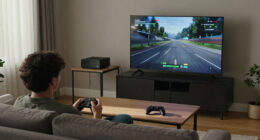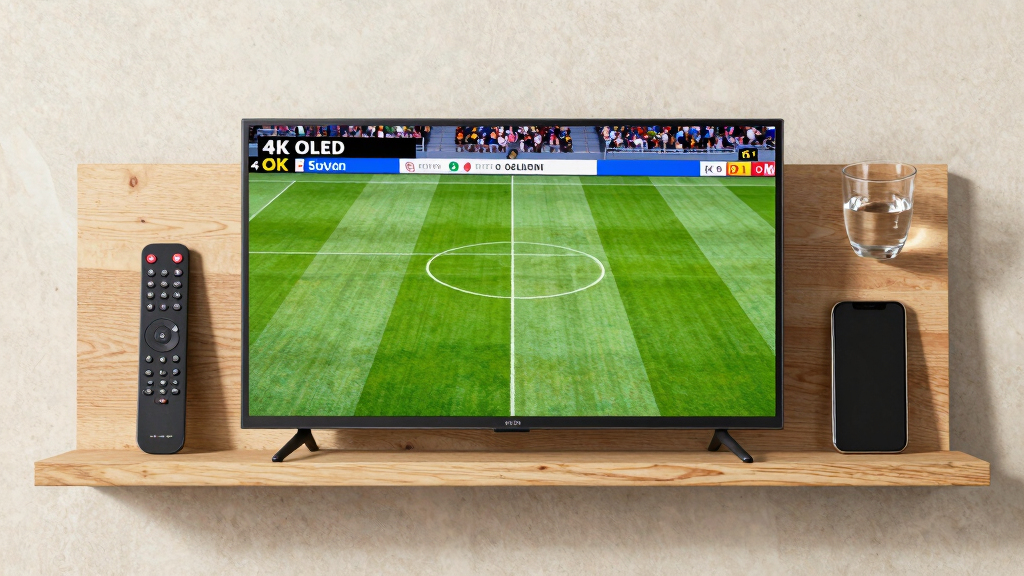

For live sports, I look for clear motion, strong contrast, a screen that suits the room, and features that help when games move between streaming, cable, and consoles. The Samsung S90H stands out for its matte Glare Free screen, while the LG C6 pairs four HDMI 2.1 inputs with fast gaming support. For a more cinematic picture with vivid QD-OLED color, the Sony BRAVIA 8 II is a compelling alternative. The tradeoffs are meaningful: Samsung uses HDR10+ rather than Dolby Vision, Sony is limited to 120 Hz, and the older LG C1 brings a much larger 77-inch screen without the newer models’ stated gaming and processing features. I ranked these options by how well their display, motion, room fit, and connectivity suit sports viewing—not by screen size or feature count alone.

Get the latest gadgets delivered free with Prime
- Fast, free delivery on millions of items
- Prime Video, Amazon Music and more included
- Member-only deals all year
Complete the kit



Key Takeaways
Best balance for sports and gaming: The LG C6 combines a native 120 Hz panel, VRR up to 165 Hz for compatible PC gaming, and four HDMI 2.1 inputs.
Best glare control: Samsung’s S90H has a matte Glare Free finish, a useful distinction when matches play in a bright room.
Best vivid color and streaming interface: Sony’s BRAVIA 8 II pairs QD-OLED color with Google TV, but its 120 Hz refresh rate is below the LG and Samsung PC-gaming ceilings.
Best older large-screen choice: The 77-inch LG C1 gives sports fans a broader viewing area, though its listed specifications offer fewer current-generation details.
Check the broadcast chain: A TV’s high refresh-rate gaming support does not make ordinary sports broadcasts run at that rate; the source and signal determine what you actually see.
| LG 65-Inch OLED evo C6 Series 4K Smart TV (2026) |  | Best Overall for Sports and Gaming | Screen size: 65 inches | Display: OLED evo, 4K | Model year: 2026 | VIEW ON AMAZON | See Our Full Breakdown |
| Samsung 65-Inch S90H Series OLED 4K Smart TV (2026) |  | Best for Bright Rooms | Screen size: 65 inches | Display: OLED, 4K | Screen finish: Matte, Glare Free | VIEW ON AMAZON | See Our Full Breakdown |
| LG OLED C1 Series 77” 4K Smart TV with AI-Powered Processing |  | Best Large Screen for Group Viewing | Screen size: 77 inches | Resolution: 3840 × 2160, 4K UHD | Display: OLED | VIEW ON AMAZON | See Our Full Breakdown |
| Sony BRAVIA 8 II 65-Inch QD-OLED 4K HDR Smart Google TV (K-65XR80M2) |  | Best for Vivid Color and Streaming | Screen size: 65 inches | Display: QD-OLED, 4K | Refresh rate: 120 Hz | VIEW ON AMAZON | See Our Full Breakdown |
| LG 65-Inch OLED evo C5 Series 4K Smart TV (OLED65C5PUA, 2025) |  | Best Previous-Generation LG All-Rounder | Screen size: 65 inches | Display: OLED evo, 4K | Model year: 2025 | VIEW ON AMAZON | See Our Full Breakdown |
| 4k oled tvs for sport | Screen size | Display | Refresh rate | Processor |
|---|---|---|---|---|
| LG 65-Inch OLED evo C6 Series | 65 inches | OLED evo, 4K | Native 120 Hz; VRR up to 165 Hz | Alpha 11 AI Processor Gen3 |
| Samsung 65-Inch S90H Series OL | 65 inches | OLED, 4K | Up to 165 Hz | — |
| LG OLED C1 Series 77” 4K Smart | 77 inches | OLED | 120 Hz | A9 Gen 4 Intelligent Processor |
| Sony BRAVIA 8 II 65-Inch QD-OL | 65 inches | QD-OLED, 4K | 120 Hz | — |
| LG 65-Inch OLED evo C5 Series | 65 inches | OLED evo, 4K | Native 120 Hz; VRR up to 144 Hz for PC gaming | α9 AI Processor Gen8 |
More Details on Our Top Picks
LG 65-Inch OLED evo C6 Series 4K Smart TV (2026)
The LG C6 takes my top spot because it combines a native 120 Hz refresh rate with a broad set of connections and gaming options. Four HDMI 2.1 inputs make it easier to connect a console, streaming device, and other gear without having to plan around a single high-bandwidth port. For sports fans who also play fast-response games, its 0.1 ms response time and VRR support up to 165 Hz for compatible PC gaming add flexibility beyond watching matches.
Against the Samsung S90H, the C6 offers a more explicit connection advantage and lists Dolby Vision, while Samsung’s matte screen may be the better fit if windows or room lighting cause reflections. Its OLED evo self-lit pixels support deep blacks and vivid contrast, which can help keep uniforms and field detail distinct in darker scenes. The Alpha 11 AI Processor Gen3 and webOS features round out a capable all-purpose setup, though picture processing still depends on the quality of the incoming feed.
The tradeoff is that the C6’s headline 165 Hz figure is a PC gaming feature, not a promise that live sports broadcasts will display at 165 frames per second. Some webOS services require an account, internet access, or subscriptions. I would choose it for a mixed sports-and-gaming room; buyers mainly seeking glare reduction should compare Samsung before deciding.
Pros:- Native 120 Hz with VRR up to 165 Hz for compatible PC gaming
- Four HDMI 2.1 inputs provide flexible device connections
- OLED evo pixels and Dolby Vision support
- 0.1 ms response time and webOS smart features
Cons:- 165 Hz VRR depends on compatible PC hardware and is not a broadcast frame-rate guarantee
- Some smart features require an account, internet connection, or subscription
- The listing does not specify a matte or glare-reducing screen finish
Best for: Sports viewers who also use a current console or compatible gaming PC and want four HDMI 2.1 inputs.
Not ideal for: Viewers whose main issue is screen glare, or buyers who do not need the newer model’s gaming and connectivity features.
- Screen size:65 inches
- Display:OLED evo, 4K
- Model year:2026
- Processor:Alpha 11 AI Processor Gen3
- Refresh rate:Native 120 Hz; VRR up to 165 Hz
- Response time:0.1 ms
- HDMI:4 HDMI 2.1 inputs
- Formats:Dolby Vision, Dolby Atmos, FILMMAKER MODE
Our verdict“I rank the C6 first for its unusually flexible combination of OLED contrast, four HDMI 2.1 ports, and fast gaming support alongside sports viewing.”
Samsung 65-Inch S90H Series OLED 4K Smart TV (2026)
The S90H’s clearest sports advantage is its Glare Free matte screen. If matches play during the day or a lamp lands opposite the TV, reducing reflections can matter more than a higher gaming refresh-rate ceiling. Samsung specifies a maximum display brightness of 2000 nits, along with OLED contrast, so this model is positioned for bright viewing spaces as well as dark-room use.
It competes closely with the LG C6, which has four HDMI 2.1 inputs and Dolby Vision in its listed formats. Samsung instead offers HDR10+, Tizen, a 2.1-channel 40-watt speaker system, and Object Tracking Sound. Those differences may shape a wider home-entertainment setup, but HDR format support has less bearing on a typical live sports feed than on compatible streamed or recorded content. The stated 165 Hz support is useful for compatible PC games; sports broadcasts remain limited by their source.
I would select the S90H over the C6 when room reflections are the biggest annoyance. I would not assume its matte finish removes every reflection or that the brightness figure guarantees a particular result for every broadcast. Buyers who specifically want Dolby Vision or clearly listed four HDMI 2.1 ports may prefer the LG instead.
Pros:- Matte Glare Free finish is aimed at reducing distracting reflections
- OLED contrast paired with a listed maximum brightness of 2000 nits
- Up to 165 Hz support for compatible PC gaming
- Tizen, Dolby Atmos, and Object Tracking Sound
Cons:- HDR support listed here is HDR10+, not Dolby Vision
- 165 Hz requires compatible PC equipment and does not change broadcast frame rates
- Picture results vary with source content
Best for: Sports fans watching in a bright room who prioritize a matte screen and also want high-refresh PC gaming support.
Not ideal for: Buyers who require Dolby Vision, want four HDMI 2.1 inputs specified, or mostly watch in a light-controlled room.
- Screen size:65 inches
- Display:OLED, 4K
- Screen finish:Matte, Glare Free
- Maximum brightness:2000 nits
- Refresh rate:Up to 165 Hz
- HDR:HDR10+
- Audio:2.1-channel, 40 W, Dolby Atmos, Object Tracking Sound
- Platform:Tizen
Our verdict“I place the S90H just behind the C6 because its glare-focused screen can be a better sports solution in bright rooms, while its format and port details are less broadly appealing.”
LG OLED C1 Series 77” 4K Smart TV with AI-Powered Processing
At 77 inches, the LG C1 offers the broadest screen in this lineup, giving a group a more expansive view than the four 65-inch options. For a suitable room and viewing distance, that size can make it easier for people seated across a couch to follow the play. Its OLED display, 4K resolution, and 120 Hz refresh rate give it a relevant foundation for sports, while AI-powered processing and a gaming mode widen its appeal beyond broadcasts.
The C1’s size is its main differentiator, not a more advanced listed refresh rate. Compared with the C6 and C5, it has fewer supplied details about HDMI 2.1 connections, VRR, and supported HDR formats, so I would not buy it on the assumption that it matches their gaming connectivity. Sony’s BRAVIA 8 II also provides more clearly listed format and platform information, but its screen is 12 inches smaller. The C1 is a better fit when screen area matters most and the room can accommodate it.
This is an older model listing, so buyers should confirm the exact condition, included accessories, and connection details for the unit they are considering. A large OLED also calls for sensible varied-use habits; its listing notes possible burn-in over time. Choose it for group viewing and screen scale, but compare the newer LG models if modern PC gaming features are central to the decision.
Pros:- 77-inch display is the largest in this comparison
- 4K OLED panel with a stated 120 Hz refresh rate
- AI-powered picture processing and gaming mode
- Large viewing area suits groups and wide seating arrangements
Cons:- Listing provides limited detail on HDMI connections and VRR support
- Large dimensions may not suit smaller rooms or viewing distances
- OLED panels can be susceptible to burn-in over time
Best for: Households that want the largest screen in this group for shared sports viewing and have room for a 77-inch TV.
Not ideal for: Small rooms, buyers seeking clearly specified newer gaming connections, or anyone who needs detailed current HDR and smart-platform information before choosing.
- Screen size:77 inches
- Resolution:3840 × 2160, 4K UHD
- Display:OLED
- Refresh rate:120 Hz
- Processor:A9 Gen 4 Intelligent Processor
- Processing:AI-powered 4K
- Listed features:Dolby Cinema, WiSA Ready, Gaming Mode
Our verdict“I recommend the C1 for room-filling group viewing, but the C6 or C5 is a clearer choice when detailed current gaming specifications matter more than screen size.”
Sony BRAVIA 8 II 65-Inch QD-OLED 4K HDR Smart Google TV (K-65XR80M2)
The BRAVIA 8 II pairs OLED’s self-lit pixels with quantum dot color, giving it a distinct color-focused position in this group. Sony lists a 120 Hz refresh rate and XR Processor with AI, while Google TV brings streaming apps and voice search together. For sports viewers who also stream documentaries, films, and event coverage, that combination makes it a strong all-around entertainment screen rather than a gaming-spec leader.
Compared with the LG C6 and C5, the Sony’s 120 Hz ceiling is lower than their stated VRR figures for compatible PC gaming. It does, however, list Dolby Vision, HDR10, and HLG, alongside Dolby Atmos, IMAX Enhanced, and DTS:X. That format range makes it a more explicitly equipped choice for varied video content than a model listing HDR10+ alone. These formats do not guarantee that a particular sports channel or streaming app will deliver matching HDR.
The stated 1000-nit maximum brightness and 65-inch size are useful details to compare with Samsung’s glare-oriented S90H, but Sony does not list a matte screen finish here. Its 50-watt audio may help create a fuller setup, though a room-filling crowd sound can still call for an external system. I would choose Sony for color, Google TV, and format breadth; I would favor Samsung for its specified glare control or LG for higher PC-gaming VRR figures.
Pros:- QD-OLED combines self-lit pixels with quantum dot color
- 120 Hz refresh rate and XR Processor with AI
- Google TV groups streaming apps and voice search
- Dolby Vision, HDR10, HLG, Dolby Atmos, IMAX Enhanced, and DTS:X
Cons:- 120 Hz refresh rate is below the LG and Samsung PC-gaming figures
- No matte or glare-reducing screen finish is specified
- Product information lists inconsistent weight details
Best for: Viewers who want QD-OLED color, Google TV, and broad listed HDR and audio-format support for sports and other streaming.
Not ideal for: PC gamers chasing the highest listed VRR refresh rate, or sports viewers who specifically need a matte screen for reflections.
- Screen size:65 inches
- Display:QD-OLED, 4K
- Refresh rate:120 Hz
- Maximum brightness:1000 nits
- HDR formats:Dolby Vision, HDR10, HLG
- Platform:Google TV
- Audio output:50 W
- Model:K-65XR80M2
Our verdict“I rate the BRAVIA 8 II as the strongest color-and-streaming choice, though its 120 Hz specification makes it less suited to buyers prioritizing high-refresh PC gaming.”
LG 65-Inch OLED evo C5 Series 4K Smart TV (OLED65C5PUA, 2025)
The LG C5 is a well-rounded choice for buyers who want the features of an OLED evo set without moving to the 2026 C6. It has a native 120 Hz refresh rate, four HDMI 2.1 inputs, a 0.1 ms response time, and VRR up to 144 Hz for PC gaming. For a household that alternates between sports, consoles, and streamed shows, those clearly listed connections make it easier to build a flexible setup.
Against the C6, the C5’s main compromise is its earlier model year and lower specified PC-gaming VRR ceiling; its α9 AI Processor Gen8 also differs from the C6’s Alpha 11 AI Processor Gen3. The C5 still lists Dolby Vision, Dolby Atmos, FILMMAKER MODE, webOS 25, and NVIDIA G-Sync and AMD FreeSync Premium support. Those details make it more fully specified than the older, larger C1 for buyers who care about current-style gaming connections, but it does not offer the C1’s 77-inch viewing area.
The C5 is a sensible middle ground if sports and gaming both matter, particularly for people who do not need the C6’s newer listed processor and higher PC VRR figure. As with other high-refresh sets, the 144 Hz specification applies to compatible PC gaming, not ordinary live broadcasts. Upscaling also depends on source quality, so low-resolution feeds may not look like native 4K.
Pros:- Native 120 Hz with VRR up to 144 Hz for PC gaming
- Four HDMI 2.1 inputs and 0.1 ms response time
- OLED evo display with Dolby Vision and FILMMAKER MODE
- webOS 25 and listed G-Sync and FreeSync Premium support
Cons:- 144 Hz support is specified for compatible PC gaming
- Upscaled picture quality varies with the source resolution
- Earlier model year and lower stated VRR ceiling than the C6
Best for: Buyers seeking a detailed, gaming-ready 65-inch OLED evo TV with four HDMI 2.1 inputs and a 120 Hz native panel.
Not ideal for: Anyone who wants the newer C6 generation, Samsung’s specified matte screen, or a 77-inch screen for a large group.
- Screen size:65 inches
- Display:OLED evo, 4K
- Model year:2025
- Processor:α9 AI Processor Gen8
- Refresh rate:Native 120 Hz; VRR up to 144 Hz for PC gaming
- HDMI:4 HDMI 2.1 inputs
- Formats:Dolby Vision, Dolby Atmos, FILMMAKER MODE
- Platform:webOS 25
Our verdict“I would choose the C5 as a capable LG sports-and-gaming option when its 144 Hz PC VRR support and four HDMI 2.1 inputs fit better than the newer C6’s upgrades.”

How We Picked
I compared the five supplied TVs around the demands of watching sports: whether they offer a high-refresh display, how their screen finish fits a bright room, what motion and gaming features are specified, and how their size works for group viewing. A native 120 Hz panel is a useful foundation for fast action, but I separate that from higher VRR figures, which are described for compatible PC gaming and should not be mistaken for the frame rate of a live broadcast.
I also weighed practical differences that can change a buying decision. The Samsung S90H earns attention for its matte screen, while the LG C6 and C5 stand out for four HDMI 2.1 inputs and stated VRR support. Sony’s BRAVIA 8 II brings QD-OLED color and broad movie-format support, though it is specified at 120 Hz. The LG C1 is the largest option here, but its listing provides less detail on current connections and platform features. I treat supplied claims as specifications, not as independent test results, and I call out gaps rather than filling them with assumptions.
My order favors the most versatile sports viewing package first, then options that serve a more specific need such as glare control, screen size, or color presentation. None is a universal winner: room lighting, viewing distance, broadcast source, and whether a PC or console is part of the setup all affect which model makes the most sense.
| 4k oled tvs for sport | Display | Processor | Platform |
|---|---|---|---|
| LG 65-Inch OLED evo C6 Series | OLED evo, 4K | Alpha 11 AI Processor Gen3 | — |
| Samsung 65-Inch S90H Series OL | OLED, 4K | — | Tizen |
| LG OLED C1 Series 77” 4K Smart | OLED | A9 Gen 4 Intelligent Processor | — |
| Sony BRAVIA 8 II 65-Inch QD-OL | QD-OLED, 4K | — | Google TV |
| LG 65-Inch OLED evo C5 Series | OLED evo, 4K | α9 AI Processor Gen8 | webOS 25 |
Factors to Consider When Choosing 15 Best 4k Oled Tvs For Sports
Sports viewing depends on more than a TV’s refresh-rate headline. I would match the screen to the room, check the source you watch most, and treat gaming features as useful extras rather than proof that every broadcast will look smoother.
Native refresh rate versus VRR
A native 120 Hz panel is a relevant specification for fast motion and also suits current consoles. VRR, or variable refresh rate, is mainly a gaming feature that lets a compatible display respond to changing game frame rates. The LG C6’s 165 Hz and C5’s 144 Hz figures, and Samsung’s up-to-165 Hz claim, are tied to compatible PC gaming. They do not make a 60 Hz sports feed into a 120 or 165 Hz broadcast. I would treat the native panel rate as the core display detail and the higher VRR ceiling as an extra for PC owners.
Match screen finish to room lighting
Reflections can cover a puck, ball, or player just when action moves across the screen. The Samsung S90H’s matte Glare Free finish makes it the most clearly specified choice for a bright room. The other models may still work well depending on placement, but their supplied descriptions do not list the same matte treatment. Before choosing, consider where windows and lamps sit relative to the TV; no display specification eliminates the need to manage direct reflections.
Pick a size for your seating distance
Four models here have 65-inch screens, while the LG C1 stretches to 77 inches. A larger image can suit a wide couch or a group watching together, but it needs enough wall space and a comfortable viewing distance. I would not select the C1 on size alone if the room is compact. Conversely, viewers spread across a larger seating area may value its wider picture more than newer PC-gaming details that are not clearly specified in its listing.
Compare ports, formats, and smart platforms
Count the devices you want connected before deciding. The LG C6 and C5 each list four HDMI 2.1 inputs, a useful advantage for setups with multiple consoles and other devices. For HDR, LG lists Dolby Vision; Samsung lists HDR10+; Sony lists Dolby Vision, HDR10, and HLG. A format matters only when the program, app, and signal support it. Tizen, webOS, and Google TV also differ in interface and app experience, so I would favor the platform that fits the services your household already uses.
Think about the broadcast source
An OLED’s contrast and 4K resolution cannot turn every incoming feed into native 4K. Sports may arrive through cable, an antenna, or a streaming service at different resolutions and bitrates. Source quality affects clarity, particularly for distant field details and fast camera pans. The LG C5 listing explicitly notes that upscaled results vary by source, a sensible point to keep in mind across this group. Check the resolution and quality offered by your usual broadcaster before paying extra for features aimed at content you rarely watch.
Set realistic expectations for audio and OLED care
Built-in audio differs across these models: Samsung specifies 40 watts and Sony 50 watts, while each also lists Dolby Atmos support. Those details do not replace a soundbar or surround setup if clear commentary and crowd ambience are priorities in a large room. OLED provides per-pixel light control, but the LG C1 listing notes that OLED screens can be susceptible to burn-in over time. For varied use, avoid leaving static graphics on screen for long periods and review the manufacturer’s care guidance.
Frequently Asked Questions
Is a 120 Hz OLED TV good for watching sports?
A 120 Hz panel is a strong fit for fast-moving content and offers additional flexibility for compatible gaming devices. The actual motion you see still depends on the broadcast or stream, its frame rate, and the TV’s processing. In this group, all five models list at least 120 Hz, but higher VRR figures on the LG and Samsung models are specified for PC gaming rather than regular sports broadcasts.
Does 165 Hz make live sports look better?
Not by itself. Samsung’s S90H and LG’s C6 list refresh-rate support up to 165 Hz for compatible PC gaming, but a live sports feed cannot provide more frames than its source delivers. If you do not connect a compatible PC, a 165 Hz gaming ceiling is less important than the native refresh rate, screen reflections, and broadcast quality.
Which TV here is best for a bright room?
The Samsung S90H is the clearest choice for bright-room viewing because its supplied specifications call out a matte Glare Free screen and a maximum brightness of 2000 nits. Those details make it stand apart from the LG, Sony, and C1 listings. Room layout still matters: direct sunlight and lamps can create distracting reflections, so placement remains part of the decision.
Should I choose the 77-inch LG C1 over a newer 65-inch OLED?
Choose the C1 if a larger shared viewing area is your priority and your room can accommodate a 77-inch screen. Choose the LG C6 or C5 if you want more explicitly listed HDMI 2.1 connections and PC-gaming VRR support. The C1 offers a 120 Hz refresh rate, but its supplied listing gives less detail about connections and current gaming features than the newer LG models.
Which model is the most versatile for both sports and gaming?
I would start with the LG C6: it lists a native 120 Hz panel, VRR up to 165 Hz for compatible PC gaming, a 0.1 ms response time, and four HDMI 2.1 inputs. The C5 is another strong match with four HDMI 2.1 inputs and VRR up to 144 Hz for PC gaming. Samsung may suit a bright room better, while Sony is appealing when QD-OLED color and Google TV matter more than the highest listed PC-gaming ceiling.
Conclusion
For one TV that can handle weekend matches and a gaming setup, I would choose the LG C6 for its four HDMI 2.1 inputs and high-refresh PC support. If reflections are the main problem, the Samsung S90H is the more targeted pick thanks to its matte Glare Free screen. The LG C1 is the group-viewing choice when a 77-inch picture matters most, while the Sony BRAVIA 8 II better suits viewers who prioritize QD-OLED color and Google TV. I would pick the LG C5 for a well-specified 65-inch OLED evo setup with broad gaming connectivity, without needing the C6’s newer listed generation. Match the screen to your room and your usual broadcast source before placing more weight on a gaming refresh-rate headline.
Columbus Day / Indigenous Peoples' Day Picks
long weekend sales
As an affiliate, we earn on qualifying purchases.