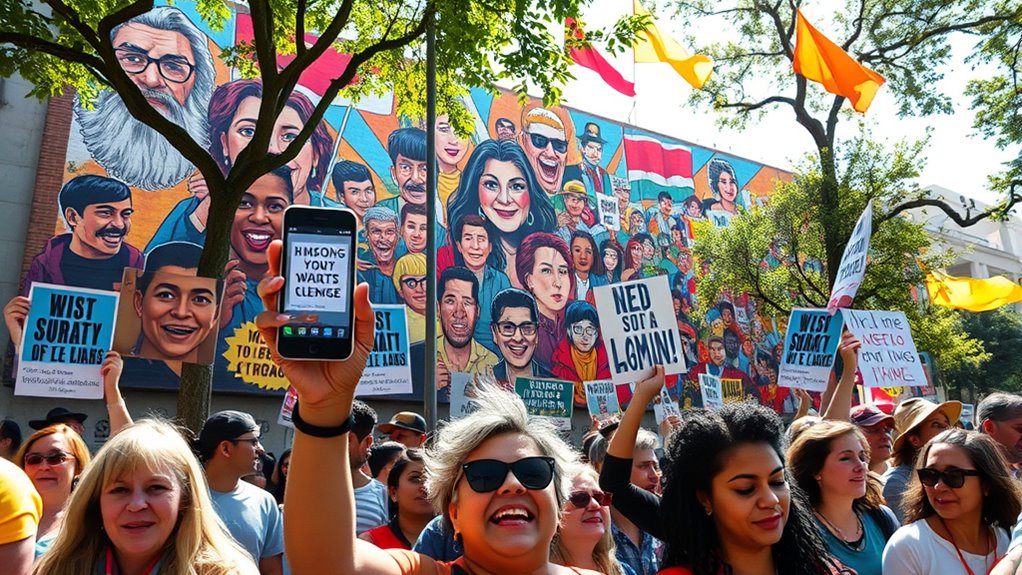

Humor, especially memes and satire, is a powerful force in activism that grabs attention and makes tough issues more relatable. It cuts through noise, simplifies complex problems, and sparks conversations that can lead to real change. By mocking authority and building shared camaraderie, humor amplifies messages and unites supporters. If you keep exploring, you’ll uncover how humor continues to inspire movements and challenge power in surprising ways.

Get the latest gadgets delivered free — and shop member deals
- Fast, free delivery on millions of items
- Access to Prime Big Deal Days deals on October 6–7
- Prime Video, Amazon Music and more included
Key Takeaways
- Humor captures attention, making complex social issues more accessible and shareable online.
- Satire exaggerates flaws, exposing injustice while spreading rapidly and engaging diverse audiences.
- Memes and humorous content foster community, build camaraderie, and encourage collective participation in activism.
- Mocking authority diminishes oppressive power, shifting perceptions and empowering marginalized voices.
- Humor amplifies messages, disarms opposition, and turns serious issues into rallying points for social change.

Humor has become a powerful tool in activism, allowing advocates to capture attention, challenge authority, and unite communities more effectively. When you use humor strategically, you’re able to cut through the noise and make serious issues more accessible. One of the key ways humor accomplishes this is through satire’s impact. Satire, by exaggerating flaws and mocking power structures, exposes hypocrisy and injustices in a way that resonates deeply. It strips away pretenses, forcing audiences to confront uncomfortable truths with a smile or a laugh. This clever critique often spreads rapidly online, turning complex political or social problems into digestible, shareable content that sparks conversations and mobilizes action.
Humor in activism exposes hypocrisy, simplifies issues, and unites communities through satire’s sharp, shareable critique.
Comedy’s role in activism isn’t just about making people laugh; it’s about fostering connection and resilience. When you use humor, you create a sense of camaraderie among supporters. It transforms activism from a serious, sometimes overwhelming task into a collective experience that’s engaging and even enjoyable. Comedy helps break down barriers—be it cultural, linguistic, or ideological—by framing messages in ways that are relatable and memorable. For example, clever memes or satirical videos can simplify intricate issues, making them approachable for diverse audiences. This accessibility encourages more people to get involved, whether by sharing content, participating in protests, or simply spreading awareness.
Furthermore, humor can challenge authority without directly confronting it, which often makes it more effective. By mocking oppressive systems or corrupt leaders, you avoid alienating potential allies who might be wary of direct confrontation. Instead, satire’s impact lies in its ability to spotlight abuses in a way that’s sharp yet entertaining. When authorities are caricatured or ridiculed, their power diminishes, and public perception shifts. Comedy becomes a form of resistance, empowering marginalized voices and highlighting injustices that might otherwise go unnoticed or unchallenged.
In addition, the use of humor in activism can be informed by historical farmhouses, which often served as gathering places for community discussion and social change.
In essence, humor in activism isn’t just about making people laugh; it’s a strategic tool that amplifies messages, disarms opposition, and builds communities. Satire and comedy work together to create a powerful narrative that’s both engaging and impactful. They turn serious issues into shared experiences, encouraging collective reflection and action. So, as you see, humor’s role in activism is essential—it’s a bridge that connects, a weapon that challenges, and a rallying cry that unites people in the fight for change.
Frequently Asked Questions
How Do Memes Influence Public Opinion Beyond Online Spaces?
Memes influence public opinion beyond online spaces through digital dissemination, spreading quickly across social media and even offline conversations. You might notice people sharing memes in real-life discussions or on TV, which shapes cultural interpretation. This process makes complex issues more accessible and relatable, encouraging broader engagement. As a result, memes can sway opinions, challenge norms, and motivate action, demonstrating their power to impact society far beyond the digital sphere.
Can Humor Undermine the Seriousness of Activism Causes?
Your concern that humor might totally ruin activism is valid, but it’s often a matter of tone management. When you use humor thoughtfully, it can engage your audience and make complex issues relatable. However, if misjudged, it risks undermining the seriousness of the cause and skewing audience perception. Done right, humor amplifies your message; done wrong, it can diminish the cause’s credibility—so choose your words wisely.
What Are the Risks of Using Humor in Sensitive Political Issues?
Using humor in sensitive political issues can lead to potential misunderstandings and offend cultural sensitivities. You might unintentionally trivialize serious matters or alienate audiences who see the humor as disrespectful. It’s crucial to take into account the context and audience carefully, as humor that seems harmless to you could be deeply offensive elsewhere. Balancing wit with respect helps ensure your message resonates without causing harm or misinterpretation.
How Do Different Cultures Perceive Humor in Activism?
You should realize that cultural humor varies widely; what’s funny in one culture might be offensive in another. When using humor in activism, you need to consider cross-cultural sensitivity to avoid misunderstandings or offending your audience. Different cultures interpret humor differently, so you must be mindful of cultural nuances and avoid stereotypes. This approach helps ensure your message resonates positively across diverse groups while promoting understanding and respect.
What Are Effective Strategies for Creating Impactful Activist Humor?
To create impactful activist humor, you should use satire and comedic critique carefully, ensuring your message resonates without offending your audience. Focus on sharp, clear messaging that highlights issues through clever exaggeration or irony. Use relatable references to boost engagement, and test your humor on trusted allies to gauge reactions. Remember, effective activist humor enlightens and motivates, turning laughter into a powerful tool for change.
Conclusion
So, next time you share a meme or crack a joke about a serious issue, remember—you’re wielding humor as a quiet weapon. Ironically, laughter might just be what sparks change more than protests or speeches. Humor’s power lies in its subtlety, slipping past defenses and planting ideas. You might think you’re just having fun, but in reality, you’re part of a movement, proving that sometimes, the funniest acts are the most revolutionary.
Fall Picks
fall essentials
As an affiliate, we earn on qualifying purchases.