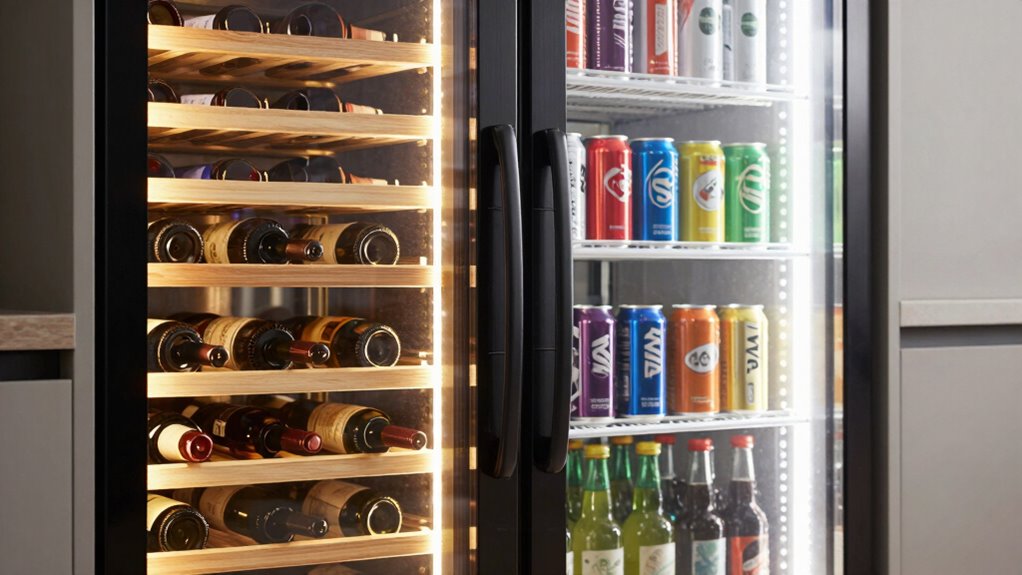
The hidden difference between a wine fridge and a beverage fridge is in their climate controls. Wine fridges maintain precise temperature ranges of 45°F–65°F and humidity levels of 50-70%, creating ideal conditions for aging and preserving wine. Beverage fridges, on the other hand, prioritize quick cooling, with temperatures around 50°F–72°F, and focus on easy access for a variety of drinks. Want to discover more about how these differences impact your storage choices?

Get the latest gadgets delivered free with Prime
- Fast, free delivery on millions of items
- Prime Video, Amazon Music and more included
- Member-only deals all year
Key Takeaways
- Wine fridges maintain a narrower temperature range (45°F–65°F) optimized for aging, while beverage fridges are set between 50°F–72°F for quick cooling.
- Humidity control is more critical in wine fridges (50-70%) to preserve corks and prevent spoilage; less so in beverage coolers.
- Wine fridges often feature horizontal racks and specialized bottle storage, whereas beverage fridges are designed for cans and bottles with adjustable shelves.
- Proper climate stability (temperature and humidity) is essential in wine fridges for long-term storage, while beverage coolers prioritize rapid access.
- The main purpose (aging wine vs. quick refreshment) influences the design, features, and storage conditions of each fridge type.
wine fridge with humidity control
As an affiliate, we earn on qualifying purchases.
As an affiliate, we earn on qualifying purchases.
Deciding Between a Wine Fridge and Beverage Cooler: Which Is Right for You?

Choosing between a wine fridge and a beverage cooler depends on how you plan to enjoy your drinks. If you prioritize wine preservation, a wine fridge provides ideal temperature and humidity controls, protecting your bottles from spoilage. It’s perfect for serious collectors or enthusiasts who want to store wine long-term. On the other hand, if you value beverage convenience, a beverage cooler offers quick access to a variety of drinks, keeping them chilled and ready to serve. These coolers are great for casual drinkers who want a mix of sodas, beers, and waters at best temperatures. Your choice hinges on whether you’re aiming to preserve wine quality or simply keep drinks cold and accessible for everyday use. Additionally, understanding the temperature control features of each appliance can help you make a more informed decision based on your specific storage needs. Knowing how different units regulate climate conditions can ensure your beverages are stored at optimal conditions for their intended use.
beverage cooler for cans and bottles
As an affiliate, we earn on qualifying purchases.
As an affiliate, we earn on qualifying purchases.
Main Differences in Temperature and Humidity Needs

Understanding the differences in temperature and humidity requirements is key to picking the right fridge for your needs. Wine fridges usually keep temperatures between 45°F and 65°F, ideal for preserving wine varietals and enhancing their flavors. Beverage fridges operate at higher temps, around 50°F to 72°F, suited for a variety of drinks. Humidity levels also differ: wine storage needs around 50-70% to prevent corks from drying out, while beverage fridges aren’t as sensitive. Proper temperature regulation is essential for maintaining optimal conditions, especially in wine fridges. Additionally, understanding the humidity needs helps prevent spoilage and preserves the quality of stored beverages. Here’s a quick comparison:
| Feature | Wine Fridge | Beverage Fridge |
|---|---|---|
| Temperature Range | 45°F – 65°F | 50°F – 72°F |
| Humidity | 50-70%, vital for cork preservation | Less critical |
| Ideal for | Wine varietals, aging | Soft drinks, beers, mixers |
| Focus | Flavor preservation, aging | Quick access, variety |
As an affiliate, we earn on qualifying purchases.
Why Humidity Matters for Proper Wine Storage
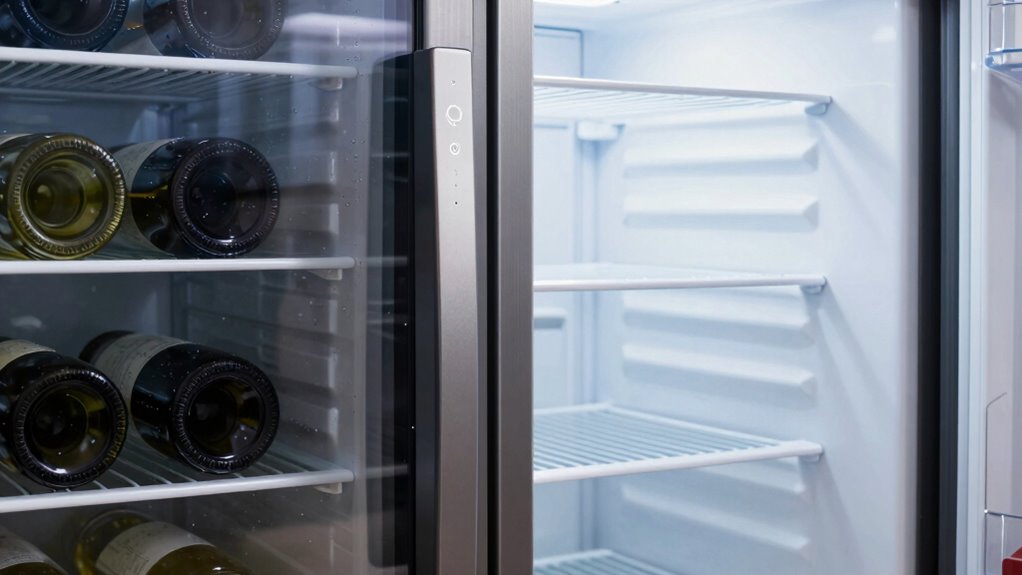
Maintaining the right humidity levels is essential for keeping your wine in top condition. Too dry, and corks can shrink, letting air spoil your bottles; too humid, and mold may develop. Ensuring ideal humidity protects your wine from damage and preserves its flavor. Proper humidity control also helps prevent the growth of mold and mildew, which can be influenced by indoor air quality and ventilation. Additionally, the materials used in wine storage can impact how well humidity levels are maintained. To optimize storage conditions, consider how ventilation systems contribute to consistent humidity levels and overall air circulation. Being mindful of air quality can significantly enhance your wine preservation environment.
Optimal Humidity Levels
Humidity levels play a crucial role in preserving the quality of your wine, preventing spoilage and unwanted spoilage. Maintaining the right humidity helps keep corks moist, preventing them from drying out and allowing air to seep in. Proper climate control depends heavily on insulation quality, which maintains consistent humidity levels and temperature. If insulation is poor, fluctuations can cause humidity to drop too low or rise too high, risking wine damage. For ideal storage, aim for humidity levels around 50-70%. This range ensures the corks stay moist without creating mold or excess moisture. A well-insulated wine fridge with effective climate control will help you sustain these perfect conditions, protecting your wine collection from humidity-related issues over time. Additionally, insulation quality plays a vital role in maintaining stable humidity and temperature levels, as it directly impacts the fridge’s ability to maintain consistent climate conditions. Ensuring good humidity control is essential for long-term wine preservation.
Preventing Wine Damage
Proper humidity levels are essential for preventing wine damage, as fluctuations can cause corks to dry out or swell, compromising the seal and allowing air to enter. This is critical not only for maintaining wine quality but also for preserving your wine labeling and beverage branding. When humidity is too low, corks shrink, increasing the risk of oxidation and spoilage. Conversely, excessive humidity can promote mold growth and damage labels, which are indispensable for identifying and showcasing your collection. A wine fridge designed for proper humidity control helps you maintain consistent conditions, protecting your wines and their presentation. Ensuring ideal humidity is a simple yet effective way to extend your wine’s lifespan and keep your beverage branding pristine. Additionally, maintaining proper humidity levels can help prevent mold growth and other potential issues that compromise your wine storage environment. Proper environmental control, including humidity, is also important for reducing pollution impact on your stored beverages, ensuring they remain pure and flavorful over time. Maintaining optimal humidity levels can also help mitigate vulnerability to climate fluctuations, which can otherwise negatively affect wine quality. Proper humidity management aligns with herbalism principles, emphasizing the importance of a balanced environment for optimal preservation and health of stored items.
As an affiliate, we earn on qualifying purchases.
Best Bottle and Can Types for Each Fridge
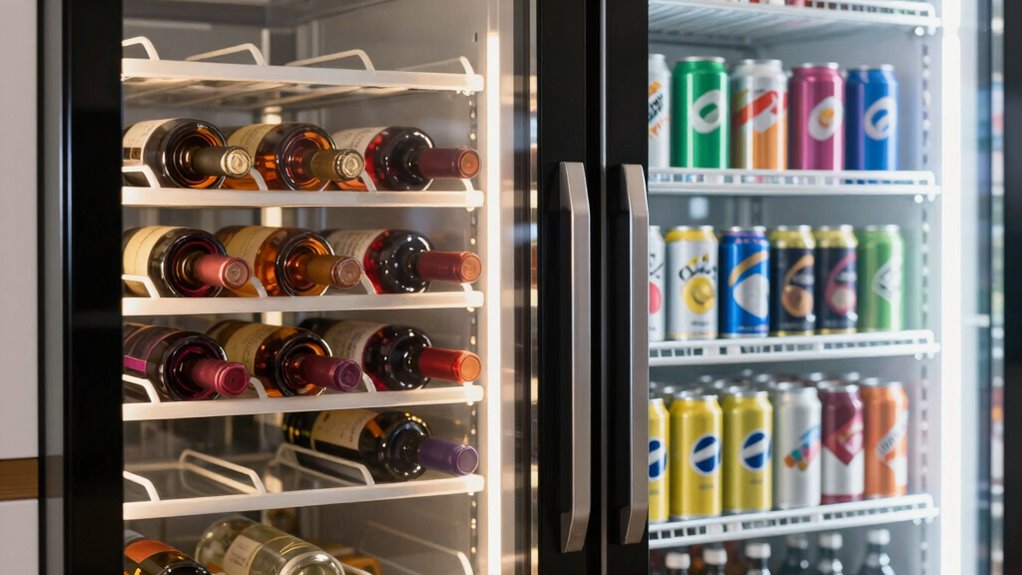
When choosing bottles and cans for your fridge, consider what types fit best with each environment. Wine fridges typically store bottles designed for aging and ideal flavor, while beverage fridges suit cans and bottles meant for quick refreshment. Your storage choices should match the compatibility of the containers with each fridge’s temperature and humidity settings. Incorporating outdoor entertaining ideas can enhance your beverage storage and sharing experiences in your backyard. Proper temperature control is essential to maintain the quality of wine and beverages, ensuring they are served at their optimal conditions. Understanding storage requirements for different beverages helps in selecting the right fridge type for your needs. Additionally, knowing the ideal storage conditions can help preserve the integrity and taste of your beverages over time. Being aware of beverage preservation techniques can also extend the lifespan of your stored drinks and improve your overall drinking experience.
Ideal Bottle Types
Choosing the right bottles and cans for your fridge depends on what you plan to store. For wine, opt for bottles that preserve the wine aroma and maintain proper aging conditions. Use standard 750ml bottles made of dark glass to protect against light exposure, helping preserve flavor and aroma. For beverages with carbonation, select cans or bottles designed to withstand pressure and prevent leakage.
Consider these ideal options:
- Bordeaux or Burgundy wine bottles for proper storage
- Slim cans for energy drinks or sodas to maximize space
- Glass bottles with secure caps for sparkling waters
- Aluminum cans for quick chilling and portability
Matching the container type to your fridge’s purpose guarantees your wine stays flavorful, and your carbonated drinks remain fizzy.
Suitable Can Varieties
Selecting the right cans and bottles for your fridge guarantees your beverages stay fresh, bubbly, and flavorful. For beverage fridges, choose cans that preserve diverse flavor profiles, such as soda, energy drinks, or craft sodas, which often require colder serving temperatures. Look for cans with sturdy construction to prevent dents and maintain carbonation. In a wine fridge, cans are less common, but if you use them, opt for those designed to keep the integrity of delicate flavor profiles at ideal temperatures. Bottled options, like glass bottles, are ideal for both fridge types, especially when serving at specific temperatures. Always consider how the beverage’s flavor profile responds to temperature changes to ensure each drink maintains its intended taste and carbonation. Additionally, understanding the traditional techniques and materials used in crafting certain bottles or cans can help you choose options that better preserve the quality of your beverages. Selecting containers made from appropriate materials can also influence how well your beverages retain their freshness over time. Proper storage methods and container choices can significantly extend the shelf life and quality of your drinks.
Storage Compatibility
Ever wondered which bottles and cans work best for your wine or beverage fridge? Your choice depends on storage compatibility, especially considering glass insulation and noise levels. For wine fridges, long-term storage works best with standard wine bottles, often stored lying down to keep the cork moist. Beverage fridges handle a variety of cans and bottles, including soda, beer, and energy drinks. Keep these in mind:
- Thin cans, like soda or energy drinks, fit well and minimize noise levels
- Bottles with thicker glass, such as craft beers, are suitable for beverage fridges
- Wine bottles should be stored with proper glass insulation in wine fridges
- Avoid irregularly shaped or fragile bottles that could damage the fridge’s interior or cause noise issues
Matching your bottles and cans to your fridge type ensures ideal storage and quiet operation.
Design and Shelving: What Fits Your Space and Storage Style?
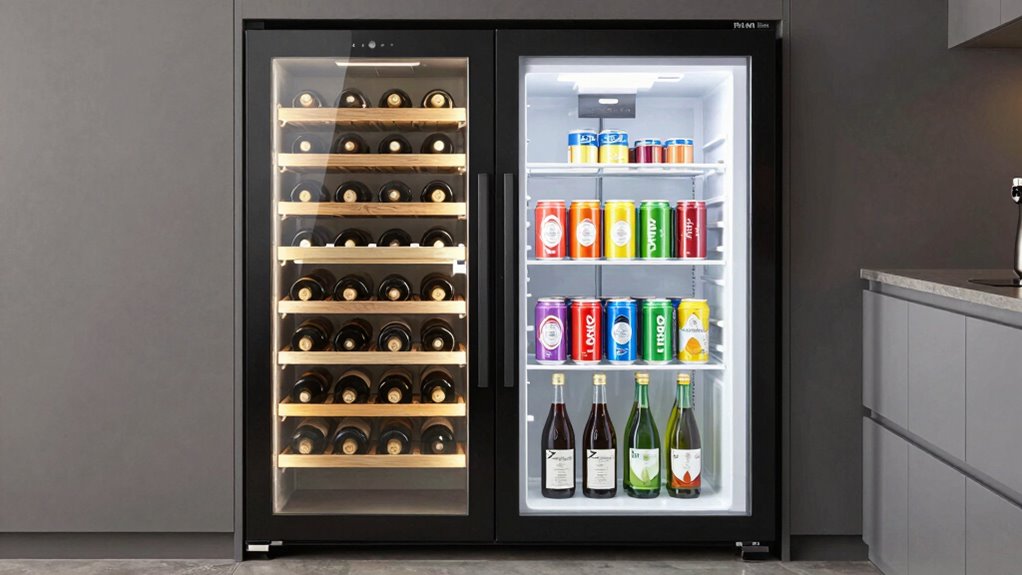
When it comes to fitting a wine or beverage fridge into your space, the design and shelving options play a vital role. You’ll want to consider interior lighting—some fridges feature soft LED lights that highlight your collection without disturbing the environment. Shelving styles also matter; wine fridges often have horizontal racks that cradle bottles securely, while beverage fridges typically offer adjustable or open shelving for cans and bottles. Noise levels are another key factor; quieter models are preferable if your fridge will be in a living or entertaining area. Think about how much space you need and what kind of storage style aligns with your home’s aesthetic. The right design ensures your drinks are accessible, well-organized, and seamlessly integrated into your space.
How Each Fridge Preserves Your Drinks and Extends Longevity
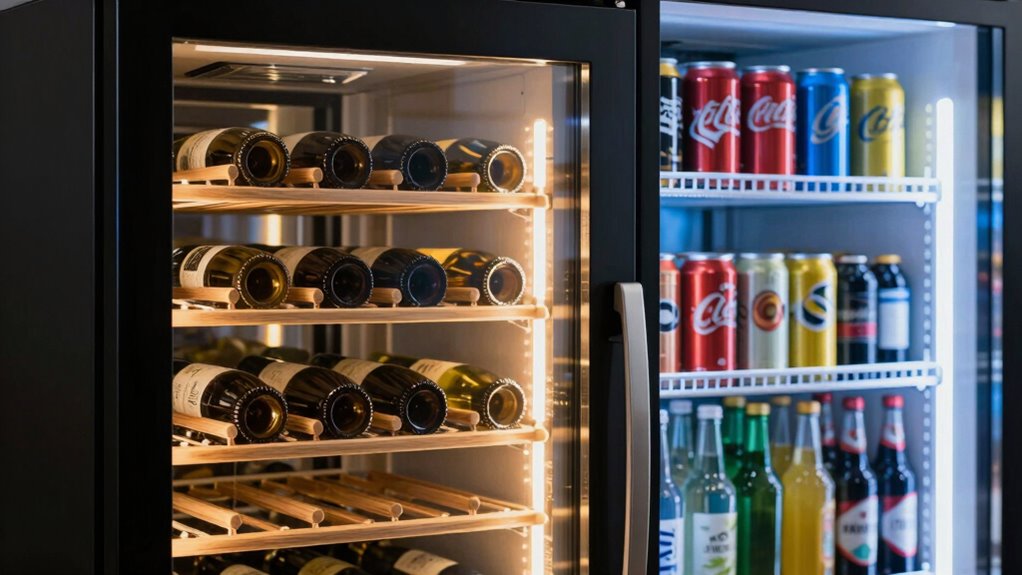
While both wine and beverage fridges help keep your drinks cold, they differ considerably in how they preserve each type and extend their shelf life. A wine fridge maintains a consistent temperature ideal for aging and wine pairing, preventing spoilage. It also controls humidity, protecting corks and preventing oxidation. Beverage fridges, on the other hand, focus on rapid cooling and preserving beverage flavors, especially for mixed drinks and sodas. They often have adjustable shelves to accommodate different bottle sizes. To maximize longevity, you should:
Wine fridges ensure optimal aging conditions, while beverage fridges prioritize quick cooling and flavor preservation.
- Store wine at the right temperature and humidity
- Keep beverages chilled but not frozen
- Avoid frequent temperature fluctuations
- Regularly clean the interior to prevent mold and odors
These practices guarantee your drinks stay fresh longer and taste their best.
Factors to Consider When Choosing the Right Fridge
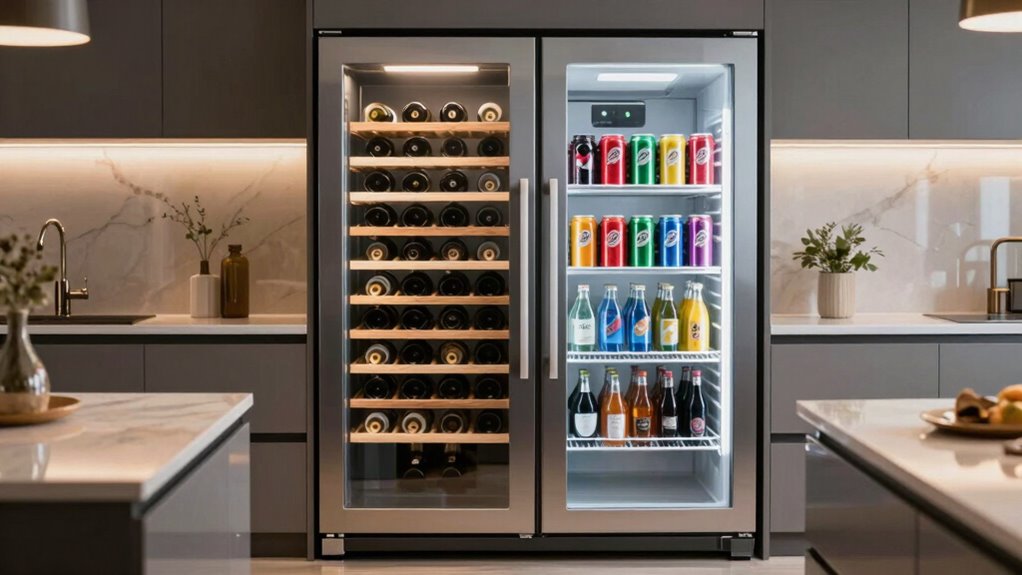
Choosing the right fridge depends on your specific needs and how you plan to store your drinks. If wine preservation is a priority, opt for a wine fridge with precise temperature control and humidity settings to protect your bottles. For beverage convenience, a beverage fridge offers a larger capacity and easy access to a variety of drinks at different temperatures. Consider the types of drinks you’ll store most often—if you prefer keeping wine at ideal conditions, a wine fridge is ideal. But if you entertain frequently and need quick access to sodas, beers, or mixers, a beverage fridge makes sense. Size, energy efficiency, and temperature zones are also key factors to guarantee your fridge fits your lifestyle and enhances your drink experience.
Can You Store Wine and Beverages in One Fridge? Pros and Cons
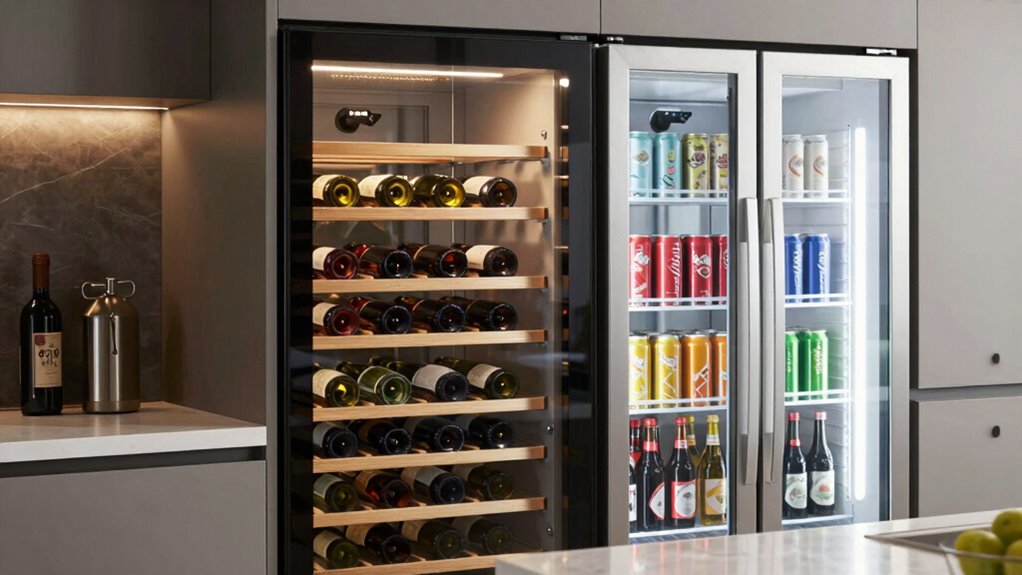
Storing wine and beverages in one fridge is possible, but it comes with both advantages and drawbacks. On the plus side, it saves space and can simplify your setup. You can experiment with beverage recipes and easily access drinks for wine pairing ideas. However, the main challenge is balancing temperature zones. Wine needs a consistent, cooler environment, while beverages often require slightly higher temps. Mixing these can compromise wine quality or affect beverage taste. Additionally, you might struggle with organizing bottles effectively, risking temperature fluctuations. If convenience outweighs perfect storage conditions, a combined fridge works. But if you’re serious about preserving wine flavors or creating the ideal beverage environment, separate units are better. Consider your priorities before combining wine and beverage storage in one fridge.
Price, Size, and Energy Use: What’s the Best Fit for Your Budget?
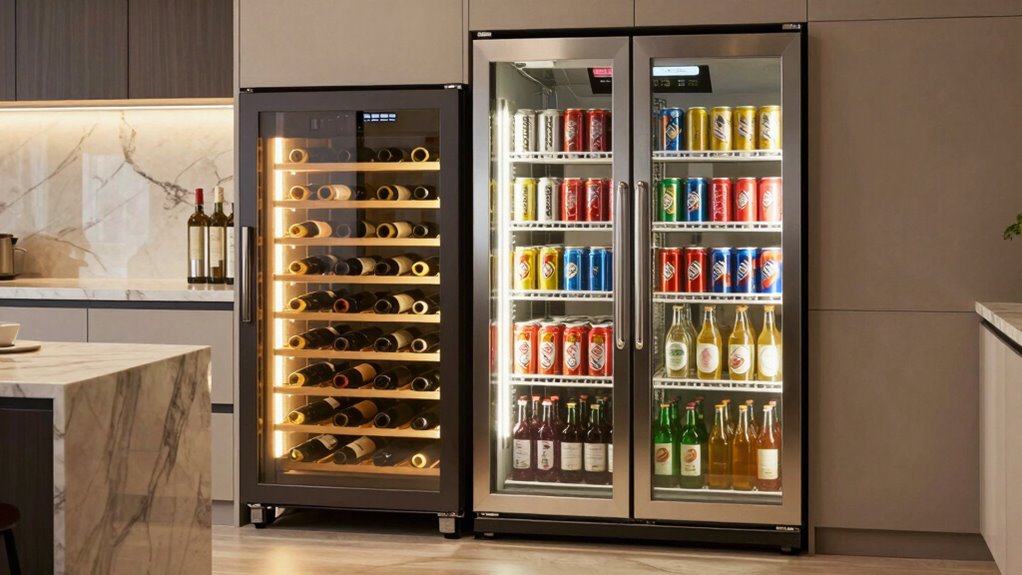
When comparing wine and beverage fridges, understanding their price, size, and energy consumption is essential to finding the best fit for your budget. Wine fridges tend to be more expensive upfront due to specialized temperature controls and better insulation, but they often come with longer warranty coverage. Beverage fridges are generally more affordable and larger in size, offering more storage for both drinks and space efficiency. A brand comparison can reveal differences in energy efficiency; some models use less power, saving you money over time. Consider your usage habits and space constraints when choosing. Investing in a reputable brand with solid warranty coverage guarantees durability and peace of mind, making it easier to justify the initial cost and find the perfect fridge for your needs.
Frequently Asked Questions
Can a Wine Fridge Also Cool Other Beverages Effectively?
Yes, a wine fridge can cool other beverages effectively, but it’s not perfect for beverage versatility. Wine preservation relies on specific temperature ranges, usually around 45-65°F, which may not suit all drinks like beer or soda. While you can store other beverages, they might not reach ideal temperature or carbonation levels. For the best results, consider a fridge designed for beverages if you want versatile cooling options.
How Does Airflow Differ Between Wine and Beverage Fridges?
Think of airflow patterns as gentle breezes guiding your drinks. In wine fridges, ventilation efficiency focuses on maintaining a consistent, slow airflow to protect delicate wines from vibrations and temperature fluctuations. Beverage fridges, however, have more vigorous airflow patterns to quickly circulate air, cooling a variety of drinks efficiently. This difference guarantees wine stays refined, while beverages chill rapidly, highlighting their distinct ventilation needs.
Are There Hybrid Fridges Designed for Both Wine and Drinks?
Yes, there are hybrid fridges designed for both wine preservation and beverage customization. These units give you the flexibility to store wine at ideal temperatures while also chilling drinks efficiently. You benefit from versatile climate controls and adjustable shelves, making it easy to switch between preserving delicate wines and cooling various beverages. With a hybrid fridge, you get the convenience of managing different types of drinks in one appliance, saving space and simplifying storage.
What Maintenance Is Required for Keeping Each Fridge in Optimal Condition?
Think of your fridge as a delicate garden needing care. You should regularly check temperature calibration to guarantee it stays steady, preventing spoilage. Humidity control is equally essential, especially for wine, to maintain its quality. Clean the coils and door seals often to keep it running efficiently. With consistent maintenance, your fridge will serve up freshness and flavor, making every sip a celebration of your dedication.
Do Different Fridge Brands Offer Specialized Features for Wine or Beverage Storage?
Yes, different fridge brands do offer specialized features for wine preservation and beverage cooling. You’ll find models with precise temperature controls, UV-protected glass, and humidity regulation tailored for wine, ensuring ideal storage conditions. For beverages, brands often include rapid cooling options, adjustable shelves, and smart temperature zones. These features help you maintain the quality of your drinks, whether you’re preserving fine wines or chilling beverages quickly and efficiently.
Conclusion
Choosing between a wine fridge and a beverage cooler is like picking the right tool for a job—you want it to fit perfectly. I once tried storing beers and wines in one fridge, only to find my reds lost their richness while cans lost their fizz. Think of your fridge as a tailored suit: the right fit preserves your drinks’ quality and saves you money. Make your choice wisely, and your drinks will thank you for it.
Fall Picks
fall essentials
As an affiliate, we earn on qualifying purchases.