Dolby Atmos is a surround sound tech that adds height channels, making you feel like sound moves above and around you. It uses upward-firing speakers or ceiling speakers to create a three-dimensional audio experience, improving immersion in movies, music, or games. The benefits depend on proper setup and compatible equipment, with content quality also playing a role. Want to know how to get the most out of Atmos? Keep exploring to find out more.

Get the latest gadgets delivered free with Prime
- Fast, free delivery on millions of items
- Prime Video, Amazon Music and more included
- Member-only deals all year
Key Takeaways
- Dolby Atmos creates a 3D sound field by adding height channels, making audio feel like it’s moving around and above you.
- Support requires compatible speakers, such as upward-firing or ceiling-mounted units, and an Atmos-enabled receiver or soundbar.
- Proper setup involves optimal speaker placement, calibration, and room acoustics to maximize sound clarity and immersion.
- Content must be specifically mixed for Atmos to fully experience its spatial effects; not all media support it.
- Effective listening depends on correct seating, environment, and understanding that Atmos benefits vary based on hardware and content quality.
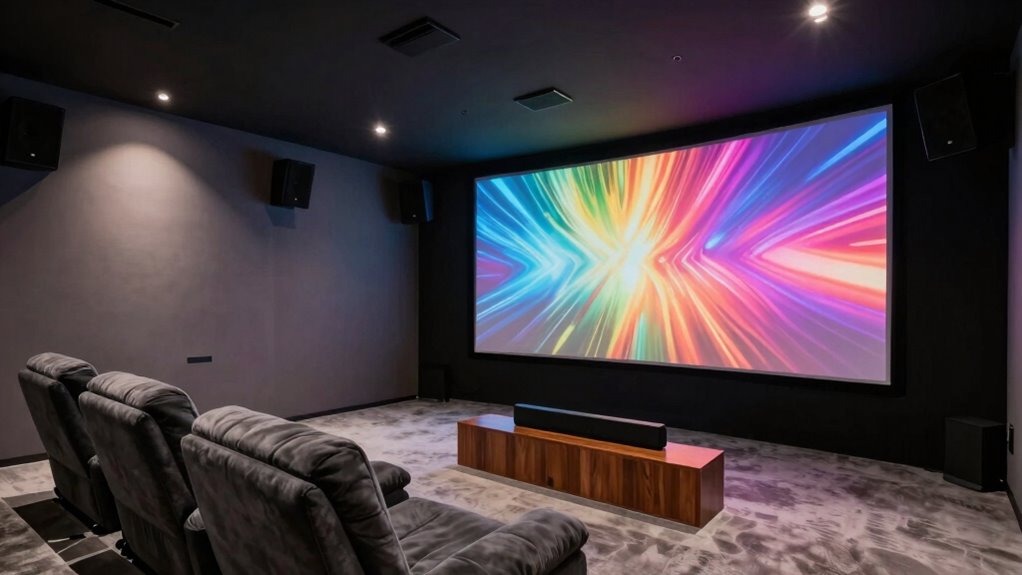
Dolby Atmos home theater speakers
As an affiliate, we earn on qualifying purchases.
As an affiliate, we earn on qualifying purchases.
What Is Dolby Atmos, and Is It Right for Your Home Theater?
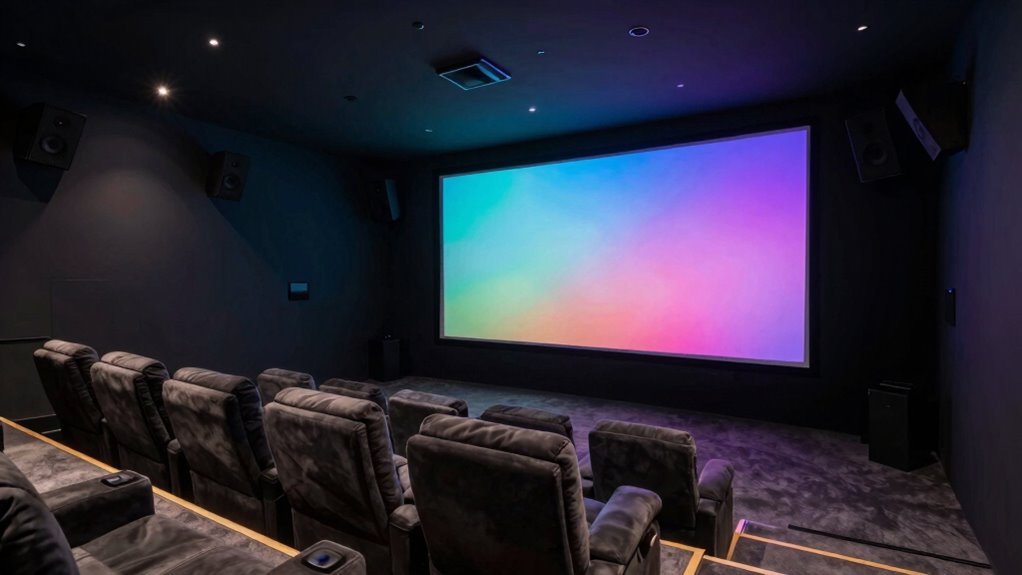
Ever wondered how some home theaters deliver immersive surround sound that makes you feel like you’re right in the middle of the action? It’s all about sound quality, which depends heavily on speaker placement. Dolby Atmos creates a three-dimensional audio experience by adding height channels, so sound moves around you more naturally. To get the most out of Atmos, you need to position speakers correctly—ceiling or upward-firing speakers should be placed to optimize sound flow. If your room allows for proper speaker placement, Atmos can profoundly enhance your home theater, making scenes more realistic and engaging. Additionally, understanding digital content formats can help you choose compatible devices and media for the best experience. However, if you can’t set up the speakers accurately, the full Atmos experience might be lost. So, consider your space and setup before investing in Atmos-compatible equipment. Proper speaker placement is essential to prevent sound distortion and achieve the best experience.
upward firing speakers for Dolby Atmos
As an affiliate, we earn on qualifying purchases.
As an affiliate, we earn on qualifying purchases.
How to Check If Your Equipment Supports Dolby Atmos
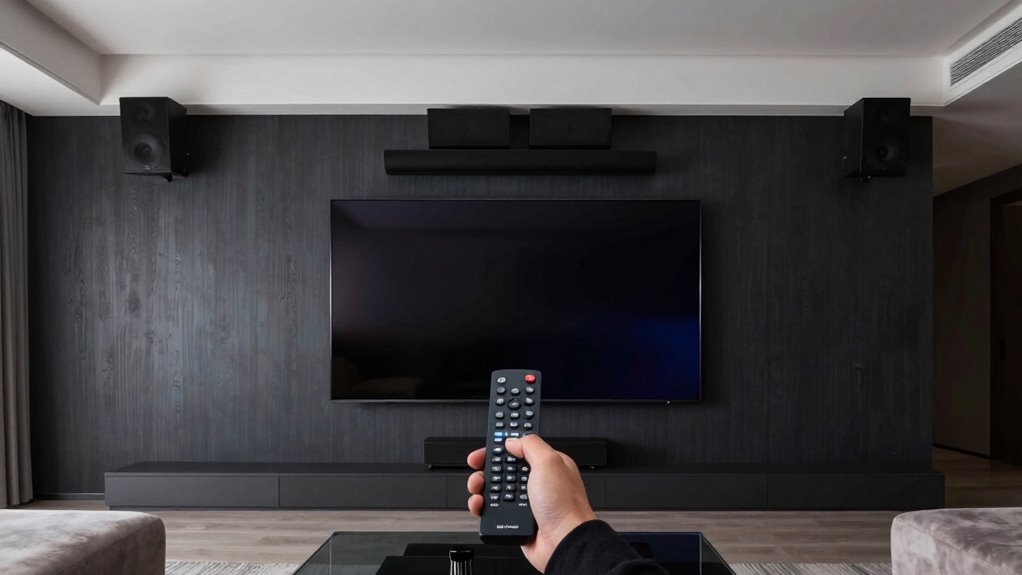
To enjoy the immersive sound of Dolby Atmos, you first need to confirm that your equipment can handle it. Start by checking your device’s specifications: look for Dolby Atmos support in the user manual or on the manufacturer’s website. Next, verify speaker placement—Dolby Atmos requires upward-firing or ceiling speakers to create a three-dimensional sound field. Then, verify your receiver or soundbar supports Atmos decoding. Additionally, understanding the importance of contrast ratio can help you optimize your system’s audio and visual performance for a more immersive experience. Proper system compatibility is essential, as it ensures all components work together seamlessly and deliver the full Atmos effect. Finally, perform audio calibration to optimize speaker levels and placement, making sure your system is configured correctly. This step guarantees the sound is balanced and positioned accurately. Be mindful of traditional home decor principles, as integrating elements like masks and natural textures can enhance your overall viewing environment. It’s also beneficial to consider equipment support to ensure your setup is capable of delivering true Dolby Atmos immersion. Ensuring proper equipment support is in place is crucial because even minor incompatibilities can hinder your immersive experience. If any of these points are missing or incompatible, your equipment won’t deliver true Dolby Atmos immersion. Proper support and calibration are essential for experiencing the full Atmos effect.
As an affiliate, we earn on qualifying purchases.
Setting Up Dolby Atmos Speakers and Equipment at Home
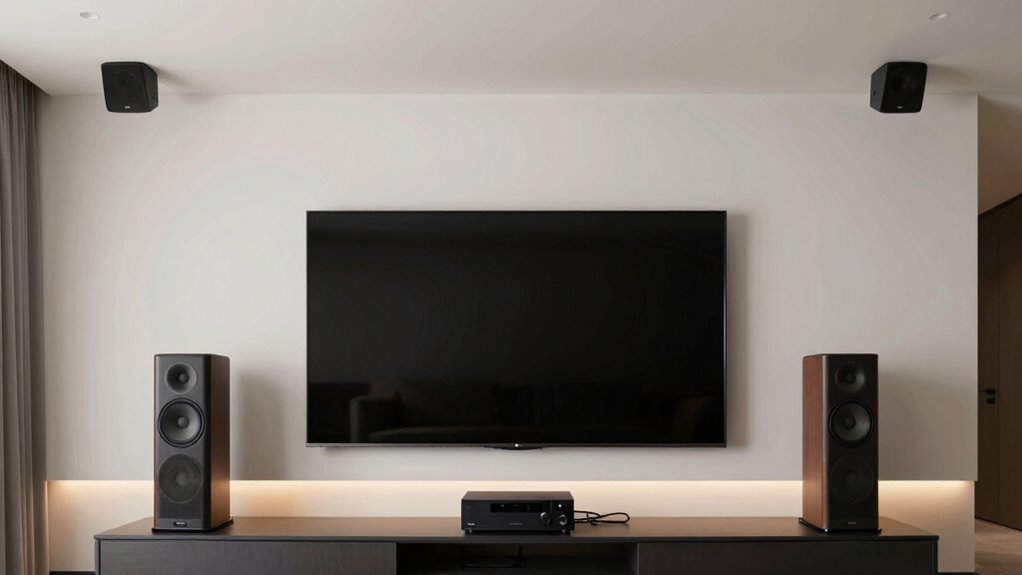
Setting up Dolby Atmos speakers at home involves careful placement to create an immersive sound experience. Proper speaker placement is essential; overhead or upward-firing speakers should be positioned to direct sound downward, ensuring clear overhead effects. For the best results, place your front speakers at ear level, with the surrounds slightly behind and to the sides. Ceiling or upward-firing speakers should be be aligned accurately for proper sound reflection. Room acoustics also play a significant role—soft furnishings can absorb sound, reducing clarity, while hard surfaces reflect it, potentially causing echo. Adjust speaker angles and positions to optimize sound dispersion. Use calibration tools or receiver settings to fine-tune your setup, balancing sound levels and ensuring the Atmos effects are seamless and immersive. Additionally, selecting high-quality kitchen gear such as precise calibration microphones or sound meters can help in achieving optimal sound calibration. Paying attention to Room acoustics and minimizing sound reflections can further enhance the overall experience. Understanding sound reflection and absorption properties can help you make adjustments for the best acoustic environment, especially considering the resale value of your equipment and setup. Incorporating acoustic treatment options like diffusers or bass traps can significantly improve sound quality in your space.
As an affiliate, we earn on qualifying purchases.
Are Dolby Atmos Benefits Worth the Upgrade?

Are the benefits of upgrading to Dolby Atmos really worth the investment? It depends on your priorities. If you value immersive sound, you’ll notice a difference with proper audio calibration and strategic speaker placement. Consider these points:
- Enhanced immersion—sound moves around you, creating a more realistic experience.
- Improved clarity—voices and effects are clearer, especially in complex scenes.
- Setup importance—correct speaker placement and calibration maximize Atmos’s benefits.
- Cost vs. value—upgrading involves expense, but the quality boost can justify it if you’re passionate about audio.
- Proper sound environment can significantly impact how well Dolby Atmos performs in your space. Additionally, understanding watt-hours and capacity is essential for choosing the right audio equipment to support your setup effectively. Proper audio calibration ensures you experience the full benefits of Atmos, making the investment more worthwhile. A well-designed audio setup can also prevent sound leakage and improve overall performance, especially when considering room acoustics and how they influence sound quality.
While the upgrade can be significant, it’s crucial to ensure your setup is optimized. Otherwise, you might not experience the full range of Dolby Atmos’s advantages.
Common Myths About Dolby Atmos Debunked
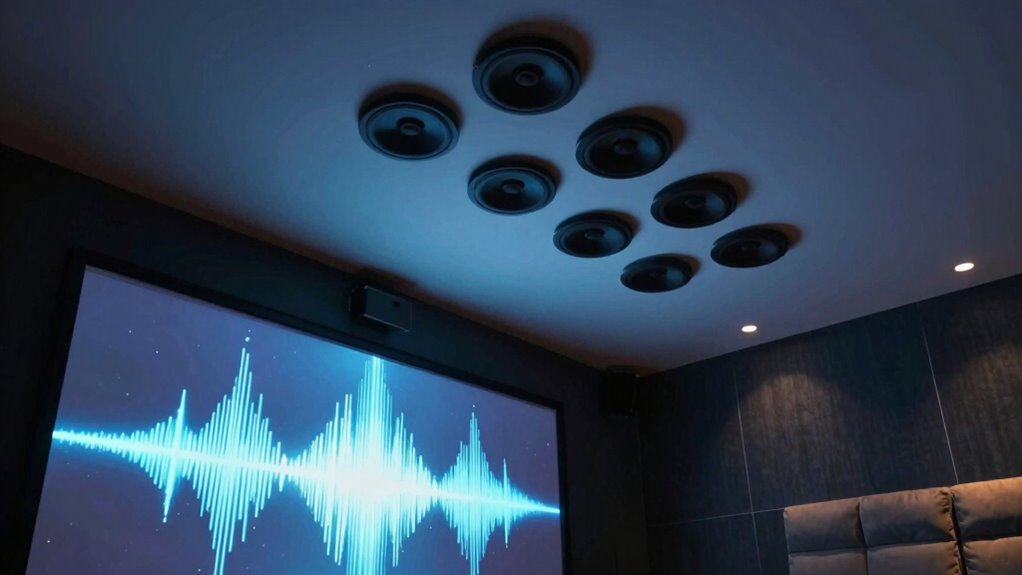
Despite the excitement surrounding Dolby Atmos, there are many misconceptions that can lead to unrealistic expectations. Some believe Atmos instantly guarantees superior sound quality or a fully immersive experience without proper setup. In reality, the quality depends on your equipment and room acoustics. To clarify, here’s a quick comparison:
| Myth | Reality | Impact on Experience |
|---|---|---|
| Atmos is only for movies | It enhances music, games, and streaming too | Broader immersive possibilities |
| You need a big room | Small rooms can still benefit with proper setup | Better sound everywhere |
| All speakers are equal | Speaker placement and quality matter most | Clearer, more precise sound |
Understanding these myths helps you set realistic expectations and maximize your immersive experience. Additionally, paying attention to speaker placement and room acoustics can significantly improve your overall sound quality. Recognizing the life mysteries often connected to sound perception can deepen your appreciation for how immersive audio influences our experiences. Furthermore, the quality of equipment plays a crucial role in achieving optimal sound performance. A well-calibrated system and proper room treatment can make a substantial difference in experiencing Dolby Atmos at its best.
Frequently Asked Questions
Can Dolby Atmos Be Experienced on Headphones Without Additional Equipment?
Yes, you can experience Dolby Atmos on headphones without extra gear. Many devices use headphone virtualization and spatial audio technology to simulate Atmos’s immersive sound. This technology creates a sense of depth and directionality, making it feel like sounds come from all around you. Make certain your device supports Dolby Atmos or compatible spatial audio features, and use compatible headphones or software that delivers this immersive experience directly through your headphones.
What Are the Differences Between Dolby Atmos and Dolby Digital Plus?
Dolby Atmos and Dolby Digital Plus differ mainly in how they handle sound. Atmos uses speaker placement and sound calibration to create a three-dimensional audio experience, immersing you in sound from all directions. Digital Plus, on the other hand, compresses audio to deliver clear sound over various connections. While Atmos offers immersive sound with the right setup, Digital Plus provides good quality audio with less complexity and equipment.
How Does Room Acoustics Impact Dolby Atmos Sound Quality?
Room acoustics profoundly impact Dolby Atmos sound quality. Your room setup influences how sound waves travel and reflect, affecting clarity and immersion. Proper acoustic treatment, like adding diffusers or bass traps, reduces unwanted echoes and reverberations. By optimizing your room’s acoustics, you guarantee that Atmos’s multi-dimensional sound is accurately reproduced, creating a more immersive experience. Ignoring these factors can lead to dull or muddled audio, diminishing the benefits of Dolby Atmos technology.
Is Dolby Atmos Compatible With All Streaming Services?
Think of Dolby Atmos like a 21st-century mixtape—it’s not compatible with everything. Streaming services vary in content compatibility, and not all support Atmos. To get the full experience, you need the right speaker placement and Atmos-enabled content. Some platforms, like Netflix and Disney+, do offer Atmos streams, but others might not. Always check your streaming service’s specs before investing in Atmos equipment.
What Are the Cost Implications of Upgrading to Dolby Atmos?
Upgrading to Dolby Atmos can be costly, as you’ll need compatible equipment like an AV receiver, speakers, and possibly new cables. You might also spend extra on professional audio calibration to optimize sound quality and guarantee proper speaker placement for immersive effects. While the initial investment varies, the enhanced audio experience makes it worthwhile, but plan for potential expenses in upgrading your current setup and fine-tuning your system.
Conclusion
Imagine upgrading from a bicycle to a sports car—suddenly, every twist and turn feels more exhilarating. That’s what Dolby Atmos can do for your home theater. It’s not just about fancy sound; it’s about immersing yourself in every scene, like being right there. If your setup supports it, and you crave a richer experience, it’s worth the leap. After all, why settle for listening when you can truly feel the story unfold around you?
Fall Picks
fall essentials
As an affiliate, we earn on qualifying purchases.