
To pick bookshelf speakers for your home theater without getting overwhelmed by specs, focus on how they fit your room and listening preferences. Choose speakers at ear level when seated and keep them equal distance from your seating area. Consider your space’s acoustics—soft furnishings help reduce echoes, while room size affects speaker choice. Experiment with placement to find the best sound, and remember, even simple models can deliver great results if set up right. Keep exploring to discover more helpful tips.

Get the latest gadgets delivered free with Prime
- Fast, free delivery on millions of items
- Prime Video, Amazon Music and more included
- Member-only deals all year
Key Takeaways
- Prioritize sound quality and clarity over technical specifications like wattage or frequency response.
- Consider speaker size, placement flexibility, and how they fit into your room’s acoustics.
- Test different models in your space to assess real-world sound performance.
- Focus on creating a balanced soundstage with clear dialogue and immersive effects.
- Remember that proper placement and room treatment can enhance even basic speakers’ performance.
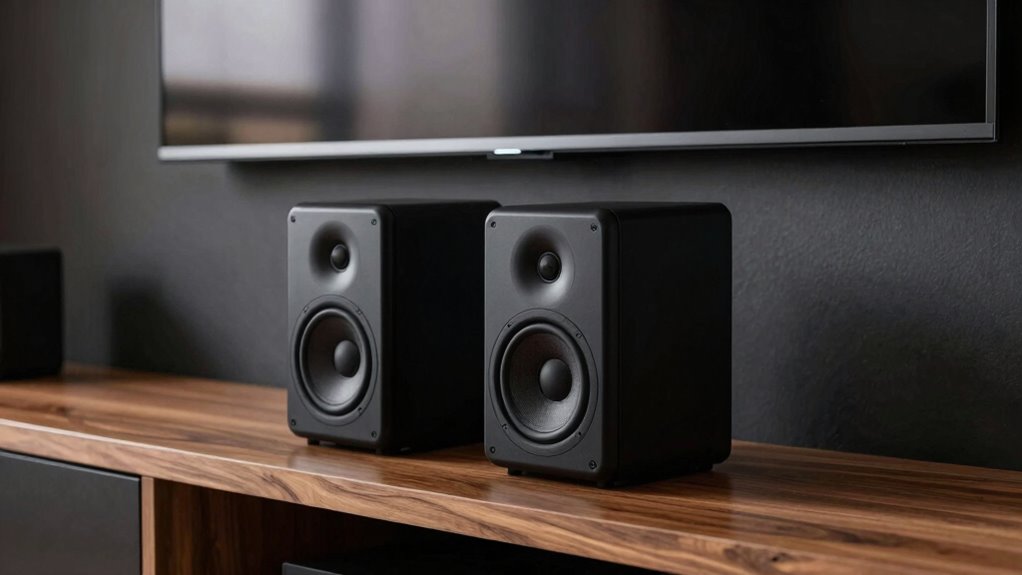
Choosing the right bookshelf speakers can greatly enhance your home theater experience, but with so many options available, it’s easy to feel overwhelmed. One of the most important factors to consider is how you’ll place your speakers. Proper speaker placement isn’t just about positioning them on shelves or stands; it’s also about how they interact with your room’s acoustics. When you position your speakers correctly, you’ll notice clearer dialogue, richer sound effects, and a more immersive listening experience.
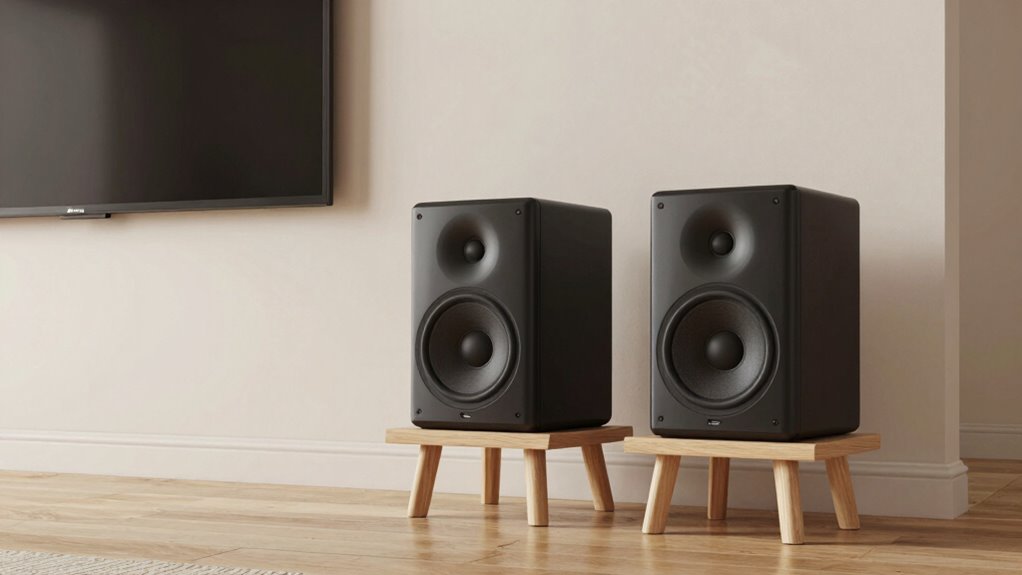
Start by placing your bookshelf speakers at ear level when you’re seated. This ensures sound travels directly to your ears without unnecessary distortion. Keep them at an equal distance from your listening position to create a balanced soundstage. Avoid placing them too close to walls or corners, as this can cause bass to sound boomy or muddy. Instead, leave some space behind and beside them to allow the sound to disperse naturally, improving overall clarity. Additionally, experimenting with speaker placement techniques can help you discover the optimal setup for your specific room.
Place bookshelf speakers at ear level and keep equal distance from your listening position for optimal sound clarity.
Room acoustics play a huge role in how your speakers perform. Hard surfaces like glass, tile, or bare walls can reflect sound waves, creating echoes or harsh sounds that muddle your audio. To counteract this, consider adding soft furnishings like rugs, curtains, or plush furniture that absorb excess sound reflections. If your room is particularly large or has many reflective surfaces, you might need to adjust your speaker placement slightly or add acoustic treatment to optimize sound quality. Additionally, understanding how room acoustics influence sound can help you make better placement decisions and improve your overall listening experience. Incorporating sound-absorbing materials strategically can significantly reduce unwanted reflections and enhance clarity. Exploring acoustic treatment options tailored to your space can further elevate your audio quality. Being aware of how these elements interact can help you achieve a more natural sound balance throughout your room.
When selecting bookshelf speakers, pay attention to their size, power handling, and frequency response, but don’t get trapped in the endless details of specs. Instead, focus on how they’ll fit into your room and how flexible their placement options are. Some models come with adjustable tweeters or mounting options, making it easier to fine-tune their positioning for the best sound. Remember, the goal is to create a seamless, balanced soundstage where dialogue is clear and effects are immersive.
Ultimately, choosing your bookshelf speakers is about understanding your space and how sound interacts within it. Take the time to experiment with placement, listen to different models, and consider how your room’s acoustics can be optimized. When you do this, you’ll find that even the most straightforward speakers can deliver a rich, cinematic experience that makes your home theater truly stand out.
bookshelf speakers for home theater
As an affiliate, we earn on qualifying purchases.
As an affiliate, we earn on qualifying purchases.
Frequently Asked Questions
Do Bookshelf Speakers Need a Subwoofer for Home Theater?
Bookshelf speakers don’t necessarily need a subwoofer for your home theater, but a sub can enhance bass response, making action scenes more immersive. Proper subwoofer placement is key to avoiding muddy sound and ensuring balanced bass. If your bookshelf speakers already deliver adequate low frequencies, you might skip the sub. However, for richer, deeper sound, adding a subwoofer is a smart choice, especially in larger rooms.
How Important Is Brand Reputation When Choosing Speakers?
Brand reputation matters when choosing bookshelf speakers because it influences your confidence in their quality and durability. You might have brand loyalty from past experiences or recommendations, which can guide your decision. A reputable manufacturer’s reputation often indicates better craftsmanship, consistent performance, and reliable customer support. So, prioritize brands known for quality, as they’re more likely to deliver satisfying sound and long-lasting speakers for your home theater setup.
Can I Upgrade My Bookshelf Speakers Later?
Yes, you can upgrade your bookshelf speakers later. When doing so, consider how speaker placement and acoustic treatment will affect sound quality. Upgrading might require repositioning your new speakers for peak performance and adding acoustic treatments like panels or rugs to improve sound clarity. This guarantees your upgrade enhances your home theater experience without being limited by initial setup constraints. Proper placement and treatment make future upgrades more effective.
What’s the Ideal Listening Distance for Bookshelf Speakers?
You should sit about 6 to 10 feet away from your bookshelf speakers—think of it as the sweet spot where sound feels like a personal concert. Proper speaker placement and room acoustics are your secret weapons; too close and you’ll miss the full richness, too far and sound gets lost. Aim for that perfect middle ground, adjusting based on your room’s size and shape for the best audio experience.
How Do I Match Speakers With My Existing AV Receiver?
To match speakers with your AV receiver, focus on speaker placement and acoustic treatment to optimize sound. Check your receiver’s power output and impedance ratings to guarantee compatibility, preventing distortion or damage. Position your speakers correctly—ear level and angled toward your listening area—and consider acoustic treatment like rugs or panels to reduce echo. This combination helps your existing AV receiver deliver clear, balanced sound with your bookshelf speakers.
best bookshelf speakers for small room
As an affiliate, we earn on qualifying purchases.
As an affiliate, we earn on qualifying purchases.
Conclusion
Choosing the right bookshelf speakers is like finding the perfect pair of shoes—you want comfort, style, and fit. Focus on size, sound quality, and your room’s vibe, and don’t get lost in a sea of specs. Trust your ears and instincts, and you’ll create a home theater experience that’s as vivid as a painting come to life. With a little patience, you’ll craft a soundscape that feels like stepping into your favorite movie every time.
As an affiliate, we earn on qualifying purchases.
room acoustic treatment for speakers
As an affiliate, we earn on qualifying purchases.
As an affiliate, we earn on qualifying purchases.
Fall Picks
fall essentials
As an affiliate, we earn on qualifying purchases.