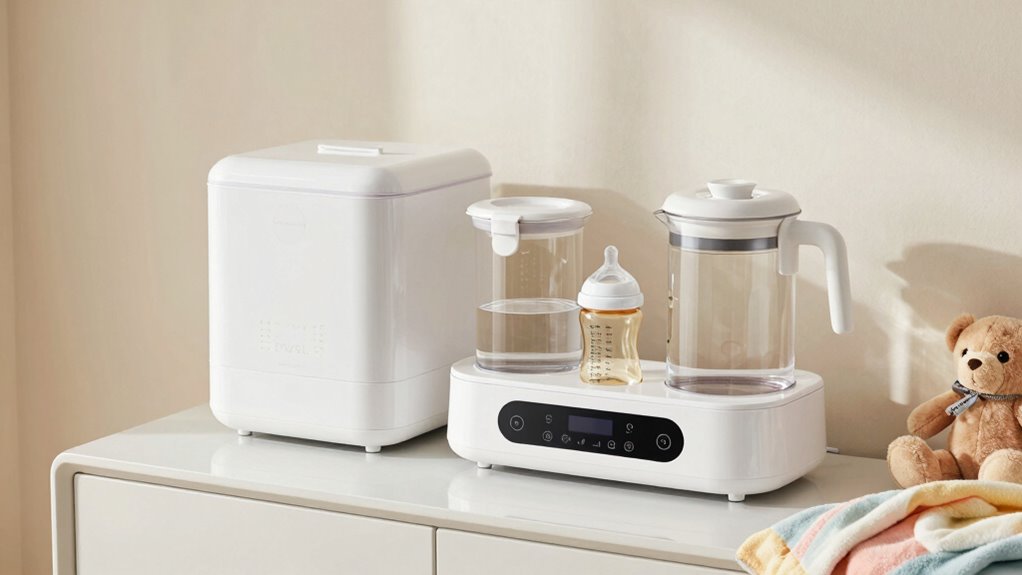

Deciding whether to use sterilizers, warmers, or formula makers depends on your lifestyle, your baby’s needs, and your comfort level. These gadgets can save time, guarantee hygiene, and help manage feeding challenges, but they’re not essential—many parents succeed without them. Consider how they fit into your routine, safety features, and ease of use. If you’re curious about how to choose the right options for your family, you’ll find helpful insights ahead.

Get the latest gadgets delivered free with Prime
- Fast, free delivery on millions of items
- Prime Video, Amazon Music and more included
- Member-only deals all year
Key Takeaways
- Not all parents need feeding appliances; traditional methods often suffice for safe, effective feeding.
- Sterilizers, warmers, and formula makers enhance convenience and safety, especially during breastfeeding challenges.
- Consider lifestyle, routine, and baby needs when choosing appliances; portability and safety features are important.
- Proper maintenance and hygiene practices are crucial to prevent hazards and ensure appliance effectiveness.
- Creating an organized, hygienic feeding environment supports baby safety and simplifies routines.
As an affiliate, we earn on qualifying purchases.
Are Feeding Appliances Necessary for Baby Feeding?
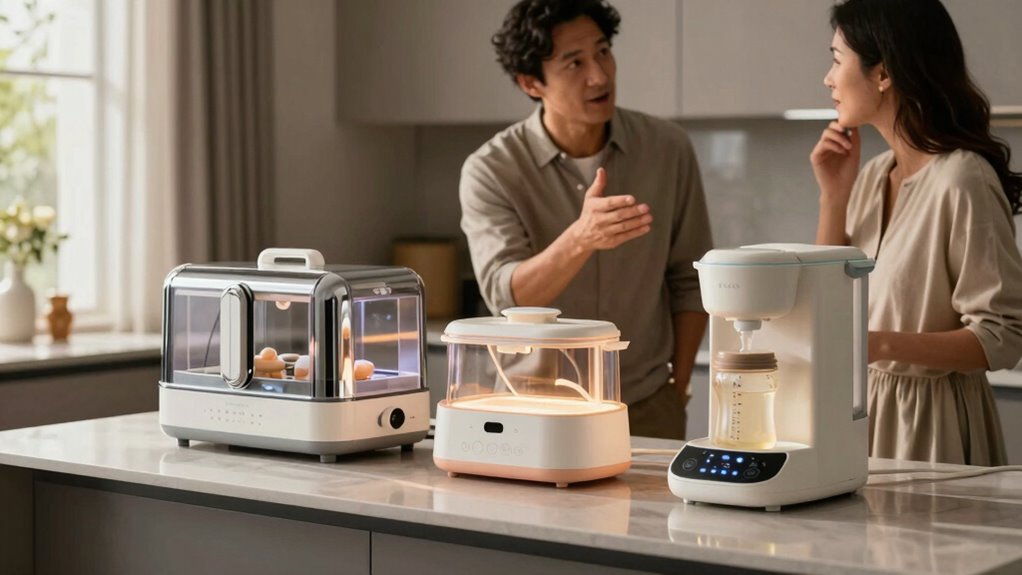
Are feeding appliances truly essential for feeding babies? Not necessarily. If you face breastfeeding challenges like latching issues or low milk supply, you might consider formula alternatives. In these cases, feeding appliances such as bottle warmers or sterilizers can make feeding more manageable. However, many parents successfully feed their babies without these gadgets, relying on traditional methods. The key is understanding your baby’s needs and your lifestyle. While appliances can offer convenience, they aren’t a requirement for nourishing your infant. Some parents prefer to keep things simple, using basic bottles and manual sterilization. Ultimately, whether you choose to use feeding appliances depends on your comfort, specific challenges, and feeding goals. You have options—what matters most is providing your baby with proper nourishment.
As an affiliate, we earn on qualifying purchases.
What Are the Main Types of Feeding Gadgets?

There are several common feeding gadgets you can choose from, each with unique features and functions. Some are designed to make feeding easier for your baby, while others focus on safety and convenience. Understanding the main types helps you select the right tools for your baby’s needs. Additionally, considering features like ease of cleaning and maintenance can greatly enhance overall bathroom and feeding efficiency. Incorporating digital content into your research can provide valuable insights into the latest innovations and safety standards for these gadgets. Exploring innovative design can also help you find products that are both functional and user-friendly, making daily routines smoother. Paying attention to sustainable materials in these products ensures they align with eco-friendly practices and durability. Recognizing the importance of compatibility with other feeding accessories can further streamline your feeding routine and reduce clutter.
Common Feeding Device Varieties
When it comes to feeding devices, choosing the right type depends on your child’s needs and developmental stage. You might face breastfeeding challenges or explore formula alternatives, which influences your options. The main varieties include:
- Bottle feeders: Ideal for supplementing breastfeeding or using formula, especially when direct breastfeeding isn’t possible.
- Sippy cups: Designed for toddlers moving from bottles, helping develop oral skills.
- Nipple shields: Assist with breastfeeding challenges by making latch easier for your baby.
- Breast pumps: Enable milk expression for later feeding or when direct breastfeeding isn’t feasible.
Each variety serves different needs, making it easier to find a device suited for your situation. Understanding these options helps you choose what’s best as your baby grows.
Features and Functionality
Feeding gadgets come in various types, each designed to serve specific purposes and cater to different developmental stages. Some devices focus on convenience, like sterilizers and warmers, making bottle prep easier. Others, like formula makers, automate mixing and heating, saving time. If you’re exploring breastfeeding alternatives, options like breast pumps and nipple shields offer flexibility. Parental preferences also influence choices—some prefer gadgets that mimic natural feeding, while others opt for simple tools or no devices at all. Features vary widely: temperature control, ease of cleaning, portability, and compatibility with different bottle types. Understanding these functionalities helps you select gadgets that align with your feeding routine and comfort level, ensuring both you and your baby get the most suitable, efficient feeding experience.
automatic formula maker for babies
As an affiliate, we earn on qualifying purchases.
As an affiliate, we earn on qualifying purchases.
How Do Sterilizers, Warmers, and Formula Makers Impact Baby Safety and Convenience?

Sterilizers, warmers, and formula makers play an essential role in enhancing both baby safety and convenience. They help reduce risks associated with bacteria during formula preparation, giving you peace of mind. These appliances also simplify feeding routines, especially when facing breastfeeding challenges or needing quick, safe formula feeds.
- Keep bottles sterile, reducing infection risk
- Quickly warm milk to the right temperature
- Streamline formula prep, saving time
- Maintain consistent feeding comfort for your baby
As an affiliate, we earn on qualifying purchases.
What Are the Pros and Cons of Using a Baby Bottle Sterilizer?
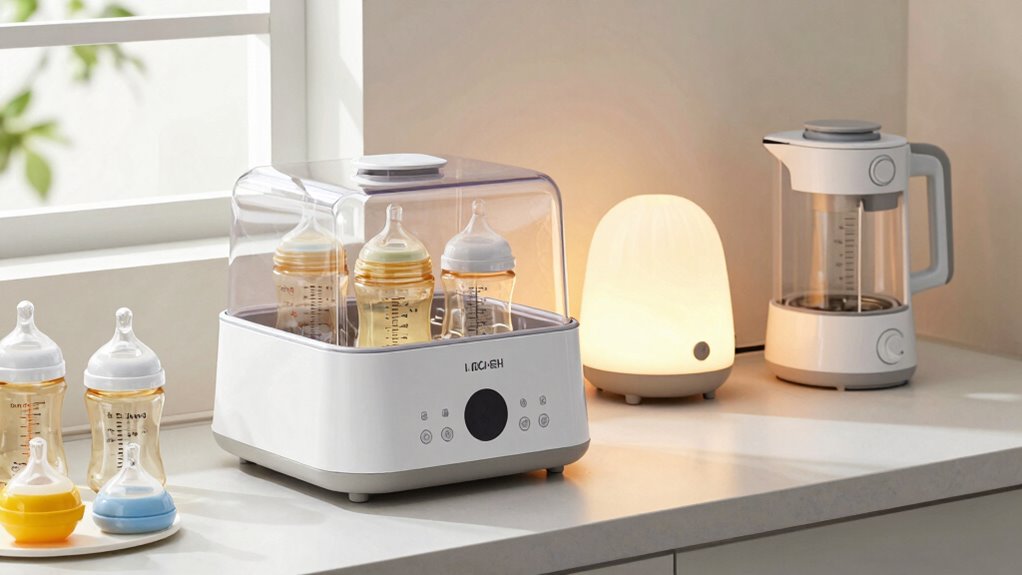
Using a baby bottle sterilizer can profoundly boost your peace of mind by ensuring bottles are free from harmful bacteria. It simplifies cleaning, making bottle drying quicker and more efficient since sterilized bottles often dry faster and more thoroughly. However, sterilizer safety is essential; improper use can pose risks if devices malfunction or aren’t cleaned regularly. While sterilizers reduce bacteria, some parents worry about over-relying on them, potentially leading to complacency about manual cleaning. Additionally, sterilizers can be bulky and require ongoing power or water supplies, which might be inconvenient for travel or small spaces. Weighing these pros and cons helps you decide if a sterilizer fits your lifestyle, balancing the benefits of enhanced hygiene with practical considerations like device maintenance and safety.
Is Investing in a Bottle Warmer Worth It?
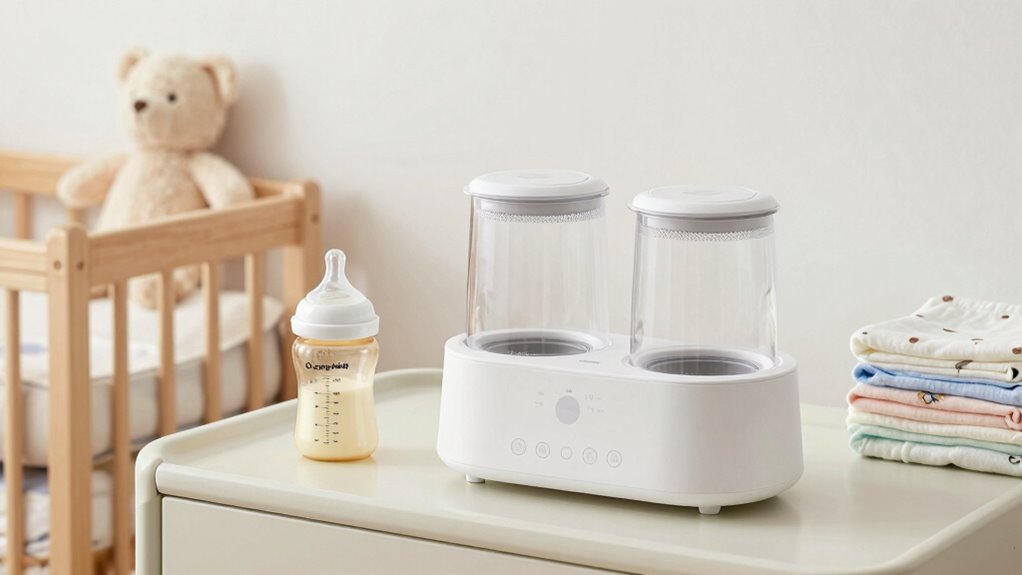
Is investing in a bottle warmer a worthwhile choice for busy parents? If your feeding schedule requires quick bottle prep, a warmer can save you time and effort. It guarantees bottles are heated evenly, reducing the risk of hot spots. Plus, it helps you maintain the right temperature, making feedings more comfortable for your baby. Additionally, a bottle warmer can contribute to a more toxin-free environment by minimizing the need for repeated heating and cooling, which can sometimes lead to leaching of harmful substances from plastic bottles. This can also support your efforts to reduce work-life stress by streamlining nighttime feedings. Ensuring safe feeding practices can help you confidently care for your little one. Some parents also find that using a warmer reduces the likelihood of silly tantrums or fussiness caused by inconsistent feeding temperatures.
Which Factors Should You Consider When Choosing Feeding Appliances?
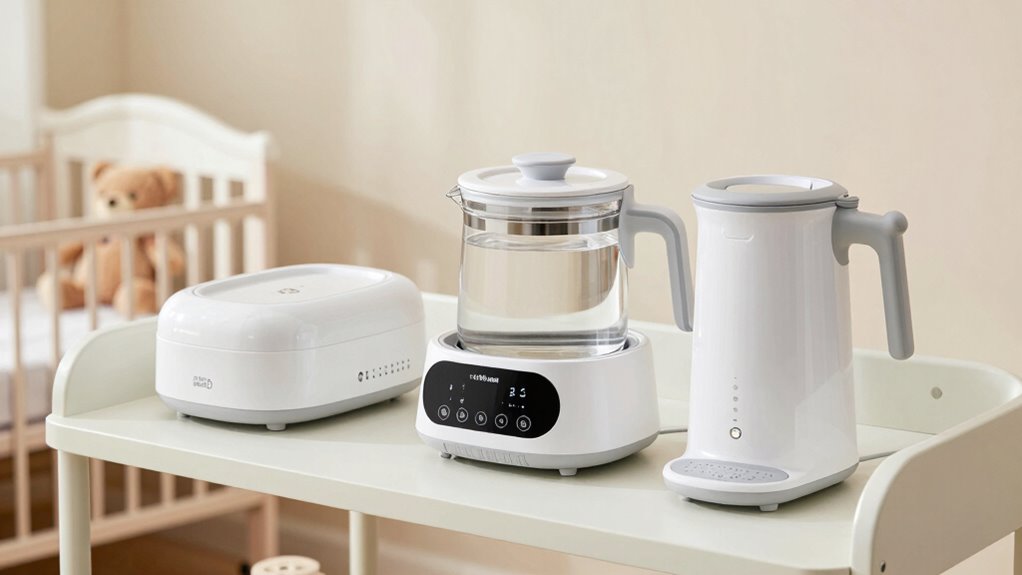
When choosing feeding appliances, it’s essential to take into account how well they fit into your daily routine and meet your baby’s specific needs. Consider the breastfeeding benefits you want to preserve or support, such as easy pumping and storage options that keep your milk fresh. If you’re formula feeding, evaluate the formula storage options—some appliances offer convenient, temperature-controlled storage that simplifies feeding times. Think about the size and portability of the device, especially if you’re often on the go. Safety features are critical; make sure the appliance is easy to clean and sterilize. Ultimately, select tools that align with your lifestyle, support your feeding goals, and help you provide consistent, safe nourishment for your baby.
How Can You Manage Baby Feeding Equipment Effectively?
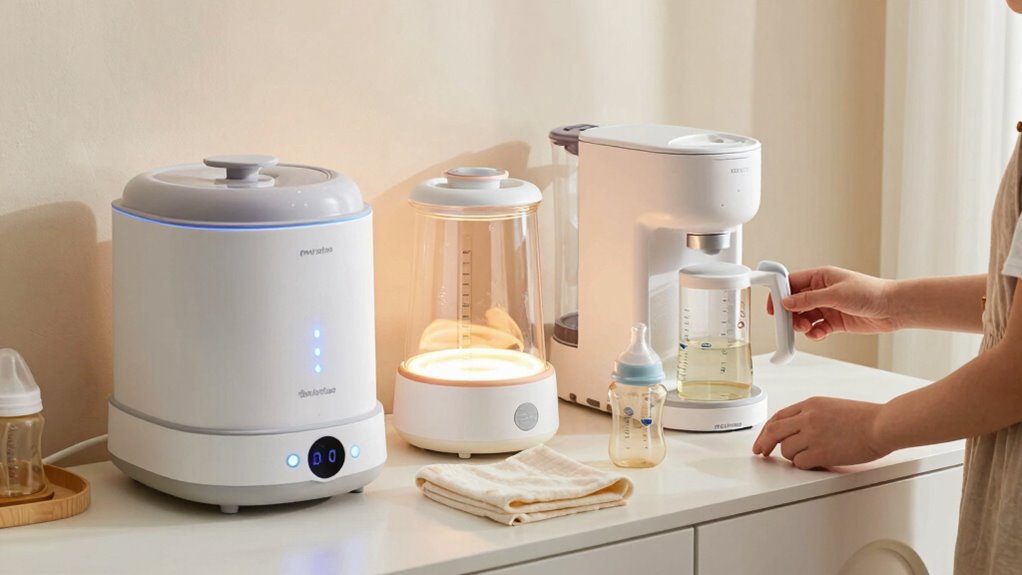
Managing baby feeding equipment effectively involves establishing routines that keep everything organized and hygienic. Consistency helps prevent contamination and makes feeding smoother. Regularly clean and sterilize traditional feeding tools or explore alternative feeding methods to suit your lifestyle. Keep a designated storage space for all supplies to reduce clutter. Label bottles and accessories for quick access and avoid mix-ups. Rotate equipment regularly to check for wear and replace any damaged items. Use a drying rack for sterilized items to guarantee they stay dry and germ-free. Incorporate proper sterilization techniques to ensure all items remain safe for your baby. Maintaining the appropriate battery capacity for your sterilizer or warmer can also optimize their effectiveness and efficiency. Additionally, understanding tracking technology can help monitor the usage and lifespan of your feeding equipment, ensuring optimal performance. Consider your needs—whether using traditional tools or alternative feeding methods—and adapt your routine accordingly. Staying organized minimizes stress and ensures your baby’s feeding environment remains safe and hygienic. Additionally, paying attention to projector technology can enhance your viewing experience if you incorporate visual entertainment into your routine. Being aware of baby product safety standards can further ensure the equipment you choose meets safety requirements and provides peace of mind.
Frequently Asked Questions
Are There Any Health Risks Associated With Using Feeding Appliances?
Yes, there are health risks if you don’t prioritize appliance safety. Poorly maintained sterilizers or warmers can harbor bacteria, risking your baby’s health and affecting nutritional impact. Using contaminated appliances may lead to infections or illnesses. To minimize risks, follow manufacturer instructions, clean appliances regularly, and guarantee proper sterilization. This way, you protect your baby’s health and ensure they get safe, nutritious feeding.
How Do Different Feeding Appliances Affect a Baby’s Digestion?
Ever wondered how feeding appliances impact your baby’s digestion? Using safe feeding appliances, like sterilized bottles and proper warmers, can help prevent bacteria and guarantee the formula stays gentle on digestion. Breastfeeding alternatives fed through reliable appliances usually promote smoother digestion, but improper use might cause discomfort. Are you prioritizing feeding appliance safety? Proper cleaning and maintenance support your baby’s digestive health, making feeding a more comfortable experience for them.
Can Feeding Appliances Be Used for All Types of Baby Formula?
Yes, feeding appliances can be used for all types of baby formula, but you need to take into account custom formula and appliance compatibility. Always check if the appliance supports your specific formula type, especially if it’s homemade or specialized. Some appliances may not be suitable for certain formulas, so reading manufacturer instructions ensures safe and effective use. This way, you can confidently prepare any formula your baby needs.
What Are the Long-Term Costs of Maintaining Feeding Appliances?
You might find that long-term costs of maintaining feeding appliances are a mix of expense and effort. The cost comparison reveals that some devices, like sterilizers or formula makers, require frequent replacements or repairs, adding up over time. Maintenance challenges, such as cleaning and troubleshooting, can also be ongoing. While they ease feeding routines, these appliances demand a commitment of time and money, impacting your budget and peace of mind.
Are There Eco-Friendly Options for Feeding Appliances?
Yes, you can choose eco-friendly feeding appliances made from sustainable materials like bamboo or recycled plastics. Look for models with eco-friendly design features, such as energy-efficient operation and minimal waste production. These options help reduce your environmental impact while ensuring your baby’s needs are met. By selecting environmentally conscious appliances, you support sustainability and contribute to a healthier planet for future generations.
Conclusion
Ultimately, deciding whether to use feeding appliances depends on your lifestyle and your baby’s needs. While they can save time and boost safety—much like a trusty steed in a medieval tale—they’re not mandatory. Weigh the pros and cons, consider your routines, and choose what feels right for your family. With a little planning, you’ll find the right balance, ensuring your little one’s nourishment is both safe and effortless—like a well-orchestrated symphony in your modern nursery.
Fall Picks
fall essentials
As an affiliate, we earn on qualifying purchases.