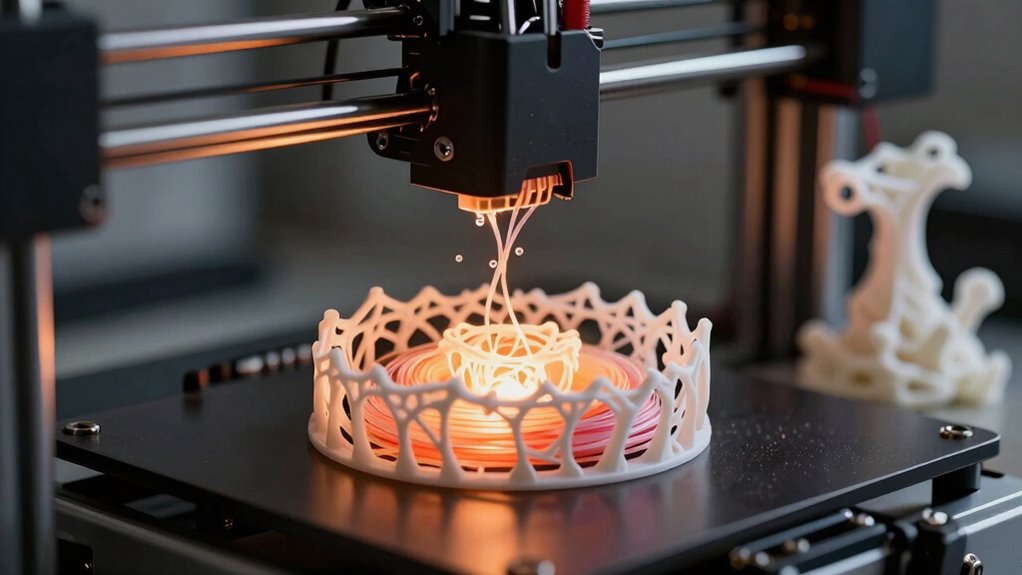

You feel the magic of 3D printing because it transforms your digital ideas into real objects layer by layer, offering a sense of instant creation and innovation. However, it can also be frustrating when prints fail or show imperfections due to issues like warping or poor adhesion. The process demands patience and precise calibration, making it feel like both a marvel and a challenge. Keep exploring, and you’ll discover how to turn that frustration into mastery.

Get the latest gadgets delivered free with Prime
- Fast, free delivery on millions of items
- Prime Video, Amazon Music and more included
- Member-only deals all year
Key Takeaways
- The magic lies in instantly transforming digital designs into real, intricate objects, inspiring awe and creativity.
- Frustration arises from inconsistencies, failed prints, and calibration challenges despite technological advancements.
- Material selection and proper calibration are critical, requiring patience and precise adjustments to achieve quality results.
- The process blends scientific precision with artistic finesse, making success both rewarding and sometimes unpredictable.
- Mastering the technical aspects turns the process from frustrating trial-and-error into a seamless, almost magical experience.
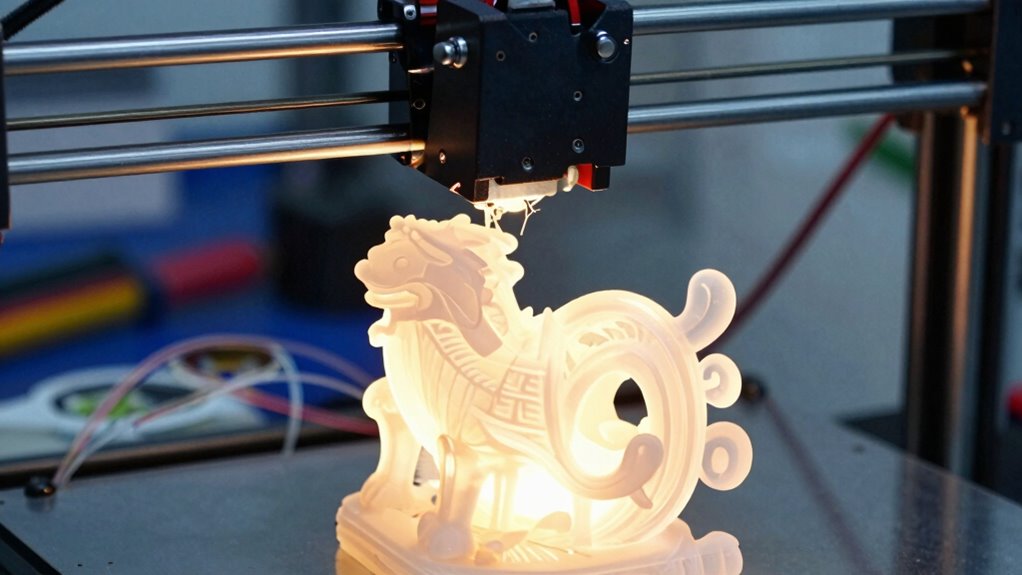
3D printing has revolutionized the way we create, offering a magical glimpse into the future of manufacturing and design. When you see a printer bring your digital model to life layer by layer, it’s easy to feel awe at the technology’s potential. But this magic often comes with a hefty dose of frustration, especially when you encounter issues like inconsistent results or failed prints. The core of this challenge lies in understanding the delicate balance of factors like material selection and print calibration. Material selection is critical because the type of filament or resin you choose directly influences the print’s success and quality. Some materials are more forgiving, while others demand precise conditions to perform well. For example, if you pick a filament that’s incompatible with your printer’s temperature settings, you’ll struggle with warping or poor adhesion. Guaranteeing you select the right material for your project and machine is the first step toward making the process smoother and more predictable. Additionally, understanding the properties of different printing materials can help you anticipate how they behave during the process.
Print calibration is where the real magic turns into meticulous work. It involves fine-tuning your printer’s settings—bed leveling, nozzle temperature, print speed, and flow rate—to ensure each layer adheres correctly and the final piece matches your design specifications. When calibration is off, your prints can come out warped, uneven, or simply fail altogether. It’s frustrating because, after hours of tweaking, you might still not get the results you want, leading to a feeling that the process is more art than science. Yet, once you dial in the correct calibration, the process becomes almost miraculous—your printer produces precise, intricate parts that seemed impossible just moments before. The key is patience and understanding that each material has its quirks, and calibration settings are unique to each filament type and printer model.
best 3D printer calibration tools
As an affiliate, we earn on qualifying purchases.
As an affiliate, we earn on qualifying purchases.
Frequently Asked Questions
How Does 3D Printing Work at a Molecular Level?
You might wonder how 3D printing works at a molecular level. It involves molecular bonding, where heated filament or resin bonds molecules together as it’s deposited, creating solid layers. Material crystallization also occurs, as molecules arrange into structured patterns, giving the object strength. This process is precise, layer by layer, transforming digital designs into physical objects through controlled molecular interactions, making 3D printing both fascinating and complex.
Can 3D Printers Create Living Tissue or Organs?
You might be surprised to learn that bioprinting breakthroughs are bringing us closer to creating living tissue and organs. While current technology can print simple tissues, fully functional organs remain a challenge. Ethical considerations also come into play, like ensuring safety and addressing potential misuse. Despite these hurdles, 3D printers are making incredible progress in regenerative medicine, offering hope for future organ transplants and personalized treatments.
What Are the Environmental Impacts of 3D Printing Materials?
You should know that 3D printing materials can have significant environmental impacts. Recycling challenges make it tough to reuse some plastics, leading to waste, while certain materials pose toxicity risks during production and disposal. These issues contribute to pollution and health concerns, so it’s essential to choose eco-friendly filaments and promote recycling efforts. Being aware of these impacts helps you make more sustainable choices with 3D printing.
How Do I Choose the Best Filament for Complex Prints?
Choosing the best filament for complex prints is a game of patience and precision. You’ll want to prioritize filament compatibility to guarantee smooth printing, so double-check your printer’s specifications. Then, consider your color selection; vibrant hues can make intricate designs stand out, but some colors may require specific settings. Ironically, the most difficult prints often demand the simplest filament choices, making your selection process both essential and surprisingly straightforward.
What Are the Future Technological Advancements in 3D Printing?
You’ll see exciting future advancements like innovative filament innovations, which will lead to stronger, more versatile materials, and rapid prototyping techniques that speed up production. As technology advances, expect more precise, high-speed 3D printers capable of creating complex structures effortlessly. These innovations will make 3D printing more accessible, efficient, and adaptable, transforming industries and enabling you to bring creative ideas to life faster than ever before.
high quality 3D printing filament
As an affiliate, we earn on qualifying purchases.
As an affiliate, we earn on qualifying purchases.
Conclusion
So, as you hold that freshly printed object, it’s like holding a piece of the future—right out of a sci-fi flick. 3D printing’s blend of magic and frustration keeps you hooked, making every success feel like victory and every mishap a lesson. Remember, even Leonardo da Vinci would’ve been captivated by this modern marvel. Embrace the chaos, and soon, you’ll craft wonders that once only existed in dreams—welcome to the revolutionary world of 3D printing.
As an affiliate, we earn on qualifying purchases.
As an affiliate, we earn on qualifying purchases.
Columbus Day / Indigenous Peoples' Day Picks
long weekend sales
As an affiliate, we earn on qualifying purchases.