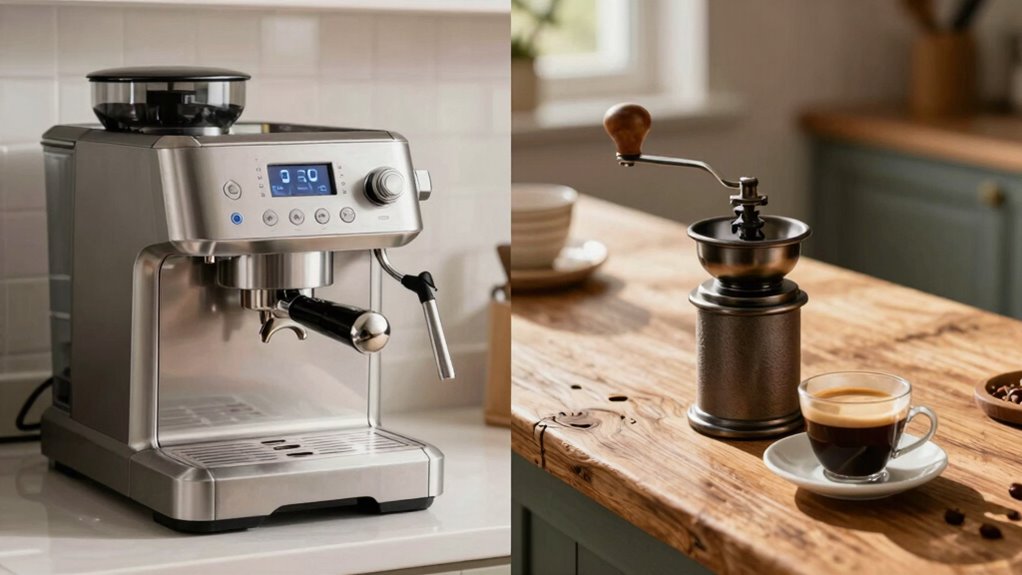
If you value quick, consistent espresso with minimal effort, a super automatic machine is ideal since it handles grinding, tamping, and brewing at the push of a button. Conversely, if you enjoy experimenting with coffee beans, adjusting grind sizes, and honing your craft, a manual machine offers more control and a rewarding experience. Your choice depends on whether you prefer convenience or a hands-on ritual—keep exploring to see which suits your lifestyle best.
Key Takeaways
- Super automatics prioritize convenience and speed, ideal for busy lifestyles seeking quick, consistent espresso with minimal effort.
- Manual machines offer full control over brewing, suited for enthusiasts who enjoy experimenting and honing their coffee-making skills.
- Super automatics limit customization, while manual machines allow tailoring grind size, tamping, and bean variety for personalized flavor.
- Manual brewing requires more time and skill, appealing to those who value the craft and ritual of making coffee.
- The choice depends on whether a lifestyle favors efficiency and simplicity or hands-on involvement and precision.
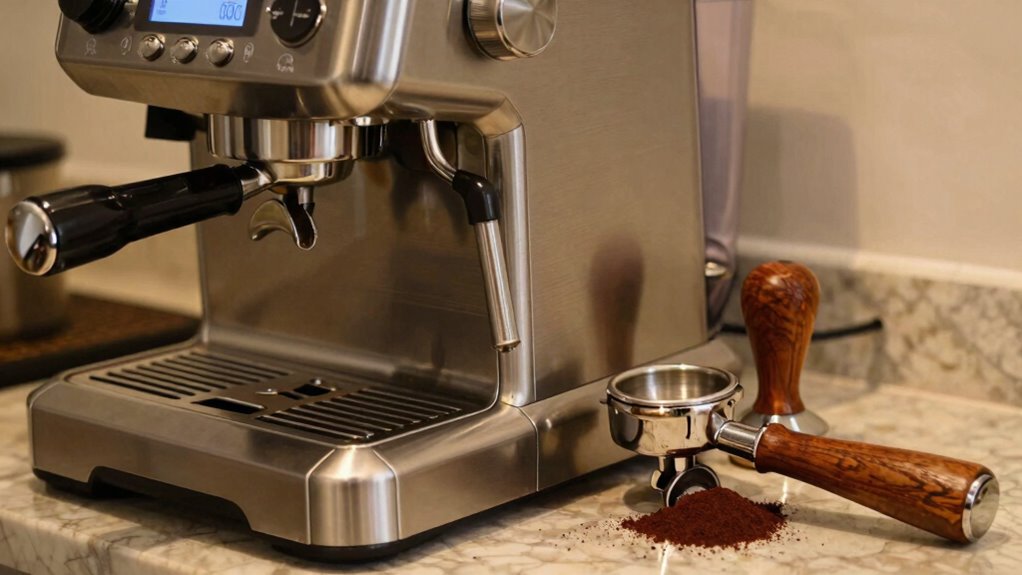
When choosing between super automatic and manual espresso machines, understanding how each type operates can help you make the right decision for your brewing style. Super automatics handle nearly everything with the push of a button, grinding the beans, tamping, brewing, and even frothing milk. You simply load your coffee bean varieties, select your preference, and let the machine do the rest. This convenience appeals if you want quick, consistent espresso without much fuss. Manual machines, on the other hand, give you full control over the process. You grind the beans yourself, tamp them to your liking, and manually operate the brew process. This setup suits those who enjoy the craft of coffee-making and want to fine-tune every shot to perfection.
Choosing between super automatic and manual espresso machines depends on your desire for convenience or control in brewing.
Your choice also depends on how much you care about the details, like grinding techniques and coffee bean varieties. Super automatics usually come with built-in grinders that can be preset for different grind sizes, but they tend to limit your options to the machine’s presets. With manual machines, you select the grind size yourself, which allows you to experiment with a wide range of coffee bean varieties. You can choose from light roasts, dark roasts, single-origin beans, or blends, and adjust your grinding technique to match the bean’s characteristics. For example, a finer grind may be necessary for certain beans to extract full flavor, while a coarser grind might better suit others. Your ability to customize these variables means you can truly tailor your espresso experience to your taste.
Super automatic machines excel in consistency because they automate the grinding, dosing, and brewing steps, reducing the chance of human error. However, they often lack the nuanced control that manual machines offer, which some coffee enthusiasts see as a drawback. If you prefer a more hands-on approach, you’ll appreciate the control manual machines give you over each step — from selecting the coffee beans to perfecting the grind size and tamping pressure. You can experiment with different coffee bean varieties and grinding techniques to discover the flavor profiles you enjoy most. This process might take more time and effort, but it can be incredibly rewarding if you love the art of coffee making. Additionally, understanding coffee bean varieties and how they interact with different grinding techniques can significantly enhance your brewing results. Developing knowledge about brewing variables can help you optimize your espresso to match your preferences even further. Gaining insights into coffee extraction can also provide you with a more comprehensive understanding of how to refine your technique and achieve better flavor profiles. Ultimately, your choice hinges on how involved you want to be in every step of the brewing process versus how much convenience you desire. If you thrive on precision and experimentation, a manual machine offers a rewarding challenge. If you prefer quick, consistent results with minimal effort, a super automatic machine will serve you well. Either way, understanding the nuances of coffee bean varieties and grinding techniques helps you appreciate what makes each type unique and how they influence your daily coffee ritual.
automatic espresso machine with built-in grinder
As an affiliate, we earn on qualifying purchases.
As an affiliate, we earn on qualifying purchases.
Frequently Asked Questions
Which Type Offers Better Control Over Brewing Variables?
You have better control over brewing variables with a manual espresso machine. It allows you to fine-tune grind consistency, tamping pressure, and extraction time, giving you a personalized user experience. Super automatics simplify the process but limit your control over these variables. If you enjoy crafting every shot and adjusting settings for ideal flavor, a manual machine suits you better, providing the precision you need for a perfect brew every time.
How Long Does It Take to Brew a Cup With Each?
It’s a race against the clock—super automatics brew a cup in about 1-2 minutes, while manual machines take around 3-5 minutes. With super automatics, grind consistency and water temperature are pre-set, making it quick and easy. Manual machines demand more time because you fine-tune grind and heat, but this control can improve flavor. So, it’s a trade-off between speed and craftsmanship depending on your priorities.
Are Super Automatics More Energy-Efficient Than Manual Machines?
Super automatics generally consume more power than manual machines due to their advanced features and energy savings modes, but they can be more efficient overall. Their power consumption varies depending on usage, with energy savings settings helping reduce consumption during inactivity. Manual machines often use less energy because they lack these features, but they may take longer to brew and require more manual effort. Your choice depends on balancing convenience with energy efficiency.
Which Is More Durable and Long-Lasting?
Your espresso machine’s durability depends on maintenance frequency and build quality. Super automatics tend to be more durable due to their robust construction but often require less frequent maintenance, making them seem more resilient. Manual machines, while potentially less durable, can last decades if properly cared for. When comparing price, super automatics usually cost more upfront but might save money long-term with fewer repairs. Ultimately, your choice hinges on your maintenance habits and budget.
Can Both Types Make Specialty Coffee Drinks?
Yes, both types can make specialty coffee drinks, but your experience varies. Super automatics excel at quick coffee customization with press of a button, often including milk frothing. Manual machines require more skill for coffee customization but give you control over each step. To keep your machine performing well, regular machine maintenance is crucial, regardless of the type you choose. This guarantees consistent quality and longevity for your specialty drinks.
As an affiliate, we earn on qualifying purchases.
Conclusion
Ultimately, choosing between super automatic and manual espresso depends on your lifestyle and preferences. If you value convenience, a super automatic machine can brew your favorite espresso in seconds—statistics show that 65% of users prioritize speed and ease. But if you enjoy the craft and precision of making each shot, manual brewing offers a rewarding experience. Consider what matters most to you—speed or artistry—and make your decision based on how you want to enjoy your coffee daily.
espresso machine for coffee enthusiasts
As an affiliate, we earn on qualifying purchases.
As an affiliate, we earn on qualifying purchases.
best semi-automatic espresso machine
As an affiliate, we earn on qualifying purchases.
As an affiliate, we earn on qualifying purchases.