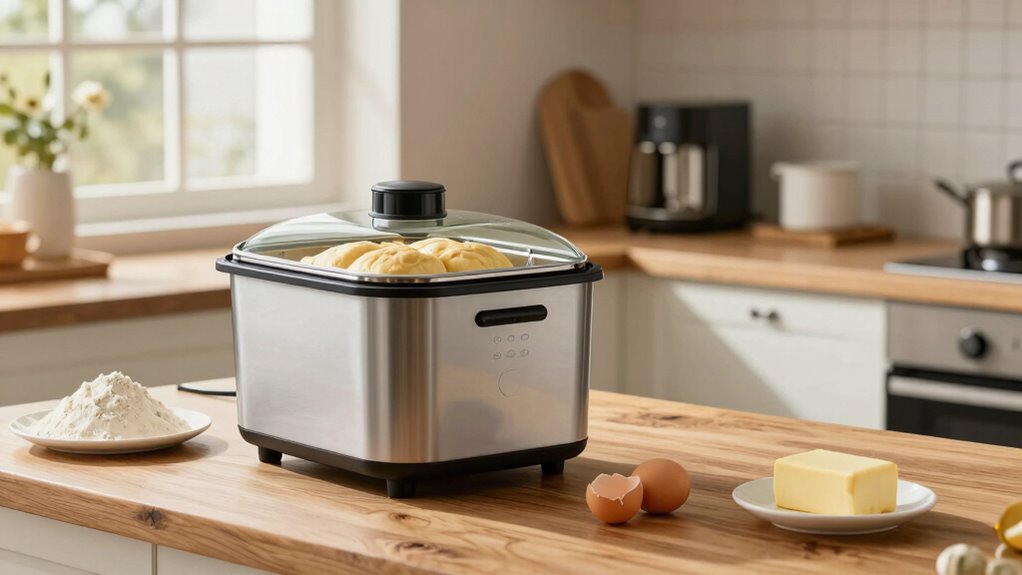
Bread makers are winning back busy people because they let you enjoy fresh, homemade bread without the long wait and effort. With automated kneading and baking, you can fit bread-making into even hectic schedules. Modern machines offer customizable options, so you control ingredients and create healthier loaves. Plus, smart features let you monitor and adjust settings remotely. Stay with us to discover more ways these appliances fit seamlessly into your lifestyle.

Get the latest gadgets delivered free with Prime
- Fast, free delivery on millions of items
- Prime Video, Amazon Music and more included
- Member-only deals all year
Key Takeaways
- They offer quick, automated baking processes, saving time for busy schedules.
- Modern features allow remote control and customization with minimal effort.
- They enable personalized, healthy bread choices using organic ingredients.
- Versatile settings support various bread styles, catering to diverse tastes and skills.
- They blend traditional baking techniques with advanced technology for quality results.
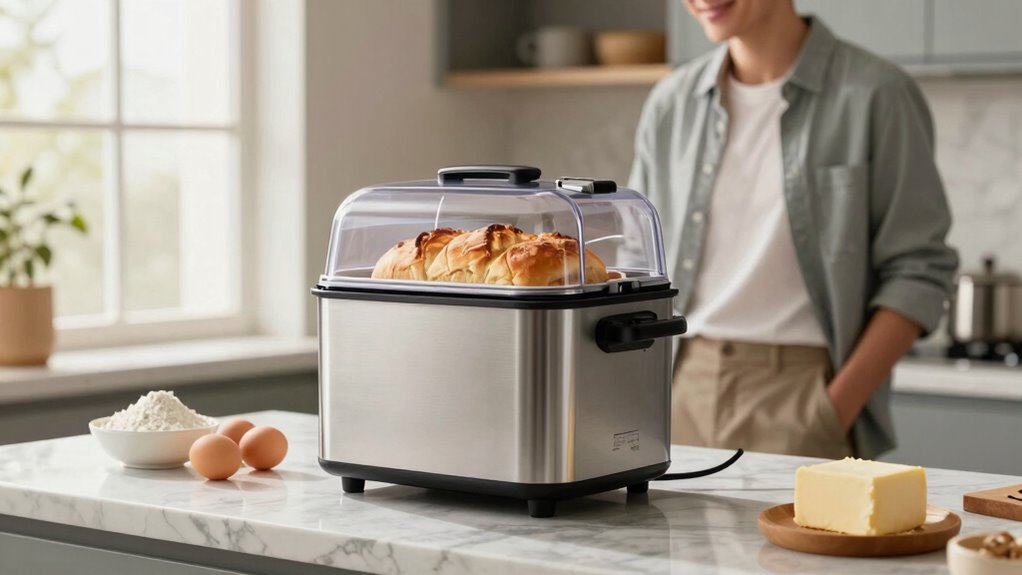
In today’s fast-paced world, busy people are rediscovering the convenience of bread makers, which allow you to enjoy fresh, homemade bread without the time-consuming process of traditional baking. These machines have become popular because they offer an easy way to create bakery-quality bread at home, fitting seamlessly into hectic schedules. But beyond convenience, bread makers also appeal to those who want to put a personal touch on their baked goods. With artisanal techniques, you can craft bread that rivals artisanal bakeries, all from your own kitchen. The machine handles the kneading and baking, but you control the ingredients, allowing you to experiment with different flours, grains, and flavorings. This ingredient customization means you’re not limited to store-bought options. Instead, you can incorporate whole grains, seeds, nuts, or even dried fruits, creating a healthier, more personalized loaf. You’re empowered to choose organic ingredients or avoid preservatives and additives found in commercial bread, making it a healthier option for your family.
Using a bread maker also opens up opportunities to develop artisanal techniques without requiring professional skills or equipment. You can experiment with shaping dough or creating unique textures, all while the machine takes care of the precise timing and temperature control. This blend of manual creativity and automation appeals to both seasoned bakers and beginners alike. Plus, many modern bread makers come with multiple settings, enabling you to craft different types of bread—from crusty sourdough to soft, sweet brioche—with ease. This versatility means you can enjoy a variety of bread styles without multiple appliances cluttering your kitchen. Additionally, the integration of modern technology in bread makers allows for more precise control over baking parameters, enhancing the quality of your homemade bread. This technological advancement also makes it easier for beginners to learn the fundamentals of bread baking through guided settings and pre-programmed options. Exploring bread-making techniques can also deepen your appreciation for traditional methods while benefiting from modern convenience. Incorporating traditional methods into your routine can help create a sense of connection to baking history and craftsmanship, even amidst a busy schedule. Furthermore, some bread makers now include smart features that enable remote monitoring and adjustments via smartphone apps, making the process even more seamless for busy lifestyles.
automatic bread maker with gluten-free settings
As an affiliate, we earn on qualifying purchases.
As an affiliate, we earn on qualifying purchases.
Frequently Asked Questions
How Much Space Do Bread Makers Typically Require on a Countertop?
A typical bread maker requires about 1 to 1.5 square feet of countertop space, giving it a modest footprint. You should consider its countertop footprint and storage considerations to guarantee it fits comfortably in your kitchen. Most models are compact, but it’s wise to measure your available space beforehand. Keep in mind that you’ll want some extra room for easy access and to prevent clutter, especially if your counters are limited.
Are Bread Makers Suitable for Gluten-Free Bread Recipes?
Yes, bread makers are suitable for gluten-free bread recipes. Many models offer gluten-free adaptation settings, ensuring proper mixing and baking. They also allow recipe customization, so you can adjust ingredients to suit your gluten-free needs. With these features, you can easily create delicious, homemade gluten-free bread without the hassle of traditional baking, making bread makers a convenient choice for those with dietary restrictions.
How Energy-Efficient Are Modern Bread Makers Compared to Traditional Baking?
Modern bread makers are generally more energy-efficient than traditional baking methods, thanks to advanced technology that minimizes energy consumption during the kneading, rising, and baking processes. You’ll notice a lower environmental impact because they use less power and produce less waste. By choosing a modern bread maker, you save energy, reduce your carbon footprint, and enjoy fresh bread with less environmental guilt.
Can Bread Makers Be Used to Make Other Baked Goods Besides Bread?
You can definitely use bread makers for more than just bread. While some believe they’re limited, many models excel at gluten-free baking and versatile recipes like cakes, dough, and even jams. Modern bread makers often include specialized settings for different baked goods, proving their adaptability. So, with a little creativity, your bread maker can become a multifunctional kitchen appliance, helping you explore various baking projects effortlessly.
What Is the Typical Lifespan of a Home Bread Maker?
A home bread maker typically lasts about 3 to 5 years, depending on usage and care. You can extend its appliance longevity by following the manufacturer’s maintenance tips and avoiding overuse. Bread machine durability varies with brand and model, so investing in a high-quality machine can guarantee longer appliance longevity. Regular cleaning and gentle handling also help keep your bread maker functioning well for years to come.
smart bread machine with remote control
As an affiliate, we earn on qualifying purchases.
As an affiliate, we earn on qualifying purchases.
Conclusion
Imagine waking up to the warm aroma of freshly baked bread filling your home, each slice a reminder that simplicity and comfort are within reach. Bread makers bring that cozy moment to life, turning busy mornings into a sensory escape. By reclaiming this daily ritual, you reconnect with the comforting rhythm of homemade goodness, even in a hectic world. It’s more than bread; it’s a small act of peace you can savor every day.
customizable bread maker for healthy bread
As an affiliate, we earn on qualifying purchases.
As an affiliate, we earn on qualifying purchases.
As an affiliate, we earn on qualifying purchases.
Halloween Picks
halloween
As an affiliate, we earn on qualifying purchases.