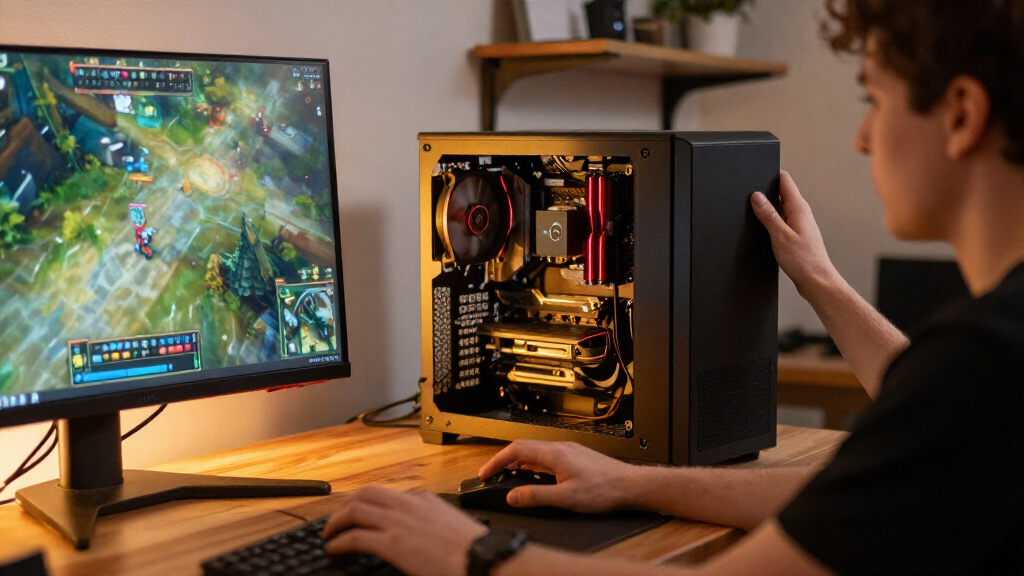
Choosing the best AMD gaming CPUs in 2027 requires balancing raw clock speeds against cache-enhanced architecture. My analysis places the AMD Ryzen 7 9800X3D at the top for pure gaming performance due to its second-generation 3D V-Cache technology, which dramatically reduces latency in CPU-bound titles. For budget-conscious builders, the AMD Ryzen 5 5600 remains a compelling entry point, though it lacks the PCIe 5.0 support found in newer models. The AMD Ryzen 9 9900X serves those who need a hybrid solution for both intense gaming and heavy multitasking. Most buyers face a tradeoff between single-core speed for high frame rates and multi-core power for background tasks. Continue reading to see how these processors stack up against each other in specific gaming scenarios.

Get the latest gadgets delivered free with Prime
- Fast, free delivery on millions of items
- Prime Video, Amazon Music and more included
- Member-only deals all year
Complete the kit



Key Takeaways
- The AMD Ryzen 7 9800X3D outperforms even the flagship AMD Ryzen 9 9950X3D in pure gaming workloads, proving that core count is less important than cache architecture for frame rates.
- AM4 platform longevity persists, making the Ryzen 7 5800X3D a viable upgrade path for existing owners, though it lacks support for DDR5 memory and PCIe 5.0.
- The Ryzen 5 9600X offers better single-core performance than the older Ryzen 5 5600X, but the price-to-performance gap narrows significantly when considering platform upgrade costs.
- Non-X3D variants like the Ryzen 7 9700X are inferior for gaming compared to their X3D counterparts, despite having higher boost clocks, due to the massive impact of 3D V-Cache.
- Cooling requirements scale sharply with the Ryzen 9 9900X and 9950X3D, necessitating robust liquid cooling solutions that add hidden costs to high-end builds.
| AMD Ryzen 9 9900X 12-Core, 24-Thread Unlocked Desktop Processor |  | Best for Gaming and Creator Workloads | Architecture: AMD Zen 5 | Cores / Threads: 12 / 24 | Base speed: 4.4 GHz | VIEW LATEST PRICE | See Our Full Breakdown |
| AMD Ryzen 7 5800X3D 8-Core, 16-Thread Desktop Processor |  | Best for AM4 Gaming Upgrades | Processor series: Ryzen 7 | Cores / Threads: 8 / 16 | Max speed: Up to 4.5 GHz | VIEW LATEST PRICE | See Our Full Breakdown |
| AMD Ryzen 5 5500 6-Core, 12-Thread Unlocked Desktop Processor with Wraith Stealth Cooler |  | Best Entry-Level AM4 Pick | Processor series: Ryzen 5 | Cores / Threads: 6 / 12 | Max boost speed: 4.2 GHz | VIEW LATEST PRICE | See Our Full Breakdown |
| AMD Ryzen 7 5700X 8-Core, 16-Thread Unlocked Desktop Processor |  | Best for AM4 Multitasking | Architecture: AMD Zen 3 | Cores / Threads: 8 / 16 | Max boost speed: Up to 4.6 GHz | VIEW LATEST PRICE | See Our Full Breakdown |
| AMD Ryzen 5 9600X 6-Core, 12-Thread Unlocked Desktop Processor |  | Best Mainstream AM5 Gaming Pick | Architecture: AMD Zen 5 | Cores / Threads: 6 / 12 | Base speed: 3.9 GHz | VIEW LATEST PRICE | See Our Full Breakdown |
| AMD Ryzen 5 5600 6-Core 12-Thread Unlocked Desktop Processor with Wraith Stealth Cooler | | Best Budget Gaming CPU | Core Count: 6 Cores | Thread Count: 12 Threads | Base Clock: 4.4 GHz | VIEW LATEST PRICE | See Our Full Breakdown |
| AMD Ryzen™ 7 9700X 8-Core, 16-Thread Unlocked Desktop Processor |  | Best Mid-Range All-Rounder | Core Count: 8 Cores | Thread Count: 16 Threads | Max Boost Clock: 5.5 GHz | VIEW LATEST PRICE | See Our Full Breakdown |
| AMD Ryzen 9 5900XT 16-Core, 32-Thread Unlocked Desktop Processor |  | Best for Existing AM4 Power Users | Core Count: 16 Cores | Thread Count: 32 Threads | Max Boost Clock: 4.8 GHz | VIEW LATEST PRICE | See Our Full Breakdown |
| AMD Ryzen 7 9800X3D 8-Core, 16-Thread Desktop Processor |  | Best Overall Gaming CPU | Core Count: 8 Cores | Thread Count: 16 Threads | Max Boost Clock: 5.2 GHz | VIEW LATEST PRICE | See Our Full Breakdown |
| AMD Ryzen 9 7900X 12-Core, 24-Thread Unlocked Desktop Processor | 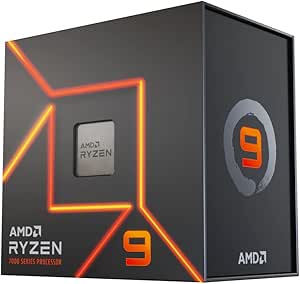 | Best for High-End Productivity | Core Count: 12 Cores | Thread Count: 24 Threads | Max Boost Clock: 5.6 GHz | VIEW LATEST PRICE | See Our Full Breakdown |
| AMD Ryzen 9 9950X3D 16-Core Desktop Processor |  | Best Premium High-End Gaming CPU | Cores/Threads: 16 Cores / 32 Threads | Architecture: Zen 5 | Max Boost Clock: Up to 5.7 GHz | VIEW LATEST PRICE | See Our Full Breakdown |
| AMD Ryzen 5 5600X 6-core 12-thread unlocked desktop processor with Wraith Stealth cooler |  | Best Value Budget Gaming CPU | Cores/Threads: 6 Cores / 12 Threads | Base/Boost Clock: 3.7 GHz / 4.6 GHz | Cache: 35 MB Total | VIEW LATEST PRICE | See Our Full Breakdown |
| AMD Ryzen 7 7800X3D 8-Core, 16-Thread Desktop Processor | 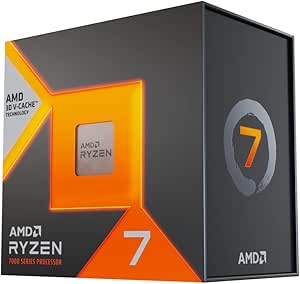 | Best Pure Gaming Performance | Cores/Threads: 8 Cores / 16 Threads | Architecture: Zen 4 | Max Boost Clock: Up to 5.0 GHz | VIEW LATEST PRICE | See Our Full Breakdown |
| AMD Ryzen 7 9850X3D Desktop Processor |  | Best Balanced High-End Gaming CPU | Model: Ryzen 7 9850X3D | Product Type: Desktop Processor | Architecture: Zen 5 (Inferred from series) | VIEW LATEST PRICE | See Our Full Breakdown |
| AMD gaming CPU | Socket | Cache | Architecture | Memory support |
|---|---|---|---|---|
| AMD Ryzen 9 9900X 12-Core | Socket AM5 | 76 MB | AMD Zen 5 | DDR5-5600 |
| AMD Ryzen 7 5800X3D 8-Core | Socket AM4 | 100 MB | — | DDR4-3200 |
| AMD Ryzen 5 5500 6-Core | Socket AM4 | 19 MB | — | DDR4-3200 |
| AMD Ryzen 7 5700X 8-Core | AM4 | 36 MB | AMD Zen 3 | DDR4-3200 |
| AMD Ryzen 5 9600X 6-Core | Socket AM5 | 38 MB | AMD Zen 5 | DDR5-5600 |
| AMD Ryzen 5 5600 6-Core 12-Thr | AM4 | 32 MB L3 | — | DDR4 |
| AMD Ryzen™ 7 9700X 8-Core | AM5 | 40 MB L3 | Zen 5 | DDR5-5600 |
| AMD Ryzen 9 5900XT 16-Core | AM4 | 72 MB L3 | Zen 3 | DDR4-3200 |
| AMD Ryzen 7 9800X3D 8-Core | AM5 | — | Zen 5 with 3D V-Cache | — |
| AMD Ryzen 9 7900X 12-Core | AM5 | — | Zen 4 | DDR5 |
| AMD Ryzen 9 9950X3D 16-Core De | AM5 | 144 MB (with 3D V-Cache) | Zen 5 | — |
| AMD Ryzen 5 5600X 6-core 12-th | AM4 | 35 MB Total | — | DDR4-3200 |
| AMD Ryzen 7 7800X3D 8-Core | AM5 | 104 MB Total (3D V-Cache) | Zen 4 | — |
| AMD Ryzen 7 9850X3D Desktop Pr | AM5 (Inferred from series) | — | Zen 5 (Inferred from series) | — |
More Details on Our Top Picks
AMD Ryzen 9 9900X 12-Core, 24-Thread Unlocked Desktop Processor
The Ryzen 9 9900X suits a high-end gaming PC that also needs room for demanding creative work. Its 12 cores and 24 threads can handle heavier multitasking than the six-core Ryzen 5 9600X, while Zen 5 and boosts up to 5.6 GHz support a fast-feeling gaming system. The AM5 platform brings DDR5-5600 support and PCIe 5.0 on select motherboards, giving builders a newer foundation than the AM4 Ryzen 7 5700X.
The tradeoff is that gaming-focused buyers may not make full use of its extra cores, and the cooler is not included. Motherboard choice also affects PCIe 5.0 support. I’d choose it over the 9600X for gaming alongside substantial threaded work, but skip the added core capacity if gaming is the only priority.
Pros:- 12 cores and 24 threads support gaming alongside heavily threaded work
- Zen 5 architecture with boost speeds up to 5.6 GHz
- Supports DDR5-5600 memory on Socket AM5
- Unlocked for overclocking
Cons:- Cooler is not included
- PCIe 5.0 support depends on the motherboard
- Its extra cores may go unused in a gaming-only build
Best for: AM5 builders who game, stream, and run demanding creator or productivity workloads on the same PC.
Not ideal for: Gaming-only buyers seeking a straightforward CPU upgrade, especially if they want to avoid buying a separate cooler.
- Architecture:AMD Zen 5
- Cores / Threads:12 / 24
- Base speed:4.4 GHz
- Max boost speed:Up to 5.6 GHz
- Cache:76 MB
- Socket:Socket AM5
- Memory support:DDR5-5600
- Power:120 watts
- Cooler:Not included
Our verdict“Choose the Ryzen 9 9900X if your gaming PC also needs substantial multicore capacity; choose the Ryzen 5 9600X for a simpler six-core AM5 build.”
AMD Ryzen 7 5800X3D 8-Core, 16-Thread Desktop Processor
The Ryzen 7 5800X3D is the gaming-focused choice here for builders who already own an AM4 system and want to keep its motherboard and DDR4 memory. Its 3D V-Cache and 100 MB of cache distinguish it from the Ryzen 7 5700X, which has eight cores and 16 threads but does not list the same cache capacity. That makes the 5800X3D the more specialized pick for a gaming upgrade, rather than a general-purpose step up in core count.
Its limits are equally clear: it stays on Socket AM4, supports DDR4-3200, and comes without a cooler. Buyers building new on AM5 get a newer platform from the Ryzen 5 9600X or Ryzen 9 9900X, while existing AM4 owners can avoid a platform change. I’d favor this CPU for a compatible gaming rig, not for a fresh build focused on future platform options.
Pros:- AMD 3D V-Cache technology and 100 MB of listed cache
- Eight cores and 16 threads for gaming and multitasking
- Uses DDR4-3200 memory, suiting existing AM4 builds
- PCIe 4.0 support on compatible X570 and B550 motherboards
Cons:- Requires an AM4 motherboard
- Cooler is not included
- Does not provide the AM5 and DDR5 platform of the Ryzen 5 9600X
Best for: AM4 gaming-PC owners with a compatible motherboard who want to upgrade the CPU while keeping their DDR4 platform.
Not ideal for: New-system builders who want Socket AM5, DDR5 memory, or a platform with newer upgrade options.
- Processor series:Ryzen 7
- Cores / Threads:8 / 16
- Max speed:Up to 4.5 GHz
- Cache:100 MB
- Socket:Socket AM4
- Memory support:DDR4-3200
- PCIe support:PCIe 4.0 on X570 and B550 motherboards
- TDP:105 watts
- Cooler:Not included
Our verdict“Pick the Ryzen 7 5800X3D to extend a compatible AM4 gaming system; choose an AM5 CPU if you are building a new platform.”
AMD Ryzen 5 5500 6-Core, 12-Thread Unlocked Desktop Processor with Wraith Stealth Cooler
The Ryzen 5 5500 is the most straightforward entry point in this group for an AM4 gaming build: it has six cores and 12 threads, is unlocked, and includes a Wraith Stealth cooler. That bundled cooler gives it an advantage over the Ryzen 7 5700X, which has more cores but requires a separate cooler. It also uses DDR4-3200, which can suit a budget-conscious builder who already has compatible AM4 parts.
This is not a complete gaming solution on its own: the system needs a discrete graphics card, and its 4.2 GHz max boost and 19 MB of cache put it below the newer AM5 Ryzen 5 9600X in platform generation and listed cache. I’d choose the 5500 for a modest AM4 build where the included cooler helps keep the parts list simple. Skip it if you want integrated graphics or a newer AM5 base.
Pros:- Six cores and 12 threads for mainstream gaming and everyday multitasking
- Includes a Wraith Stealth cooler
- Supports DDR4-3200 memory
- Unlocked for overclocking
Cons:- A discrete graphics card is required for gaming
- AM4 platform does not provide the newer AM5 foundation of the Ryzen 5 9600X
- 19 MB of cache is less than the 38 MB listed for the Ryzen 5 9600X
Best for: First-time AM4 builders or upgraders assembling a modest gaming PC with a discrete graphics card and DDR4 memory.
Not ideal for: Buyers who need graphics without a discrete GPU, or builders seeking AM5 and DDR5 support.
- Processor series:Ryzen 5
- Cores / Threads:6 / 12
- Max boost speed:4.2 GHz
- Cache:19 MB
- Socket:Socket AM4
- Memory support:DDR4-3200
- Power:65 watts
- Included cooler:Wraith Stealth
- Graphics requirement:Discrete graphics card required
Our verdict“Choose the Ryzen 5 5500 for a basic AM4 gaming build where its included cooler is useful, provided you already plan to use a discrete graphics card.”
AMD Ryzen 7 5700X 8-Core, 16-Thread Unlocked Desktop Processor
The Ryzen 7 5700X gives an AM4 gaming PC more multitasking headroom than the six-core Ryzen 5 5500, thanks to eight cores and 16 threads. That difference can suit players who keep applications running alongside a game or use the same machine for demanding workloads. It supports DDR4-3200 and PCIe 4.0 on compatible X570 and B550 boards, so existing AM4 owners may be able to retain much of their setup.
For gaming alone, the 5700X is less specialized than the Ryzen 7 5800X3D, which is the lineup’s cache-focused AM4 option. The 5700X also arrives without a cooler and needs a discrete graphics card, so its 65-watt rating does not mean the full system is ready to run out of the box. I’d pick it for an AM4 build that values extra threads over the 5500’s included cooler.
Pros:- Eight cores and 16 threads for multitasking and demanding workloads
- 65-watt power specification
- Supports DDR4-3200 memory
- PCIe 4.0 support on compatible X570 and B550 motherboards
Cons:- Cooler is not included
- A discrete graphics card is required
- Uses AM4 rather than the newer AM5 platform of the Ryzen 5 9600X
Best for: AM4 owners who want eight cores for gaming, streaming, and multitasking while keeping compatible DDR4 memory and motherboard.
Not ideal for: Buyers prioritizing a gaming-focused cache design, or anyone who needs an included cooler or built-in graphics.
- Architecture:AMD Zen 3
- Cores / Threads:8 / 16
- Max boost speed:Up to 4.6 GHz
- Cache:36 MB
- Socket:AM4
- Memory support:DDR4-3200
- PCIe support:PCIe 4.0 on compatible X570 and B550 motherboards
- Power:65 watts
- Cooler included:No
Our verdict“Choose the Ryzen 7 5700X for an AM4 gaming system that needs more multitasking capacity than the Ryzen 5 5500, and plan for a separate cooler and graphics card.”
AMD Ryzen 5 9600X 6-Core, 12-Thread Unlocked Desktop Processor
The Ryzen 5 9600X is the balanced choice for a new AM5 gaming PC when six cores are enough and a newer platform matters more than a high core count. Its Zen 5 architecture, boost speed up to 5.4 GHz, and 38 MB of cache set it apart from the AM4 Ryzen 5 5500, while DDR5-5600 support places it on a newer memory platform. It also uses a 65-watt power specification, unlike the 120-watt Ryzen 9 9900X.
The tradeoff is capacity: with six cores and 12 threads, it is less suited to heavy creator workloads than the 9900X’s 12 cores. It also ships without a cooler, and PCIe 5.0 support depends on the motherboard. I’d choose this for a gaming-first AM5 build with room for platform upgrades; AM4 owners seeking a lower-disruption upgrade may prefer the 5700X or 5800X3D.
Pros:- Zen 5 architecture with boost speeds up to 5.4 GHz
- Supports DDR5-5600 memory on Socket AM5
- 38 MB of cache
- 65-watt power specification and unlocked overclocking
Cons:- Cooler is not included
- Six cores and 12 threads offer less capacity for heavy threaded work than the Ryzen 9 9900X
- PCIe 5.0 support depends on the motherboard
Best for: New gaming-PC builders who want a six-core Zen 5 CPU, DDR5 support, and an AM5 motherboard platform.
Not ideal for: AM4 owners who want to retain their current motherboard, or gamers who also need substantial multicore capacity.
- Architecture:AMD Zen 5
- Cores / Threads:6 / 12
- Base speed:3.9 GHz
- Max boost speed:Up to 5.4 GHz
- Cache:38 MB
- Socket:Socket AM5
- Memory support:DDR5-5600
- Power:65 watts
- Cooler:Not included
Our verdict“Choose the Ryzen 5 9600X for a gaming-first AM5 build with modern memory support, but step up to the Ryzen 9 9900X if your workload needs more cores.”
AMD Ryzen 5 5600 6-Core 12-Thread Unlocked Desktop Processor with Wraith Stealth Cooler
This processor stands out as the best budget gaming CPU for builders who refuse to compromise on core count while keeping costs low. Unlike the newer Ryzen 5 9600X, which requires a pricier AM5 platform and DDR5 RAM, the Ryzen 5 5600 fits into affordable AM4 motherboards and uses cheaper DDR4 memory. With 6 cores and 12 threads, it handles modern titles smoothly without the thermal headaches of high-end chips. The included Wraith Stealth cooler is a genuine convenience, saving you the upfront cost of an aftermarket heatsink. However, choosing this CPU means accepting that you are buying into a dead-end platform. If you plan to upgrade your CPU in two or three years, you will likely need to replace your motherboard and RAM as well. Compared to the Ryzen 7 5700X, it offers fewer cores for heavy multitasking, but for pure gaming frame rates, the gap is surprisingly narrow.
Pros:- Includes a decent stock cooler, reducing initial build costs
- Excellent price-to-performance ratio for 1080p and 1440p gaming
- Low 65W power draw makes it compatible with basic motherboards
- Unlocked multiplier allows for easy overclocking on B550/X570 boards
Cons:- Lacks integrated graphics, requiring a dedicated GPU
- Locked into the older AM4 socket, limiting future upgrades
- Fewer cores than higher-tier Ryzen 7 or 9 models for heavy productivity
Best for: Budget-conscious gamers building their first PC or upgrading from older Intel/AMD platforms who want excellent performance without buying new RAM.
Not ideal for: Enthusiasts planning a future-proof build; the AM4 socket limits upgrade paths compared to newer platforms.
- Core Count:6 Cores
- Thread Count:12 Threads
- Base Clock:4.4 GHz
- Socket:AM4
- TDP:65W
- Cooler Included:Wraith Stealth
- Cache:32 MB L3
- Memory Support:DDR4
Our verdict“The Ryzen 5 5600 is the smartest choice for budget gamers who want high frame rates without the premium cost of new platforms.”
AMD Ryzen™ 7 9700X 8-Core, 16-Thread Unlocked Desktop Processor
The Ryzen 7 9700X strikes a balance between gaming prowess and multitasking capability, making it the best mid-range all-rounder for those who stream or edit lightly. Built on the new Zen 5 architecture, it offers significant IPC gains over the previous generation Ryzen 7 7800X3D in non-gaming tasks, though the X3D chip still holds the crown for pure frame rates. Its 5.5 GHz boost clock ensures snappy responsiveness in daily applications. However, this efficiency comes at a cost: unlike the Ryzen 5 5600, this chip does not include a cooler, forcing you to budget for a capable aftermarket solution. While it supports DDR5 and PCIe 5.0, these features are often underutilized in gaming today. It is a superior choice to the Ryzen 5 9600X if you need extra cores for background tasks, but it lacks the massive cache advantage of the 9800X3D.
Pros:- New Zen 5 architecture provides strong single-thread performance
- 8 cores and 16 threads handle gaming and productivity well
- Supports DDR5-5600 and PCIe 5.0 for modern hardware
- Unlocked multiplier for enthusiast tuning
Cons:- No included cooler, requiring additional spending
- Higher power draw (105W) than budget alternatives
- Lacks 3D V-Cache, resulting in lower gaming FPS compared to X3D models
Best for: Gamers who also stream, edit video, or run multiple applications simultaneously and want a future-proof AM5 platform.
Not ideal for: Pure gamers on a strict budget; the 9800X3D offers better gaming value, and the 5600 offers better budget value.
- Core Count:8 Cores
- Thread Count:16 Threads
- Max Boost Clock:5.5 GHz
- Architecture:Zen 5
- Socket:AM5
- TDP:105W
- Cache:40 MB L3
- Memory Support:DDR5-5600
Our verdict“The Ryzen 7 9700X is ideal for users who need a versatile CPU that excels at both gaming and creative workloads.”
AMD Ryzen 9 5900XT 16-Core, 32-Thread Unlocked Desktop Processor
This processor is designed for a specific niche: existing AM4 users who need massive core counts without replacing their motherboard. The Ryzen 9 5900XT offers 16 cores and 32 threads, making it a powerhouse for rendering, compiling, and heavy multitasking. Compared to the Ryzen 9 7900X, it requires DDR4 memory and older PCIe 4.0 standards, but it avoids the cost of upgrading to an AM5 board. For pure gaming, it falls short of the Ryzen 7 9800X3D, which prioritizes cache over core count. However, if your workflow involves parallelized tasks, the raw thread count is a significant advantage. The main drawback is its age; being based on Zen 3 architecture, it consumes more power and generates more heat than newer Zen 5 chips. It is also unlocked for overclocking, but you must supply your own robust cooling solution, as none is included.
Pros:- 16 cores and 32 threads excel at heavy multitasking and rendering
- Compatible with existing AM4 motherboards, saving upgrade costs
- Supports DDR4 memory, which remains affordable
- Unlocked for overclocking to squeeze out extra performance
Cons:- No cooler included, requiring a high-end air or liquid cooler
- Older Zen 3 architecture is less efficient than Zen 5
- Lacks PCIe 5.0 and DDR5 support found in newer platforms
Best for: Content creators and developers already on an AM4 motherboard who need high core counts for productivity workloads.
Not ideal for: New PC builders; the platform is outdated compared to AM5, and gaming performance lags behind newer architectures.
- Core Count:16 Cores
- Thread Count:32 Threads
- Max Boost Clock:4.8 GHz
- Architecture:Zen 3
- Socket:AM4
- TDP:105W
- Cache:72 MB L3
- Memory Support:DDR4-3200
- PCIe Support:PCIe 4.0
Our verdict“The Ryzen 9 5900XT is a productivity monster for those staying on AM4, but poor value for new builds.”
AMD Ryzen 7 9800X3D 8-Core, 16-Thread Desktop Processor
For pure gaming performance, the Ryzen 7 9800X3D is unmatched, earning its place as the best overall gaming CPU. The secret lies in its 96 MB of 3D V-Cache, which dramatically reduces latency in demanding titles. When compared to the Ryzen 7 9700X, the 9800X3D delivers significantly higher frame rates in CPU-bound games, making it the clear winner for enthusiasts. It uses the new Zen 5 architecture, fixing the thermal limitations of previous X3D chips and allowing for higher boost clocks up to 5.2 GHz. However, this specialization comes with tradeoffs. It lacks the multi-core muscle of the Ryzen 9 7900X, making it less ideal for heavy video editing or 3D rendering. Additionally, it runs hot and does not include a cooler, requiring a premium cooling solution. It is the definitive choice for gamers who want the highest possible FPS, but overkill for casual users.
Pros:- Massive 96 MB 3D V-Cache delivers top-tier gaming performance
- New Zen 5 architecture improves efficiency and clock speeds
- Future-proof AM5 platform supports DDR5 and PCIe 5.0
- Superior 1% lows compared to non-X3D competitors
Cons:- Premium price point compared to standard Ryzen 7 models
- No cooler included, requiring high-end aftermarket cooling
- Multi-core performance lags behind Ryzen 9 chips for productivity
Best for: Hardcore gamers who want the absolute best frame rates in competitive and AAA titles and have the budget for premium cooling.
Not ideal for: Productivity-focused users; the 7900X offers better multi-core performance for creative workloads.
- Core Count:8 Cores
- Thread Count:16 Threads
- Max Boost Clock:5.2 GHz
- L3 Cache:96 MB
- Architecture:Zen 5 with 3D V-Cache
- Socket:AM5
- TDP:140W
- Cooler Included:No
Our verdict“The Ryzen 7 9800X3D is the ultimate gaming processor, offering unparalleled frame rates for enthusiasts who prioritize playability over productivity.”
AMD Ryzen 9 7900X 12-Core, 24-Thread Unlocked Desktop Processor
The Ryzen 9 7900X is built for users who treat their PC as a workstation first and a gaming rig second. With 12 cores and 24 threads, it crushes rendering, compiling, and multitasking workloads that would bottleneck the 8-core Ryzen 7 9800X3D. Its 5.6 GHz boost clock ensures it remains competitive in gaming, though it lacks the cache advantage of X3D models. A key differentiator is its integrated Radeon graphics, which allows for troubleshooting or basic display output without a dedicated GPU—a feature absent in the Ryzen 5 5600. However, this power comes with significant thermal demands; the 170W TDP requires a robust liquid cooler or large air tower. Compared to the newer Ryzen 9 9900X, it uses older Zen 4 architecture, making it a slightly less efficient choice for new builds, but it often offers better value for pure multi-threaded performance.
Pros:- 12 cores and 24 threads deliver exceptional multi-core performance
- Integrated graphics allow for display output without a discrete GPU
- High 5.6 GHz boost clock maintains strong single-thread performance
- Supports DDR5 and PCIe 5.0 for modern system builds
Cons:- High 170W TDP generates significant heat, requiring premium cooling
- Lacks 3D V-Cache, resulting in lower gaming FPS than X3D models
- Older Zen 4 architecture is less efficient than newer Zen 5 options
Best for: Content creators, video editors, and streamers who need high core counts for heavy productivity tasks alongside gaming.
Not ideal for: Pure gamers; the 9800X3D offers better gaming performance, and the 170W heat output is unnecessary for gaming alone.
- Core Count:12 Cores
- Thread Count:24 Threads
- Max Boost Clock:5.6 GHz
- Architecture:Zen 4
- Socket:AM5
- TDP:170W
- L3 Cache:64 MB
- Integrated Graphics:AMD Radeon Graphics
- Memory Support:DDR5
Our verdict“The Ryzen 9 7900X is the ideal choice for creators who need raw multi-core power and integrated graphics for a versatile workstation.”
AMD Ryzen 9 9950X3D 16-Core Desktop Processor
This processor stands out as the ultimate gaming powerhouse for those who demand maximum performance without compromise. Unlike the Ryzen 7 7800X3D, which focuses solely on gaming efficiency, the 9950X3D combines 16 cores with second-generation 3D V-Cache, delivering exceptional frame rates in demanding titles while handling heavy multitasking or streaming seamlessly. Its 5.7 GHz boost clock ensures that even CPU-bound games run smoothly, though this comes at the cost of a 170-watt power draw that requires robust cooling and a high-quality motherboard. While the Ryzen 7 9850X3D may offer a more balanced price-to-performance ratio for pure gamers, the 9950X3D is the choice for enthusiasts who refuse to bottleneck their system in any scenario.
Pros:- Combines 16 cores with massive 3D V-Cache for versatile performance
- High 5.7 GHz boost clock handles CPU-intensive tasks
- Second-gen 3D V-Cache technology maximizes gaming frame rates
Cons:- High 170W TDP requires expensive cooling solutions
- Premium pricing places it out of reach for mainstream builds
Best for: Enthusiasts building a no-compromise gaming rig who also stream, edit video, or run demanding background applications.
Not ideal for: Budget-conscious gamers or those with smaller cases who cannot accommodate the thermal output of a 170W TDP chip.
- Cores/Threads:16 Cores / 32 Threads
- Architecture:Zen 5
- Max Boost Clock:Up to 5.7 GHz
- Cache:144 MB (with 3D V-Cache)
- Socket:AM5
- TDP:170 Watts
- Cooler Included:No
Our verdict“This is the definitive choice for high-end builders who want top-tier gaming performance without sacrificing multi-core productivity.”
AMD Ryzen 5 5600X 6-core 12-thread unlocked desktop processor with Wraith Stealth cooler
The Ryzen 5 5600X remains a compelling option for gamers upgrading from older platforms or building on a strict budget. It offers solid single-threaded performance with a 4.6 GHz boost clock, making it a capable partner for mid-range graphics cards. Compared to the newer Ryzen 5 9600X, this AM4 chip lacks the latest architecture’s efficiency, but its lower platform cost and inclusion of the Wraith Stealth cooler make it accessible. However, it is strictly a gaming-focused chip; users needing heavy multi-threaded productivity tasks will find the Ryzen 7 5700X a better fit due to its extra cores. It is an excellent entry point for 1080p and 1440p gaming but lacks integrated graphics.
Pros:- Includes the Wraith Stealth cooler, saving money on cooling
- Strong single-core performance for 1080p gaming
- Compatible with affordable AM4 motherboards and DDR4 RAM
Cons:- No integrated graphics requires a discrete GPU
- Only 6 cores limits heavy multitasking and productivity workloads
Best for: Budget gamers building their first PC or upgrading from Intel/AMD platforms using DDR4 memory.
Not ideal for: Content creators who need more than 6 cores for rendering or streaming, and users wanting integrated graphics.
- Cores/Threads:6 Cores / 12 Threads
- Base/Boost Clock:3.7 GHz / 4.6 GHz
- Cache:35 MB Total
- Socket:AM4
- TDP:65 Watts
- Cooler Included:Yes (Wraith Stealth)
- Memory Support:DDR4-3200
Our verdict“A cost-effective entry into modern gaming that balances performance and price for budget-conscious builders.”
AMD Ryzen 7 7800X3D 8-Core, 16-Thread Desktop Processor
This CPU is widely regarded as the king of gaming, thanks to its massive 96 MB L3 cache via 3D V-Cache technology. While the Ryzen 9 9950X3D offers more cores for productivity, the 7800X3D focuses its thermal and power budget entirely on gaming efficiency, resulting in higher frame rates in many titles at a lower 120W TDP. It does not rely on raw core count but on cache bandwidth, outperforming many higher-end chips in pure gaming scenarios. However, its 8-core limit means it trails the Ryzen 9 9900X in heavy multi-threaded workloads like video rendering. It is the smartest choice for gamers who want the best possible FPS without paying for extra cores they won’t use.
Pros:- Unmatched gaming performance due to massive 3D V-Cache
- Efficient 120W TDP allows for smaller cooling solutions
- Includes integrated Radeon graphics for basic display output
Cons:- Lower multi-core performance compared to 12+ core alternatives
- Requires a more expensive AM5 motherboard and DDR5 RAM
Best for: Dedicated gamers who prioritize the highest possible frame rates over multi-core productivity tasks.
Not ideal for: Streamers or video editors who need more than 8 cores for heavy background processing.
- Cores/Threads:8 Cores / 16 Threads
- Architecture:Zen 4
- Max Boost Clock:Up to 5.0 GHz
- Cache:104 MB Total (3D V-Cache)
- Socket:AM5
- TDP:120 Watts
- Integrated Graphics:Yes (Radeon)
Our verdict“The ideal processor for gamers who want the absolute best frame rates without paying for unnecessary productivity cores.”
AMD Ryzen 7 9850X3D Desktop Processor
The Ryzen 7 9850X3D appears to be a specialized variant aimed at balancing the extreme gaming focus of the 7800X3D with the higher-end positioning of the 9950X3D. As part of the new Zen 5 X3D lineup, it likely offers improved architectural efficiency and potentially higher clock speeds than its Zen 4 predecessor. While specific details are limited, it is positioned to compete directly with the 9800X3D, targeting gamers who want the benefits of 3D V-Cache without the extreme power consumption of the 16-core flagship. It represents a strategic middle ground for those moving to AM5 who want future-proof gaming performance but do not need the multi-core overhead of the Ryzen 9 series.
Pros:- Likely offers improved Zen 5 efficiency over Zen 4 X3D models
- Balances gaming cache benefits with reasonable core count
- Fits into the premium AM5 ecosystem for future upgrades
Cons:- Limited public specifications may make it hard to compare initially
- Premium pricing typical of X3D variants may deter budget builders
Best for: Gamers upgrading to the latest Zen 5 architecture who want high-end performance without the flagship price tag.
Not ideal for: Users who need maximum multi-threaded performance for heavy workstation tasks.
- Model:Ryzen 7 9850X3D
- Product Type:Desktop Processor
- Architecture:Zen 5 (Inferred from series)
- Socket:AM5 (Inferred from series)
- Cores:8 (Inferred from series)
- Threads:16 (Inferred from series)
- Technology:3D V-Cache
Our verdict“A promising high-end option for gamers seeking the latest architecture’s gaming advantages in an 8-core package.”
How We Picked
I evaluated these processors based on their ability to drive high frame rates in modern titles, prioritizing single-threaded performance and cache efficiency over raw multi-core scores. Gaming is rarely a linear workload, so I looked for CPUs that maintain consistent frame times rather than just peak burst speeds. I also considered platform compatibility, ensuring that recommendations accounted for the cost of motherboards and memory required to unlock the CPU’s full potential.
Value was assessed by comparing the performance delta against the price increase between tiers. For example, a 10% performance gain for a 50% price hike was penalized heavily, while a modest performance bump with significant feature additions like PCIe 5.0 support was rewarded. This approach ensures that the rankings reflect real-world utility for gamers rather than synthetic benchmark dominance.
| AMD gaming CPU | Socket | Memory support |
|---|---|---|
| AMD Ryzen 9 9900X 12-Core | Socket AM5 | DDR5-5600 |
| AMD Ryzen 7 5800X3D 8-Core | Socket AM4 | DDR4-3200 |
| AMD Ryzen 5 5500 6-Core | Socket AM4 | DDR4-3200 |
| AMD Ryzen 7 5700X 8-Core | AM4 | DDR4-3200 |
| AMD Ryzen 5 9600X 6-Core | Socket AM5 | DDR5-5600 |
| AMD Ryzen 5 5600 6-Core 12-Thr | AM4 | DDR4 |
| AMD Ryzen™ 7 9700X 8-Core | AM5 | DDR5-5600 |
| AMD Ryzen 9 5900XT 16-Core | AM4 | DDR4-3200 |
| AMD Ryzen 7 9800X3D 8-Core | AM5 | — |
| AMD Ryzen 9 7900X 12-Core | AM5 | DDR5 |
| AMD Ryzen 9 9950X3D 16-Core De | AM5 | — |
| AMD Ryzen 5 5600X 6-core 12-th | AM4 | DDR4-3200 |
| AMD Ryzen 7 7800X3D 8-Core | AM5 | — |
| AMD Ryzen 7 9850X3D Desktop Pr | AM5 (Inferred from series) | — |
Factors to Consider When Choosing Best AMD Gaming CPUs
Selecting the right processor involves more than just picking the highest number in the model name. Here are the critical factors that determine whether a CPU will bottleneck your system or provide headroom for future upgrades.The Impact of 3D V-Cache on Frame Rates
AMD’s 3D V-Cache technology stacks additional L3 cache directly on the CPU die, which drastically reduces the time the processor spends waiting for data from system memory. This architectural advantage is the primary reason X3D models dominate gaming benchmarks. In titles like Microsoft Flight Simulator or World of Warcraft, where asset streaming is constant, the extra cache allows the CPU to keep frequently accessed data closer to the cores. If you prioritize maximum FPS in CPU-intensive games, an X3D variant is non-negotiable. However, this technology can slightly reduce clock speeds and thermal headroom compared to non-X3D chips, making them less ideal for heavy rendering tasks.
AM4 vs. AM5 Platform Longevity
The choice between AM4 (Ryzen 5000 series) and AM5 (Ryzen 7000/9000 series) dictates your entire build cost. AM5 supports DDR5 memory and PCIe 5.0, offering a longer upgrade path. AM4 is cheaper and supports DDR4, which is still plentiful and affordable. A common mistake is buying a budget AM4 CPU like the Ryzen 5 5500 with the intent to upgrade later; you will likely need to replace the motherboard and RAM anyway. If you are building a new PC from scratch, AM5 is the only logical choice for future-proofing. If you already have an AM4 system, an X3D upgrade is the most cost-effective performance boost available.
Core Count vs. Single-Thread Performance
Most modern games still rely heavily on single-thread performance, meaning a 6-core CPU with high clocks can outperform a 16-core CPU with lower clocks. For pure gaming, 6 to 8 cores remain the sweet spot. Adding more cores only benefits you if you stream simultaneously, run background applications, or engage in content creation. The Ryzen 9 9950X is overkill for gaming alone, as its additional cores sit idle during gameplay, generating extra heat without improving frame rates. Buyers should resist the urge to overspend on core counts unless they have specific productivity needs alongside gaming.
Thermal Management and Cooling Costs
High-end AMD processors, particularly the 16-core variants, can draw significant power and generate substantial heat. Budgeting for cooling is just as important as budgeting for the CPU itself. While some lower-tier chips come with basic coolers, high-performance models require aftermarket air or liquid cooling to maintain boost clocks. A Ryzen 9 9900X running on a stock or low-end cooler will throttle, negating the performance you paid for. Check the TDP and power limits of your chosen CPU and allocate funds for a capable cooling solution to prevent thermal throttling during long gaming sessions.
Bottlenecking and GPU Pairing
A powerful CPU is wasted if paired with a weak GPU, and vice versa. At 1080p resolution, the CPU is often the bottleneck, making high-end chips like the Ryzen 7 9800X3D valuable. At 4K resolution, the GPU becomes the limiting factor, meaning a mid-range CPU like the Ryzen 5 9600X can deliver nearly identical frame rates to a flagship model. Evaluate your monitor resolution and target frame rate before buying. If you plan to play at 4K, you can save money on the CPU and invest in a better graphics card instead.
Frequently Asked Questions
Do I need an X3D CPU for gaming?
If you want the absolute highest frame rates in competitive or CPU-bound titles, yes. The 3D V-Cache provides a measurable advantage in games that rely on fast data access, such as simulation and strategy games. However, if you play graphically intensive AAA titles at 4K resolution, the difference between an X3D model and a standard high-end chip like the Ryzen 7 9700X becomes negligible because the GPU is the primary bottleneck. For mid-range builds, a standard non-X3D CPU often offers better value per frame.Is the Ryzen 5000 series still worth buying in 2027?
The Ryzen 5000 series is only worth buying if you already own an AM4 motherboard and DDR4 RAM. The Ryzen 7 5800X3D remains a powerful gaming CPU that can hold its own against newer mid-range chips. However, for new builds, the AM5 platform offers better long-term support, faster memory speeds, and PCIe 5.0 capabilities. Buying into AM4 now limits your future upgrade options and forces a full platform replacement sooner than an AM5 build would.How many cores do I really need for gaming?
Six cores are the minimum for a smooth modern gaming experience, but eight cores provide better stability when running background tasks like Discord, web browsers, or recording software. The Ryzen 5 9600X is sufficient for pure gamers, while the Ryzen 7 9800X3D offers headroom for streamers. Sixteen-core chips like the Ryzen 9 9950X3D are generally unnecessary for gaming alone, as few titles utilize more than 8-12 threads effectively. Overspending on cores usually results in higher electricity costs and cooling requirements without tangible gaming benefits.Does the CPU affect 4K gaming performance?
In most cases, no. At 4K resolution, the graphics card is doing the heavy lifting, and the CPU’s ability to prepare frames is rarely the limiting factor. A mid-range CPU like the Ryzen 5 5600 or Ryzen 5 9600X will often produce the same 4K frame rates as a flagship Ryzen 9 9950X3D. The CPU’s influence becomes critical only if you are targeting extremely high refresh rates (like 360Hz) at lower resolutions, where the GPU can render frames faster than the CPU can feed them.Can I upgrade from AM4 to AM5 without changing my RAM?
No, you cannot. AM5 motherboards exclusively support DDR5 memory, while AM4 boards use DDR4. If you are moving from a Ryzen 5000 series chip to a Ryzen 7000 or 9000 series chip, you will need to purchase new DDR5 RAM. Additionally, the physical socket design is different, so your existing AM4 cooler may not be compatible without a specific mounting bracket. This platform transition cost is a significant factor when deciding whether to stick with an older high-end AM4 chip or invest in a new AM5 build.Conclusion
For the vast majority of gamers, the AMD Ryzen 7 9800X3D stands as the definitive choice, offering the best balance of gaming performance, power efficiency, and platform support. It outperforms more expensive options in pure FPS scenarios, making it the smartest premium investment. If you are building on a strict budget, the AMD Ryzen 5 5600 remains the king of value, provided you are willing to stick with the AM4 platform and DDR4 memory. For those who need a hybrid chip for both gaming and heavy productivity, the AMD Ryzen 9 9900X delivers the necessary multi-core muscle without the thermal extremes of the 16-core flagships. Beginners should look at the AMD Ryzen 5 9600X as a modern, efficient entry point into the AM5 ecosystem that leaves room for future GPU upgrades.