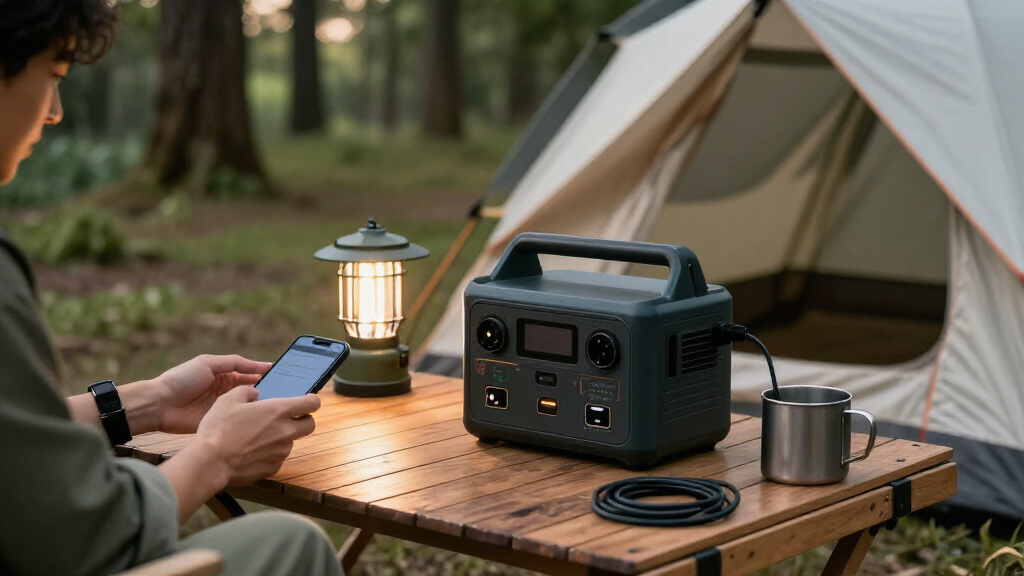

Among these portable power stations, I’d put the EcoFlow DELTA 3 Max first for shoppers seeking a versatile balance of capacity and output, while the Jackery Explorer 1000 v2 is a more manageable choice for everyday trips and the Jackery HomePower 3600 Plus suits larger backup needs. The lineup ranges from pocketable units for phones and small electronics to high-capacity models built for longer outages, so choosing the biggest battery is not always the best move. Buyers also need to weigh output limits, weight, recharge options, and whether solar panels are included. I ranked the options by how well their capacity, power, portability, and use case fit together, rather than treating one feature as decisive. Read on for the full breakdown and help matching a station to your needs.

Get the latest gadgets delivered free with Prime
- Fast, free delivery on millions of items
- Prime Video, Amazon Music and more included
- Member-only deals all year
Complete the kit


Key Takeaways
- The lineup splits into distinct capacity tiers: the Daran’s 89.6Wh capacity favors small electronics, while units such as the Jackery HomePower 3600 Plus target much larger backup loads.
- About 1,000Wh is the most flexible middle ground here: models such as the Jackery Explorer 1000 v2 and EcoFlow DELTA 3 Classic offer more room for appliances than compact stations without moving into the largest-capacity class.
- Power output and battery capacity solve different problems: wattage affects which devices can run at once, while watt-hours help estimate how long they can run.
- Solar bundles simplify setup but limit panel choice: the Jackery Solar Generator 1000 v2 includes a 200W panel, while standalone stations let buyers choose compatible solar equipment separately.
- Small capacity is a real advantage for light-duty use: the BLUETTI Elite 30 Mini and Jackery Explorer 300 are easier to match to phones, lights, and small electronics than oversized backup stations.
- LiFePO4 appears across several compact and mid-sized picks: the BLUETTI Elite 30 Mini, LIBRIDS C600, and Marsriva MP6 Plus all list this battery chemistry, but capacity and output still determine their practical roles.
| BLUETTI Elite 30 Mini Portable Power Station 288Wh 300W LFP Solar Generator |  | Best Compact Power Station | Capacity: 288Wh | Battery type: LiFePO4 (LFP) | Weight: 7.27 lbs | VIEW LATEST PRICE | See Our Full Breakdown |
| Daran Portable Power Station 89.6Wh LiFePO4 Battery with 100W AC Outlets and PD Fast Charging |  | Best for Lightweight Essentials | Capacity: 89.6Wh | Battery type: LiFePO4 | Weight: 2.54 lbs | VIEW LATEST PRICE | See Our Full Breakdown |
| BLUETTI Elite 100 Mini Portable Power Station, 1004.8Wh, 700W |  | Best Mid-Capacity Backup | Capacity: 1,004.8Wh | AC output: 700W | Surge power: 1,400W | VIEW LATEST PRICE | See Our Full Breakdown |
| Jackery Explorer 2000 v2 Portable Power Station |  | Best for High-Capacity Home Backup | Capacity: 2,042Wh | AC output: 2,200W | Battery type: LiFePO4 | VIEW LATEST PRICE | See Our Full Breakdown |
| LIBRIDS C600 Portable Power Station, 640Wh LiFePO4 Battery, 600W Output |  | Best for Multi-Device Camp Setups | Capacity: 640Wh | Surge power: 1,200W | Battery type: LiFePO4 | VIEW LATEST PRICE | See Our Full Breakdown |
| Jackery HomePower 3600 Plus Portable Power Station |  | Best for Heavy-Duty Home Backup | Capacity: 3584Wh | AC output: 3600W; 7200W in parallel | Voltage: 120V; 240V in parallel | VIEW LATEST PRICE | See Our Full Breakdown |
| Jackery Explorer 1000 v2 Portable Power Station |  | Best Lightweight Backup with UPS | Capacity: 1024Wh | Battery type: LiFePO4 (LFP) | AC output: 1500W; 3000W surge | VIEW LATEST PRICE | See Our Full Breakdown |
| EcoFlow DELTA 3 Max Portable Power Station |  | Best for Fast-Recharging Mid-Size Backup | Capacity: 2048Wh | Battery type: LiFePO4 (LFP) | Continuous output: 2400W | VIEW LATEST PRICE | See Our Full Breakdown |
| BLUETTI Elite 300 Portable Power Station |  | Best for RV Hookups and Compact 3kWh Capacity | Capacity: 3014.4Wh | Battery type: LiFePO4 | Continuous output: 2400W | VIEW LATEST PRICE | See Our Full Breakdown |
| Anker SOLIX C1000 Gen 2 Portable Power Station |  | Best for High Output in a 1kWh Class | Battery capacity: 1024Wh | Battery type: LiFePO4 | Peak output: 3000W | VIEW LATEST PRICE | See Our Full Breakdown |
| Anker SOLIX S2000 Portable Power Station |  | Best for Compact High-Capacity Backup | Capacity: 2,010Wh | Continuous output: 1,500W | Peak output: 3,000W | VIEW LATEST PRICE | See Our Full Breakdown |
| Marsriva MP6 Plus Portable Power Station, 512Wh LiFePO4 Solar Generator, 600W AC Output, 1200W Peak, UPS Backup |  | Best for Fast-Charging Mid-Size Backup | Capacity: 512Wh | AC output: 600W rated; 1,200W peak | Battery: LiFePO4; more than 3,000 cycles | VIEW LATEST PRICE | See Our Full Breakdown |
| Jackery Solar Generator 1000 v2 with 200W Solar Panel |  | Best Solar-Ready All-Rounder | Battery capacity: 1,024Wh | Battery type: LiFePO4; 4,000+ cycles | AC output: 1,500W | VIEW LATEST PRICE | See Our Full Breakdown |
| EcoFlow DELTA 3 Classic Portable Power Station (1024Wh, 1800W) |  | Best for Higher-Power Appliances | Capacity: 1,024Wh | AC output: 1,800W; 3,600W surge | Battery type: LiFePO4 | VIEW LATEST PRICE | See Our Full Breakdown |
| Jackery Explorer 300 Portable Power Station, 292Wh |  | Best Lightweight Grab-and-Go Pick | Battery capacity: 292Wh | Battery type: LiFePO4; over 4,000 cycles before reaching 70% capacity | Peak surge output: 600W | VIEW LATEST PRICE | See Our Full Breakdown |
| portable power station | Weight | Battery type | Capacity | Charging time |
|---|---|---|---|---|
| BLUETTI Elite 30 Mini Portable | 7.27 lbs | LiFePO4 (LFP) | 288Wh | 80% in 46 minutes |
| Daran Portable Power Station 8 | 2.54 lbs | LiFePO4 | 89.6Wh | 0–80% in 1.5 hours |
| BLUETTI Elite 100 Mini Portabl | 23.5 lbs | LiFePO4 (LFP) | 1,004.8Wh | 80% in 1.5 hours |
| Jackery Explorer 2000 v2 Porta | 39.5 lbs | LiFePO4 | 2,042Wh | 80% in 66 minutes |
| LIBRIDS C600 Portable Power St | 16.3 lbs | LiFePO4 | 640Wh | — |
| Jackery HomePower 3600 Plus Po | 77.2 lbs | LFP with ceramic membrane | 3584Wh | — |
| Jackery Explorer 1000 v2 Porta | 23.4 lbs | LiFePO4 (LFP) | 1024Wh | 50 minutes in Emergency Mode; 1.25 hours standard |
| EcoFlow DELTA 3 Max Portable P | — | LiFePO4 (LFP) | 2048Wh | — |
| BLUETTI Elite 300 Portable Pow | 58 lbs | LiFePO4 | 3014.4Wh | 78 minutes to 80% |
| Anker SOLIX C1000 Gen 2 Portab | 11.3 kg | LiFePO4 | — | — |
| Anker SOLIX S2000 Portable Pow | 35.7 lbs | — | 2,010Wh | — |
| Marsriva MP6 Plus Portable Pow | 15.7 lbs | — | 512Wh | — |
| Jackery Solar Generator 1000 v | 23.4 lbs | LiFePO4; 4,000+ cycles | — | 50 minutes in Emergency Mode; 1.25 hours in Standard Mode |
| EcoFlow DELTA 3 Classic Portab | 26.7 lbs | LiFePO4 | 1,024Wh | 0–80% in 45 minutes |
| Jackery Explorer 300 Portable | 7.5 lbs | LiFePO4; over 4,000 cycles before reaching 70% capacity | — | — |
More Details on Our Top Picks
BLUETTI Elite 30 Mini Portable Power Station 288Wh 300W LFP Solar Generator
The BLUETTI Elite 30 Mini suits buyers who want more than a phone-sized emergency bank but still need something easy to carry. At 7.27 pounds, its 288Wh capacity and two AC outlets can support small electronics and modest loads on a trip; the retractable USB-C cable also cuts down on loose accessories. Compared with the 2.54-pound Daran, it provides far more stored energy and a higher 300W output, though it takes up more room in a bag. Its 140W bidirectional charging and 80% recharge in 46 minutes help shorten downtime, while the LFP battery is rated for 6,000+ cycles. The tradeoff is a firm ceiling: 300W and 288Wh won’t suit heating appliances or extended backup for larger devices.
Pros:- 288Wh capacity and 300W output offer more flexibility than ultra-small stations such as the Daran.
- Built-in retractable USB-C cable reduces the number of accessories to pack.
- LFP battery is rated for more than 6,000 charge cycles.
- Reaches 80% charge in 46 minutes and includes a UPS switchover under 10ms.
Cons:- 300W rated output rules out many kitchen and heating appliances.
- 288Wh capacity limits runtime for power-hungry devices.
- Some charging methods require separate accessories or adapters.
Best for: Campers and travelers who want a carryable station for phones, laptops, lights, and other modest loads.
Not ideal for: Buyers planning to run high-wattage appliances or power several devices for long stretches; its 300W output and 288Wh capacity are limiting.
- Capacity:288Wh
- Battery type:LiFePO4 (LFP)
- Weight:7.27 lbs
- Charge cycles:6,000+
- UPS switchover:<10ms
- Charging time:80% in 46 minutes
- Ports:2 AC, 2 140W USB-C, 1 30W USB-C, 1 USB-A, 1 12V car outlet
Our verdict“Choose the Elite 30 Mini for portable power that outlasts a tiny backup bank, but skip it if your plans call for appliance-level output or long runtimes.”
Daran Portable Power Station 89.6Wh LiFePO4 Battery with 100W AC Outlets and PD Fast Charging
The Daran is the lineup’s smallest, lightest option, built for buyers who value a few ounces of backup over all-day energy. At 2.54 pounds, it can slip into a backpack and provide AC power for compatible low-draw devices, alongside USB-C and USB-A charging. Its 89.6Wh capacity is much smaller than the BLUETTI Elite 30 Mini’s 288Wh, so this is better for topping up essentials than supporting a campsite’s worth of gear. The fanless operation is useful in quiet sleeping spaces, and 0–80% charging in 1.5 hours keeps turnaround manageable. A 100W output cap also means it cannot handle demanding appliances, while solar panels and charging cables are not included. I’d pick it for personal electronics, not as a household backup source.
Pros:- At 2.54 pounds, it is substantially easier to carry than the BLUETTI Elite 30 Mini.
- Fanless design supports quiet use near a bed or in a tent.
- LiFePO4 battery is rated for 3,500+ cycles.
- Seven output ports include AC, USB-C, USB-A, and DC connections.
Cons:- 89.6Wh capacity provides limited runtime beyond small personal devices.
- 100W output excludes most appliances and higher-draw equipment.
- Solar panel and charging cables are not included.
Best for: Solo travelers and backpackers who need a compact backup for phones, tablets, and other low-power electronics.
Not ideal for: Campers seeking multiple days of power or anyone needing to run appliances; its 89.6Wh capacity and 100W output are restrictive.
- Capacity:89.6Wh
- Battery type:LiFePO4
- Weight:2.54 lbs
- Dimensions:6.5 × 3.3 × 4 in
- Charge cycles:3,500+
- Charging time:0–80% in 1.5 hours
- Ports:2 AC, 2 USB-C, 2 USB-A, 1 DC5521
Our verdict“Pick the Daran when low weight and silent charging matter more than long runtime or appliance support.”
BLUETTI Elite 100 Mini Portable Power Station, 1004.8Wh, 700W
With 1,004.8Wh of storage and 700W AC output, the BLUETTI Elite 100 Mini fills the gap between compact travel units and heavier, higher-output stations. Its three AC outlets can serve several everyday devices, while the 140W USB-C port, app control, and UPS backup add useful flexibility at home or at camp. It carries more capacity than the 640Wh LIBRIDS C600, but its 700W output is only modestly higher, so neither is aimed at high-demand appliances. At 23.5 pounds, this BLUETTI is manageable for short moves, though it is far less appealing to carry long distances than the Elite 30 Mini. The LFP battery’s 6,000+ cycle rating and 80% recharge in 1.5 hours support regular use; the compromise is weight without a matching leap in output.
Pros:- 1,004.8Wh capacity provides substantially more reserve than the Elite 30 Mini or LIBRIDS C600.
- Three AC outlets and a 140W USB-C port support a varied device mix.
- LFP battery is rated for 6,000+ cycles.
- App control and UPS switchover up to 10ms add monitoring and backup flexibility.
Cons:- 700W AC output limits which appliances it can power.
- At 23.5 pounds, it is less convenient for extended carrying than compact models.
- Its larger capacity does not make it a high-output alternative to stations rated for heavier loads.
Best for: Campers and households wanting roughly 1kWh of storage for everyday electronics, lights, and modest backup loads.
Not ideal for: People who need a station for high-wattage appliances or frequent long-distance carrying; 700W output and 23.5 pounds make those jobs a poor fit.
- Capacity:1,004.8Wh
- AC output:700W
- Surge power:1,400W
- Battery type:LiFePO4 (LFP)
- Weight:23.5 lbs
- AC outlets:3
- UPS switchover:≤10ms
- Charging time:80% in 1.5 hours
Our verdict“Choose the Elite 100 Mini for a relatively compact 1kWh reserve and everyday-device backup, not for heavy appliances or lightweight travel.”
Jackery Explorer 2000 v2 Portable Power Station
The Jackery Explorer 2000 v2 is the clear choice here when stored energy and appliance support matter more than easy carrying. Its 2,042Wh capacity and 2,200W AC output place it well above the BLUETTI Elite 100 Mini and LIBRIDS C600 for running larger loads or keeping several devices powered through an outage. At 39.5 pounds, it is relatively compact for this capacity class, but it is still a two-hand move for many buyers, not a casual backpack companion. Fast charging reaches 80% in 66 minutes; silent mode keeps noise below 30dB but takes five hours for a full charge. The 20ms UPS switching time is slower than the 10ms figures on the BLUETTI and LIBRIDS models. Solar panels are sold separately.
Pros:- 2,042Wh capacity and 2,200W output handle larger loads than the other reviewed stations.
- Reaches 80% charge in 66 minutes in fast-charge mode.
- Silent mode operates below 30dB.
- 39.5-pound weight is relatively manageable for a station with this capacity.
Cons:- At 39.5 pounds, it is much less portable than the smaller BLUETTI and Daran models.
- Solar panel is sold separately.
- 20ms UPS switching is slower than the 10ms switchover specified for the LIBRIDS C600.
Best for: Households and small workspaces that need substantial stored power for outages, with the ability to move the station occasionally.
Not ideal for: Backpackers and buyers who need rapid UPS switchover or an included solar setup; its 39.5-pound weight and separate panel purchase are limiting.
- Capacity:2,042Wh
- AC output:2,200W
- Battery type:LiFePO4
- Weight:39.5 lbs
- AC ports:3
- Charging time:80% in 66 minutes
- Silent-mode noise:<30dB
- UPS switching time:20ms
Our verdict“Choose the Explorer 2000 v2 when you need high capacity and strong AC output for backup, and accept the weight and separate solar-panel cost.”
LIBRIDS C600 Portable Power Station, 640Wh LiFePO4 Battery, 600W Output
The LIBRIDS C600 makes a practical middle ground for buyers who want several AC connections without stepping up to a much heavier, higher-capacity station. Its four AC outlets and eight total output ports can keep a shared camp setup or small work area organized, while 640Wh provides more reserve than the Elite 30 Mini. Compared with the BLUETTI Elite 100 Mini, it stores less energy, but its 16.3-pound body is lighter and its 600W output is close to that model’s 700W rating. The 10ms UPS, pure sine wave output, metal housing, and four recharge methods add useful versatility. Still, 600W is a real limit for appliance use, and 16.3 pounds is substantial for a long walk from the car. The listed recharge time is as little as 1.5 hours.
Pros:- Four AC outlets and eight total ports make it easier to connect several devices at once.
- 640Wh capacity offers more reserve than the Elite 30 Mini.
- Supports AC, solar, car, and gas-generator recharging, including combined AC and solar charging.
- 10ms UPS, metal housing, and an LCD status display provide practical backup and monitoring features.
Cons:- 600W rated output excludes many high-power appliances.
- At 16.3 pounds, it is heavier than compact travel stations such as the Elite 30 Mini.
- Its 640Wh capacity falls short of the BLUETTI Elite 100 Mini’s 1,004.8Wh.
Best for: Campers and mobile workers who need several AC outlets for modest loads and want a station that can be recharged by multiple methods.
Not ideal for: Buyers powering high-wattage appliances or carrying their station over long distances; 600W output and 16.3 pounds constrain both uses.
- Capacity:640Wh
- Surge power:1,200W
- Battery type:LiFePO4
- Weight:16.3 lbs
- Output ports:8 total, including 4 AC outlets
- Charge cycles:4,000+ while retaining over 80% capacity
- UPS switch time:10ms
- Recharging methods:AC, solar (XT60), car, or gas generator
Our verdict“Pick the LIBRIDS C600 for a multi-device setup with flexible recharging, but look to a higher-output station for demanding appliances.”
Jackery HomePower 3600 Plus Portable Power Station
For buyers prioritizing large reserves and high AC output, the HomePower 3600 Plus is the strongest fit here: its 3584Wh capacity and 3600W output can support demanding appliances that exceed the reach of the Jackery Explorer 1000 v2. That extra headroom suits outage plans built around equipment such as pumps, heaters, or dryers, while AC, solar, and generator charging offer several ways to refill it. The LFP battery is rated for 6,000 cycles, and the ceramic membrane is presented as an added safety feature. Wheels and a telescopic handle help move this 77.2-pound unit around a home, but they do not make it easy to lift into a vehicle. Its two AC outlets also limit how many appliances can connect directly, and parallel operation is needed for the listed 240V output.
Pros:- 3584Wh capacity and 3600W AC output suit heavier household loads than the smaller Jackery Explorer 1000 v2.
- AC, solar, and gas-generator charging provide multiple refill options.
- LFP battery is rated for 6,000 cycles, with a ceramic membrane design cited for added safety.
- Wheels and telescopic handle make it easier to roll than a comparably heavy unit without mobility features.
Cons:- At 77.2 pounds, it remains difficult to lift despite its wheels and handle.
- Only two AC outlets may require a power strip for several simultaneous devices.
- The listed 240V output requires parallel operation rather than a single-unit setup.
Best for: Homeowners planning backup for high-wattage appliances who can roll the unit into place and have a suitable charging setup.
Not ideal for: Campers or RV travelers who need a unit they can lift easily, or households that need several AC appliances connected without a power strip.
- Capacity:3584Wh
- AC output:3600W; 7200W in parallel
- Voltage:120V; 240V in parallel
- Battery type:LFP with ceramic membrane
- Charge cycles:6,000
- Weight:77.2 lbs
- Dimensions:15.2 × 12.2 × 19.3 in
- Warranty:5 years
Our verdict“Choose the HomePower 3600 Plus for substantial home backup and heavy loads, but skip it if easy lifting or many built-in AC outlets matter more.”
Jackery Explorer 1000 v2 Portable Power Station
The Explorer 1000 v2 is the more manageable choice for buyers who want meaningful backup capacity without handling a 58-pound or 77-pound unit like the BLUETTI Elite 300 or Jackery HomePower 3600 Plus. At 23.4 pounds and 1024Wh, it is easier to move between a home, car, and campsite, while its 1500W AC output can run many everyday essentials. A 10ms UPS switchover gives it a clear role for devices that need power continuity during an outage, though capacity and output are far below the HomePower 3600 Plus for heavy household loads. Emergency charging can reach a full charge in 50 minutes, but it requires manual activation in the app; standard charging takes 1.25 hours. Solar panels are not included, and solar charging is limited to Jackery panels, narrowing that option compared with products listing broader recharge methods.
Pros:- At 23.4 pounds, it is much easier to carry than the BLUETTI Elite 300 and Jackery HomePower 3600 Plus.
- 10ms UPS switchover supports continuity for essential connected devices.
- Emergency charging can reach a full charge in 50 minutes when activated through the app.
- LiFePO4 battery is rated for more than 4,000 cycles.
Cons:- Its 1024Wh capacity and 1500W output cannot match larger stations for sustained heavy loads.
- Emergency fast charging must be manually activated in the app for each session.
- Solar panels are not included, and solar charging is limited to Jackery-brand panels.
Best for: People who need a portable backup for a refrigerator, communications gear, or other essential devices and value quick UPS switchover.
Not ideal for: Buyers planning to run high-wattage appliances for extended periods, or those who want to use third-party solar panels.
- Capacity:1024Wh
- Battery type:LiFePO4 (LFP)
- AC output:1500W; 3000W surge
- Weight:23.4 lbs
- Dimensions:12.34 × 7.91 × 9.19 in
- Charging time:50 minutes in Emergency Mode; 1.25 hours standard
- UPS switchover:10ms
- Ports:2 AC, 2 USB-C, 1 USB-A, 1 DC car port
- Battery lifespan:4,000+ charge cycles
Our verdict“Pick the Explorer 1000 v2 for portable essential-device backup and quick UPS response, not for running heavy appliances or broad solar compatibility.”
EcoFlow DELTA 3 Max Portable Power Station
The DELTA 3 Max balances a 2048Wh battery with 2400W continuous output, giving it more capacity and load headroom than the Jackery Explorer 1000 v2 without reaching the size of the 3584Wh Jackery HomePower 3600 Plus. That middle ground suits buyers who want to cover an outage or RV trip with fewer charging stops but still need a station that can move between locations. EcoFlow lists 0–80% charging in 1.13 hours and a transfer time under 10ms, useful when quick replenishment and backup for connected equipment matter. X-Boost is listed at 3400W, but it should not be treated as the same thing as continuous output when choosing appliances. The tradeoff is a tall, bulky form, and solar panels are sold separately, so portable recharging adds another component to the setup.
Pros:- 2048Wh capacity provides twice the stored energy of the Jackery Explorer 1000 v2.
- 2400W continuous output and 3400W X-Boost offer substantial appliance support.
- Listed 0–80% AC charging time of 1.13 hours helps reduce downtime.
- Under-10ms transfer time and app control suit home backup management.
Cons:- Its 19.44-inch height and overall size make it less convenient to carry than the Explorer 1000 v2.
- Solar panels are sold separately.
- X-Boost maximum output is not a substitute for the 2400W continuous rating when matching appliances.
Best for: RV owners and households seeking a 2kWh-class station with fast AC recharging and enough output for demanding everyday appliances.
Not ideal for: Buyers who need a compact carry-on-style unit or want a solar-ready package with panels included.
- Capacity:2048Wh
- Battery type:LiFePO4 (LFP)
- Continuous output:2400W
- Maximum output:3400W with X-Boost
- AC charging:0–80% in 1.13 hours
- Transfer time:Under 10ms
- Dimensions:9.4 × 12 × 19.44 in
- Warranty:5 years
Our verdict“Choose the DELTA 3 Max for fast-recharging, mid-size backup with stronger capacity than a 1kWh station, provided its bulk and separate solar-panel purchase suit your setup.”
BLUETTI Elite 300 Portable Power Station
The Elite 300 brings 3014.4Wh into a compact-for-its-capacity frame, making it a distinctive option for RV users who want substantial stored energy without stepping up to the Jackery HomePower 3600 Plus. Its TT-30 outlet and 12V/30A DC output are practical advantages for connecting RV equipment directly, while the 2400W continuous output and 4800W surge rating cover a broad range of loads. It also reaches 80% charge in a listed 78 minutes and has a 10ms UPS switch for backup use. Against the EcoFlow DELTA 3 Max, the Elite 300 offers considerably more capacity, but its 58-pound weight makes frequent lifting a chore. It is limited to 120V output, so buyers needing 240V appliances should look elsewhere; its compact dimensions do not remove that electrical limitation.
Pros:- 3014.4Wh capacity offers more stored energy than the EcoFlow DELTA 3 Max.
- TT-30 RV outlet and 12V/30A DC output support direct RV connections.
- Reaches 80% charge in a listed 78 minutes.
- LiFePO4 battery is rated for more than 6,000 charge cycles.
Cons:- At 58 pounds, it is heavy for frequent manual transport.
- 120V-only output rules out 240V appliances.
- Its 2400W continuous output is below the Jackery HomePower 3600 Plus’s 3600W rating.
Best for: RV owners who need a direct TT-30 connection, substantial battery capacity, and a station that can also serve as home backup.
Not ideal for: Users who need 240V appliance support or regularly carry a power station up stairs or in and out of a vehicle.
- Capacity:3014.4Wh
- Battery type:LiFePO4
- Continuous output:2400W
- Surge output:4800W
- Weight:58 lbs
- Dimensions:14.4 × 12 × 11.7 in
- Charging time:78 minutes to 80%
- UPS switch time:10ms
- Recharge methods:AC, solar, car, and generator
Our verdict“Choose the Elite 300 for RV-focused connections and high capacity in a compact frame, but skip it if 240V output or easy lifting is a requirement.”
Anker SOLIX C1000 Gen 2 Portable Power Station
The SOLIX C1000 Gen 2 is a strong match for buyers who want more AC output from a 1kWh-class station: its 2000W rating exceeds the Jackery Explorer 1000 v2’s 1500W, which can broaden the range of appliances it supports. It keeps the same basic capacity class at 1024Wh, so it is better for shorter backup periods than the 2048Wh EcoFlow DELTA 3 Max or the BLUETTI Elite 300. Fast refilling is another advantage: the listed AC recharge time is 49 minutes at 1600W, with solar input up to 600W and a stated 1.8-hour solar recharge. The under-10ms UPS function adds a practical role for home essentials. Its solar input ceiling is lower than larger solar setups may call for, and the specifications list nine outlets, so buyers should check the port mix against their devices.
Pros:- 2000W rated output gives it more continuous AC power than the Jackery Explorer 1000 v2.
- 49-minute AC recharge is listed at 1600W input.
- Under-10ms UPS switchover supports backup for essential connected equipment.
- LiFePO4 battery is specified to retain at least 80% capacity after 4,000 cycles.
Cons:- 1024Wh capacity offers much less stored energy than the EcoFlow DELTA 3 Max or BLUETTI Elite 300.
- Solar input is capped at 600W and 60V maximum.
- The specifications list nine outlets, while the description claims support for up to 10 devices, so buyers should verify their port needs.
Best for: Campers and households wanting a relatively compact station with 1kWh capacity, higher AC output, fast charging, and UPS backup.
Not ideal for: Buyers who need multi-day energy reserves, 240V output, or solar input above 600W.
- Battery capacity:1024Wh
- Battery type:LiFePO4
- Peak output:3000W
- AC voltage:120V
- AC recharging time:49 minutes at 1600W
- Solar input:600W, 60V maximum
- Solar recharging time:1.8 hours
- UPS switchover:Under 10ms
- Weight:11.3 kg
Our verdict“Pick the SOLIX C1000 Gen 2 when higher output and rapid recharging matter more than the extended runtime of a larger-capacity station.”
Anker SOLIX S2000 Portable Power Station
The Anker SOLIX S2000 pairs 2,010Wh of capacity with a 35.7-pound build, making it a space-conscious choice for buyers who want substantial backup without moving a much larger unit. Its 1,500W continuous output and eight outlets suit several everyday devices, while the sub-10ms UPS response can keep compatible home-office equipment running through a brief outage. Compared with the EcoFlow DELTA 3 Classic, it stores nearly twice as much energy but delivers less continuous power, so it favors longer runtimes over handling heavier loads. Six charging methods and up to 400W solar input give it flexibility for home or outdoor use. The tradeoffs are its lack of a 12V DC port and a 1,500W ceiling that rules out some high-draw appliances and tools.
Pros:- 2,010Wh capacity in a comparatively compact 35.7-pound package
- LiFePO4 battery rated for 10,000 cycles
- Six recharging methods, including up to 400W solar input
- Sub-10ms UPS switchover and eight total outlets
Cons:- No 12V DC port for compatible automotive and specialty accessories
- 1,500W continuous output limits use with some high-draw appliances and tools
Best for: Home-office owners or campers who want roughly 2kWh of capacity in a relatively compact unit and value UPS backup.
Not ideal for: Buyers who need a 12V DC connection or plan to run appliances and tools that draw more than 1,500W continuously.
- Capacity:2,010Wh
- Continuous output:1,500W
- Peak output:3,000W
- Battery:LiFePO4; rated for 10,000 cycles
- Weight:35.7 lbs
- Solar input:Up to 400W
- Outlets:8 total
- UPS switchover:<10 ms
- Warranty:5 years
Our verdict“Choose the S2000 if you want high capacity and fast UPS backup in a compact package, but skip it if your loads need more than 1,500W or a 12V port.”
Marsriva MP6 Plus Portable Power Station, 512Wh LiFePO4 Solar Generator, 600W AC Output, 1200W Peak, UPS Backup
The Marsriva MP6 Plus suits buyers who want more capacity than a small personal power station without stepping up to a 1kWh-class unit. Its 512Wh battery, 600W AC output, and 100W USB-C PD cover phones, laptops, lights, and select modest appliances; the sub-10ms UPS mode adds value for a router or desktop setup. It charges quickly, reaching 90% in about an hour, and its 300W solar input with built-in MPPT makes panel charging a practical option. Compared with the Jackery Explorer 1000 v2, it is a smaller-capacity, lower-output choice, better suited to lighter loads than refrigerator backup. At 15.7 pounds, it is not especially light for its capacity, and the unit is not waterproof, so outdoor use calls for shelter from rain and moisture.
Pros:- LiFePO4 battery rated for more than 3,000 charge cycles
- Reaches 90% charge in about one hour
- Built-in MPPT controller and up to 300W solar input
- 100W USB-C PD and sub-10ms UPS function
Cons:- 512Wh capacity and 600W rated output limit runtime and appliance choices
- 15.7-pound weight is substantial for a mid-capacity portable unit
- Not waterproof; needs protection from rain and moisture
Best for: Remote workers and weekend campers who need laptop-class power, quick recharging, and UPS backup in a mid-size station.
Not ideal for: Buyers seeking long runtimes for refrigerators or heavy appliances, or anyone who needs a station that can sit exposed to wet weather.
- Capacity:512Wh
- AC output:600W rated; 1,200W peak
- Battery:LiFePO4; more than 3,000 cycles
- USB-C output:100W PD
- Solar input:300W
- Recharge time:90% in about 1 hour; 0–90% in 1.5 hours
- UPS response:<10 ms
- Weight:15.7 lbs
- Warranty:5 years
Our verdict“Pick the MP6 Plus for fast-charging backup for smaller electronics and modest loads, not for extended refrigerator use or exposed wet-weather trips.”
Jackery Solar Generator 1000 v2 with 200W Solar Panel
The Jackery Solar Generator 1000 v2 is a balanced choice for buyers who want a 1kWh-class station and a solar panel in the same package. Its 1,024Wh capacity and 1,500W AC output can support a mix of camping gear and household essentials, while the 23.4-pound weight keeps it more manageable than the EcoFlow DELTA 3 Classic, which offers a higher 1,800W output but weighs more. The included 200W panel gives solar charging a head start for trips away from an outlet. Jackery also specifies a 50-minute emergency charging mode and a 10ms UPS switchover. That fastest charging mode must be activated in the app for each session, and the supplied panel is not the same as a built-in solar source. Buyers who need heavier appliance loads may prefer the EcoFlow’s higher output.
Pros:- 1,024Wh LiFePO4 battery with more than 4,000 rated cycles
- Includes a 200W solar panel
- 1,500W AC output with 3,000W surge capability
- Compact 23.4-pound build and 10ms UPS switchover
Cons:- Emergency 50-minute charging mode must be activated through the app each time
- The included solar panel is a separate component to set up and carry
- Lower continuous output than the EcoFlow DELTA 3 Classic
Best for: Campers and road-trippers who want a 1kWh-class station, a bundled 200W solar panel, and enough output for common essentials.
Not ideal for: Buyers who need more than 1,500W of continuous AC output or prefer charging controls that do not require an app.
- Battery capacity:1,024Wh
- Battery type:LiFePO4; 4,000+ cycles
- AC output:1,500W
- Surge output:3,000W
- Weight:23.4 lbs
- Charging time:50 minutes in Emergency Mode; 1.25 hours in Standard Mode
- UPS switchover:10 ms
- Included solar panel:200W
- Battery lifespan:10+ years; 4,000+ cycles
Our verdict“Choose this Jackery for a portable 1kWh setup with a panel included; choose the DELTA 3 Classic instead if higher continuous output matters more.”
EcoFlow DELTA 3 Classic Portable Power Station (1024Wh, 1800W)
The EcoFlow DELTA 3 Classic is the stronger pick in this group for buyers whose priority is running more demanding appliances from a 1kWh-class station. It supplies 1,800W continuous output with 3,600W surge and X-Boost support, compared with the Jackery Solar Generator 1000 v2’s 1,500W continuous rating. That extra headroom can accommodate a broader range of loads, while the 45-minute 0–80% charge and sub-10ms UPS response help when it is used for home backup. The tradeoff is portability: at 26.7 pounds, it weighs more than the Jackery, and its optional 500W solar input requires a separately sourced panel. Buyers with older DELTA 2 or DELTA 3 series extra batteries should also check compatibility, since this model does not support those listed battery packs.
Pros:- 1,800W AC output and 3,600W surge rating
- Charges from 0–80% in 45 minutes
- Sub-10ms UPS function for sensitive electronics
- 100W USB-C output and up to 500W solar input
Cons:- At 26.7 pounds, it is heavier than the Jackery Solar Generator 1000 v2
- Solar panel is optional rather than included
- Not compatible with DELTA 2 or DELTA 3 Series Smart Extra Batteries
Best for: Homeowners and campers who need a 1kWh-class station with more AC output for refrigerators, microwaves, or other higher-demand devices.
Not ideal for: Buyers who prioritize low carry weight, already own a listed DELTA 2 or DELTA 3 series extra battery, or want solar hardware included.
- Capacity:1,024Wh
- AC output:1,800W; 3,600W surge
- Battery type:LiFePO4
- Charging time:0–80% in 45 minutes
- UPS switch time:<10 ms
- Weight:26.7 lbs
- Outlets:6 total
- USB-C output:100W
- Solar input:Up to 500W; panel optional
Our verdict“Choose the DELTA 3 Classic if higher AC output and quick recharging beat low weight or an included solar panel on your priority list.”
Jackery Explorer 300 Portable Power Station, 292Wh
At 7.5 pounds, the Jackery Explorer 300 is the most carry-friendly choice in this batch, built for topping up smaller devices rather than backing up a household. Its 292Wh capacity and 300W rated output suit phones, laptops, lights, and select low-draw gear, while the 120W car port adds flexibility for road trips. Compared with the Marsriva MP6 Plus, it is substantially lighter but offers less than 60% of the capacity, so it makes more sense for short outings than overnight backup for multiple devices. The LiFePO4 battery is rated for more than 4,000 cycles, giving frequent users a durable small-format option. Its main limit is output: larger appliances are outside its intended range. Solar charging is supported, but the panel is sold separately.
Pros:- Lightweight 7.5-pound design with an integrated carry handle
- 292Wh LiFePO4 battery rated for more than 4,000 cycles
- 100W USB-C PD and 120W car port alongside two AC outlets
- Supports solar charging for off-grid use
Cons:- 300W rated output excludes many appliances and higher-draw tools
- 292Wh capacity provides limited runtime compared with the Marsriva MP6 Plus
- Solar panel is sold separately
Best for: Day hikers, road-trippers, and occasional campers who need portable power for phones, laptops, lights, and other modest loads.
Not ideal for: Households seeking long runtimes, refrigerator backup, or power for appliances that exceed its 300W rated output.
- Battery capacity:292Wh
- Battery type:LiFePO4; over 4,000 cycles before reaching 70% capacity
- Peak surge output:600W
- Weight:7.5 lbs
- AC outlets:2
- USB and car ports:2 USB-A, 1 USB-C PD (100W), 1 120W car port
- Solar charging:About 80% in 2.8 hours with a 100W panel; panel not included
Our verdict“Choose the Explorer 300 for lightweight power for smaller devices on short trips, not for appliance backup or extended off-grid use.”
How We Picked
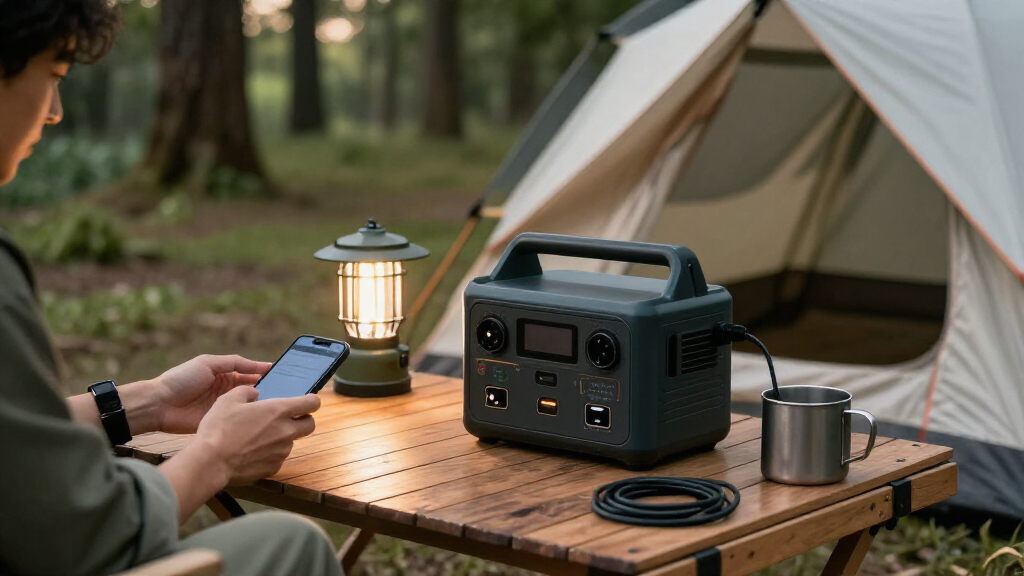
I compared the 15 options by the factors that most affect day-to-day usefulness: usable battery capacity, continuous AC output, portability, charging flexibility, and practical fit for travel or backup. I gave more weight to a balanced combination than to a single standout figure. A high-output station can run more demanding equipment, but without enough stored energy it may not keep that equipment running for long; a large battery can also be a poor travel pick if its bulk is more than the buyer needs.
The order reflects those tradeoffs rather than a claim that one model is right for every household. I separated compact electronics-focused choices from mid-capacity all-rounders and larger backup stations, then considered features that change the buying experience, such as a bundled solar panel or a listed UPS function. Product details supplied for this roundup do not establish measured runtime, recharge speed, or exact weight for every model, so I avoid treating those as confirmed advantages. Buyers should check the specific configuration and device limits before purchase.
| portable power station | Battery type |
|---|---|
| BLUETTI Elite 30 Mini Portable | LiFePO4 (LFP) |
| Daran Portable Power Station 8 | LiFePO4 |
| BLUETTI Elite 100 Mini Portabl | LiFePO4 (LFP) |
| Jackery Explorer 2000 v2 Porta | LiFePO4 |
| LIBRIDS C600 Portable Power St | LiFePO4 |
| Jackery HomePower 3600 Plus Po | LFP with ceramic membrane |
| Jackery Explorer 1000 v2 Porta | LiFePO4 (LFP) |
| EcoFlow DELTA 3 Max Portable P | LiFePO4 (LFP) |
| BLUETTI Elite 300 Portable Pow | LiFePO4 |
| Anker SOLIX C1000 Gen 2 Portab | LiFePO4 |
| Anker SOLIX S2000 Portable Pow | — |
| Marsriva MP6 Plus Portable Pow | — |
| Jackery Solar Generator 1000 v | LiFePO4; 4,000+ cycles |
| EcoFlow DELTA 3 Classic Portab | LiFePO4 |
| Jackery Explorer 300 Portable | LiFePO4; over 4,000 cycles before reaching 70% capacity |
Factors to Consider When Choosing Portable Power Stations
Before choosing a portable power station, I’d start with the devices you need to run and how long you need them powered. A station that fits a weekend electronics kit may not be suitable for a refrigerator or home backup, even if both products share the same category name. These checks can prevent overbuying, underestimating runtime, and paying for features that will stay unused.
Match Battery Capacity to Runtime
Capacity, shown in watt-hours (Wh), is a starting point for estimating how long a station can supply energy. Add up the watt-hours your devices use over the period you care about; a device drawing 50 watts for four hours would use roughly 200Wh before conversion losses. Real runtime is lower than a simple capacity division suggests, especially when using AC outlets, so leave a margin rather than planning to drain the battery completely. A small station can be a sensible fit for phones, lights, and camera gear, while longer outage coverage calls for more stored energy. A common mistake is buying based on a single appliance’s startup needs and forgetting the hours of energy it will consume afterward. I’d size the battery around the full load and duration, not the most impressive number on the product page.
Check Output for Both Running and Startup Loads
Continuous output tells you how much power a station can supply at once, while surge or peak output may cover brief startup demands from certain appliances. These figures answer a different question from battery capacity: output determines whether a device can run, and capacity helps determine for how long. Check the labels or manuals for each device, including any compressor, pump, or motor that may draw more power when starting. Then total the loads you expect to run simultaneously, not every device you own. Buyers often see a high peak figure and assume it means the station can sustain that output, which may not be true. For a home backup plan, test the intended device combination on paper before choosing a model.
Treat Portability as a Use Pattern, Not a Product Label
Portable can mean easy to carry from a car to a campsite, or merely movable between rooms during an outage. The larger the battery, the more likely transport, storage space, and frequent repositioning will matter, so check the unit’s actual weight and dimensions before committing. Think through the route: stairs, a narrow closet, a tent, or a vehicle’s cargo area can change which size is practical. If the station will mostly sit in one place, capacity and output may matter more than easy carrying. If you plan to move it often, a smaller unit may deliver more real-world value even if it cannot run as many appliances. Avoid paying for a large reserve that is awkward to store and rarely used.
Plan Recharging Around Your Situation
Charging options shape how useful a station remains after its first battery cycle. Compare supported AC and solar charging, the included accessories, and whether panels must be purchased separately; a solar bundle can reduce setup decisions, but it may not match every buyer’s preferred panel size or placement. Solar output depends on sunlight, panel angle, shading, and season, so do not treat a panel’s rated wattage as a guaranteed daily recharge. For emergency use, think about how you will recharge when grid power is unavailable and whether you can store the station charged safely according to its instructions. For road trips, access to household outlets or vehicle charging may matter more. The right charging plan is the one you can use consistently, not the one with the longest list of methods.
Choose Battery Chemistry and Backup Features for the Job
Battery chemistry can affect cycle life, weight, and product design, but it should not replace a check of capacity, output, warranty, and operating instructions. Several models in this lineup list LiFePO4 batteries, including compact and mid-capacity options, while the product details provided do not identify chemistry for every pick. A listed UPS function, such as the one on the Marsriva MP6 Plus, may suit equipment that benefits from backup power, but buyers should verify transfer behavior and compatibility for sensitive electronics. Do not assume every power station acts like a home generator or can safely power every household circuit. Check the supported connection method, safety guidance, and any limitations before connecting critical equipment. Pay for backup features when they fit a specific plan, not just because they sound reassuring.
Budget for the Whole Setup and the Loads You Actually Need
The station is only part of a backup or travel setup: solar panels, cables, storage, and compatible adapters can affect the total cost and convenience. A bundled panel, like the one paired with the Jackery Solar Generator 1000 v2, reduces the need to source a panel separately, while a standalone unit gives you more freedom to select accessories. Make a list of essential devices and rank them by priority, since powering a router and lights is a different goal from supporting high-draw cooking or heating equipment. A frequent mistake is buying a station for a rare worst-case scenario while overlooking everyday loads that would make a smaller unit more useful. Paying more makes sense when added capacity or output directly supports the devices and runtime you need. If it does not, a simpler, lighter station may be the more practical choice.
Frequently Asked Questions
How do I know whether a portable power station can run my appliance?
Check the appliance’s running wattage and compare it with the station’s continuous AC output. For devices with motors or compressors, also check startup demand and whether the station’s surge rating supports it. If you plan to run several devices at once, add their running loads together and keep within the station’s limits. Then check capacity separately to estimate runtime, allowing for conversion losses. When an appliance’s requirements are unclear, its manual or manufacturer support is a safer source than a rough estimate.
Should I choose a 300Wh-class station or a 1,000Wh-class model?
Choose based on the devices and duration you need, not on capacity alone. A station around 300Wh, such as the BLUETTI Elite 30 Mini or Jackery Explorer 300, can suit light electronics and shorter outings, but leaves less reserve for extended use. A model around 1,000Wh gives more room for longer sessions or a broader mix of devices, though it may be less convenient to carry. Estimate the energy your essential devices use over the full trip or outage period, then add a margin. If you only need phones and lights, the larger class may bring bulk without a useful benefit.
Is a solar-panel bundle better than buying a station and panels separately?
A bundle is convenient when its included panel fits your charging goals and you want fewer compatibility decisions. The Jackery Solar Generator 1000 v2 pairs the station with a 200W panel, while standalone models let you select a panel setup separately. Separate purchases can offer more choice in panel size and placement, but you need to confirm connector and input compatibility. Either way, rated panel output does not predict the energy you will collect every day because sunlight and shading vary. Compare the complete setup and the charging limits, not just the station’s battery capacity.
Can a portable power station replace a home generator during an outage?
It can cover selected devices, but whether it replaces a generator depends on the loads, outage length, and recharge access. A power station stores a finite amount of energy, so high-draw appliances can use its reserve quickly even when its output rating is sufficient. Larger models such as the Jackery HomePower 3600 Plus are aimed at greater backup needs than compact travel units, but buyers still need to check appliance compatibility and runtime. A station also does not automatically connect to a home’s electrical panel; follow approved connection methods and local requirements. List the circuits or appliances you need before deciding whether a station alone is enough.
What should I prioritize if I need backup power for sensitive electronics?
Start by checking the electronics’ power requirements and the station’s output specifications, then verify that the manufacturer supports the intended use. A UPS feature can matter when equipment needs a fast changeover during an outage, but the Marsriva MP6 Plus’s listed UPS function should not be treated as proof of compatibility with every computer or network device. Check transfer time, outlet type, and any guidance for sensitive loads. For equipment that must stay online, consider whether the station can supply enough capacity for the full outage and how you would recharge it. Test the setup before relying on it for work or critical communications.
Conclusion
My best overall pick is the EcoFlow DELTA 3 Max for buyers who want a versatile station rather than a narrowly focused compact unit or the largest backup option. For a best value starting point, compare the LIBRIDS C600 and Marsriva MP6 Plus around their 600W output class and mid-range capacities, choosing the Marsriva if its listed UPS feature fits your setup. The Jackery HomePower 3600 Plus is my best premium direction for buyers prioritizing substantial home backup capacity, while the Jackery Explorer 300 is a more approachable choice for beginners with modest device needs. For compact use, I’d shortlist the BLUETTI Elite 30 Mini; for a ready-made solar pairing, consider the Jackery Solar Generator 1000 v2. Before deciding, match your essential devices to both the station’s output and the runtime its capacity can support.