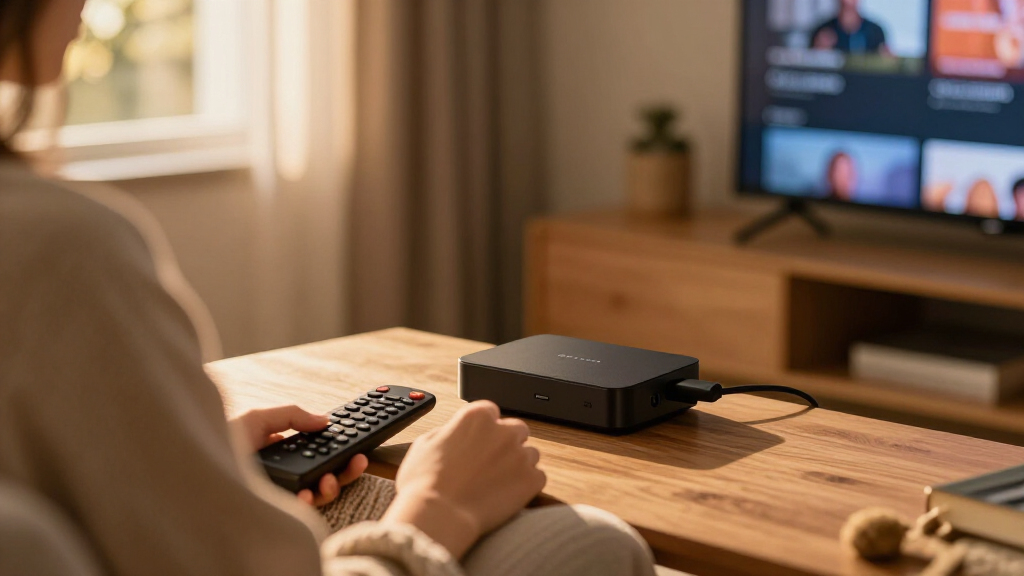

The best streaming devices make it easier to find and watch the shows you want, but the right pick depends on your TV, preferred interface, and appetite for extra features. I rank the Roku Streaming Stick Plus 4K as the best overall choice for straightforward 4K streaming, while the Amazon Fire TV Stick 4K Max suits viewers who want a faster, more connected Fire TV option and the Google TV Streamer 4K stands out for Google TV and added storage. The main tradeoffs are simple menus versus more ecosystem features, compact sticks versus full-size players, and 4K capability versus the needs of an HD-only TV. Continue reading for the full breakdown and a guide to matching a device to your setup.

Get the latest gadgets delivered free with Prime
- Fast, free delivery on millions of items
- Prime Video, Amazon Music and more included
- Member-only deals all year
Complete the kit



Key Takeaways
- The amazon.com/dp/B0C6W3D4RM?tag=toksickmagazine-20&ascsubtag=dc-1178166″ target=”_blank” rel=”nofollow sponsored noopener”>amazon.com/dp/B09BZZ3MM7?tag=toksickmagazine-20&ascsubtag=dc-1178166″ target=”_blank” rel=”nofollow sponsored noopener”>amazon.com/dp/B0F7Z4QZTT?tag=toksickmagazine-20&ascsubtag=dc-1178166″ target=”_blank” rel=”nofollow sponsored noopener”>amazon.com/dp/B0DXY833HV?tag=toksickmagazine-20&ascsubtag=dc-1178166″ target=”_blank” rel=”nofollow sponsored noopener”>Roku Streaming Stick Plus 4K leads this lineup for buyers seeking a compact device with 4K streaming and a straightforward Roku experience.
- Amazon’s Fire TV options span distinct needs: the 4K Select is the more basic route, while the 4K Max and Fire TV Cube add higher-end performance and connectivity features.
- The Google TV Streamer 4K and onn 4K Pro put Google TV at the center; the Google model adds 32 GB of storage, while the onn option offers a separate full-size device format.
- Roku Ultra and Fire TV Cube are the full-size choices for shoppers prioritizing a more capable player over a stick that hides behind the TV.
- The Roku Streaming Stick HD and renewed Roku Streaming Stick 4K make the most sense when their specific tradeoffs fit: HD-only use for the former, and a renewed-device purchase for the latter.
| Roku Streaming Stick Plus 4K HDR Streaming Device with Voice Remote |  | Best for a Simple Roku Setup | Model: 3830R | Resolution: 4K | HDR: HDR10+ | VIEW LATEST PRICE | See Our Full Breakdown |
| Amazon Fire TV Stick 4K Plus |  | Best Value for 4K and Dolby Atmos | Maximum resolution: 2160p at up to 60 fps | Video formats: Dolby Vision, HDR 10, HDR10+, HLG, H.265, H.264, VP9, AV1 | Audio: Dolby Atmos, 7.1 surround sound, stereo, HDMI audio pass-through | VIEW LATEST PRICE | See Our Full Breakdown |
| Amazon Fire TV Cube (3rd Gen) 4K Streaming Media Player with Alexa and Wi-Fi 6E |  | Best Premium Hands-Free Streaming Hub | Processor: Octa-core: 4 × 2.2 GHz and 4 × 2.0 GHz | Storage: 16 GB | Memory: 2 GB | VIEW LATEST PRICE | See Our Full Breakdown |
| Amazon Fire TV Stick 4K Select with Alexa Voice Remote |  | Best for Essential 4K Streaming | Output resolution: 2160p, 1080p, and 720p up to 60 fps | Supported video formats: HDR10, HDR10+, HLG, H.265, H.264, VP9, AV1 | Wi-Fi: Dual-band, dual-antenna MIMO; supports 802.11a/b/g/n/ac | VIEW LATEST PRICE | See Our Full Breakdown |
| Google TV Streamer 4K with Voice Remote, 32 GB Storage, Hazel |  | Best for Google TV Discovery and App Storage | Resolution: 4K (3840 × 2160) | HDR: Dolby Vision | Storage: 32 GB | VIEW LATEST PRICE | See Our Full Breakdown |
| Roku Streaming Stick 4K with Voice Remote |  | Best Compact 4K Stick | Model: 3820R2 | Resolution: 4K UHD, up to 2160p at 60 fps | HDR formats: Dolby Vision, HDR10+ | VIEW LATEST PRICE | See Our Full Breakdown |
| Roku Streaming Stick HD with Voice Remote |  | Best for 1080p TVs | Model: 3840R | Resolution: 1080p (1920 × 1080) | Connectivity: Bluetooth, Wi-Fi | VIEW LATEST PRICE | See Our Full Breakdown |
| Roku Ultra 4K Streaming Player with Voice Remote Pro |  | Best Premium Roku Player | Resolution: 4K (3840 × 2160) | HDR formats: HDR10+, Dolby Vision | Connectivity: Wi-Fi 6, Ethernet, Bluetooth, HDMI, USB | VIEW LATEST PRICE | See Our Full Breakdown |
| onn 4K Pro Streaming Device with Google TV |  | Best for Google TV and Built-In Storage | Operating system: Google TV | Resolution: 4K Ultra HD | Video format: Dolby Vision | VIEW LATEST PRICE | See Our Full Breakdown |
| onn Android TV 4K UHD Streaming Device with Voice Remote |  | Best for Casting on a Budget-Friendly Setup | Model: 100026240 | Operating system: Android TV | Resolution: 4K UHD (3840 × 2160) | VIEW LATEST PRICE | See Our Full Breakdown |
| Amazon Fire TV Stick 4K Max (2nd Gen) with Alexa Voice Remote |  | Best for Fast, Feature-Rich Streaming | Maximum output resolution: 2160p at up to 60 fps | Storage: 16 GB | Processor: Quad-core 2.0 GHz | VIEW LATEST PRICE | See Our Full Breakdown |
| Roku Streaming Stick 4K with Voice Remote (Renewed) | 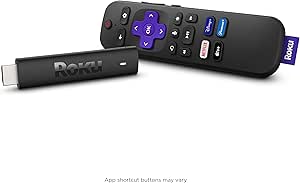 | Best Compact Roku Pick | Model: 3820R | Video output resolution: 4K | HDR formats: Dolby Vision and HDR10+ | VIEW LATEST PRICE | See Our Full Breakdown |
| streaming device | Connectivity | Resolution |
|---|---|---|
| Roku Streaming Stick Plus 4K H | Bluetooth, Wi-Fi | 4K |
| Amazon Fire TV Stick 4K Plus | — | — |
| Amazon Fire TV Cube | — | — |
| Amazon Fire TV Stick 4K Select | — | — |
| Google TV Streamer 4K with Voi | Ethernet, Wi-Fi | 4K (3840 × 2160) |
| Roku Streaming Stick 4K with V | Wi-Fi | 4K UHD, up to 2160p at 60 fps |
| Roku Streaming Stick HD with V | Bluetooth, Wi-Fi | 1080p (1920 × 1080) |
| Roku Ultra 4K Streaming Player | Wi-Fi 6, Ethernet, Bluetooth, HDMI, USB | 4K (3840 × 2160) |
| onn 4K Pro Streaming Device wi | Wi-Fi 6, Ethernet port | 4K Ultra HD |
| onn Android TV 4K UHD Streamin | HDMI, Wi-Fi | 4K UHD (3840 × 2160) |
| Amazon Fire TV Stick 4K Max | — | — |
| Roku Streaming Stick 4K with V | HDMI; long-range Wi-Fi | — |
More Details on Our Top Picks
Roku Streaming Stick Plus 4K HDR Streaming Device with Voice Remote
The Roku Streaming Stick Plus suits buyers who want 4K streaming without a separate box taking up shelf space. It plugs into HDMI and draws power from the TV, which can keep setup tidy, while the voice remote also handles TV power and volume. Compared with the Amazon Fire TV Stick 4K Plus, Roku emphasizes a straightforward streaming interface and private listening through Bluetooth Headphone Mode rather than Wi-Fi 6 and Dolby Atmos support. Its compact body is a practical fit when neighboring HDMI ports are close together. The tradeoff is that its listed HDR support is HDR10+, and the supplied details do not establish the same audio-format breadth as the Fire TV stick. I’d choose it for easy everyday viewing, not for a feature-maxed home theater.
Pros:- Supports 4K resolution and HDR10+
- Compact stick design helps keep adjacent HDMI ports accessible
- Draws power directly from the TV, avoiding a separate wall outlet
- Voice remote controls streaming, TV power, and volume
Cons:- 4K playback requires a compatible 4K television and suitable content
- The listed specs do not include Dolby Atmos support
- Included accessories beyond the voice remote are not specified
Best for: Viewers who want a compact, TV-powered 4K stick, an uncomplicated Roku interface, and a voice remote for basic TV controls.
Not ideal for: Home-theater buyers prioritizing Dolby Atmos support or shoppers who want Wi-Fi 6; the Fire TV Stick 4K Plus lists both.
- Model:3830R
- Resolution:4K
- HDR:HDR10+
- Connectivity:Bluetooth, Wi-Fi
- Connector:HDMI
- Voice assistant compatibility:Alexa, Apple AirPlay and HomeKit, Google Home
- Dimensions:3.7 × 0.8 × 0.5 in
- Weight:80 g
Our verdict“Choose this Roku for a tidy, uncomplicated 4K setup, but pick the Fire TV Stick 4K Plus if Wi-Fi 6 and Dolby Atmos matter more.”
Amazon Fire TV Stick 4K Plus
The Fire TV Stick 4K Plus brings together the main home-theater features many stick buyers want: 4K at up to 60 fps, Dolby Vision, HDR10+, and Dolby Atmos. Wi-Fi 6 can also help when a household has several devices competing for network capacity. Against the Roku Streaming Stick Plus, this model offers broader stated video and audio format support, though Roku’s stick can draw power from the TV and includes Bluetooth Headphone Mode. Alexa voice search and TV power and volume controls make everyday operation convenient, and free ad-supported content adds options without requiring a subscription for every viewing choice. The limitations are its 8 GB storage and the need for compatible equipment and content to get the full HDR and audio experience. Cloud gaming also depends on separate subscriptions and a controller.
Pros:- Supports 4K at up to 60 fps, Dolby Vision, and HDR10+
- Dolby Atmos support suits compatible sound systems
- Wi-Fi 6 can help on busy home networks
- Alexa remote includes voice search and compatible TV power and volume controls
Cons:- Only 8 GB of storage is specified
- HDR and 4K benefits depend on compatible equipment and available content
- Cloud gaming requires a separate subscription and compatible controller
Best for: Viewers building a 4K setup who want Dolby Vision, Dolby Atmos, Wi-Fi 6, and Alexa controls in a compact HDMI stick.
Not ideal for: People who want TV-powered operation or Bluetooth private listening; those features are specified for the Roku Streaming Stick Plus, not this model.
- Maximum resolution:2160p at up to 60 fps
- Video formats:Dolby Vision, HDR 10, HDR10+, HLG, H.265, H.264, VP9, AV1
- Audio:Dolby Atmos, 7.1 surround sound, stereo, HDMI audio pass-through
- Wi-Fi:Dual-band Wi-Fi 6, 2.4 GHz and 5 GHz
- Processor:Quad-core, 1.7 GHz
- Storage:8 GB
- Bluetooth:Bluetooth 5.2 + BLE
- Voice control:Alexa Voice Remote included
Our verdict“Pick this stick for a strong mix of 4K picture, Dolby Atmos, and Wi-Fi 6; choose the Roku Streaming Stick Plus for TV-powered simplicity and private listening.”
Amazon Fire TV Cube (3rd Gen) 4K Streaming Media Player with Alexa and Wi-Fi 6E
The Fire TV Cube (3rd Gen) is the most capable hub in this group for buyers who want streaming and voice control to extend beyond the TV. Built-in Alexa microphones and speakers allow hands-free commands, while HDMI input and output, an IR extender, and Ethernet give it more ways to connect and control compatible equipment than the Fire TV Stick 4K Plus. Its octa-core processor and 16 GB storage also distinguish it from the smaller stick’s quad-core design and 8 GB. Wi-Fi 6E is a further perk for a compatible network, though it is not an automatic benefit for every household. The Cube is larger and heavier than a stick, and its advanced connections matter most in a setup with a soundbar, receiver, or other devices. For a basic TV, the simpler Fire TV stick is a more sensible fit.
Pros:- Built-in microphones and speakers enable hands-free Alexa control
- Wi-Fi 6E and Ethernet offer flexible network connections
- HDMI input and output plus IR extender support connected-device control
- Supports Dolby Vision, HDR formats, and Dolby Atmos
Cons:- Larger and heavier than the streaming sticks in this roundup
- Wi-Fi 6E benefits require a compatible router and WPA3 encryption
- 4K and some streaming content require compatible equipment or separate subscriptions
Best for: Home-theater owners who want hands-free Alexa, wired Ethernet, and control of compatible TVs, soundbars, receivers, and connected devices.
Not ideal for: Buyers seeking a low-profile HDMI stick for one TV, especially if they do not need hands-free voice control or the Cube’s extra ports.
- Processor:Octa-core: 4 × 2.2 GHz and 4 × 2.0 GHz
- Storage:16 GB
- Memory:2 GB
- Wi-Fi:Wi-Fi 6E tri-band; supports 802.11a/b/g/n/ac/ax
- Ports:HDMI 2.1 input and output, IR extender, USB-A 2.0, 10/100 Mbps Ethernet, power
- Maximum resolution:4K, 1080p, and 720p up to 60 fps
- Video formats:Dolby Vision, HDR 10, HDR10+, HLG, H.265, H.264, VP9, AV1
- Dimensions and weight:3.38 × 3.38 × 2.99 in; 513 g
Our verdict“Choose the Cube for a connected home-theater setup and hands-free Alexa, but use the Fire TV Stick 4K Plus for a simpler, more compact installation.”
Amazon Fire TV Stick 4K Select with Alexa Voice Remote
The Fire TV Stick 4K Select covers core 4K streaming needs with HDR10+, HDR10, and HLG, plus Alexa search and access to a broad range of apps. It makes more sense for buyers who want a straightforward stick than the Fire TV Cube, which adds hands-free Alexa, Ethernet, and device-control connections that can go unused in a basic setup. It also supports cloud gaming through Xbox Game Pass and Luna, but that feature is not plug-and-play: subscriptions and compatible controllers may be needed. Compared with the Fire TV Stick 4K Plus, the Select’s listed Wi-Fi tops out at 802.11ac rather than Wi-Fi 6, and its specifications do not list Dolby Vision or Dolby Atmos. Its 8 GB storage and HDMI stick format keep the feature set focused, not expansive.
Pros:- Supports 4K output and HDR10+, HDR10, and HLG
- Alexa Voice Remote and Fire TV app provide voice-control options
- Access to streaming apps and free ad-supported content
- Cloud gaming support includes Xbox Game Pass and Luna
Cons:- Only 8 GB of internal storage is specified
- Wi-Fi specification lists 802.11ac, not Wi-Fi 6
- Cloud gaming may require separate subscriptions and a compatible controller
Best for: Viewers with a 4K HDR television who want Alexa search, common streaming apps, and a basic stick setup without Cube-style home-theater connections.
Not ideal for: Buyers seeking Dolby Vision, Dolby Atmos, or Wi-Fi 6; the Fire TV Stick 4K Plus lists those capabilities.
- Output resolution:2160p, 1080p, and 720p up to 60 fps
- Supported video formats:HDR10, HDR10+, HLG, H.265, H.264, VP9, AV1
- Wi-Fi:Dual-band, dual-antenna MIMO; supports 802.11a/b/g/n/ac
- Processor:Quad-core, 1.7 GHz
- Storage:8 GB
- Bluetooth:Bluetooth 5.0 and Bluetooth Low Energy
- Ports:HDMI output; micro-USB for power
- Dimensions and weight:3.9 × 1.2 × 0.6 in; 1.5 oz
Our verdict“Choose the Select for basic 4K HDR viewing and Alexa search, but move up to the Fire TV Stick 4K Plus for Wi-Fi 6 and Dolby Vision support.”
Google TV Streamer 4K with Voice Remote, 32 GB Storage, Hazel
The Google TV Streamer 4K stands apart from the HDMI sticks by pairing Google TV’s service-based recommendations with 32 GB of storage and 4 GB of RAM. That extra capacity gives it a clear spec advantage over the 8 GB Fire TV Stick 4K Plus and Select, particularly for buyers who expect to install more apps. Google TV organizes supported services in one place, so finding a show can involve less hopping between apps; voice search and smart-home control add useful remote functions. It supports 4K HDR with Dolby Vision and includes a power adapter and cable. The main catch is the separate HDMI 2.1 cable, and its listed HDR format is narrower than the Fire TV Stick 4K Plus’s Dolby Vision and HDR10+ combination. Its larger, tabletop-style form also suits a different setup than a discreet stick.
Pros:- 32 GB storage and 4 GB RAM exceed the listed capacities of the Fire TV sticks here
- Google TV organizes content from supported streaming services
- Supports 4K HDR with Dolby Vision
- Voice remote supports search and smart-home control
Cons:- HDMI 2.1 cable is required and sold separately
- Listed HDR support is Dolby Vision, while the Fire TV Stick 4K Plus also lists HDR10+
- Larger tabletop-style unit is less discreet than an HDMI stick
Best for: Google TV users who want recommendations across supported services, more onboard storage for apps, and a streamer that can sit beside the television.
Not ideal for: Buyers who need an HDMI cable in the box or prefer a compact stick that plugs directly behind the TV; the HDMI cable is sold separately.
- Resolution:4K (3840 × 2160)
- HDR:Dolby Vision
- Storage:32 GB
- RAM:4 GB
- Connectivity:Ethernet, Wi-Fi
- Included components:Streamer, power adapter, 1.8 m power cable, quick start guide, voice remote, 2 AAA batteries
- Dimensions and weight:6.4 × 3 × 1 in; 5.7 oz
- HDMI cable:Required, sold separately
Our verdict“Choose the Google TV Streamer for Google’s content recommendations and higher listed storage, but pick a Fire TV stick if you want a compact HDMI-connected device.”
Roku Streaming Stick 4K with Voice Remote
I’d choose this Roku when the goal is 4K HDR streaming without a visible box. It supports Dolby Vision and HDR10+, and its low-profile HDMI design is made to leave neighboring ports accessible. The long-range Wi-Fi receiver also suits TVs positioned far from a router, though it does not offer the wired Ethernet connection found on the Roku Ultra. Compared with the Roku Streaming Stick HD, this model is the better fit for a 4K television; the HD stick is a simpler match for a 1080p screen. The tradeoff is a more limited connection setup than a full-size player, and buyers who want Dolby Atmos or advanced remote features should look at the Ultra instead.
Pros:- Supports 4K UHD, Dolby Vision, and HDR10+
- Compact body is designed to avoid blocking nearby HDMI ports
- Long-range Wi-Fi receiver suits less convenient router placement
- Voice remote is included
Cons:- No Ethernet connection is listed
- Does not list Dolby Atmos or the Ultra’s advanced remote features
Best for: People with a 4K Dolby Vision or HDR10+ TV who want a discreet Roku device and a voice remote.
Not ideal for: Viewers who need Ethernet, Dolby Atmos support, or a rechargeable remote with hands-free voice control.
- Model:3820R2
- Resolution:4K UHD, up to 2160p at 60 fps
- HDR formats:Dolby Vision, HDR10+
- Connectivity:Wi-Fi
- Connector:HDMI
- Memory:1 GB RAM, 16 GB storage
- Controls:Remote control, voice control
- Dimensions:3.7 × 0.8 × 0.45 in
Our verdict“Choose this stick for compact 4K HDR streaming, but pick the Roku Ultra if you want Ethernet and more capable remote features.”
Roku Streaming Stick HD with Voice Remote
This stick is a sensible match for a bedroom TV, an older 1080p set, or anyone who does not need 4K. Its voice remote controls streaming and TV volume, while the compact HDMI body can draw power from the TV, potentially avoiding a separate wall outlet. Bluetooth Headphone Mode is a useful option for private listening. Compared with the Roku Streaming Stick 4K, this model gives up 4K resolution and HDR formats, so it makes less sense for a newer 4K display. In return, it keeps the setup straightforward for HD viewing. I’d skip it if you’re buying for a 4K television or want a wired network connection; streaming also requires internet access.
Pros:- Compact HDMI design leaves neighboring ports accessible
- Can draw power directly from the TV
- Voice remote handles searches, playback, and TV volume
- Bluetooth Headphone Mode and free live TV channels are supported
Cons:- Maximum resolution is 1080p, with no 4K HDR support listed
- Streaming requires an internet connection
Best for: People setting up a secondary 1080p television who want a compact Roku stick, voice search, and private listening.
Not ideal for: Owners of 4K TVs who want 4K or HDR playback, and viewers who need Ethernet or offline streaming.
- Model:3840R
- Resolution:1080p (1920 × 1080)
- Connectivity:Bluetooth, Wi-Fi
- Connector:HDMI
- Video codecs:H.264/AVC, AV1
- Power:Can be powered by the TV
- Remote:Voice control, TV volume control
- Dimensions:3.7 × 0.8 × 0.5 in
Our verdict“Pick this for an HD secondary TV; for a 4K screen, the Roku Streaming Stick 4K is the more suitable choice.”
Roku Ultra 4K Streaming Player with Voice Remote Pro
The Roku Ultra is the strongest fit here for viewers who want more than a basic HDMI stick. It combines 4K, Dolby Vision, HDR10+, and Dolby Atmos with Wi-Fi 6 and Ethernet, giving buyers a wired option when wireless streaming is unreliable. Its rechargeable Voice Remote Pro adds backlit buttons, hands-free voice control, and a lost-remote finder—features the Roku Streaming Stick 4K does not list. That makes the Ultra appealing for a main living-room setup, especially when ease of finding and using the remote matters. The tradeoff is a separate player rather than a stick hidden behind the TV, and some features depend on compatible services or equipment. I’d choose a Roku stick instead for a simpler, more discreet installation.
Pros:- Supports 4K, Dolby Vision, and HDR10+
- Dolby Atmos support for compatible audio setups
- Wi-Fi 6 and Ethernet provide wireless and wired connection options
- Rechargeable remote has backlit buttons, hands-free voice control, and a finder
Cons:- Separate player is less discreet than the Roku Streaming Stick 4K
- Some advertised features depend on compatible services or devices
Best for: Roku users building a main 4K home-theater setup who want Ethernet, Dolby Atmos, and an advanced rechargeable remote.
Not ideal for: People who want a device hidden behind the TV, or whose television and audio setup cannot use its higher-end video and audio features.
- Resolution:4K (3840 × 2160)
- HDR formats:HDR10+, Dolby Vision
- Connectivity:Wi-Fi 6, Ethernet, Bluetooth, HDMI, USB
- Audio:Dolby Atmos
- Video formats:H.264/AVC, H.265/HEVC, AV1, VP9
- Remote:Rechargeable USB-C, backlit buttons, hands-free voice control, lost remote finder
- Supported services:Apple TV+, Disney+, Hulu, Netflix, Prime Video
- Dimensions:5 × 4.9 × 1 in
Our verdict“Choose the Ultra for a feature-rich Roku living-room setup; choose a stick if compact, hidden installation matters more.”
onn 4K Pro Streaming Device with Google TV
I’d shortlist this onn model for buyers who want Google TV with 32GB of storage and a more substantial memory allowance than the listed 8GB in the onn Android TV 4K device. It supports 4K Ultra HD, Dolby Vision, and Dolby Atmos, while Wi-Fi 6 and an Ethernet port give it flexible network options. The backlit remote’s Find My Remote feature also helps when the controller gets misplaced. Compared with the Roku Ultra, this is the Google TV alternative rather than a Roku player, so the better choice depends on which interface and services suit your household. The product data lists Gemini but does not spell out which features are included; I would not choose it based on that promise alone. Its listed 10 × 4 × 4-inch dimensions and 1.49-pound weight also make it less stick-like than compact options.
Pros:- 4K Ultra HD with Dolby Vision support
- Dolby Atmos audio support
- 32GB storage and 3GB RAM
- Wi-Fi 6, Ethernet, and a backlit remote with Find My Remote
Cons:- Gemini features are not specified in the product information
- Listed dimensions and weight make it less compact than an HDMI stick
Best for: Google TV users who want 4K Dolby Vision and Atmos, substantial built-in storage, and Wi-Fi 6 or Ethernet.
Not ideal for: Buyers seeking a tiny HDMI stick, or anyone relying on specific Gemini functions that are not detailed in the product information.
- Operating system:Google TV
- Resolution:4K Ultra HD
- Video format:Dolby Vision
- Audio format:Dolby Atmos
- Memory:3GB RAM, 32GB storage
- Connectivity:Wi-Fi 6, Ethernet port
- Remote:Backlit, Find My Remote
- Dimensions and weight:10 × 4 × 4 in; 1.49 lb
Our verdict“Choose this for a Google TV setup with ample listed storage and network options, but not if you need a discreet stick or clearly defined Gemini features.”
onn Android TV 4K UHD Streaming Device with Voice Remote
This onn device suits viewers who want 4K streaming plus built-in Chromecast for sending video from Android or iOS phones and tablets. Android TV provides access to apps through Google Play, and the voice remote includes Google Assistant. An HDMI cable is included, which can simplify setup compared with a stick-only package. Against the newer onn 4K Pro, this model lists less memory—2GB RAM and 8GB storage—and does not specify Wi-Fi 6, Ethernet, Dolby Vision, or Dolby Atmos. That makes it a more basic choice for app streaming and casting, not the stronger pick for buyers prioritizing storage or newer networking. Its stated United States-only region compatibility is a firm limitation for international setups.
Pros:- Supports 4K UHD video output
- Chromecast built in for casting from Android and iOS devices
- Voice remote includes Google Assistant
- HDMI cable is included
Cons:- Designed for use in the United States and not compatible with other regions
- 8GB storage is less than the onn 4K Pro’s listed 32GB
- Dolby Vision, Dolby Atmos, Wi-Fi 6, and Ethernet are not listed
Best for: U.S. viewers who want 4K Android TV apps, phone-to-TV casting, and a voice remote for a compatible television.
Not ideal for: People outside the United States, or buyers who need more storage, specified Dolby Vision or Atmos support, or Wi-Fi 6 and Ethernet.
- Model:100026240
- Operating system:Android TV
- Resolution:4K UHD (3840 × 2160)
- Memory:2GB RAM, 8GB storage
- Connectivity:HDMI, Wi-Fi
- Video codecs:H.264, H.265/HEVC
- Included accessories:Voice remote, HDMI cable
- Region compatibility:United States only
Our verdict“Choose this for U.S.-based 4K viewing and easy phone casting, but step up to the onn 4K Pro if you want more storage and specified advanced formats.”
Amazon Fire TV Stick 4K Max (2nd Gen) with Alexa Voice Remote
The Fire TV Stick 4K Max is the stronger fit for viewers who want broad HDR support and extra room for apps without moving to a separate box. Its 16 GB storage is four times the Roku Streaming Stick 4K’s listed capacity, while Wi-Fi 6E can help on a compatible, uncongested network. Dolby Vision, HDR10+, and Dolby Atmos cover a wide range of high-end TV and audio setups; they do not add much for viewers with basic equipment or services that lack those formats.
Compared with the Roku Streaming Stick 4K, this model offers more storage and newer Wi-Fi, but relies on Amazon’s Fire TV interface and Alexa controls. The remote can operate compatible TVs and audio gear, which reduces remote juggling. I’d skip it if you do not need its extra capacity or cannot use Wi-Fi 6E: those advantages depend on your home equipment, and streaming subscriptions remain separate.
Pros:- Supports 4K output up to 60 fps with Dolby Vision, HDR10+, and HLG
- 16 GB storage leaves more room for apps and games than the Roku Streaming Stick 4K’s listed 4 GB
- Tri-band Wi-Fi 6E and Bluetooth 5.2
- Alexa remote can control compatible TVs and audio devices
Cons:- Wi-Fi 6E benefits require a compatible router
- 4K, HDR, and Dolby Atmos depend on compatible equipment and available content
- Some streaming services require separate subscriptions
Best for: Viewers with a 4K HDR television, a Wi-Fi 6E router, and a large collection of streaming apps or games who prefer Alexa voice control.
Not ideal for: People with a basic HD television, an older router, or a preference for Roku’s interface; its premium connectivity and HDR features may go unused.
- Maximum output resolution:2160p at up to 60 fps
- Storage:16 GB
- Processor:Quad-core 2.0 GHz
- Wi-Fi:Wi-Fi 6E tri-band (2.4, 5, and 6 GHz)
- Bluetooth:Bluetooth 5.2 + BLE
- Video formats:Dolby Vision, HDR10, HDR10+, HLG, H.265, H.264, VP9, AV1
- Audio support:Dolby Atmos, 7.1 surround, stereo, and HDMI audio passthrough
- Ports:HDMI 2.1 output with ARC input support; micro USB
- Weight:43.5 g
Our verdict“Choose this Fire TV Stick if you want generous app storage, broad HDR support, and Alexa control, and have equipment that can use its advanced features.”
Roku Streaming Stick 4K with Voice Remote (Renewed)
The Roku Streaming Stick 4K suits buyers who want a small HDMI-connected player with 4K and premium HDR formats, without adding a box beside the television. Its long-range Wi-Fi is intended to help when the TV is farther from the router, though a stable connection is still needed for smooth playback. The voice remote handles streaming searches as well as compatible TV power and volume, keeping everyday controls together.
Against the Amazon Fire TV Stick 4K Max, this Roku has less listed storage—4 GB versus 16 GB—and lacks the Max’s Wi-Fi 6E specification. It may be the better match for people who prefer Roku’s channel-focused experience over Alexa-centered Fire TV. The key caveat is condition: this is a renewed unit with a 90-day limited warranty, not a new device. I’d choose it for a compact Roku setup, but skip it if you want more storage or prefer buying new.
Pros:- Supports 4K, Dolby Vision, and HDR10+
- Long-range Wi-Fi can suit TVs located farther from the router
- Voice remote controls streaming, TV power, and volume
- Access to free, live, and premium streaming channels
Cons:- Renewed condition may not suit buyers seeking a new unit
- Listed 4 GB storage is less than the Fire TV Stick 4K Max’s 16 GB
- Smooth playback still depends on a strong Wi-Fi connection
Best for: Roku fans who want a compact 4K player, use a voice remote for basic TV controls, and are comfortable buying a renewed device.
Not ideal for: Buyers who want a new device, need substantial storage for apps, or have unreliable Wi-Fi where the TV is located.
- Model:3820R
- Video output resolution:4K
- HDR formats:Dolby Vision and HDR10+
- Connectivity:HDMI; long-range Wi-Fi
- Storage capacity:4 GB
- Voice assistants:Siri, Alexa, and Google Assistant
- Weight:25.54 g
- Condition:Renewed
- Warranty:90-day limited warranty
Our verdict“Pick this renewed Roku for compact 4K streaming and straightforward voice control if you are comfortable with its condition and limited storage.”
How We Picked
I compared these devices on the factors that change day-to-day streaming: supported video formats, interface and voice controls, connection options, form factor, and how well each fits a particular type of TV setup. I also looked at the difference between basic streaming sticks and full-size players, since the latter can offer a different mix of ports, controls, and placement flexibility. A feature only counted as a meaningful advantage when it could solve a clear buyer need, rather than simply adding a longer spec list.
The ranking gives priority to broad usefulness, ease of choosing, and a sensible balance of features. That puts the Roku Streaming Stick Plus 4K first as a straightforward 4K fit, while more specialized picks rank higher for their specific audiences rather than being treated as universal upgrades. The Fire TV Cube, Roku Ultra, and Google TV Streamer 4K stand out for buyers seeking a more capable or ecosystem-specific device; HD-only, entry-level, and renewed options rank lower because they suit narrower situations.
Factors to Consider When Choosing Best Streaming Devices
I’d start with the TV and the way you watch, not the longest feature list. These choices can change whether an upgrade is useful, whether setup stays simple, and whether a streaming stick or a larger player makes sense in your room.
Match Resolution to Your Television
A 4K device makes sense when the television supports 4K and you want to watch compatible content at that resolution. On an HD-only set, an HD streamer may cover your needs without adding features you cannot use. Check the TV’s available HDMI connections and video capabilities before choosing, especially if the set is older. A device’s 4K label does not make non-4K content look like native 4K. Also check whether the services you watch offer the resolution you want on that device. I would spend extra for 4K only when the television and viewing habits can benefit from it.
Choose an Interface You’ll Want to Use
The home screen shapes the everyday experience more than a headline spec does. Roku, Fire TV, and Google TV organize content and voice controls differently, so your comfort with the interface matters if you switch apps often. A household already using Alexa may prefer keeping controls in the Fire TV family, while Google TV may suit people who want its recommendations and ecosystem. If several people share the TV, think about whether everyone can find their services quickly. Do not assume that the most feature-rich menu will feel easiest. I’d favor a familiar, clear interface over extras that your household is unlikely to use.
Decide Between a Streaming Stick and a Full-Size Player
A stick is small, keeps the equipment out of sight, and is often the simpler fit for a TV with a free HDMI port. A full-size player takes up more space but may be a better match when you want a dedicated device with more room for connections or controls. Measure the area around the TV and check whether nearby ports are easy to reach. Wall-mounted televisions can make access behind the screen awkward, which changes the value of a compact stick or an included voice remote. Avoid buying a larger player just because it looks more capable if its added features do not solve a problem. Pick the form factor around your room and routine.
Check Network Needs Before Paying for Connectivity Extras
Streaming quality depends on the home network as well as the player. If your router is far from the TV or separated by thick walls, a device upgrade alone may not fix buffering. Check which Wi-Fi standards your router supports and whether the streaming device can connect reliably from its planned location. Higher-end connectivity features may matter in a busy home or a setup with demanding streaming habits, but they are less compelling when the current connection is already stable. A wired connection can also be useful if both the player and room setup support one. I would diagnose weak Wi-Fi before spending on a premium streamer to solve it.
Buy Only the Features That Change Your Routine
Voice controls, extra storage, and smart-home integration can be useful when they fit how you watch. They matter less if you mainly open a few apps with a remote and rarely use voice commands. Storage becomes more relevant when you expect to install many apps or want room for additional device functions; it is not a reason by itself to replace a working streamer. A premium player can make sense when its extra controls or connectivity match a specific need. Otherwise, a capable stick may deliver the viewing features you actually use. I’d write down the one frustration you want a new device to fix before comparing upgrades.
Treat Renewed Devices as a Separate Tradeoff
A renewed streaming device can be a sensible way to reuse hardware, but it is not identical to choosing a new model. Check the seller’s condition details, included remote and accessories, return terms, and any warranty coverage before deciding. Confirm the exact model and generation, since names that look similar can refer to different feature sets. For a device that will be used every day, reliable support and a straightforward return path may matter as much as the hardware. A renewed option suits buyers comfortable checking those details; shoppers who want the simplest purchase may prefer a new unit. Compare the full terms rather than focusing only on the product name.
Frequently Asked Questions
Should I choose a Roku, Fire TV, or Google TV device?
Choose based on the interface and voice ecosystem your household will use, not just the device’s video support. Roku is the clearest fit here for buyers who want a direct streaming experience, while Fire TV models suit people already using Alexa and Amazon services. Google TV may be a better match for households that prefer Google’s content discovery and ecosystem. If you are unsure, check that the apps you watch are available on your preferred platform and that the menu feels familiar. The best platform is the one your household can use without constant workarounds.
Is a 4K streaming device worth buying for an HD television?
A 4K streamer can connect to an HD television, but the TV remains the limit on displayed resolution. That means the extra resolution support will not deliver 4K viewing on that set. It may still suit you if you expect to replace the TV soon or want other features found on a 4K model, but do not buy it for picture sharpness your screen cannot show. The Roku Streaming Stick HD in this lineup is a more direct match for an HD-only setup. Check your TV model before deciding.
When should I choose a full-size streaming player instead of a stick?
A full-size player is worth a closer look when you want a more capable device and do not mind making space for it. The Roku Ultra and Amazon Fire TV Cube offer alternatives to the compact stick format in this lineup. A stick is usually a more natural fit when hiding the device behind the television and keeping the setup compact are priorities. Check your TV’s HDMI access, room layout, and the connections you need before choosing. Do not assume a larger device is a better choice unless its additional capabilities matter to you.
What should I check before buying a renewed streaming device?
Confirm the exact model, what accessories come with it, the condition description, and the seller’s return and warranty terms. For a streaming stick, make sure the remote and any required power accessories are included or readily available. A renewed model can work for shoppers comfortable with those checks, but it involves more purchase details than selecting a new device. Compare the renewed option with current models based on the features you need, not just the model name. If hassle-free support is a priority, a new device may be the easier choice.
Do I need a premium streaming device if my current one still plays my apps?
Not necessarily. A premium upgrade makes more sense when you can name a problem it would address, such as wanting a different interface, more capable connectivity, or a feature your current player lacks. If your apps open reliably and the picture meets your needs, replacing the device may not change your viewing routine. Check whether the frustration comes from the streamer, the network, or the television before buying. A higher-end model is most useful when its added capabilities solve that specific issue.
Conclusion
For most buyers who want a compact, straightforward 4K option, I’d start with the Roku Streaming Stick Plus 4K as the best overall pick. The Amazon Fire TV Stick 4K Select is the lineup’s best value-style choice for viewers who want a basic Fire TV stick, while the Amazon Fire TV Cube is the best premium fit for someone seeking a more capable full-size player. For beginners, I’d favor the simple Roku experience, particularly the Streaming Stick Plus 4K for a 4K TV or the Roku Streaming Stick HD for an HD-only set. If you want Google TV with added storage, choose the Google TV Streamer 4K; if you need a compact Fire TV model with added performance features, compare the Fire TV Stick 4K Max. Pick the device that fits your screen, ecosystem, and actual viewing habits rather than paying for features that will sit unused.
Fall Picks
fall essentials
As an affiliate, we earn on qualifying purchases.