Smartphones with thermal cameras combine a phone and a heat-imaging tool, with most options in this roundup built for demanding work environments. I rank the Ulefone Armor 28 Ultra Thermal as the best overall because its listed high-end processor, large storage capacity, and dual AMOLED displays make it the most capable all-round package on paper. The Ulefone Armor 27T Pro is a more straightforward thermal-first alternative, while the compact Ulefone Armor Mini 20T Pro suits buyers who want a smaller device. The main tradeoffs are rugged bulk, battery and software priorities, and whether a phone’s thermal features match your actual inspection needs. Read on for the full comparison and guidance on choosing a model for work, repairs, or outdoor use.

Get the latest gadgets delivered free with Prime
- Fast, free delivery on millions of items
- Prime Video, Amazon Music and more included
- Member-only deals all year
Complete the kit



Key Takeaways
- The Armor 28 Ultra Thermal leads on overall phone hardware: its listed Dimensity 9300+, 1TB storage, dual AMOLED displays, and 10,600mAh battery give it a broader feature set than simpler thermal-focused picks.
- Thermal imaging is not the only differentiator: several models share rugged construction and thermal capability, so network generation, camera and display setup, size, and storage can tip the choice.
- The lineup spans distinct form factors: the Armor Mini 20T Pro is the compact pick, while high-capacity models such as the Armor 28 Ultra and Armor 29 Pro prioritize roomier hardware and larger builds.
- Connectivity and endurance vary: 4G models like the Blackview ROCK 3 and Armor 25T may suit simpler field use, while 5G options offer a more current connectivity profile.
- Check the thermal workflow before buying: a built-in imager is convenient, but buyers doing regulated or highly technical inspections should verify imaging specifications, compatible software, and reporting tools for their tasks.
| Ulefone Armor 28 Ultra Thermal 5G Rugged Smartphone, 16GB RAM, 1TB Storage, Dimensity 9300+, Dual AMOLED Displays, 10,600mAh Battery |  | Best for High-Detail Thermal Imaging | Thermal imaging: 640 × 512, 25Hz | Processor: MediaTek Dimensity 9300+, up to 3.4GHz | Memory and storage: 16GB RAM + 16GB virtual RAM; 1TB internal, expandable up to 2TB | VIEW LATEST PRICE | See Our Full Breakdown |
| Ulefone Armor 27T Pro 5G Rugged Smartphone with Thermal Camera |  | Best for Rugged Work Versatility | Thermal camera: Thermal imaging; resolution not specified in the supplied data | Processor: MediaTek Dimensity 6300, octa-core, up to 2.4GHz | Memory and storage: 12GB RAM + 12GB virtual RAM; 256GB storage, expandable up to 2TB | VIEW LATEST PRICE | See Our Full Breakdown |
| Blackview ROCK 3 Rugged 4G Smartphone with Thermal Camera |  | Best for Inspection Reports | Thermal camera: 160 × 120; 61° × 47° field of view; -15°C to 550°C range | Processor: MediaTek Helio G100 | Memory and storage: 8GB physical RAM + up to 24GB virtual RAM; 256GB internal, expandable up to 2TB | VIEW LATEST PRICE | See Our Full Breakdown |
| OUKITEL WP500 Ultra Rugged 5G Smartphone with Thermal Imaging |  | Best for Outdoor Night Work | Thermal imaging: AI-powered thermal imaging; resolution not specified | Processor: MediaTek Dimensity 8300, octa-core, up to 3.35GHz | Memory and storage: 12GB physical RAM + 24GB virtual RAM; 1TB storage | VIEW LATEST PRICE | See Our Full Breakdown |
| Blackview Rock 3 Rugged Smartphone with Thermal Imaging and 108MP Camera |  | Best for Straightforward Thermal Value | Thermal sensor: 160 × 120 FLIR; PDF reports and GPS stamps listed | Processor: MediaTek Helio G100, octa-core, up to 2.2GHz | Memory and storage: 8GB RAM + 24GB expansion; 256GB storage, expandable up to 2TB | VIEW LATEST PRICE | See Our Full Breakdown |
| Ulefone Armor 29 Pro Thermal 5G Rugged Smartphone, 32GB RAM, 512GB Storage |  | Best for Maximum Thermal Detail | Thermal imaging resolution: 640 × 512 | Display: 6.67-inch AMOLED, 120 Hz | Processor: MediaTek Dimensity 7400, up to 2.6 GHz | VIEW LATEST PRICE | See Our Full Breakdown |
| AGM G3 Pro Rugged Smartphone with Thermal Camera |  | Best for Thermal Video | Thermal camera: 512 × 384; 25 fps thermal video | Processor: MediaTek Dimensity 7300 5G | Operating system: Android 15 | VIEW LATEST PRICE | See Our Full Breakdown |
| Ulefone Armor 27T Pro Plus 5G Rugged Smartphone with Thermal Imaging |  | Best Balanced Thermal Phone | Thermal imaging: FLIR camera with MSX and VividIR processing | Display: 6.78-inch FHD+, 2460 × 1080, 120 Hz | Processor: MediaTek Dimensity 6300, octa-core, up to 2.4 GHz | VIEW LATEST PRICE | See Our Full Breakdown |
| Ulefone Armor 25T 4G Rugged Smartphone with Thermal Imaging |  | Best for Lighter Rugged Carry | Operating system: Android 15 | Processor: MediaTek Helio G99, 2.2 GHz | Memory and storage: 8GB physical RAM plus up to 8GB virtual; 256GB storage, expandable to 2TB | VIEW LATEST PRICE | See Our Full Breakdown |
| Ulefone Armor Mini 20T Pro 5G Rugged Smartphone with Thermal Imaging |  | Best Compact Thermal Phone | Thermal camera: FLIR Lepton 3.5 | Display: 4.7-inch, 720 × 1600, 90 Hz, 700 nits | Processor: MediaTek Dimensity 6300, octa-core, 2.4 GHz | VIEW LATEST PRICE | See Our Full Breakdown |
| RUGONE Xever 7 Pro 5G Rugged Phone |  | Best for Swappable-Battery Thermal Work | Thermal sensor: FLIR Lepton 3.5 | Operating system: Android 15; listed for three years of system updates | Processor: MediaTek Dimensity 7025, up to 2.5GHz | VIEW LATEST PRICE | See Our Full Breakdown |
| FOSSiBOT F115 Ultra 5G Rugged Smartphone |  | Best for Extended Thermal Fieldwork | Thermal imaging range: -20°C to 550°C | Laser rangefinder: Up to 1,200m; listed accuracy ±1m | Night vision camera: 64MP, 4K recording, up to 50m | VIEW LATEST PRICE | See Our Full Breakdown |
| smartphones with thermal camera | Processor | Memory and storage | Display | Battery and charging |
|---|---|---|---|---|
| Ulefone Armor 28 Ultra Thermal | MediaTek Dimensity 9300+, up to 3.4GHz | 16GB RAM + 16GB virtual RAM; 1TB internal, expandable up to 2TB | 6.67-inch AMOLED, 120Hz; 1.04-inch secondary AMOLED | 10,600mAh; 120W wired and up to 30W wireless |
| Ulefone Armor 27T Pro 5G Rugge | MediaTek Dimensity 6300, octa-core, up to 2.4GHz | 12GB RAM + 12GB virtual RAM; 256GB storage, expandable up to 2TB | 6.78-inch FHD+, 1080 × 2460, 120Hz | 10,600mAh; 33W wired, 30W Qi wireless, wireless reverse charging |
| Blackview ROCK 3 Rugged 4G Sma | MediaTek Helio G100 | 8GB physical RAM + up to 24GB virtual RAM; 256GB internal, expandable up to 2TB | 6.78-inch FHD, 120Hz, up to 750 nits | 10,000mAh; 27W wired, 15W wireless, 10W reverse charging |
| OUKITEL WP500 Ultra Rugged 5G | MediaTek Dimensity 8300, octa-core, up to 3.35GHz | 12GB physical RAM + 24GB virtual RAM; 1TB storage | 6.8-inch FHD+, 120Hz, 550 nits peak brightness | 10,000mAh; 45W fast charging and OTG reverse charging |
| Blackview Rock 3 Rugged Smartp | MediaTek Helio G100, octa-core, up to 2.2GHz | 8GB RAM + 24GB expansion; 256GB storage, expandable up to 2TB | 6.78-inch FHD+, 120Hz, up to 750 nits | — |
| Ulefone Armor 29 Pro Thermal 5 | MediaTek Dimensity 7400, up to 2.6 GHz | 32GB RAM (16GB physical + 16GB virtual); 512GB storage | 6.67-inch AMOLED, 120 Hz | 21,200mAh; 120W wired; 10W reverse charging |
| AGM G3 Pro Rugged Smartphone w | MediaTek Dimensity 7300 5G | 12GB physical + 12GB virtual RAM; 512GB storage, expandable to 1TB | — | 10,000mAh; 33W wired and 18W wireless charging |
| Ulefone Armor 27T Pro Plus 5G | MediaTek Dimensity 6300, octa-core, up to 2.4 GHz | 24GB RAM (12GB physical + up to 12GB virtual); 256GB storage, expandable to 2TB | 6.78-inch FHD+, 2460 × 1080, 120 Hz | 10,600mAh; 33W wired, 30W wireless, wireless reverse charging |
| Ulefone Armor 25T 4G Rugged Sm | MediaTek Helio G99, 2.2 GHz | 8GB physical RAM plus up to 8GB virtual; 256GB storage, expandable to 2TB | 6.78-inch FHD+, 2460 × 1080, 120 Hz | 6,500mAh; 33W wired, 30W wireless, reverse wireless charging |
| Ulefone Armor Mini 20T Pro 5G | MediaTek Dimensity 6300, octa-core, 2.4 GHz | 16GB RAM (8GB physical + up to 8GB virtual); 256GB storage, expandable to 2TB | 4.7-inch, 720 × 1600, 90 Hz, 700 nits | 6,200mAh; 33W wired and 15W wireless charging |
| RUGONE Xever 7 Pro 5G Rugged P | MediaTek Dimensity 7025, up to 2.5GHz | 12GB physical RAM plus 12GB virtual expansion; 512GB storage | 6.67-inch FHD+ AMOLED, 120Hz | — |
| FOSSiBOT F115 Ultra 5G Rugged | MediaTek Dimensity 7100+ | 36GB RAM (12GB physical plus 24GB virtual); 256GB storage | 6.78-inch FHD+, 120Hz | 20,000mAh; 33W charging and 18W OTG reverse charging |
More Details on Our Top Picks
Ulefone Armor 28 Ultra Thermal 5G Rugged Smartphone, 16GB RAM, 1TB Storage, Dimensity 9300+, Dual AMOLED Displays, 10,600mAh Battery
The Armor 28 Ultra Thermal is the strongest fit here for buyers who want thermal detail alongside flagship-class computing and abundant storage. Its 640 × 512 thermal resolution is far higher than the 160 × 120 sensors in the Blackview ROCK 3 models, giving inspection images more detail to work with. The Dimensity 9300+, 1TB storage, and 8K-capable main camera also make it the most capable all-purpose phone in this group.
That headroom comes with compromises: this is a large, heavy-duty device, and the Blackview ROCK 3 offers inspection-oriented PDF reporting at a lower thermal resolution. Carrier support also needs checking before purchase: the Armor 28 Ultra is not compatible with AT&T or Cricket. Choose it for thermal resolution and performance, not a compact build or broad carrier flexibility.
Pros:- 640 × 512 thermal imaging offers substantially more detail than the 160 × 120 Blackview ROCK 3 sensors
- Dimensity 9300+ processor, 16GB RAM, and 1TB internal storage support demanding phone use and large files
- 10,600mAh battery with 120W wired and up to 30W wireless charging
- IP68/IP69K and MIL-STD-810H protection, plus night vision and 8K video recording
Cons:- Not compatible with AT&T or Cricket
- Large battery and rugged build make it a poor fit for buyers seeking a slim, light phone
- The description lists up to 30W wireless charging, despite a 50W claim in the title
Best for: Field technicians and power users who need detailed thermal images, extensive local storage, and a rugged 5G phone.
Not ideal for: AT&T or Cricket customers, or buyers who prioritize a lightweight handset over a large battery and rugged construction.
- Thermal imaging:640 × 512, 25Hz
- Processor:MediaTek Dimensity 9300+, up to 3.4GHz
- Memory and storage:16GB RAM + 16GB virtual RAM; 1TB internal, expandable up to 2TB
- Display:6.67-inch AMOLED, 120Hz; 1.04-inch secondary AMOLED
- Battery and charging:10,600mAh; 120W wired and up to 30W wireless
- Cameras:50MP main, 50MP ultra-wide, 64MP night vision, 50MP front; up to 8K video
- Operating system:Android 15
- Durability and network:IP68, IP69K, MIL-STD-810H; 5G; not compatible with AT&T or Cricket
Our verdict“Choose the Armor 28 Ultra if detailed thermal imaging and high-end phone hardware matter more than carrier choice and portability.”
Ulefone Armor 27T Pro 5G Rugged Smartphone with Thermal Camera
The Armor 27T Pro suits buyers who want thermal imaging as part of a practical field toolkit, rather than the highest-resolution sensor in this lineup. It pairs its thermal camera with night vision, NFC, dual SIM support, and compatibility with Ulefone endoscopes, making it useful for maintenance jobs that involve more than spotting heat patterns. The 10,600mAh battery and wireless charging also add flexibility away from a power outlet.
Compared with the Armor 28 Ultra Thermal, it has a less powerful Dimensity 6300 processor and 256GB of storage, while the supplied product data does not state a thermal resolution for direct image-detail comparison. Its advertised 24GB memory includes 12GB of virtual RAM, not 24GB of physical memory. Like the Armor 28 Ultra, it does not support AT&T or Cricket, so network compatibility should be checked first.
Pros:- Combines thermal imaging with a 64MP night-vision camera
- Large 10,600mAh battery, 33W wired charging, and 30W Qi wireless charging
- Supports compatible Ulefone endoscopes and includes NFC and dual SIM
- IP68/IP69K protection and expandable storage up to 2TB
Cons:- Not compatible with AT&T or Cricket
- The 24GB memory figure includes 12GB of virtual RAM
- Dimensity 6300 and 256GB internal storage are more modest than the Armor 28 Ultra Thermal
Best for: Tradespeople who want a rugged 5G phone for thermal checks, night work, and endoscope-assisted inspections.
Not ideal for: Buyers who need stated high-resolution thermal specifications, abundant internal storage, or service on AT&T or Cricket.
- Thermal camera:Thermal imaging; resolution not specified in the supplied data
- Processor:MediaTek Dimensity 6300, octa-core, up to 2.4GHz
- Memory and storage:12GB RAM + 12GB virtual RAM; 256GB storage, expandable up to 2TB
- Display:6.78-inch FHD+, 1080 × 2460, 120Hz
- Battery and charging:10,600mAh; 33W wired, 30W Qi wireless, wireless reverse charging
- Cameras:50MP main, 64MP night vision, 32MP front
- Operating system:Android 15
- Durability and network:IP68/IP69K; 5G; not compatible with AT&T or Cricket
Our verdict“Pick the Armor 27T Pro if your field work benefits from endoscope support, night vision, and charging flexibility more than flagship speed.”
Blackview ROCK 3 Rugged 4G Smartphone with Thermal Camera
The Blackview ROCK 3 is the clearest choice here for buyers whose thermal phone needs to support an inspection workflow. Its 160 × 120 thermal camera can capture images and video and generate PDF reports, with a stated measuring range from -15°C to 550°C. That reporting emphasis gives it a practical role distinct from the Ulefone Armor 28 Ultra Thermal, whose much higher-resolution sensor favors image detail but whose supplied description does not specify PDF report creation.
The compromise is a lower-resolution thermal sensor and 4G rather than 5G. Its large 10,000mAh battery and IP68/IP69K construction make it suited to demanding sites, while a 1.5-meter drop-resistance claim adds reassurance for work use. Check network bands carefully: the listed carrier exclusions include AT&T and Verizon. Also, using a TF card means giving up the second SIM slot.
Pros:- Thermal images and video support PDF report generation
- Thermal measurement range is specified as -15°C to 550°C
- 10,000mAh battery with wired, wireless, and reverse charging
- IP68/IP69K protection and stated 1.5-meter drop resistance
Cons:- 160 × 120 thermal resolution is far below the Armor 28 Ultra Thermal’s 640 × 512 sensor
- 4G connectivity rather than 5G
- Using a TF card prevents simultaneous dual SIM use, and carrier support is limited
Best for: Inspectors and maintenance workers who need thermal captures and PDF reports from a rugged phone, and can use supported GSM networks.
Not ideal for: Buyers who need detailed thermal imagery, 5G, AT&T or Verizon compatibility, or dual SIM use alongside a TF card.
- Thermal camera:160 × 120; 61° × 47° field of view; -15°C to 550°C range
- Processor:MediaTek Helio G100
- Memory and storage:8GB physical RAM + up to 24GB virtual RAM; 256GB internal, expandable up to 2TB
- Display:6.78-inch FHD, 120Hz, up to 750 nits
- Battery and charging:10,000mAh; 27W wired, 15W wireless, 10W reverse charging
- Cameras:50MP and 108MP rear cameras
- Operating system:Android 16
- Durability and connectivity:IP68/IP69K; 4G, NFC, Wi-Fi 5, Bluetooth 5.2
Our verdict“Choose this ROCK 3 when report creation and rugged inspection use matter more than thermal resolution or 5G.”
OUKITEL WP500 Ultra Rugged 5G Smartphone with Thermal Imaging
The OUKITEL WP500 Ultra stands apart by surrounding thermal imaging with gear aimed at outdoor work after dark. It combines AI-powered thermal imaging with a night-vision camera and a 1200-lumen built-in lantern, which can serve as a work light or campsite light without carrying a separate lamp. The 10,000mAh battery and IP68/IP69K plus MIL-STD-810H protection reinforce that outdoors-first role.
Compared with the Armor 28 Ultra Thermal, the WP500 Ultra lists no thermal resolution, so buyers cannot judge sensor detail from the supplied specifications. Its 1TB storage is generous, but the 36GB memory figure includes 24GB of virtual RAM. Carrier restrictions are also substantial: it supports T-Mobile but not AT&T, Verizon, or Cricket. Its bulky battery-focused design makes more sense for field use than everyday pocket comfort.
Pros:- Pairs AI-powered thermal imaging with a night-vision camera
- 1200-lumen lantern provides a built-in light for outdoor tasks
- 10,000mAh battery with 45W charging and OTG reverse charging
- IP68, IP69K, and MIL-STD-810H ruggedness ratings
Cons:- Not compatible with AT&T, Verizon, or Cricket
- Thermal resolution is not stated in the supplied specifications
- Large battery and rugged construction add bulk
Best for: Outdoor workers and campers on T-Mobile who want thermal imaging, night vision, and a powerful integrated light in one rugged device.
Not ideal for: AT&T, Verizon, or Cricket customers, and buyers who need published thermal resolution or a compact everyday phone.
- Thermal imaging:AI-powered thermal imaging; resolution not specified
- Processor:MediaTek Dimensity 8300, octa-core, up to 3.35GHz
- Memory and storage:12GB physical RAM + 24GB virtual RAM; 1TB storage
- Display:6.8-inch FHD+, 120Hz, 550 nits peak brightness
- Battery and charging:10,000mAh; 45W fast charging and OTG reverse charging
- Cameras and lighting:108MP main, 8MP night vision, 32MP front; 1200-lumen lantern
- Operating system:Android 16
- Durability and network:IP68, IP69K, MIL-STD-810H; T-Mobile supported; AT&T, Verizon, and Cricket unsupported
Our verdict“The WP500 Ultra is a strong outdoor-work pick for T-Mobile users who value its lantern and night vision, but not for buyers comparing thermal detail.”
Blackview Rock 3 Rugged Smartphone with Thermal Imaging and 108MP Camera
This Blackview Rock 3 is the straightforward pick for buyers who want a rugged Android phone with thermal imaging, a large battery, and a high-resolution conventional camera. Its 160 × 120 FLIR thermal sensor is suited to locating heat differences, while the product data also lists PDF reports and GPS stamps for documenting findings. The 108MP main camera and 400-lumen flashlight add practical tools without changing the phone’s core inspection focus.
It shares the same listed thermal resolution and Helio G100 platform as the other Blackview ROCK 3 entry, so it does not offer the detail advantage of the Ulefone Armor 28 Ultra Thermal. The supplied data gives less thermal measurement detail than that other ROCK 3 listing, including no temperature range or field of view. It is a 4G-class option in the provided connectivity details, and its 8GB physical RAM is supplemented by virtual memory rather than additional physical RAM.
Pros:- 160 × 120 FLIR thermal sensor with PDF report and GPS-stamp features
- 10,000mAh battery supports long stretches away from a charger
- 108MP main camera and 400-lumen flashlight add general field utility
- 256GB storage can be expanded up to 2TB
Cons:- Thermal resolution is far below the Armor 28 Ultra Thermal’s 640 × 512 sensor
- 8GB physical RAM is supplemented by 24GB of expansion memory
- The supplied specifications omit thermal measurement range and field of view
Best for: Budget-conscious field users who want a basic thermal inspection phone with GPS-stamped documentation, a bright flashlight, and expandable storage.
Not ideal for: Buyers who need high-resolution thermal images, published measurement-range details, or clearly specified 5G connectivity.
- Thermal sensor:160 × 120 FLIR; PDF reports and GPS stamps listed
- Processor:MediaTek Helio G100, octa-core, up to 2.2GHz
- Memory and storage:8GB RAM + 24GB expansion; 256GB storage, expandable up to 2TB
- Display:6.78-inch FHD+, 120Hz, up to 750 nits
- Battery:10,000mAh
- Cameras and lighting:108MP main camera; 400-lumen flashlight
- Operating system:Android 16
- Connectivity:Bluetooth 5.3, NFC, GPS
Our verdict“Choose this Blackview Rock 3 for basic documented thermal checks and practical work features, not fine thermal detail.”
Ulefone Armor 29 Pro Thermal 5G Rugged Smartphone, 32GB RAM, 512GB Storage
The Armor 29 Pro Thermal is the standout here for buyers who want the roundup’s highest stated thermal resolution: 640 × 512. That extra detail can make heat patterns easier to distinguish during inspections than with the AGM G3 Pro’s 512 × 384 sensor. Its 21,200mAh battery also suits long work shifts or outdoor trips, while the secondary display and 1,000-lumen camping light add practical utility beyond thermal imaging. This is a feature-heavy choice, not an easy everyday carry: at 688g, it is substantially heavier than the Armor 27T Pro Plus at 441g. I would also check carrier fit before buying, since it does not work with AT&T or Cricket. Choose it for thermal detail and endurance; skip it if portability matters more.
Pros:- 640 × 512 thermal imaging offers the highest stated resolution among these five models.
- 21,200mAh battery and 120W wired charging are suited to extended use and faster replenishment.
- MIL-STD-810H, IP68, and IP69K protection support demanding work and outdoor conditions.
- Dual AMOLED displays, a 1,000-lumen camping light, and multiple rear cameras broaden its utility.
Cons:- At 688g, it is exceptionally heavy compared with the 441g Armor 27T Pro Plus.
- Not compatible with AT&T or Cricket.
- Its large body and feature set make it a poor fit for buyers seeking a simple, pocketable phone.
Best for: Field technicians and outdoor workers who prioritize high-resolution thermal imaging, long battery life, and rugged protection over a light phone.
Not ideal for: AT&T or Cricket customers, and anyone who needs a phone light enough for comfortable one-handed daily use.
- Thermal imaging resolution:640 × 512
- Display:6.67-inch AMOLED, 120 Hz
- Processor:MediaTek Dimensity 7400, up to 2.6 GHz
- Memory and storage:32GB RAM (16GB physical + 16GB virtual); 512GB storage
- Battery and charging:21,200mAh; 120W wired; 10W reverse charging
- Durability:MIL-STD-810H, IP68, IP69K
- Weight:688g (1.5 lb)
- Network compatibility:5G; not compatible with AT&T or Cricket
Our verdict“Pick the Armor 29 Pro Thermal if maximum stated thermal resolution and battery capacity matter more than weight or carrier flexibility.”
AGM G3 Pro Rugged Smartphone with Thermal Camera
The AGM G3 Pro earns its place for buyers who need moving thermal footage, not just still-image inspection: its 512 × 384 thermal camera records at 25 fps. That gives it a clear use-case distinction from the Ulefone Armor 25T, whose provided specifications list thermal imaging but no thermal video frame rate. The AGM also pairs IP68/IP69K protection and 1.5-meter drop protection with a 10,000mAh battery, wireless charging, a camping light, and a 5W speaker. Those additions make it a plausible worksite or outdoor companion, though its rugged build and large battery mean it will not feel like a compact handset. The bigger limitation is network choice: it is specified for T-Mobile only, so buyers on other carriers should look at a different model, such as the Armor 27T Pro Plus.
Pros:- 512 × 384 thermal camera records video at 25 fps.
- IP68 and IP69K ratings plus stated drop protection up to 1.5 meters.
- 10,000mAh battery supports 33W wired and 18W wireless charging.
- Integrated camping light and 5W speaker add practical worksite and outdoor functions.
Cons:- Carrier compatibility is limited to T-Mobile.
- Rugged construction and the large battery make it bulky for routine pocket carry.
- Its thermal resolution is lower than the Armor 29 Pro Thermal’s 640 × 512 specification.
Best for: T-Mobile users who need to record thermal changes in motion and want a rugged phone with useful outdoor lighting and audio.
Not ideal for: People on carriers other than T-Mobile, or buyers who want a smaller, lighter everyday handset.
- Thermal camera:512 × 384; 25 fps thermal video
- Processor:MediaTek Dimensity 7300 5G
- Operating system:Android 15
- Memory and storage:12GB physical + 12GB virtual RAM; 512GB storage, expandable to 1TB
- Battery and charging:10,000mAh; 33W wired and 18W wireless charging
- Protection:IP68, IP69K; drop protection up to 1.5 meters
- Carrier compatibility:T-Mobile only
- Outdoor features:Integrated camping light; 5W speaker
Our verdict“Choose the AGM G3 Pro if you use T-Mobile and thermal video capture matters more than broad carrier support or a compact build.”
Ulefone Armor 27T Pro Plus 5G Rugged Smartphone with Thermal Imaging
The Armor 27T Pro Plus is the most balanced pick in this group for buyers who want thermal imaging without accepting the Armor 29 Pro Thermal’s 688g heft. At 441g, it is still heavy by ordinary smartphone standards, but it is a more manageable choice with a 10,600mAh battery, 120Hz screen, and both wired and wireless charging. Its FLIR thermal imaging with MSX and VividIR processing gives the thermal camera a named image-enhancement toolkit, while expandable storage leaves room for inspection photos and video. Compared with the Armor 25T, this model adds 5G and a larger battery, though the 25T is lighter at 326g. The tradeoff is that the Pro Plus remains a bulky device, and storage expansion requires a separately purchased TF card.
Pros:- FLIR thermal imaging includes MSX and VividIR processing.
- 10,600mAh battery supports 33W wired and 30W wireless charging.
- IP68/IP69K and MIL-STD-810H protection suit demanding environments.
- 120Hz FHD+ display and storage expansion up to 2TB support regular work use.
Cons:- At 441g, it is heavier than the Armor 25T and still substantial for daily carry.
- TF card for storage expansion must be purchased separately.
- Its 256GB built-in storage is less than the Armor 29 Pro Thermal’s 512GB.
Best for: Tradespeople and facilities staff who want FLIR thermal tools, 5G, and substantial battery capacity in a rugged phone that is lighter than the Armor 29 Pro Thermal.
Not ideal for: Buyers who want a genuinely light phone, or anyone who expects expandable storage accessories to be included.
- Thermal imaging:FLIR camera with MSX and VividIR processing
- Display:6.78-inch FHD+, 2460 × 1080, 120 Hz
- Processor:MediaTek Dimensity 6300, octa-core, up to 2.4 GHz
- Memory and storage:24GB RAM (12GB physical + up to 12GB virtual); 256GB storage, expandable to 2TB
- Battery and charging:10,600mAh; 33W wired, 30W wireless, wireless reverse charging
- Durability:IP68/IP69K and MIL-STD-810H
- Weight:441g
- Network:5G; dual SIM dual standby
Our verdict“Choose the Armor 27T Pro Plus for a strong mix of FLIR thermal features, battery life, and 5G without the Armor 29’s extreme weight.”
Ulefone Armor 25T 4G Rugged Smartphone with Thermal Imaging
Among these five, the Armor 25T is the lighter route into a rugged phone with thermal imaging: its 326g weight is well below the Armor 27T Pro Plus at 441g and the Armor 29 Pro Thermal at 688g. It keeps useful field features, including IP68/IP69K and MIL-STD-810H protection, a 120Hz FHD+ display, night vision, and wired plus wireless charging. The 6,500mAh battery is more modest than the AGM G3 Pro’s 10,000mAh capacity, so it is less suited to long stretches away from power. This is also a 4G model, unlike the 5G Armor 27T Pro Plus. Its RAM figure deserves care: only 8GB is physical, with up to 8GB virtual memory supplementing it. I’d pick it for a more manageable rugged phone, not for maximum endurance or connectivity.
Pros:- At 326g, it is lighter than the other listed rugged thermal phones.
- IP68/IP69K and MIL-STD-810H protection support harsh-use environments.
- 120Hz FHD+ display, night vision camera, and thermal imaging combine useful field functions.
- Supports 33W wired, 30W wireless, and reverse wireless charging.
Cons:- 4G connectivity lacks the 5G support found on the Armor 27T Pro Plus and Armor Mini 20T Pro.
- The 6,500mAh battery is smaller than the AGM G3 Pro’s 10,000mAh unit.
- Only 8GB of RAM is physical; the advertised additional capacity is virtual.
Best for: Field users who want thermal imaging and rugged protection in a comparatively lighter phone and do not need 5G.
Not ideal for: Buyers who need 5G, a very large battery, or 16GB of physical RAM.
- Operating system:Android 15
- Processor:MediaTek Helio G99, 2.2 GHz
- Memory and storage:8GB physical RAM plus up to 8GB virtual; 256GB storage, expandable to 2TB
- Display:6.78-inch FHD+, 2460 × 1080, 120 Hz
- Rear cameras:50MP main, 64MP night vision, thermal imaging
- Battery and charging:6,500mAh; 33W wired, 30W wireless, reverse wireless charging
- Durability:IP68/IP69K and MIL-STD-810H
- Weight:326g
Our verdict“The Armor 25T suits buyers who want a relatively lighter rugged thermal phone and can accept 4G and a mid-sized battery.”
Ulefone Armor Mini 20T Pro 5G Rugged Smartphone with Thermal Imaging
The Armor Mini 20T Pro is the clear choice here for buyers who prefer a shorter phone: its 4.7-inch display and 301g body are more compact than the 6.78-inch Armor 25T, though the Mini is not light in ordinary smartphone terms. It brings a FLIR Lepton 3.5 thermal camera, 5G, a 6,200mAh battery, and a 500-lumen LED light into that smaller footprint. The screen is the main compromise: at 720 × 1600, it offers less display area and resolution than the Armor 27T Pro Plus’s FHD+ panel, making maps, reports, and thermal imagery less comfortable to view. The carrier restriction also matters: it is not compatible with AT&T or Cricket. Choose it for compact dimensions, not for a large viewing canvas or unrestricted network options.
Pros:- Compact 4.7-inch display and 5.25-inch body are easier to handle than the larger Armor 25T.
- FLIR Lepton 3.5 thermal camera provides a dedicated thermal-imaging system.
- IP68/IP69K and MIL-STD-810H protection support rough environments.
- 6,200mAh battery supports wired and wireless charging, and the integrated light reaches 500 lumens.
Cons:- Not compatible with AT&T or Cricket.
- The 720 × 1600 display is smaller and lower resolution than the Armor 27T Pro Plus’s FHD+ screen.
- At 301g, it is still heavy for its compact dimensions.
Best for: Technicians and outdoor users who want a more compact 5G thermal phone with rugged protection and a built-in work light.
Not ideal for: AT&T or Cricket customers, and buyers who regularly inspect detailed thermal images or documents on a large, high-resolution screen.
- Thermal camera:FLIR Lepton 3.5
- Display:4.7-inch, 720 × 1600, 90 Hz, 700 nits
- Processor:MediaTek Dimensity 6300, octa-core, 2.4 GHz
- Memory and storage:16GB RAM (8GB physical + up to 8GB virtual); 256GB storage, expandable to 2TB
- Battery and charging:6,200mAh; 33W wired and 15W wireless charging
- Durability:IP68, IP69K, and MIL-STD-810H
- Weight and dimensions:301g; 5.25 × 2.49 × 0.98 inches
- Network compatibility:5G, dual Nano SIM; not compatible with AT&T or Cricket
Our verdict“Choose the Armor Mini 20T Pro if compact dimensions and FLIR thermal imaging matter more than screen space or AT&T and Cricket compatibility.”
RUGONE Xever 7 Pro 5G Rugged Phone
The Xever 7 Pro is a strong fit for field users who want FLIR Lepton 3.5 thermal imaging without having to stop and charge during a long shift. Its two 5,550mAh batteries can be swapped without restarting the phone, and the included dock charges a spare alongside the handset. That makes it more practical for extended work than the FOSSiBOT F115 Ultra, whose much larger battery prioritizes long runtime but adds substantial bulk. The Xever also pairs thermal imaging with a 120Hz AMOLED screen, eSIM support, and IP68/IP69K and MIL-STD-810H protection. The tradeoff is that its battery capacity per pack is far below the FOSSiBOT’s, and the listed carrier caveat excludes AT&T and Cricket. I’d choose it for replaceable power and a more manageable rugged-phone setup, not for maximum battery endurance.
Pros:- FLIR Lepton 3.5 thermal sensor with MyFLIR Pro app
- Two swappable 5,550mAh batteries and a dock that charges both phone and spare
- 120Hz FHD+ AMOLED display
- IP68/IP69K and MIL-STD-810H protection
Cons:- Not compatible with AT&T or Cricket, according to the listing
- Each battery is much smaller than the FOSSiBOT F115 Ultra’s 20,000mAh battery
- Large, rugged construction is less convenient than a standard smartphone
Best for: Field technicians and outdoor workers who need thermal imaging across long shifts and can carry a charged spare battery.
Not ideal for: AT&T or Cricket customers, and buyers who want one exceptionally large battery rather than carrying and swapping spares.
- Thermal sensor:FLIR Lepton 3.5
- Operating system:Android 15; listed for three years of system updates
- Processor:MediaTek Dimensity 7025, up to 2.5GHz
- Memory and storage:12GB physical RAM plus 12GB virtual expansion; 512GB storage
- Expandable storage:Up to 2TB via microSD
- Display:6.67-inch FHD+ AMOLED, 120Hz
- Batteries:Two swappable 5,550mAh batteries; 33W charging
- Protection:IP68, IP69K, and MIL-STD-810H
- Connectivity:5G, eSIM, NFC, and dual SIM
Our verdict“Choose the Xever 7 Pro if replaceable batteries and FLIR thermal imaging matter more than a single oversized battery or broad carrier compatibility.”
FOSSiBOT F115 Ultra 5G Rugged Smartphone
The F115 Ultra stands apart for buyers who need thermal imaging plus other measuring tools in one rugged device. Its thermal range is listed as -20°C to 550°C, and the integrated laser rangefinder reaches up to 1,200m, making it more geared toward inspection and outdoor measurement than the RUGONE Xever 7 Pro. It also adds 64MP night vision with 4K recording and a 20,000mAh battery that can supply power through reverse charging. Those capabilities come with a clear cost in portability: its 6.78-inch screen and very large battery make it a bulky everyday phone, while 36GB RAM includes virtual memory rather than being entirely physical. The listing also excludes AT&T, Verizon, and Cricket, so network compatibility needs checking before purchase. I’d pick it for long, tool-heavy jobs, not for a light carry.
Pros:- Thermal imaging covers a stated range of -20°C to 550°C
- Laser rangefinder reaches up to 1,200m with listed ±1m accuracy
- 20,000mAh battery supports 18W OTG reverse charging
- 64MP night vision camera supports 4K recording and up to 50m range
Cons:- The 20,000mAh battery and rugged body make it bulky
- Not compatible with AT&T, Verizon, or Cricket, according to the listing
- The stated 36GB RAM includes 24GB of virtual expansion
Best for: Building inspectors, remote-site workers, and outdoor professionals who want thermal readings, night vision, laser distance measurement, and long battery life in one handset.
Not ideal for: People seeking a pocket-friendly daily phone or customers using AT&T, Verizon, or Cricket, which the listing says are unsupported.
- Thermal imaging range:-20°C to 550°C
- Laser rangefinder:Up to 1,200m; listed accuracy ±1m
- Night vision camera:64MP, 4K recording, up to 50m
- Operating system:Android 16
- Processor:MediaTek Dimensity 7100+
- Memory and storage:36GB RAM (12GB physical plus 24GB virtual); 256GB storage
- Expandable storage:Up to 2TB
- Display:6.78-inch FHD+, 120Hz
- Battery and charging:20,000mAh; 33W charging and 18W OTG reverse charging
Our verdict“Choose the F115 Ultra for extended fieldwork that benefits from thermal imaging, night vision, and long-range distance measurement, provided its bulk and carrier limits suit you.”
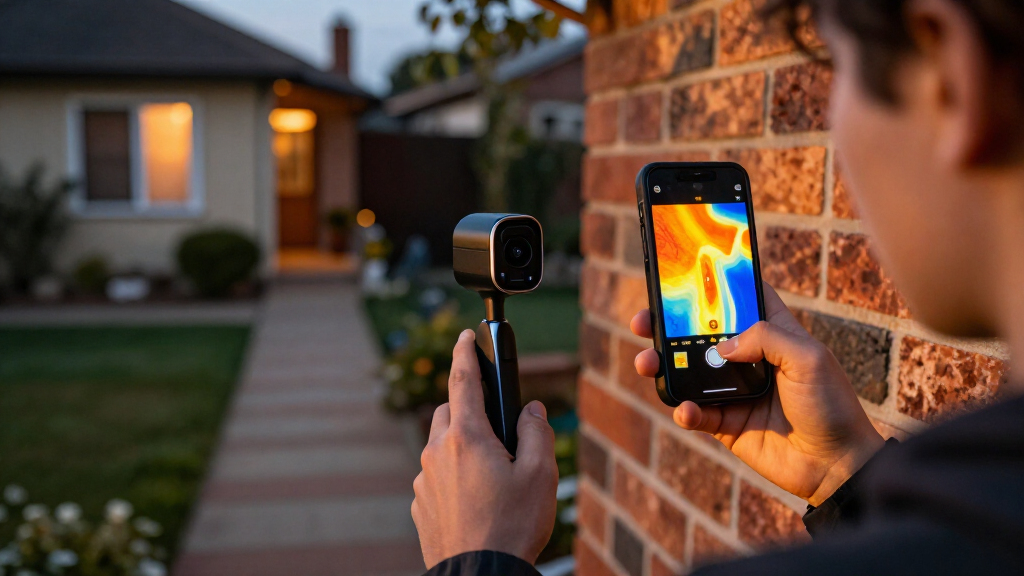
How We Picked
I ranked these phones by how well their listed features serve someone who specifically needs thermal imaging in a smartphone. I weighed thermal use as the central purpose, then compared the practical package around it: connectivity, processor and memory claims, storage, screen and camera setup, battery capacity where provided, and form factor. Rugged construction matters because many likely users work outdoors or around equipment, but durability claims do not replace checking the maker’s exact ingress and drop-protection specifications.
The order also reflects how clearly each model fits a buyer type and how much general phone capability it brings alongside thermal imaging. That favors the Armor 28 Ultra Thermal as the broadest high-spec choice, while more specialized, compact, or 4G models rank for narrower needs rather than being treated as lesser versions of one ideal phone. Product listings do not provide enough consistent thermal sensor data to make claims about image resolution, temperature accuracy, or measurement range, so I would verify those figures and the included app before purchase.
| smartphones with thermal camera | Operating system |
|---|---|
| Ulefone Armor 28 Ultra Thermal | Android 15 |
| Ulefone Armor 27T Pro 5G Rugge | Android 15 |
| Blackview ROCK 3 Rugged 4G Sma | Android 16 |
| OUKITEL WP500 Ultra Rugged 5G | Android 16 |
| Blackview Rock 3 Rugged Smartp | Android 16 |
| Ulefone Armor 29 Pro Thermal 5 | — |
| AGM G3 Pro Rugged Smartphone w | Android 15 |
| Ulefone Armor 27T Pro Plus 5G | — |
| Ulefone Armor 25T 4G Rugged Sm | Android 15 |
| Ulefone Armor Mini 20T Pro 5G | — |
| RUGONE Xever 7 Pro 5G Rugged P | Android 15; listed for three years of system updates |
| FOSSiBOT F115 Ultra 5G Rugged | Android 16 |
Factors to Consider When Choosing Smartphones With Thermal Cameras
A thermal camera built into a phone can simplify field checks, but the right choice depends on what you need to detect and how you will use the results. I would start with the inspection task and workflow, then compare phone size, connectivity, endurance, and support rather than choosing by RAM or camera megapixels alone.
Match the thermal imager to the job
Thermal phones can help locate heat patterns, but not every built-in imager is suited to every inspection. Before buying, check the sensor’s resolution, stated temperature range, accuracy, sensitivity, and refresh rate against the work you plan to do. A home troubleshooting task may tolerate a different level of detail from electrical maintenance or building diagnostics. A thermal image can point to an anomaly without proving its cause, so it should not replace a qualified inspection where safety or compliance is involved. Avoid assuming that two phones with the same thermal label produce equivalent results. Ask whether the manufacturer provides sample images and technical documentation for the exact model.
Check the app and report workflow
The camera is only part of a useful thermal setup; the software determines how easily you can review, save, and share findings. Find out whether the app supports temperature spot readings, adjustable palettes, image annotations, and export formats that fit your team’s process. If multiple workers share results, check whether files retain useful measurement data or only save a visual image. Confirm that the app works with the phone’s Android version and that updates are available from a reliable source. A feature-rich thermal sensor can be frustrating if reports require manual workarounds. For routine jobs, a clear, repeatable capture-and-share process may matter more than extra phone memory.
Balance ruggedness against everyday handling
Rugged phones are designed for harsher settings, but their protective build often brings more bulk than a standard handset. Think about whether the phone will live in a tool pouch, mount to equipment, or be carried all day in a pocket. Check exact size, weight, grip, button placement, and screen behavior with gloves rather than relying on a rugged label. Also verify the protection rating and the conditions under which it applies; resistance to dust or water does not mean a device is indestructible. Buyers who need a phone for occasional inspections may prefer a smaller model over a maximum-size battery or display. A rugged case or repair plan may still be sensible for frequent drops or exposure.
Choose connectivity for where the work happens
5G can help when uploading large files or working in areas with strong current network coverage, but it does not guarantee a reliable connection at remote job sites. A 4G phone may be enough if thermal images are saved locally and shared later. Check supported bands and carrier compatibility for the country and network you use; the network label alone does not confirm service. If your work takes you underground, into plant rooms, or far from coverage, offline access and local storage deserve more attention than peak cellular speed. Consider whether the phone supports the SIM setup your team needs. This prevents paying attention to a connectivity feature that may not help at your actual worksites.
Prioritize battery and storage for real shifts
Thermal capture, bright outdoor displays, navigation, and cellular use can all draw power during a long workday. A large battery may reduce charging interruptions, but it can add weight, so compare endurance needs with how the phone is carried. Storage matters if you keep many high-resolution photos, videos, or job records on the device; cloud storage may be unreliable where coverage is poor. Check whether storage can be expanded and whether the manufacturer lists a realistic battery capacity for the exact model. Do not treat RAM figures as a substitute for a capable thermal app or a well-supported operating system. For rotating crews, removable or swappable batteries may be more useful than a larger fixed battery, provided spares and charging arrangements are practical.
Pay for useful phone features, not headline numbers
Some phones pair thermal imaging with premium processors, large memory claims, elaborate camera arrays, or high-refresh displays. Those additions help if the same device will handle demanding apps, media, or general daily use, but they do not by themselves improve thermal measurement quality. Compare the exact configuration and software support period before treating memory or storage figures as a reason to choose one model. A simpler phone may be a better field tool if it is easier to carry, has the right thermal workflow, and meets your network needs. Conversely, paying more for broader phone capability can make sense when one handset replaces a personal phone and a work device. The best value is the model that fits the complete job, not the one with the longest spec list.
Frequently Asked Questions
Can a smartphone thermal camera replace a dedicated thermal camera?
It can be convenient for quick checks and routine documentation, but I would not assume it can replace a dedicated instrument. Compare the phone’s sensor specifications and measurement features with the precision, distance, or compliance demands of your work. Dedicated equipment may offer different optics, controls, calibration options, or reporting functions. A built-in camera is most appealing when portability and having one device matter more than specialized capabilities. For safety-critical decisions, follow the relevant professional standards and use equipment rated for the task.
What thermal specifications should I verify before ordering?
Check the thermal resolution, temperature range, stated accuracy, thermal sensitivity, and refresh rate for the exact phone model. These figures affect how much detail you can see and whether the device can measure the temperatures involved in your task. Also confirm whether the app displays spot temperatures, supports useful image controls, and saves measurement information with exported files. Product titles often say “thermal imaging” without giving enough detail to compare performance. If the manufacturer cannot provide specifications for your intended use, I would not rely on the phone for technical measurements.
Should I choose a 5G model or is 4G enough for field inspections?
Choose based on the networks available where you work and how quickly you need to share files. If you capture images offline and upload them later, a 4G model can be perfectly practical. 5G may help with large uploads in areas where compatible coverage is available, but it does not improve thermal readings. Verify carrier bands and local coverage rather than relying on the 4G or 5G label alone. For remote work, storage, battery life, and offline app behavior can matter more than network generation.
Are rugged thermal phones too bulky for everyday use?
Many rugged phones are larger and heavier than mainstream handsets because of their protective bodies and high-capacity batteries. That tradeoff can be worthwhile if the phone is used around dust, water, impact risks, or work gloves, but less appealing if it spends most of its time in a pocket. Compare the dimensions and weight of the specific models, especially if you carry tools or wear a belt pouch. A compact option such as the Armor Mini 20T Pro is worth a closer look for buyers who prioritize handling. Rugged construction also does not remove the need to check the exact protection rating and warranty terms.
Is a phone with thermal imaging suitable for professional inspection reports?
It depends on the phone’s measurement functions, software, file handling, and the standards required for your work. Check whether the app can save temperature readings, annotations, and image metadata in a format your clients or organization accept. Confirm any calibration or accuracy documentation needed for formal reporting rather than assuming a thermal overlay is sufficient. For informal troubleshooting, a straightforward image record may be enough; regulated or safety-related work may call for a dedicated instrument and documented procedures. Ask the manufacturer for technical documents and sample exports before making the phone part of a professional workflow.
Conclusion
Best overall: I would start with the Ulefone Armor 28 Ultra Thermal for buyers who want a capable phone package alongside thermal imaging. Best value: the Ulefone Armor 25T or Blackview ROCK 3 may suit buyers whose needs are limited to a simpler 4G field phone, but I would compare their thermal specifications and support before choosing. Best premium: the Ulefone Armor 29 Pro Thermal is the pick for shoppers drawn to its listed 32GB RAM and 512GB storage, while the Armor 28 Ultra offers a different high-end mix with its listed processor and dual displays. Best for beginners: the Ulefone Armor 27T Pro is a sensible starting point if you want a thermal-focused rugged phone without making compact size or maximum listed memory the priority. For specific needs, choose the Armor Mini 20T Pro for a smaller form factor, the RUGONE Xever 7 Pro if swappable batteries fit your work routine, or a 5G model when local coverage and file-sharing needs support it. Before ordering any of them, verify the thermal sensor specifications and app workflow for the inspections you plan to perform.
Columbus Day / Indigenous Peoples' Day Picks
long weekend sales
As an affiliate, we earn on qualifying purchases.