
TL;DR

Get the latest gadgets delivered free — and shop member deals
- Fast, free delivery on millions of items
- Access to Prime Big Deal Days deals on October 6–7
- Prime Video, Amazon Music and more included
OpenDLSS is a public Vulkan reimplementation of NVIDIA’s DLSS 5 Neural Rendering network, with its developer reporting byte-for-byte matches at all 75 block boundaries against reference captures. It requires users to provide the model weights and runs on Windows with supported NVIDIA GPUs and driver extensions; the project is not DLSS Super Resolution.
A developer has published OpenDLSS, a Vulkan reimplementation of NVIDIA’s DLSS 5 Neural Rendering network, and says it matches the reference output byte for byte at all 75 block boundaries. The project offers a way to run the network outside NVIDIA’s own implementation, but users must supply the model weights and meet demanding hardware and driver requirements.
The repository describes the network as a 71-block shifted-window transformer with a global vision transformer at its deepest level. It uses E4M3 FP8 activations with FP16 accumulation, and its weights occupy about 141 MiB. The implementation accepts a rendered frame along with noise, a reprojected previous-frame output and five conditioning values; it returns an RGB residual and a temporal-blend value for each pixel.
The developer reports that not only the final image but also all 75 block boundaries match the reference captures byte for byte. A separate browser WebGPU port is also described as bit-exact against those captures, despite not using tensor cores, FP8 or inter-block fusion. These are claims made by the project; the supplied material does not include an independent verification.
On an RTX 4070 SUPER, the repository reports minimum whole-network times of 2.8 milliseconds at 768 × 768, 7.8 ms at 1920 × 1080, 12.6 ms at 2560 × 1440 and 29.3 ms at 3840 × 2160, based on a minimum measured over 40 frames. The author says sustained GPU load can change clock states, leaving median results a few percent higher. The project lists Windows, an NVIDIA Ada-generation or newer GPU, and specific Vulkan and NVIDIA driver extensions among its requirements.
A Reimplementation Outside NVIDIA
OpenDLSS makes the network’s computation available through a public Vulkan codebase, rather than limiting experimentation to an NVIDIA-provided runtime. Researchers and graphics developers can inspect the implementation, test its behavior and study how its rendering stages fit together, provided they have compatible hardware and the required model files.
The reported performance figures also give readers a resolution-by-resolution indication of the cost on one GPU, rather than suggesting the network is equally fast at every output size. At the highest listed resolution, the reported minimum is 29.3 milliseconds per frame, so the measurements should not be read as a promise of a particular frame rate on other systems.
The distinction from upscaling matters: this implementation works at the same input and output resolution, according to the repository. It is described as generating and adjusting image detail in an already-rendered frame, not as the separate DLSS Super Resolution network.
NVIDIA DLSS 5 Neural Rendering GPU
As an affiliate, we earn on qualifying purchases.
As an affiliate, we earn on qualifying purchases.
What the Repository Implements
The project identifies its target as the same network used by DLSS-NR build 310.8.0. NVIDIA describes the model in a report titled “DLSS 5: Generative Neural Rendering,” which the repository points to for network background. OpenDLSS says its graph contains 71 blocks across six pooling levels, with shifted-window transformer blocks and a global attention stage.
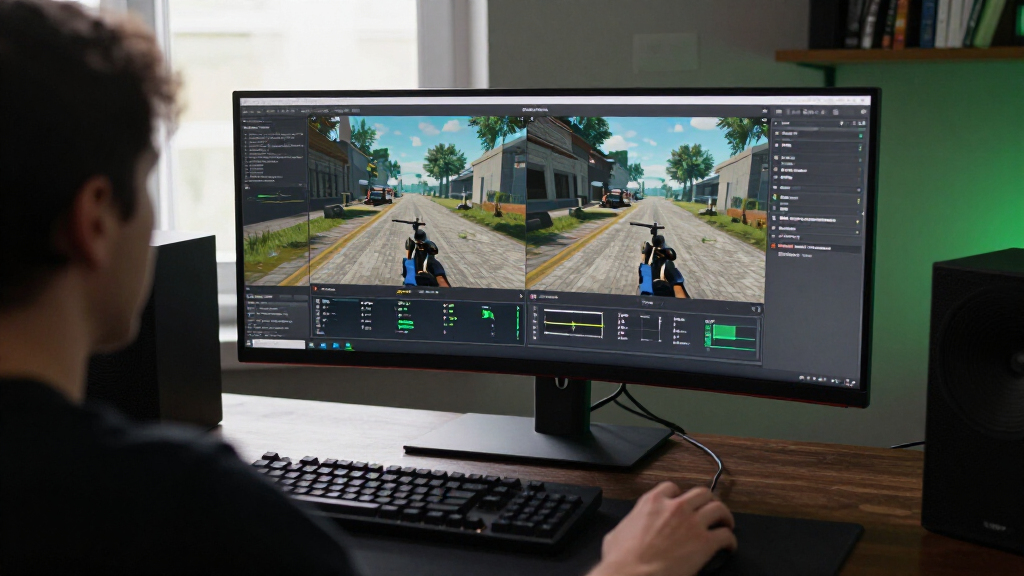
The repository includes a C++ host implementation, GLSL reference kernels and generated PTX kernels for its faster route, alongside a demo built around Filament. Its WebGPU port provides a separate implementation intended to run in a browser. The repository reports that this port takes 72 ms at 512 × 512, compared with 2.7 ms for its Vulkan implementation at that resolution; the source material does not specify a test GPU for that comparison.
OpenDLSS does not provide the model weights in the described setup: users supply a model directory. The project also explicitly says it does not implement DLSS-SR, which it identifies as a different network. Its command-line tool processes single frames without temporal history, while the demo uses reprojected history and the network’s blend output.
“A Vulkan reimplementation of NVIDIA’s DLSS 5 Neural Rendering network, bit-exact against the original.”
— OpenDLSS GitHub repository
As an affiliate, we earn on qualifying purchases.
Parity, Weights and Compatibility
The bit-exactness statements and performance results come from the project’s own documentation. The supplied material does not identify an independent test, name the reference-capture source in detail or establish whether other hardware produces the same timings. The figures are specific to an RTX 4070 SUPER and include a stated minimum-over-40-frames measurement method.
Users need to provide the model weights, and the source material does not establish their availability, licensing terms or distribution conditions. It also does not say whether NVIDIA has reviewed or endorsed OpenDLSS. Compatibility is limited by the listed requirements, including an Ada-or-newer NVIDIA GPU and driver support for several specified extensions; broader hardware support is not confirmed.
As an affiliate, we earn on qualifying purchases.
Testing Beyond the Published Setup
The immediate next step for interested developers is to examine the repository’s documentation and, if they have the required model files and hardware, reproduce its parity and benchmark tests. The project includes commands for performance measurement, profiling and comparisons against fixtures, as well as a demo for rendered scenes.
Further independent tests could establish whether the reported byte-for-byte parity holds across additional fixtures and supported GPUs, and how timings vary by driver and system. The supplied material gives no announced release schedule, planned support for other hardware, or confirmation of changes to the project’s stated scope.
As an affiliate, we earn on qualifying purchases.
Key Questions
What is OpenDLSS?
OpenDLSS is a public Vulkan implementation of NVIDIA’s DLSS 5 Neural Rendering network. Its developer also provides a separate browser-based WebGPU implementation.
Does it upscale images?
No. The repository says the network takes and returns frames at the same resolution. It distinguishes this work from DLSS Super Resolution, which it says is not implemented.
Does OpenDLSS include the model weights?
The described setup requires users to supply a model directory. The supplied project material does not establish whether or how the weights can be obtained or what terms govern their use.
What hardware does it require?
The repository lists Windows, an NVIDIA Ada-generation or newer GPU, and a driver exposing several specified Vulkan and NVIDIA extensions. It does not confirm support for other GPU vendors.
Are the parity and speed claims independently verified?
Not in the supplied material. The claims of byte-for-byte parity and the RTX 4070 SUPER timings are reported by the project, with no independent verification described.
Source: hn
Fall Picks
fall essentials
As an affiliate, we earn on qualifying purchases.