
📊 Full opportunity report: New Ways To Learn And Teach With ChatGPT Work And Codex on ThorstenMeyerAI.com — validation score, market gap, and execution plan.

Get the latest gadgets delivered free with Prime
- Fast, free delivery on millions of items
- Prime Video, Amazon Music and more included
- Member-only deals all year
TL;DR
OpenAI has published new guidance for integrating ChatGPT Work and Codex into educational workflows, allowing for complex, multi-step projects. The tools aim to support research, teaching, and technical tasks but lack independent evidence of improved learning outcomes. For more insights, see the original analysis.
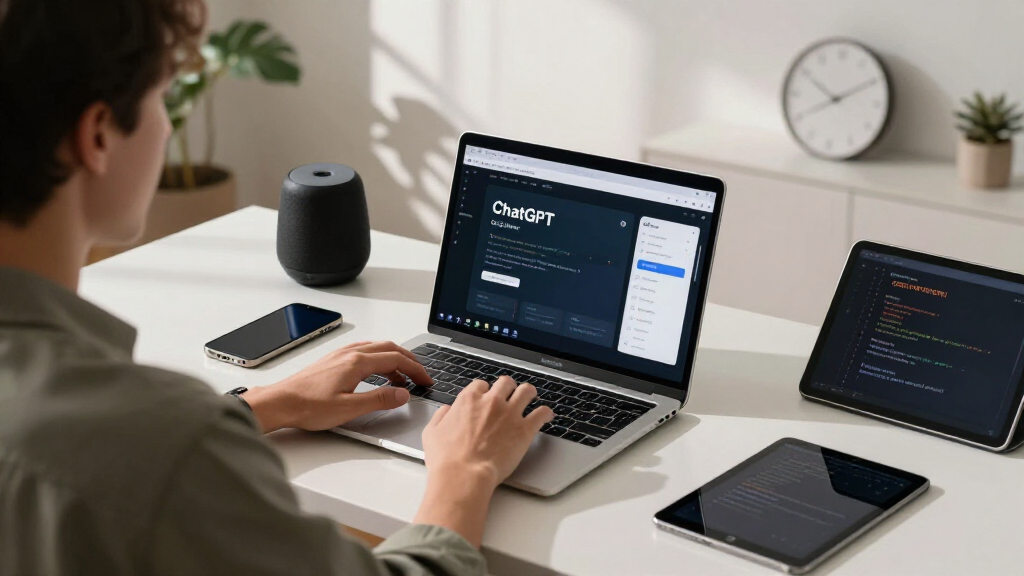
OpenAI has released updated guidance for ChatGPT Work and Codex, positioning these tools as agents capable of managing multi-step research, course development, and software projects within educational workflows. This move signifies a shift from simple conversational assistance toward supporting complex workflows that span files, websites, and connected tools, impacting how institutions might incorporate AI into teaching and administration.
The company describes ChatGPT Work as an agent that can plan, execute, and oversee multi-step academic and administrative tasks. Users can define goals, review plans, upload files, and monitor progress, with outputs including documents, presentations, and interactive websites. For educators, workflows include revising syllabi, comparing course materials with accessibility standards, organizing accreditation evidence, and preparing planning briefs. OpenAI emphasizes that these are proposed workflows, not independently verified improvements in educational outcomes.
Meanwhile, Codex continues to focus on software development, assisting in coding, debugging, and implementation tasks. It is positioned as a tool for technical teams, developers, and learners working on repositories and technical projects, complementing ChatGPT’s broader conversational capabilities. As of July 2026, ChatGPT Work runs on GPT-5.6, with features varying by platform and subscription plan.
The integration of these tools into educational workflows broadens OpenAI’s role in supporting longer, more complex projects, potentially reducing administrative time and streamlining content creation. However, the company notes that the effectiveness of these workflows in improving learning, retention, or teaching quality has not yet been demonstrated through peer-reviewed research. Usage and access vary depending on institutional policies, permissions, and regional factors, and users must still verify and review AI-generated outputs. Learn more about innovative AI teaching methods in this detailed overview.
Implications for Educational Workflow Automation
This development indicates a significant expansion of AI’s role in education, moving beyond simple question-answering to managing complex, multi-step tasks. While the tools could reduce administrative burdens and streamline project workflows, their impact on learning outcomes remains unproven. The shift raises questions about the future integration of AI in teaching, assessment, and institutional management, emphasizing the need for careful oversight and evaluation.
Products Worth Considering

Bose QuietComfort Wireless Bluetooth Headphones with Active Noise Cancellation, Mic, USB‑C Charging, Deep Bass, 24‑Hour Battery – White Smok

LG UltraGear 32GX850A-B 32-Inch 4K UHD Glossy OLED Gaming Monitor

DJI Mic 3 Wireless Microphone System (2 Transmitters, 1 Receiver, Charging Case)
As an affiliate, we earn on qualifying purchases.
Evolution of AI Tools in Academic Settings
OpenAI has been gradually expanding its educational tools since launching ChatGPT Edu and Study Mode, aimed at guided learning and institutional access. The introduction of ChatGPT Work and Codex represents a move toward supporting comprehensive workflows, such as course planning, accreditation, and software development, across connected platforms like Google Drive, Microsoft 365, and learning management systems. This follows broader trends of AI integration into administrative and technical domains within education, but the effectiveness and ethical considerations are still under review.
“There is currently no peer-reviewed evidence demonstrating that these workflows improve learning outcomes; their effectiveness remains to be tested.”
— Thorsten Meyer, AI researcher
Unverified Claims About Learning Improvements
OpenAI has not provided peer-reviewed studies or independent evidence confirming that using ChatGPT Work and Codex improves student comprehension, retention, or teaching quality. The actual accuracy, error rates, and required human oversight for specialized academic tasks are still unknown. Institutional policies on data sharing, disclosure, and integrity also vary, complicating widespread adoption.
Monitoring and Evaluating Real-World Deployments
Future developments will include documenting how educational institutions implement these workflows, assessing their impact on administrative efficiency and learning outcomes, and conducting independent research. OpenAI is expected to update the tools regularly, while educators and administrators will need to establish policies for oversight, verification, and ethical use. The first peer-reviewed studies comparing agent-assisted workflows with traditional methods are anticipated within the next year.
Key Questions
What exactly can ChatGPT Work do in education?
ChatGPT Work can plan, coordinate, and manage multi-step academic and administrative projects, such as revising syllabi, organizing accreditation evidence, and preparing research reports, by integrating with various connected tools and files.
How reliable are these AI workflows for teaching and research?
Reliability and accuracy are still unproven; OpenAI has not published peer-reviewed evidence. Users must verify outputs, and institutional policies will influence how these tools are used and trusted.
Will these tools replace teachers or students?
OpenAI states that the tools are meant to assist, not substitute, human judgment. Human review remains essential, especially for verifying citations, calculations, and interpretations.
Are there privacy concerns with using these connected workflows?
Yes, institutions need to decide what data can be shared with connected tools and how generated work is disclosed, considering privacy, academic integrity, and record-keeping policies.
When will we see independent research on these tools’ effectiveness?
Initial independent studies are expected within the next 12 months, as institutions begin deploying these workflows and researchers evaluate their impact.
Source: ThorstenMeyerAI.com