
To optimize sound in a small room, focus on more than just smaller speakers. Strategic placement is key; keep speakers clear of walls and corners, and find a perfect listening spot. Incorporate acoustic treatments like panels or rugs to absorb reflections and reduce muddiness. Wireless streaming lets you position speakers freely for better soundstaging. By managing acoustics and layout effectively, you’ll create a balanced, clear audio environment. Keep exploring for tips on mastering your space.

Get the latest gadgets delivered free with Prime
- Fast, free delivery on millions of items
- Prime Video, Amazon Music and more included
- Member-only deals all year
Key Takeaways
- Optimize speaker placement and room layout to enhance sound quality and reduce reflections, not just downsize equipment.
- Incorporate acoustic treatments like panels and rugs to improve clarity and minimize reverberation.
- Use wireless streaming to allow flexible speaker positioning, maximizing soundstage in limited space.
- Focus on managing room acoustics to create a balanced, immersive listening environment.
- Combine sound source management with acoustic adjustments for a comprehensive small-room audio solution.
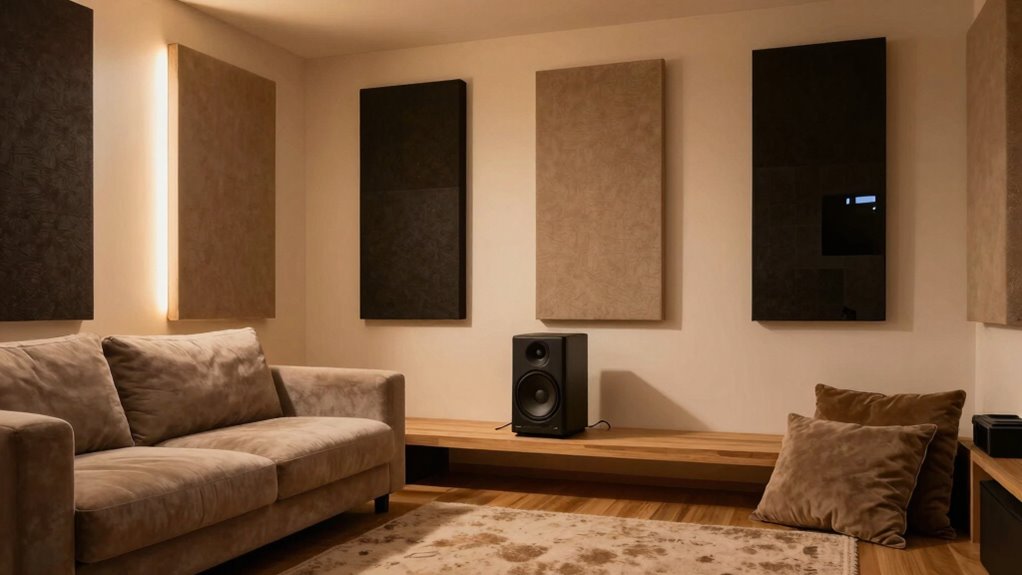
Creating the perfect sound environment in a small room can be challenging, but with the right strategy, you can achieve impressive audio quality without overwhelming the space. Many people assume that smaller speakers are the only solution, but that’s not entirely true. Instead, focusing on how you manage your audio sources and treat your space can make a bigger difference. Wireless streaming plays an essential role here, allowing you to eliminate clutter and simplify your setup. With wireless streaming, you can connect high-quality speakers directly to your devices without the tangled mess of wires, freeing up space and reducing potential acoustic issues caused by cable clutter.
Using wireless streaming also makes it easier to position your speakers ideally. You can place them farther apart or at ear level, creating a more balanced soundstage. This flexibility helps compensate for the size constraints of your room. But great sound isn’t just about the speakers; acoustic treatment is equally critical. Small rooms tend to reflect sound waves harshly, creating echoes and muddiness. Adding acoustic panels, bass traps, or even simple furnishings like rugs and curtains can absorb unwanted reflections and improve clarity. These treatments don’t have to be bulky—they can be sleek and discreet, fitting seamlessly into your decor while dramatically enhancing sound quality. Incorporating acoustic treatment into your space is a proven method to improve sound precision in small environments. Additionally, understanding the room’s acoustics can help you make more informed decisions about placement and treatment. Furthermore, assessing your space’s acoustic properties can lead to more tailored solutions that optimize your listening experience.
Wireless streaming enables flexible speaker placement and improves sound clarity with discreet acoustic treatments.
Beyond just the hardware, consider your room’s layout. Avoid placing speakers directly against walls or in corners, which can cause sound distortion. Instead, position them with some space around them to allow sound to breathe. Also, try to sit in a perfect listening spot, ideally where the sound converges and the reflections are minimized. Creating a balanced listening environment by adjusting speaker placement and room acoustics will markedly improve your listening experience. Remember, a well-thought-out layout and sound management can significantly elevate your audio experience in confined spaces.
Products Worth Considering

Sonos Era 100 SL Compact Microphone-Free Speaker, Black

Sonos Era 100 Wireless Smart Speaker, Black

Sony WH-1000XM4C Wireless Noise-Cancelling Headphones, Black
As an affiliate, we earn on qualifying purchases.
Frequently Asked Questions
How Does Room Acoustics Affect Small-Room Audio Performance?
Room acoustics considerably impact your small-room audio performance by influencing sound absorption and reflection. Poor acoustics cause sound waves to bounce unevenly, creating echoes and muddying clarity. Adjusting speaker orientation helps direct sound toward your listening area and reduces unwanted reflections. Incorporate sound-absorbing materials like rugs or panels to minimize echoes, ensuring clearer, more balanced audio. Proper room treatment enhances your listening experience, making every note crisp and immersive.
What Is the Ideal Speaker Placement for Small Rooms?
Place your speakers at ear level, ensuring they’re not too high or low, for ideal sound. Position them away from walls and corners to reduce reflections, and keep furniture placement in mind to avoid blocking sound paths. Ideally, set speakers equidistant from your listening position, forming an equilateral triangle. Experiment with slight adjustments in speaker height and furniture arrangement to find the best sound balance in your small room.
How Can I Reduce Echo and Reverberation in Small Spaces?
Don’t let echo and reverberation get the best of your space; it’s easier than you think. Start with soundproofing techniques like adding rugs, curtains, and soft furnishings to absorb sound. Place acoustic panels strategically on walls—especially behind speakers and along reflective surfaces—to dampen sound waves. This simple approach transforms your small room into a cozy, acoustically balanced haven, making your audio experience much clearer and more enjoyable.
What Are the Best Affordable Audio Calibration Tools?
For budget-friendly calibration gadgets, consider tools like the Audyssey Audio Calibration Microphone or the Monoprice True-Fi. These affordable devices help you optimize your audio setup by accurately measuring room acoustics and adjusting sound settings. You can also explore smartphone apps like Room EQ Wizard or Ultimate Ears’ calibration tools, which offer effective calibration options without breaking the bank. These gadgets guarantee your small room sounds clear and well-balanced.
How Do I Choose the Right Amplifier for Small-Room Systems?
To choose the right amplifier for small-room systems, focus on speaker power and proper amplifier matching. Guarantee the amp can deliver enough wattage without overpowering your speakers. Check your speakers’ power ratings and match them with an amplifier that complements their impedance and power needs. This balance ensures clear, dynamic sound without distortion. By prioritizing speaker power compatibility and matching, you’ll optimize your small-room audio experience effectively.
Conclusion
Remember, achieving great sound in a small room isn’t about choosing tiny speakers alone—think of it like a finely tuned orchestra, where every instrument matters. By mastering your acoustics, placement, and gear, you can create a symphony that rivals larger setups. So, channel your inner maestro, and don’t be fooled by size. With the right strategy, your small room can deliver a listening experience as rich and immersive as the grandest concert hall.