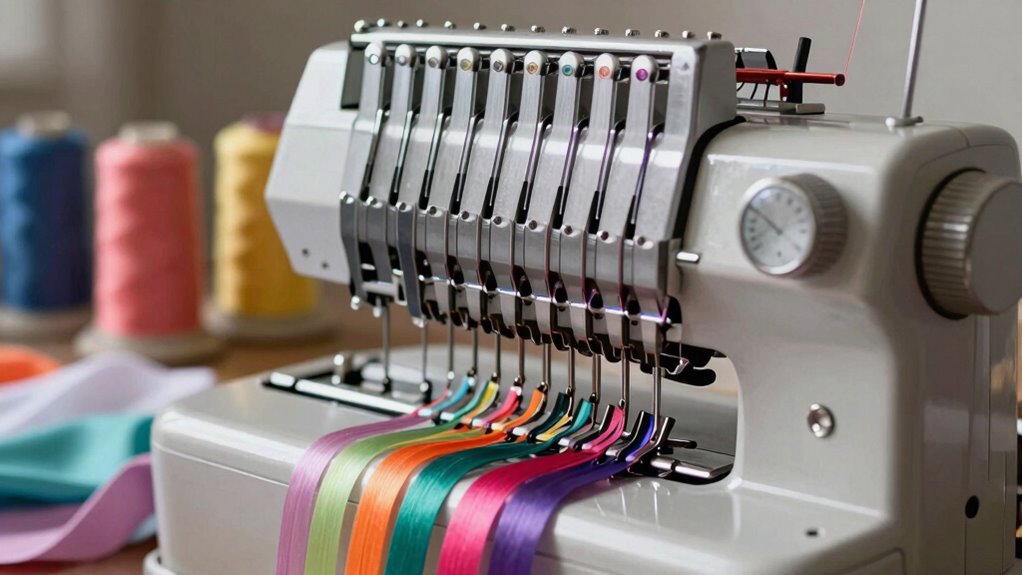

You might find your serger confusing at first because it involves complex thread interactions and tension adjustments that look like tangled chaos. When you’re new, understanding how each thread, stitch, and tension dial works together can feel overwhelming. But as you experiment and learn how to control tension and thread paths, it starts to make sense. Keep exploring, and you’ll discover how mastering these mechanics transforms your sewing experience from frustrating to confident.

Get the latest gadgets delivered free with Prime
- Fast, free delivery on millions of items
- Prime Video, Amazon Music and more included
- Member-only deals all year
Key Takeaways
- The complex stitch formation involves multiple threads working simultaneously, making initial understanding challenging.
- Proper tension adjustment is crucial but often confusing without experience, affecting stitch quality.
- Machine mechanics and thread interaction influence stitch results, requiring practice to master.
- Familiarity and hands-on practice help demystify the process, turning confusion into confidence.
- Understanding core principles transforms the serger into a versatile, professional sewing tool.
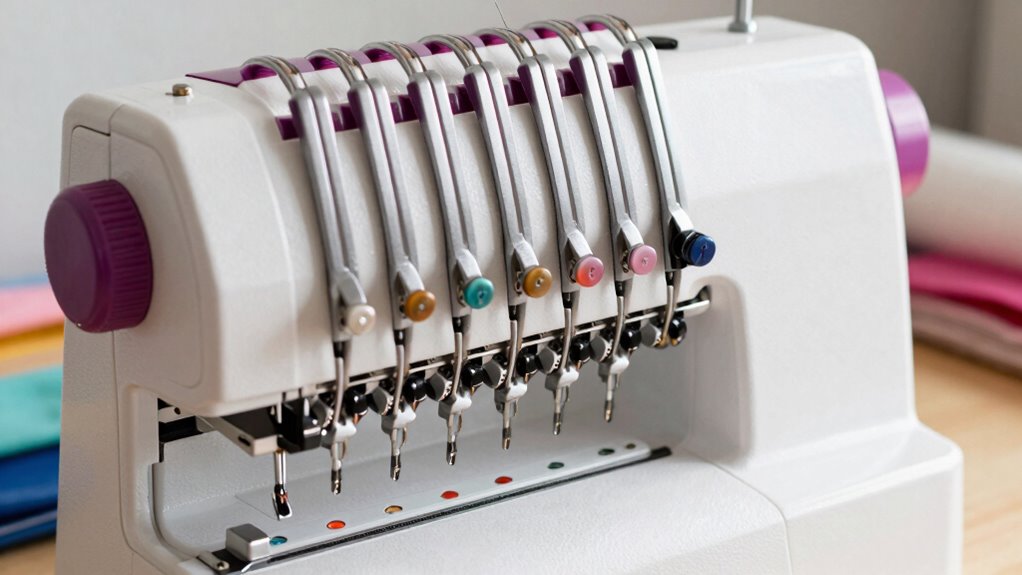
Learning to use a serger machine can feel overwhelming at first, but once you understand its mechanics, everything clicks into place. One of the main reasons it feels confusing initially is because of how complex the machine’s stitch formation appears. Unlike a regular sewing machine, a serger combines multiple threads to create a neat, professional edge or seam in a single pass. It involves several threads working together simultaneously, which can seem like a tangled mess when you’re just starting out. You might notice that the stitches don’t look right or that the fabric bunches up—these issues often stem from misunderstandings about stitch formation. Once you grasp how the threads interlock and move through the loopers and needles, the process becomes much clearer. You’ll realize that stitch formation isn’t random; it’s a carefully coordinated action that requires precise tension adjustment.
Tension adjustment is another area where beginners often get stuck. Proper tension is essential because it directly affects the quality of your stitches and the durability of your finished seams. When tension isn’t set correctly, your stitches can pucker, purl, or become uneven. This can be frustrating, especially when you’re trying to achieve a clean, professional look. However, once you understand how to adjust the tension dials for each thread, things start to fall into place. It’s a matter of trial and error—making small adjustments and testing on scrap fabric until the stitches look balanced. The key is to recognize that tension isn’t a one-size-fits-all setting; it varies depending on fabric type, thread weight, and project goals. Learning to fine-tune tension allows you to control stitch formation more precisely, which in turn makes your serging smoother and more predictable. Recognizing how the thread tension interacts with fabric and thread type is essential to mastering your serger. Additionally, understanding the mechanics of the machine helps prevent common issues and speeds up troubleshooting.
As you practice, you’ll start to see that many of the initial difficulties stem from unfamiliarity with the machine’s mechanics of stitch formation. Once you get comfortable with how the threads interact during stitch formation and learn how to properly adjust tension, your confidence will grow. The confusion will give way to a sense of mastery, and sewing with a serger will become faster, easier, and more enjoyable. The more you experiment, the more intuitive the process becomes. Ultimately, understanding these core principles transforms the serger from a perplexing contraption into a powerful tool that elevates your sewing projects with professional finishing touches. Recognizing the stitch formation process is key to mastering your serger more quickly.
As an affiliate, we earn on qualifying purchases.
Frequently Asked Questions
How Do I Choose the Right Serger Machine for Beginners?
To choose the right serger machine for beginners, focus on easy-to-use features like adjustable thread tension and stitch width. Look for models with clear dials or digital controls, making adjustments straightforward. Consider a machine with built-in tutorials or guides, which help you learn quickly. A versatile machine with a variety of stitch options and good reviews guarantees you’ll enjoy sewing, gain confidence, and eventually master your serger skills.
What Are the Common Troubleshooting Issues With Sergers?
Think of your serger like a well-tuned orchestra. Troubleshooting issues often stem from the wrong thread tension or misaligned needles, which cause uneven stitches or skipped stitches. To fix this, adjust the thread tension carefully and check needle alignment. When these elements are in harmony, your machine runs smoothly, and sewing becomes a seamless symphony. Regular maintenance and patience help you master this musical balance.
How Do I Change Stitches on a Serger?
To change stitches on your serger, start by adjusting the stitch selector dial. You may need to change thread tension settings to match the new stitch type, ensuring smooth sewing. Also, consider switching needle types if the stitch requires a different needle, such as a twin or ballpoint needle. Always test on scrap fabric first to fine-tune tension and needle choices, making your stitch perfect and your project seamless.
What Maintenance Is Required to Keep a Serger in Top Condition?
To keep your serger in top condition, regularly check and adjust thread tension to guarantee smooth stitching. Clean the machine after each use to prevent lint buildup, and routinely inspect and replace the blades to maintain precise cuts. Lubricate moving parts according to your machine’s manual, and store it properly when not in use. Consistent maintenance keeps your serger running efficiently, so your sewing projects stay flawless and frustration-free.
Can I Sew With a Serger Without Using the Differential Feed?
Yes, you can sew with a serger without using the differential feed, but it might affect your results. To do so, focus on adjusting thread tension and needle selection to prevent puckering or uneven stitches. Keep in mind that without differential feed, fabrics with different thicknesses may not feed smoothly, so test on scrap fabric first. Proper tension and the right needle will help you achieve cleaner, professional-looking seams even without differential feed.
best beginner serger sewing machine
As an affiliate, we earn on qualifying purchases.
As an affiliate, we earn on qualifying purchases.
Conclusion
Once you master the mechanics and unravel the mysteries, serger machines become your sewing sidekick. Don’t delay, jump right in, and discover the delight of doing it yourself. With patience, practice, and a little persistence, those perplexing parts will click into place, transforming confusion into confidence. Before you know it, you’ll be sewing smoothly, confidently conquering countless creations. So, stay steadfast, and soon enough, serger successes will feel simply sensational!
serger thread tension adjustment tools
As an affiliate, we earn on qualifying purchases.
As an affiliate, we earn on qualifying purchases.
professional serger sewing machine
As an affiliate, we earn on qualifying purchases.
As an affiliate, we earn on qualifying purchases.
Halloween Picks
halloween
As an affiliate, we earn on qualifying purchases.