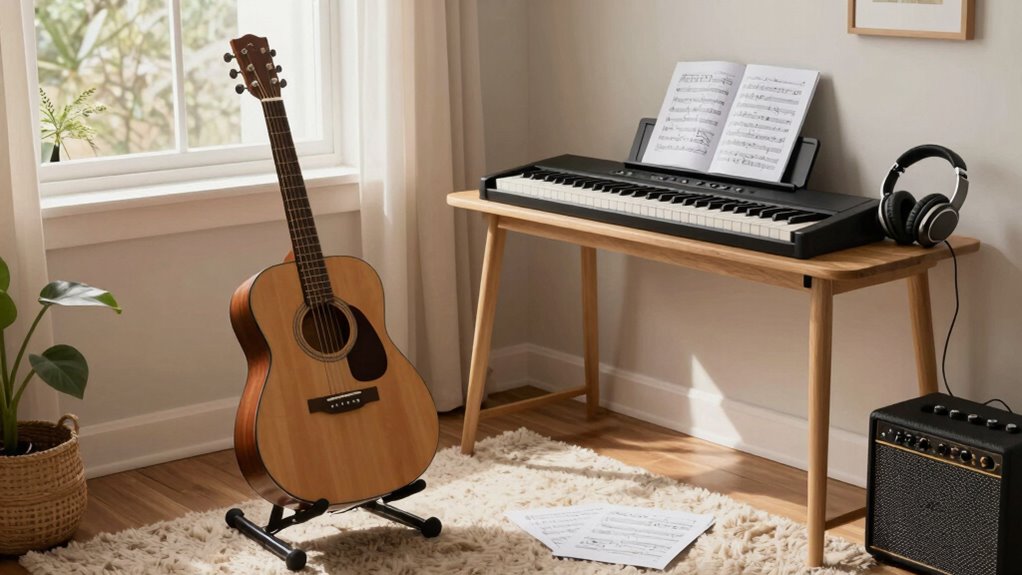
To make practice easier to start at home, create a dedicated, clutter-free space with good acoustics by using foam panels and bass traps. Keep your gear organized on labeled shelves or hooks, so everything is easy to find and quick to set up. Make the room inviting with comfortable seating, proper lighting, and minimal distractions. If you continue exploring, you’ll discover more simple tweaks to turn your practice into an enjoyable daily routine.

Get the latest gadgets delivered free with Prime
- Fast, free delivery on millions of items
- Prime Video, Amazon Music and more included
- Member-only deals all year
Key Takeaways
- Create a dedicated, clutter-free practice zone with comfortable seating and proper lighting.
- Use acoustic treatments like foam panels or DIY solutions to improve sound clarity and reduce echo.
- Keep instruments, cables, and gear organized with labeled storage for quick, hassle-free setup.
- Incorporate soundproofing to minimize external noise and maintain a consistent practice environment.
- Establish a routine by investing in a dedicated space, fostering regular, motivated practice sessions.

First, consider acoustic treatments. Even if you don’t have a professional studio, small adjustments can drastically improve your sound quality. Use foam panels, bass traps, or even DIY solutions like thick blankets or curtains to absorb excess sound reflections. These treatments prevent the room from sounding muddy or echoey, which helps you hear your instrument or vocals more accurately. When your sound is clear, you won’t waste time trying to decipher muddled notes or adjusting your hearing to compensate for poor acoustics. You’ll instantly notice how much more motivating and efficient your practice sessions become.
Small acoustic adjustments like foam panels or blankets can vastly improve sound clarity and boost your practice efficiency.
Next, focus on equipment organization. A cluttered space can be a real barrier to starting — the more time you spend searching for that cable or tuner, the less likely you are to begin practicing. Keep your instruments, pedals, cables, and microphones in designated spots using shelves, hooks, or storage bins. Labeling these areas can save even more time and effort. When everything is within arm’s reach and well-organized, setting up becomes a quick task rather than an obstacle. This streamlined approach encourages you to *jump into* practice whenever you feel inspired, instead of delaying because of chaos or disorganization. Incorporating effective storage solutions can further streamline your setup process. Additionally, maintaining a consistent organization system ensures your space remains efficient over time. Regularly reviewing your setup can also help identify inefficient arrangements that may be hindering your practice flow.
Additionally, create a dedicated practice zone that’s free from distractions. This space should have a comfortable chair, adequate lighting, and a stable surface for your gear. Keep your most-used equipment close by, and store less frequently used items elsewhere. This setup minimizes setup time and mental clutter, making your practice sessions feel less like a chore and more like a focused, enjoyable activity. Incorporating acoustic treatments into your environment can also help maintain a consistent sound quality, further enhancing your practice experience. Using soundproofing techniques can prevent external noise from disrupting your sessions, creating an ideal environment for focus and progress.
Finally, remember that small investments in acoustic treatments and organization tools pay off over time. They help you establish a routine, reduce setup frustrations, and improve your overall sound. With a space tailored for music, you’ll find it easier to start practicing regularly, stay motivated, and make steady progress. Creating an environment that’s welcoming and efficient transforms practice from a *challenging* task into a natural part of your daily routine.
acoustic foam panels for music practice
As an affiliate, we earn on qualifying purchases.
As an affiliate, we earn on qualifying purchases.
Frequently Asked Questions
How Much Should I Budget for a Home Music Setup?
You should budget around $300 to $1,000 for a home music setup, depending on your music genre and goals. If you’re into casual practice or beginner levels, a basic setup with a decent microphone and speakers might suffice. For more professional sound quality, invest in higher-end equipment. Budget planning helps you balance quality and affordability, ensuring you get the right gear without overspending.
What Are Essential Soundproofing Tips for Apartment Practice Spaces?
To soundproof your apartment practice space, start with acoustic panels on walls to absorb sound and reduce echo. Use noise barriers like heavy curtains or rugs to block noise from escaping. Seal gaps around doors and windows with weatherstripping or draft stoppers. These steps help minimize sound transfer, so you can practice without disturbing neighbors, making your home music setup more effective and enjoyable.
How Do I Choose the Best Instrument for Beginners?
Choosing the best instrument for beginners is like picking a trusty sidekick. You want something easy to maintain, affordable, and not overwhelming for your first lessons. Consider instruments with simple maintenance, like ukuleles or digital pianos, which are great for beginner music lessons. Think about your musical interests and comfort. A well-chosen instrument sparks your passion, making practice enjoyable and helping you progress faster.
Can I Set up a Home Music Space in Small Rooms?
Yes, you can set up a home music space in small rooms. Use decorating ideas like wall-mounted shelves for storage and a compact desk for your instrument. Focus on lighting arrangements that maximize natural light or add adjustable lamps to create a comfortable environment. Keep your space organized and clutter-free, using vertical storage options, so you can enjoy practicing without feeling cramped, even in limited space.
What Are the Best Storage Solutions for Musical Accessories?
You should choose versatile storage options like labeled bins, wall-mounted racks, and dedicated drawers for music storage and accessory organization. Use clear containers to easily identify items, stackable bins to maximize space, and pegboards for quick access to frequently used accessories. Keep cables, picks, and sheet music neatly sorted, so everything’s within reach. This organized approach keeps your musical space tidy, efficient, and ready for practice whenever inspiration strikes.
musician organization storage bins
As an affiliate, we earn on qualifying purchases.
As an affiliate, we earn on qualifying purchases.
Conclusion
With a well-designed home music setup, starting your practice becomes effortless and enjoyable. Imagine setting up a cozy corner with your favorite instrument, good lighting, and minimal distractions—like Alex, who improved their skills by dedicating just 15 minutes daily in a dedicated space. By creating a comfortable environment tailored to your needs, you’ll find it easier to stay consistent and motivated. Ultimately, a thoughtful setup transforms practice from a chore into a rewarding part of your daily routine.
soundproofing curtains for home studio
As an affiliate, we earn on qualifying purchases.
As an affiliate, we earn on qualifying purchases.
comfortable practice chair for musicians
As an affiliate, we earn on qualifying purchases.
As an affiliate, we earn on qualifying purchases.
Halloween Picks
halloween
As an affiliate, we earn on qualifying purchases.