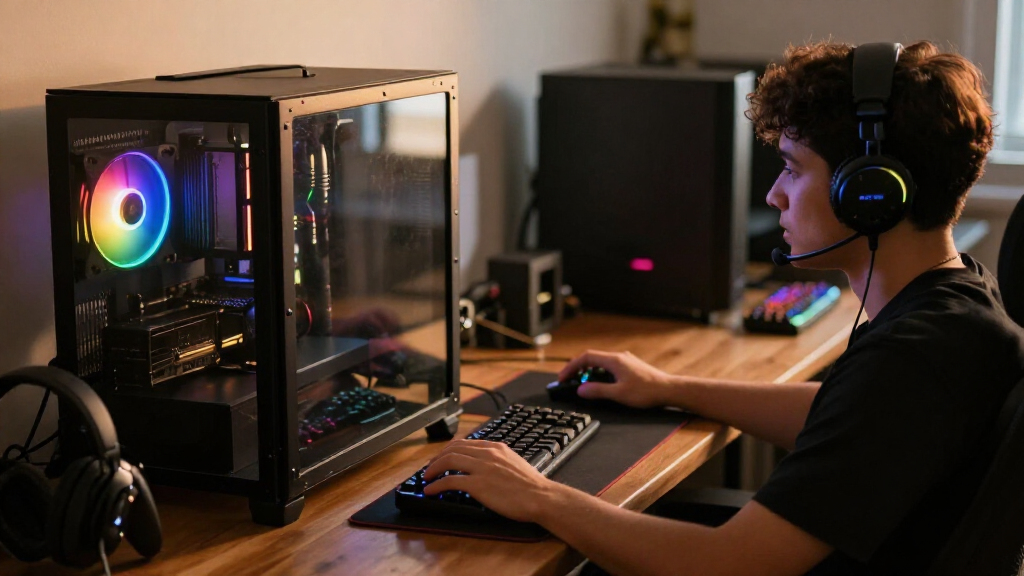

The best gaming PCs in this roundup balance graphics power, processor performance, memory, storage, and room to grow. My best overall pick is the Skytech King 95 with Ryzen 7 9800X3D and RTX 5070 Ti, a strong match for demanding gaming without stepping up to an RTX 5080 system. For more graphics headroom, the Skytech King 95 with RTX 5080 stands out, while the Skytech Gaming Azure 3 pairs a gaming-focused processor with 16GB of graphics memory. The main tradeoffs are graphics capability versus system cost, and whether you prefer a balanced build or more storage and memory. Read on for the full breakdown and help choosing the PC that fits your games and display.

Get the latest gadgets delivered free with Prime
- Fast, free delivery on millions of items
- Prime Video, Amazon Music and more included
- Member-only deals all year
Complete the kit



Key Takeaways
- The RTX 5070 Ti options set the roundup’s balance point: the Skytech King 95 and Lenovo Legion Tower 5 pair that GPU class with the Ryzen 7 9800X3D, while the Skytech model lists twice the SSD capacity.
- The RTX 5080 systems are the performance-first choices: the STORMCRAFT Phantom and Skytech King 95 with Ryzen 7 9850X3D are aimed at buyers who want more graphics headroom than the RTX 5070 and 5070 Ti PCs provide.
- Graphics memory differs within the RTX 5060 Ti group: the Skytech Azure 3 lists 16GB, while the Skytech Ryzen 7 7700 PC and CyberPowerPC Gamer Master list 8GB.
- More memory and storage do not automatically mean more gaming speed: the Horizon Autherium offers 64GB RAM and 5TB storage, but its listed RTX 5070 OC remains the main graphics component to compare against faster GPU tiers.
- Entry-level systems involve more compromises: several RTX 5060 PCs pair 32GB memory with older Ryzen 7 5700-series processors, while the CyberPowerPC Gamer Master lists 16GB RAM.
| iBUYPOWER Element Gaming Desktop, AMD Ryzen 9 7900X, NVIDIA GeForce RTX 5070 12GB, 32GB DDR5 RAM, 1TB NVMe SSD, Windows 11 Home |  | Best for Gaming and Content Creation | Processor: AMD Ryzen 9 7900X, 4.7 GHz base, up to 5.6 GHz | Graphics: NVIDIA GeForce RTX 5070, 12GB | Memory: 32GB DDR5 RGB, 4800 MHz | VIEW LATEST PRICE | See Our Full Breakdown |
| Horizon Autherium Dragon RGB Gaming Desktop PC, Intel Core i9, GeForce RTX 5070 OC, 64GB RAM, 5TB Storage, Windows 11 Pro |  | Best for Large Game Libraries and Heavy Multitasking | Processor: Unlocked Intel Core i9, up to 5.4 GHz | Graphics: NVIDIA GeForce RTX 5070 OC, 12GB GDDR7 | Memory: 64GB RAM | VIEW LATEST PRICE | See Our Full Breakdown |
| Skytech King 95 Gaming Desktop, Ryzen 7 9800X3D, GeForce RTX 5070 Ti, 32GB DDR5 RAM, 2TB NVMe SSD |  | Best for High-Performance Gaming | Processor: AMD Ryzen 7 9800X3D, 4.7 GHz, up to 5.2 GHz | Graphics: NVIDIA GeForce RTX 5070 Ti, 16GB GDDR7; brand may vary | Memory: 32GB DDR5 6000 RGB | VIEW LATEST PRICE | See Our Full Breakdown |
| CyberPowerPC Gamer Xtreme Gaming Desktop, Intel Core i9-14900KF, GeForce RTX 5070 12GB, 32GB DDR5, 2TB SSD |  | Best for Intel-Based Gaming and Expansion | Processor: Intel Core i9-14900KF, 24 cores, 3.2 GHz | Graphics: NVIDIA GeForce RTX 5070, 12GB | Memory: 32GB DDR5, 6000 MHz | VIEW LATEST PRICE | See Our Full Breakdown |
| Skytech Gaming Azure 3 Gaming PC with AMD Ryzen 7 7800X3D and GeForce RTX 5060 Ti 16GB |  | Best for a Gaming-Focused Build on a Lighter Memory Budget | Processor: AMD Ryzen 7 7800X3D, 4.2 GHz base, up to 5.0 GHz | Graphics: NVIDIA GeForce RTX 5060 Ti, 16GB GDDR7; brand may vary | Memory: 16GB DDR5 6000 | VIEW LATEST PRICE | See Our Full Breakdown |
| Skytech Gaming Desktop PC with Ryzen 7 7700, RTX 5060 Ti 8GB, 32GB DDR5 RAM, and 1TB NVMe SSD |  | Best for Ready-to-Play 1080p Gaming | Processor: AMD Ryzen 7 7700, 3.8GHz base and up to 5.3GHz boost | Graphics: NVIDIA GeForce RTX 5060 Ti, 8GB GDDR7 | Memory: 32GB DDR5 5600 | VIEW LATEST PRICE | See Our Full Breakdown |
| KOTIN Gaming Desktop with RTX 5070, Ryzen 7 9700X, 32GB DDR5, and 1TB SSD |  | Best for Feature-Rich Setup | Processor: AMD Ryzen 7 9700X, 8 cores | Graphics: NVIDIA GeForce RTX 5070, 12GB GDDR7 | Memory: 32GB DDR5 (2 x 16GB) | VIEW LATEST PRICE | See Our Full Breakdown |
| Lenovo Legion Tower 5 Gaming Desktop, Ryzen 7 9800X3D, GeForce RTX 5070 Ti, 32GB DDR5, 1TB SSD, Windows 11 Home |  | Best for Higher-Tier Graphics | Processor: AMD Ryzen 7 9800X3D | Graphics: NVIDIA GeForce RTX 5070 Ti, 16GB GDDR7 | Memory: 32GB DDR5; maximum 64GB | VIEW LATEST PRICE | See Our Full Breakdown |
| CyberPowerPC Gamer Master Gaming Desktop, AMD Ryzen 7 8700F, GeForce RTX 5060 Ti 8GB, 16GB DDR5, 1TB SSD |  | Best for a Memory Upgrade Path | Processor: AMD Ryzen 7 8700F, 8 cores, 4.1GHz | Graphics: NVIDIA GeForce RTX 5060 Ti, 8GB | Memory: 16GB DDR5 4800MHz; maximum 192GB | VIEW LATEST PRICE | See Our Full Breakdown |
| Skytech Shadow 5 Gaming PC with AMD Ryzen 7 7700, RTX 5070, 32GB DDR5 RAM, and 1TB SSD |  | Best for Liquid-Cooled RTX 5070 Gaming | Processor: AMD Ryzen 7 7700, 3.8GHz base and up to 5.3GHz boost | Graphics: NVIDIA GeForce RTX 5070, 12GB GDDR7 | Memory: 32GB DDR5 6000 RGB RAM | VIEW LATEST PRICE | See Our Full Breakdown |
| STORMCRAFT Phantom Gaming PC with AMD Ryzen 7 9800X3D and GeForce RTX 5080 |  | Best for High-End Gaming | Processor: AMD Ryzen 7 9800X3D, 8 cores / 16 threads, up to 5.2 GHz | Graphics: GeForce RTX 5080, 16GB GDDR7 | Memory: 32GB DDR5-6000 RGB | VIEW LATEST PRICE | See Our Full Breakdown |
| MSI Codex Z2 Gaming Desktop, Ryzen 7 8700F, GeForce RTX 5070, 32GB DDR5, 2TB SSD |  | Best Mainstream Gaming Pick | Processor: AMD Ryzen 7 8700F, 8 cores / 16 threads, up to 5.0 GHz | Graphics: NVIDIA GeForce RTX 5070 | Memory: 32GB DDR5-6000 | VIEW LATEST PRICE | See Our Full Breakdown |
| Skytech Crystal Gaming Desktop with AMD Ryzen 7 5700, GeForce RTX 5060, 32GB RAM, 1TB SSD |  | Best Starter Gaming PC | Processor: AMD Ryzen 7 5700, up to 4.6 GHz | Graphics: NVIDIA GeForce RTX 5060, 8GB GDDR7; brand may vary | Memory: 32GB DDR4-3200 | VIEW LATEST PRICE | See Our Full Breakdown |
| YAWYORE Gaming Desktop PC with AMD Ryzen 7 5700X and GeForce RTX 5060 |  | Best for 1080p Gaming | Processor: AMD Ryzen 7 5700X, 8 cores / 16 threads, up to 4.6 GHz | Motherboard: MSI B550M-A PRO | Graphics: GeForce RTX 5060, 8GB GDDR7; brand may vary | VIEW LATEST PRICE | See Our Full Breakdown |
| Skytech King 95 Gaming Desktop PC with Ryzen 7 9850X3D, RTX 5080, 32GB RAM, and 2TB SSD | | Best Premium Gaming PC | Processor: AMD Ryzen 7 9850X3D, up to 5.6 GHz | Graphics: NVIDIA GeForce RTX 5080, 16GB GDDR7; brand may vary | Memory: 32GB DDR5-6000 RGB | VIEW LATEST PRICE | See Our Full Breakdown |
| gaming PC | Processor | Graphics | Memory | Storage |
|---|---|---|---|---|
| iBUYPOWER Element Gaming Deskt | AMD Ryzen 9 7900X, 4.7 GHz base, up to 5.6 GHz | NVIDIA GeForce RTX 5070, 12GB | 32GB DDR5 RGB, 4800 MHz | 1TB NVMe SSD |
| Horizon Autherium Dragon RGB G | Unlocked Intel Core i9, up to 5.4 GHz | NVIDIA GeForce RTX 5070 OC, 12GB GDDR7 | 64GB RAM | 1TB M.2 NVMe SSD and 4TB 7200 RPM HDD |
| Skytech King 95 Gaming Desktop | AMD Ryzen 7 9800X3D, 4.7 GHz, up to 5.2 GHz | NVIDIA GeForce RTX 5070 Ti, 16GB GDDR7; brand may vary | 32GB DDR5 6000 RGB | 2TB Gen4 NVMe M.2 SSD |
| CyberPowerPC Gamer Xtreme Gami | Intel Core i9-14900KF, 24 cores, 3.2 GHz | NVIDIA GeForce RTX 5070, 12GB | 32GB DDR5, 6000 MHz | 2TB PCIe 4.0 NVMe SSD |
| Skytech Gaming Azure 3 Gaming | AMD Ryzen 7 7800X3D, 4.2 GHz base, up to 5.0 GHz | NVIDIA GeForce RTX 5060 Ti, 16GB GDDR7; brand may vary | 16GB DDR5 6000 | 1TB Gen4 NVMe M.2 SSD |
| Skytech Gaming Desktop PC with | AMD Ryzen 7 7700, 3.8GHz base and up to 5.3GHz boost | NVIDIA GeForce RTX 5060 Ti, 8GB GDDR7 | 32GB DDR5 5600 | 1TB NVMe M.2 SSD |
| KOTIN Gaming Desktop with RTX | AMD Ryzen 7 9700X, 8 cores | NVIDIA GeForce RTX 5070, 12GB GDDR7 | 32GB DDR5 (2 x 16GB) | 1TB PCIe 4.0 NVMe SSD |
| Lenovo Legion Tower 5 Gaming D | AMD Ryzen 7 9800X3D | NVIDIA GeForce RTX 5070 Ti, 16GB GDDR7 | 32GB DDR5; maximum 64GB | 1TB SSD |
| CyberPowerPC Gamer Master Gami | AMD Ryzen 7 8700F, 8 cores, 4.1GHz | NVIDIA GeForce RTX 5060 Ti, 8GB | 16GB DDR5 4800MHz; maximum 192GB | 1TB PCIe 4.0 NVMe SSD |
| Skytech Shadow 5 Gaming PC wit | AMD Ryzen 7 7700, 3.8GHz base and up to 5.3GHz boost | NVIDIA GeForce RTX 5070, 12GB GDDR7 | 32GB DDR5 6000 RGB RAM | 1TB NVMe M.2 SSD |
| STORMCRAFT Phantom Gaming PC w | AMD Ryzen 7 9800X3D, 8 cores / 16 threads, up to 5.2 GHz | GeForce RTX 5080, 16GB GDDR7 | 32GB DDR5-6000 RGB | 2TB NVMe Gen4 SSD |
| MSI Codex Z2 Gaming Desktop | AMD Ryzen 7 8700F, 8 cores / 16 threads, up to 5.0 GHz | NVIDIA GeForce RTX 5070 | 32GB DDR5-6000 | 2TB M.2 NVMe SSD |
| Skytech Crystal Gaming Desktop | AMD Ryzen 7 5700, up to 4.6 GHz | NVIDIA GeForce RTX 5060, 8GB GDDR7; brand may vary | 32GB DDR4-3200 | 1TB NVMe M.2 SSD |
| YAWYORE Gaming Desktop PC with | AMD Ryzen 7 5700X, 8 cores / 16 threads, up to 4.6 GHz | GeForce RTX 5060, 8GB GDDR7; brand may vary | 32GB DDR4-3200 (2 x 16GB) | 1TB M.2 NVMe PCIe SSD |
| Skytech King 95 Gaming Desktop | AMD Ryzen 7 9850X3D, up to 5.6 GHz | NVIDIA GeForce RTX 5080, 16GB GDDR7; brand may vary | 32GB DDR5-6000 RGB | 2TB NVMe M.2 SSD |
More Details on Our Top Picks
iBUYPOWER Element Gaming Desktop, AMD Ryzen 9 7900X, NVIDIA GeForce RTX 5070 12GB, 32GB DDR5 RAM, 1TB NVMe SSD, Windows 11 Home
The iBUYPOWER Element pairs a Ryzen 9 7900X with an RTX 5070, giving it more CPU headroom for editing, streaming, and demanding multitasking than the gaming-focused Skytech King 95 with its Ryzen 7 9800X3D. Both use an RTX 5070-family graphics tier, but the Skytech has the stronger RTX 5070 Ti and twice the SSD capacity, making it the more direct fit for graphics-heavy gaming and larger libraries. This iBUYPOWER counters with 32GB of DDR5, a 240mm liquid cooler, and included keyboard and mouse, so a new owner can get started without sourcing peripherals. Its main compromise is the 1TB SSD, which can fill quickly with modern games and media projects. The sizable 36-pound tower also needs a fixed, roomy spot.
Pros:- Ryzen 9 7900X offers substantial CPU capacity for gaming and creative multitasking.
- RTX 5070 and 32GB DDR5 provide a strong foundation for modern gaming.
- 240mm liquid CPU cooler is included.
- Keyboard and RGB mouse are included, reducing the need to buy basic peripherals separately.
Cons:- The 1TB NVMe SSD may be restrictive for large game and media libraries.
- The 36-pound tower is bulky to move and needs generous space.
Best for: Players who also edit video, stream, or run demanding creative applications and want a capable CPU alongside an RTX 5070.
Not ideal for: Gamers with large installed libraries or limited desk space; the 1TB SSD and full-size, 36-pound tower may prompt upgrades or placement compromises.
- Processor:AMD Ryzen 9 7900X, 4.7 GHz base, up to 5.6 GHz
- Graphics:NVIDIA GeForce RTX 5070, 12GB
- Memory:32GB DDR5 RGB, 4800 MHz
- Storage:1TB NVMe SSD
- Cooling:240mm liquid CPU cooling system
- Operating system:Windows 11 Home
- Dimensions and weight:20 x 9.1 x 17.4 inches; 36 pounds
- Included accessories:Gaming keyboard and RGB gaming mouse
Our verdict“Choose the iBUYPOWER Element if you want a gaming PC that also has ample processor capacity for creative work, and accept that its storage may need expansion.”
Horizon Autherium Dragon RGB Gaming Desktop PC, Intel Core i9, GeForce RTX 5070 OC, 64GB RAM, 5TB Storage, Windows 11 Pro
The Horizon Autherium Dragon is the storage-and-memory specialist in this group: 64GB of RAM and a combined 5TB of storage leave more room for big game libraries, creative files, and simultaneous applications than the iBUYPOWER Element’s 32GB and 1TB SSD. Its RTX 5070 OC keeps gaming capability in the same broad class as that iBUYPOWER, while the unlocked Core i9, 360mm liquid cooler, and Windows 11 Pro make the system better suited to busy mixed-use workloads. The tradeoff is that the 5TB figure combines a fast 1TB NVMe drive with a slower 4TB mechanical hard drive; it is not all SSD storage. Eleven fans and the large cooling setup also make this a substantial 35-pound tower, not a compact or understated choice.
Pros:- 64GB of RAM supports heavy multitasking and memory-intensive creative work.
- 5TB combined storage offers much more capacity than the 1TB iBUYPOWER Element.
- RTX 5070 OC and unlocked Core i9 suit gaming alongside demanding applications.
- 360mm liquid cooling, 11 fans, and an 850W 80+ Gold power supply are specified.
Cons:- Only 1TB of the 5TB total is NVMe SSD storage; the remaining 4TB is a 7200 RPM hard drive.
- The 35-pound tower and extensive cooling setup take up substantial space.
- The supplied resolution descriptions differ, so buyers should verify display-output details for their setup.
Best for: Multitaskers, streamers, and PC gamers who want substantial memory and ample space for a large collection of games and media.
Not ideal for: Buyers who want their entire game library on fast solid-state storage, or who need a lightweight, compact desktop.
- Processor:Unlocked Intel Core i9, up to 5.4 GHz
- Graphics:NVIDIA GeForce RTX 5070 OC, 12GB GDDR7
- Memory:64GB RAM
- Storage:1TB M.2 NVMe SSD and 4TB 7200 RPM HDD
- Cooling:360mm liquid cooling and 11 fans
- Operating system:Windows 11 Pro
- Power supply:850W 80+ Gold
- Dimensions and weight:17 x 18 x 18 inches; 35 pounds
Our verdict“Pick the Horizon if memory capacity and a large mixed SSD-and-HDD library matter more than having every game on solid-state storage.”
Skytech King 95 Gaming Desktop, Ryzen 7 9800X3D, GeForce RTX 5070 Ti, 32GB DDR5 RAM, 2TB NVMe SSD
For a gaming-first build in this set, the Skytech King 95 stands out with a Ryzen 7 9800X3D and an RTX 5070 Ti with 16GB of GDDR7. That graphics card is a step up from the RTX 5070 in the CyberPowerPC Gamer Xtreme, while the 2TB Gen4 NVMe SSD gives this Skytech twice the listed solid-state capacity of the iBUYPOWER Element. The result is a more game-focused combination with room for a larger installed library, rather than the iBUYPOWER’s higher-tier Ryzen 9 emphasis on creative workloads. A 360mm liquid cooler, 32GB of DDR5-6000 memory, and included keyboard and mouse round out the package. The compromises are the one-year parts-and-labor warranty and variable graphics-card brand; some additional port details may vary too.
Pros:- Ryzen 7 9800X3D and RTX 5070 Ti 16GB make this the gaming-focused performance pick.
- 2TB Gen4 NVMe storage provides more fast capacity than the iBUYPOWER Element’s 1TB SSD.
- 32GB DDR5-6000 memory and a 360mm ARGB liquid cooler are included.
- Keyboard, mouse, and free technical support are included.
Cons:- Graphics-card brand may vary.
- Additional port details may vary.
- The listed parts-and-labor warranty is one year.
Best for: Gamers prioritizing a strong gaming-focused processor, a higher-tier GPU, and more fast storage for current games.
Not ideal for: Buyers who need a longer stated warranty, a guaranteed graphics-card manufacturer, or fixed port details before purchase.
- Processor:AMD Ryzen 7 9800X3D, 4.7 GHz, up to 5.2 GHz
- Graphics:NVIDIA GeForce RTX 5070 Ti, 16GB GDDR7; brand may vary
- Memory:32GB DDR5 6000 RGB
- Storage:2TB Gen4 NVMe M.2 SSD
- Cooling:360mm AIO liquid CPU cooler with ARGB fans
- Operating system:Windows 11 Home 64-bit
- Wireless:802.11 AC
- Warranty:One year on parts and labor
Our verdict“Choose the King 95 if gaming performance and 2TB of fast storage take priority over a longer warranty or fixed component branding.”
CyberPowerPC Gamer Xtreme Gaming Desktop, Intel Core i9-14900KF, GeForce RTX 5070 12GB, 32GB DDR5, 2TB SSD
The CyberPowerPC Gamer Xtreme combines a 24-core Core i9-14900KF with an RTX 5070, so it offers more CPU cores and twice the listed SSD capacity of the iBUYPOWER Element while keeping the same graphics-card class. That makes it a sensible fit for players who also run demanding applications or want extra room for games without relying on a hard drive. Compared with the Skytech King 95, however, this model uses a standard RTX 5070 rather than an RTX 5070 Ti, so the Skytech is the clearer choice for buyers putting gaming graphics first. CyberPowerPC includes liquid CPU cooling, a keyboard and mouse, and lifetime technical support. Its older Wi-Fi 5 and Bluetooth 4.2 are less current than the connectivity details on some rivals.
Pros:- 24-core Core i9-14900KF supports demanding gaming and CPU-heavy multitasking.
- 2TB PCIe 4.0 NVMe SSD provides more fast storage than the iBUYPOWER Element.
- 32GB DDR5-6000 memory and liquid CPU cooling are included.
- Keyboard and mouse are included, with lifetime technical support listed.
Cons:- RTX 5070 is a lower graphics tier than the RTX 5070 Ti in the Skytech King 95.
- Wi-Fi 5 and Bluetooth 4.2 are older listed wireless standards.
- No specific liquid-cooling radiator size is provided.
Best for: Intel-focused gamers who want a high-core-count processor, a 2TB SSD, and bundled peripherals for gaming and multitasking.
Not ideal for: Buyers seeking the stronger graphics tier in this group or newer listed wireless standards; the Skytech King 95 is the better GPU-focused alternative.
- Processor:Intel Core i9-14900KF, 24 cores, 3.2 GHz
- Graphics:NVIDIA GeForce RTX 5070, 12GB
- Memory:32GB DDR5, 6000 MHz
- Storage:2TB PCIe 4.0 NVMe SSD
- Operating system:Windows 11 Home
- Connectivity:Wi-Fi 5, Bluetooth 4.2, one LAN port
- Video outputs:One HDMI and three DisplayPort
- Warranty and support:One-year parts and labor warranty; lifetime technical support
Our verdict“Choose the Gamer Xtreme if you want an Intel Core i9, 2TB of SSD storage, and support perks, but favor the Skytech King 95 for its stronger GPU.”
Skytech Gaming Azure 3 Gaming PC with AMD Ryzen 7 7800X3D and GeForce RTX 5060 Ti 16GB
The Skytech Azure 3 pairs a Ryzen 7 7800X3D with an RTX 5060 Ti 16GB, making it a gaming-oriented alternative to the more expensive-component mix of the iBUYPOWER Element’s Ryzen 9 and RTX 5070. It also shares a gaming-focused processor approach with the Skytech King 95, but steps down to an RTX 5060 Ti and includes just 16GB of DDR5 and a 1TB SSD. That smaller memory pool is the key constraint: it can suit a straightforward gaming setup, but leaves less room for heavy multitasking than the 32GB systems in this roundup and may call for an upgrade. On the plus side, a 360mm liquid cooler, white tempered-glass case, keyboard, and mouse are included. Graphics-card brand and some port details may vary.
Pros:- Ryzen 7 7800X3D is a gaming-focused processor.
- RTX 5060 Ti includes 16GB GDDR7 graphics memory.
- 360mm AIO liquid cooler and white tempered-glass case are included.
- Keyboard and mouse are bundled.
Cons:- 16GB DDR5 is half the memory included with the iBUYPOWER Element and Skytech King 95.
- The 1TB SSD offers less capacity than the 2TB drives in the Skytech King 95 and CyberPowerPC Gamer Xtreme.
- Graphics-card brand and additional port details may vary.
Best for: Gamers seeking a Ryzen 7 7800X3D system with a 16GB RTX 5060 Ti and bundled peripherals, who are comfortable with a 16GB starting memory configuration.
Not ideal for: Players who keep many demanding apps open, want 32GB of memory out of the box, or need guaranteed graphics-card branding and port details.
- Processor:AMD Ryzen 7 7800X3D, 4.2 GHz base, up to 5.0 GHz
- Graphics:NVIDIA GeForce RTX 5060 Ti, 16GB GDDR7; brand may vary
- Memory:16GB DDR5 6000
- Storage:1TB Gen4 NVMe M.2 SSD
- Cooling:360mm AIO liquid CPU cooler with ARGB fans
- Operating system:Windows 11 Home 64-bit
- Wireless:Wi-Fi 5 (802.11ac)
- Warranty:One year on parts and labor
Our verdict“Pick the Azure 3 if you want a gaming-focused Ryzen system with an RTX 5060 Ti and can work within its 16GB memory and 1TB storage limits.”
Skytech Gaming Desktop PC with Ryzen 7 7700, RTX 5060 Ti 8GB, 32GB DDR5 RAM, and 1TB NVMe SSD
This Skytech pairs a Ryzen 7 7700 with an RTX 5060 Ti and 32GB of DDR5, giving buyers a balanced setup without needing an immediate memory upgrade. The 1TB NVMe drive also leaves room for a game library while keeping load times snappy. Compared with the CyberPowerPC Gamer Master in this group, it doubles the installed memory, a useful advantage for running a game alongside chat, browsers, or creative apps. Its tradeoff is the graphics card’s 8GB of VRAM, which leaves less headroom for demanding textures than the 12GB RTX 5070 options, including the Skytech Shadow 5. The tempered-glass case, ARGB fans, Windows, and included keyboard and mouse make setup straightforward, though component brands and some ports can vary.
Pros:- 32GB DDR5 supports gaming alongside everyday multitasking.
- Ryzen 7 7700 and RTX 5060 Ti provide a capable midrange gaming combination.
- 1TB NVMe SSD offers quick loading and useful starting capacity.
- Includes Windows 11 Home, a keyboard, and a mouse.
Cons:- The RTX 5060 Ti has 8GB of VRAM, less than the 12GB RTX 5070 cards in this roundup.
- Graphics card brand and some I/O ports may vary between configurations.
Best for: Players who want a prebuilt for current 1080p gaming, multitasking, and a basic keyboard-and-mouse setup without adding RAM right away.
Not ideal for: Buyers targeting demanding high-resolution gaming or texture-heavy games who want more than 8GB of graphics memory.
- Processor:AMD Ryzen 7 7700, 3.8GHz base and up to 5.3GHz boost
- Graphics:NVIDIA GeForce RTX 5060 Ti, 8GB GDDR7
- Memory:32GB DDR5 5600
- Storage:1TB NVMe M.2 SSD
- Operating system:Windows 11 Home 64-bit
- Wireless:802.11ac
- Cooling and case:High-performance air cooler; black tempered-glass case with ARGB fans
- Warranty:1 year parts and labor
Our verdict“Choose this Skytech if you want 32GB of memory and a ready-to-use 1080p gaming setup, but skip it if you need the extra graphics-memory headroom of the Skytech Shadow 5.”
KOTIN Gaming Desktop with RTX 5070, Ryzen 7 9700X, 32GB DDR5, and 1TB SSD
The KOTIN stands out for pairing an RTX 5070 12GB with a Ryzen 7 9700X, while adding extras beyond the core gaming hardware: a 360mm liquid cooler, Wi-Fi 7, and an 11.3-inch smart display. That display can show system information at a glance, making this a more feature-forward pick than the simpler Skytech Gaming Desktop with its air cooler and RTX 5060 Ti. Its 850W Gold-rated power supply and 32GB of memory also give the configuration a well-equipped foundation for gaming and heavier multitasking. The tradeoff is that the smart screen and cooling add complexity without changing the basic fact that the Lenovo Legion Tower 5 has a faster-tier RTX 5070 Ti. Older VGA and DVI monitors need an adapter, and the PC has no built-in speakers.
Pros:- RTX 5070 with 12GB GDDR7 and Ryzen 7 9700X form a strong gaming and multitasking pairing.
- 11.3-inch smart display provides at-a-glance system information.
- 360mm liquid cooler and 850W 80 Plus Gold power supply are included.
- Wi-Fi 7 and 32GB DDR5 provide modern connectivity and memory capacity.
Cons:- VGA and DVI monitors require an HDMI or DisplayPort adapter.
- No integrated speakers are included.
- The Lenovo Legion Tower 5 offers higher-tier RTX 5070 Ti graphics for buyers prioritizing GPU performance.
Best for: PC gamers who want a current RTX 5070 system with a built-in monitoring display, modern wireless, and liquid cooling already fitted.
Not ideal for: Buyers who prefer a simpler build, need speakers included, or want the stronger RTX 5070 Ti graphics in the Lenovo Legion Tower 5.
- Processor:AMD Ryzen 7 9700X, 8 cores
- Graphics:NVIDIA GeForce RTX 5070, 12GB GDDR7
- Memory:32GB DDR5 (2 x 16GB)
- Storage:1TB PCIe 4.0 NVMe SSD
- Cooling:360mm liquid cooler
- Power supply:850W, 80 Plus Gold certified
- Display and connectivity:11.3-inch LED smart display; Wi-Fi 7 and Bluetooth
- Operating system:Windows 11 Home
- Warranty:One-year limited warranty; lifetime free technical support
Our verdict“Pick the KOTIN if its smart display, liquid cooling, and Wi-Fi 7 appeal to you; choose the Lenovo Legion Tower 5 instead if graphics performance is your main priority.”
Lenovo Legion Tower 5 Gaming Desktop, Ryzen 7 9800X3D, GeForce RTX 5070 Ti, 32GB DDR5, 1TB SSD, Windows 11 Home
For buyers who want to step up from the RTX 5070 systems in this group, the Legion Tower 5 brings an RTX 5070 Ti with 16GB GDDR7 and a Ryzen 7 9800X3D. That GPU memory capacity gives it more room for demanding game assets than the 8GB RTX 5060 Ti in the CyberPowerPC Gamer Master, while the processor makes this the more gaming-focused Lenovo option compared with the KOTIN’s Ryzen 7 9700X. Water cooling and support for up to 64GB of memory round out the setup. The main caveat is a mismatch in the supplied display information: the listing states a maximum resolution of 1920 × 1080, despite the higher-tier graphics card. It also lists just one HDMI port, so buyers with multiple HDMI displays should check their connection needs.
Pros:- RTX 5070 Ti includes 16GB GDDR7, more graphics memory than the RTX 5070 and RTX 5060 Ti picks here.
- Ryzen 7 9800X3D is a gaming-focused processor.
- 32GB DDR5 is expandable to a listed maximum of 64GB.
- Water cooling and nine listed USB ports add useful system and peripheral flexibility.
Cons:- The listed maximum display resolution is 1920 × 1080, which may not match buyers’ expectations for this GPU tier.
- Only one HDMI port is listed.
- The 1TB SSD offers less storage than some larger-capacity alternatives in the roundup.
Best for: Gamers who want a high-tier GPU with 16GB of graphics memory and a Ryzen 7 9800X3D, and who are comfortable checking display compatibility before buying.
Not ideal for: Buyers who need several HDMI connections or want clear confirmation of support for resolutions above 1920 × 1080 from the listed specifications.
- Processor:AMD Ryzen 7 9800X3D
- Graphics:NVIDIA GeForce RTX 5070 Ti, 16GB GDDR7
- Memory:32GB DDR5; maximum 64GB
- Storage:1TB SSD
- Cooling:Water cooling
- Operating system:Windows 11 Home
- Connectivity:Wi-Fi, Bluetooth, Ethernet, HDMI, and USB
- Ports:9 USB ports; 1 HDMI port listed
- Warranty:1 year limited parts and labor
Our verdict“Choose the Legion Tower 5 for its RTX 5070 Ti and 16GB of graphics memory, but verify display support and port needs before committing.”
CyberPowerPC Gamer Master Gaming Desktop, AMD Ryzen 7 8700F, GeForce RTX 5060 Ti 8GB, 16GB DDR5, 1TB SSD
The Gamer Master offers a straightforward foundation: an 8-core Ryzen 7 8700F, RTX 5060 Ti, and 1TB PCIe 4.0 SSD. Its main compromise is the 16GB of DDR5 memory, half the installed amount in the Skytech Gaming Desktop and most other picks here. That makes the CyberPowerPC a better fit for buyers who are comfortable planning a RAM upgrade rather than expecting generous multitasking headroom from day one. It does list a maximum capacity of 192GB, and its Wi-Fi 6, Bluetooth 5.3, two USB-C ports, and three video outputs give it useful connection options. The 8GB graphics card is also less equipped for memory-heavy games than the 12GB RTX 5070 in the Skytech Shadow 5.
Pros:- Eight-core Ryzen 7 8700F supports gaming and concurrent everyday workloads.
- 1TB PCIe 4.0 NVMe SSD provides fast storage and a useful starting capacity.
- Memory can be expanded up to a listed 192GB.
- Wi-Fi 6, Bluetooth 5.3, and two USB-C ports offer flexible connectivity.
Cons:- Ships with 16GB DDR5, below the 32GB configurations of the Skytech Gaming Desktop and Skytech Shadow 5.
- RTX 5060 Ti has 8GB of graphics memory, less than the 12GB RTX 5070 cards in this roundup.
- Only one HDMI output is listed.
Best for: PC gamers who want an 8-core processor, a 1TB NVMe drive, and room to expand memory later, and who can start with 16GB.
Not ideal for: Players who keep many apps open while gaming or want 32GB installed from the start without opening the case for an upgrade.
- Processor:AMD Ryzen 7 8700F, 8 cores, 4.1GHz
- Graphics:NVIDIA GeForce RTX 5060 Ti, 8GB
- Memory:16GB DDR5 4800MHz; maximum 192GB
- Storage:1TB PCIe 4.0 NVMe SSD
- Operating system:Windows 11 Home
- Wireless:Wi-Fi 6 and Bluetooth 5.3
- Video outputs:1 HDMI and 2 DisplayPort
- USB ports:2 USB-C 3.2, 4 USB-A 3.2, and 2 USB-A 2.0
- Warranty:1-year limited parts and labor; lifetime technical support
Our verdict“Pick the Gamer Master if you value its expansion capacity and can add memory later; choose the Skytech Gaming Desktop for 32GB already installed.”
Skytech Shadow 5 Gaming PC with AMD Ryzen 7 7700, RTX 5070, 32GB DDR5 RAM, and 1TB SSD
The Shadow 5 pairs a Ryzen 7 7700 with an RTX 5070 and 32GB DDR5, then adds a 360mm liquid CPU cooler. That combination gives it a clear performance step over Skytech’s RTX 5060 Ti desktop: the RTX 5070 has 12GB GDDR7 rather than 8GB, while the larger cooler distinguishes this model from air-cooled alternatives. It is a practical fit for players who want a stronger graphics tier without stepping up to the RTX 5070 Ti in the Lenovo Legion Tower 5. The costs are less advanced wireless—Wi-Fi 5 rather than the KOTIN’s Wi-Fi 7—and some uncertainty around component brands and port selection. The included keyboard and mouse help with initial setup, but the listed video outputs are limited to one HDMI and one DisplayPort.
Pros:- RTX 5070 with 12GB GDDR7 offers more graphics memory than the RTX 5060 Ti options here.
- 32GB DDR5 6000 supports gaming and multitasking.
- 360mm AIO liquid CPU cooler and ARGB fans are included.
- Comes with Windows 11 Home, a keyboard, and a mouse.
Cons:- Wi-Fi 5 is older than the Wi-Fi 7 included with the KOTIN desktop.
- Graphics card brand and some I/O ports may vary.
- The Lenovo Legion Tower 5 has a higher-tier RTX 5070 Ti with 16GB of graphics memory.
Best for: Gamers seeking an RTX 5070 with 32GB memory and liquid CPU cooling in a ready-to-use tower, without moving up to an RTX 5070 Ti system.
Not ideal for: Buyers who need Wi-Fi 7, broad certainty about exact ports and component brands, or the Lenovo Legion Tower 5’s RTX 5070 Ti graphics.
- Processor:AMD Ryzen 7 7700, 3.8GHz base and up to 5.3GHz boost
- Graphics:NVIDIA GeForce RTX 5070, 12GB GDDR7
- Memory:32GB DDR5 6000 RGB RAM
- Storage:1TB NVMe M.2 SSD
- Cooling:360mm AIO liquid CPU cooler with ARGB fans
- Operating system:Windows 11 Home 64-bit
- Wireless:Wi-Fi 5 (802.11ac)
- Video outputs:1 HDMI and 1 DisplayPort; additional ports may vary
- Warranty:1 year parts and labor
Our verdict“Choose the Shadow 5 for a liquid-cooled RTX 5070 system with 32GB of RAM, but favor the KOTIN for newer Wi-Fi or the Lenovo for a stronger GPU tier.”
STORMCRAFT Phantom Gaming PC with AMD Ryzen 7 9800X3D and GeForce RTX 5080
The STORMCRAFT Phantom is a strong choice for buyers prioritizing gaming performance: its Ryzen 7 9800X3D and GeForce RTX 5080 pair with 32GB of DDR5 memory and a 2TB SSD, giving it a higher graphics tier than the MSI Codex Z2 and its RTX 5070. The 360mm liquid cooler and seven adjustable fans add substantial cooling capacity, while Windows 11 Home and lifetime technical support are included. Compared with the Skytech King 95, this model lists a 9800X3D rather than a 9850X3D, but provides longer stated parts and labor coverage. The tradeoffs are a large tower and unclear keyboard-and-mouse inclusion; the listed case dimensions also differ across product details, so I would verify the exact chassis before buying.
Pros:- Pairs a Ryzen 7 9800X3D with GeForce RTX 5080 graphics.
- 32GB DDR5 memory and a 2TB NVMe Gen4 SSD provide strong capacity for games and multitasking.
- 360mm liquid cooler and seven adjustable ARGB fans offer substantial cooling hardware.
- Includes lifetime technical support and a stated three-year labor warranty.
Cons:- Keyboard and mouse inclusion is unclear.
- Case dimensions differ between the description and product details.
- The RTX 5080 configuration and cooling hardware make this more system than buyers targeting RTX 5060-class gaming may need.
Best for: Gamers seeking an RTX 5080 system with a gaming-focused processor, ample memory, and a 2TB SSD, who value extended labor coverage and technical support.
Not ideal for: Buyers who need a compact tower, want confirmed included peripherals, or prefer product listings with consistent chassis details.
- Processor:AMD Ryzen 7 9800X3D, 8 cores / 16 threads, up to 5.2 GHz
- Graphics:GeForce RTX 5080, 16GB GDDR7
- Memory:32GB DDR5-6000 RGB
- Storage:2TB NVMe Gen4 SSD
- Cooling:360mm AIO liquid cooler and seven adjustable ARGB fans
- Power supply:850W, 80 Plus Gold certified
- Operating system:Windows 11 Home
- Warranty and support:Two years parts, three years labor, one year shipping coverage, lifetime technical support
Our verdict“Choose the STORMCRAFT Phantom if you want an RTX 5080 gaming tower with extensive cooling and longer stated labor coverage, and can confirm the chassis and peripheral details.”
MSI Codex Z2 Gaming Desktop, Ryzen 7 8700F, GeForce RTX 5070, 32GB DDR5, 2TB SSD
The MSI Codex Z2 is the balanced middle ground in this group: its RTX 5070, 32GB DDR5, and 2TB NVMe SSD make a capable all-purpose gaming configuration without reaching for the RTX 5080 hardware in the STORMCRAFT Phantom or Skytech King 95. Its eight-core Ryzen 7 8700F and Wi-Fi 6 support gaming alongside everyday multitasking, and the four-fan setup has customizable RGB lighting. The main distinction from those higher-tier PCs is graphics headroom: buyers focused on demanding games and stronger performance at high resolutions may prefer their RTX 5080 configurations. MSI uses an air cooler rather than a 360mm liquid cooler, which keeps the setup simpler but may disappoint buyers specifically seeking liquid cooling. Windows 11 Home is suitable for personal gaming, though the listing points business users toward Pro.
Pros:- RTX 5070 graphics offer a stronger tier than the RTX 5060 systems in this lineup.
- 32GB DDR5 memory and a 2TB NVMe SSD provide generous capacity.
- Ryzen 7 8700F has eight cores and 16 threads for gaming and multitasking.
- Includes Wi-Fi 6, Bluetooth, Ethernet, HDMI, DisplayPort, and USB Type-C.
Cons:- Air cooling lacks the liquid-cooling hardware found in the STORMCRAFT Phantom and Skytech King 95.
- Its RTX 5070 sits below the RTX 5080 systems for buyers prioritizing graphics performance.
- Windows 11 Home may not fit buyers who need the Pro edition for business features.
Best for: PC gamers who want an RTX 5070 desktop with 32GB of DDR5, 2TB of storage, and modern wireless connectivity without stepping up to an RTX 5080 system.
Not ideal for: Buyers seeking an RTX 5080 graphics card, a liquid-cooled CPU, or Windows 11 Pro for business use.
- Processor:AMD Ryzen 7 8700F, 8 cores / 16 threads, up to 5.0 GHz
- Graphics:NVIDIA GeForce RTX 5070
- Memory:32GB DDR5-6000
- Maximum memory:96GB
- Storage:2TB M.2 NVMe SSD
- Cooling:Air cooler and four system fans
- Connectivity:Wi-Fi 6, Bluetooth, Ethernet, HDMI, DisplayPort, USB Type-C
- Operating system:Windows 11 Home
Our verdict“Pick the MSI Codex Z2 for a well-equipped RTX 5070 gaming desktop with 2TB storage, but choose an RTX 5080 model if graphics performance is your main priority.”
Skytech Crystal Gaming Desktop with AMD Ryzen 7 5700, GeForce RTX 5060, 32GB RAM, 1TB SSD
The Skytech Crystal is the entry point among these five systems, pairing an RTX 5060 with a Ryzen 7 5700, 32GB of DDR4, and a 1TB SSD. That makes it a more modest gaming choice than the MSI Codex Z2 and its RTX 5070, but it still arrives with Windows 11 Home, Wi-Fi, and a keyboard and mouse—useful for someone setting up a first desktop. Its triple tempered-glass panels and ARGB fans put more emphasis on visible case styling than the plainer-focused configurations elsewhere. The tradeoff is less storage than the 2TB systems and older DDR4 memory rather than the DDR5 used by the MSI, STORMCRAFT, and Skytech King 95. Component brands and models may vary, so buyers who want certainty about the exact graphics-card maker or ports should look elsewhere.
Pros:- RTX 5060 with 8GB GDDR7 provides dedicated graphics for gaming.
- 32GB of memory and a 1TB NVMe SSD are included.
- Triple tempered-glass panels and ARGB fans suit buyers who want visible components and lighting.
- Includes Windows 11 Home, a keyboard, and a mouse.
Cons:- RTX 5060 graphics sit below the MSI Codex Z2’s RTX 5070 and the two RTX 5080 systems.
- Uses DDR4 memory and has a smaller SSD than the 2TB desktops in this group.
- Graphics-card brand and additional port details may vary by configuration.
Best for: First-time PC gamers who want an RTX 5060 desktop, included keyboard and mouse, and a showy glass-panel case for general gaming.
Not ideal for: Buyers seeking RTX 5070 or RTX 5080 graphics, DDR5 memory, 2TB of storage, or fixed component and port details.
- Processor:AMD Ryzen 7 5700, up to 4.6 GHz
- Graphics:NVIDIA GeForce RTX 5060, 8GB GDDR7; brand may vary
- Memory:32GB DDR4-3200
- Storage:1TB NVMe M.2 SSD
- Wireless:802.11ac
- Cooling and case:Air cooler with ARGB fans; black triple-tempered-glass case
- Operating system:Windows 11 Home 64-bit
- Included accessories and warranty:Keyboard and mouse; one-year parts and labor warranty
Our verdict“Choose the Skytech Crystal as a starter gaming desktop if its included peripherals and glass-panel styling matter more than DDR5, 2TB storage, or higher-tier graphics.”
YAWYORE Gaming Desktop PC with AMD Ryzen 7 5700X and GeForce RTX 5060
The YAWYORE combines an RTX 5060 with a Ryzen 7 5700X and 32GB of DDR4, making it a straightforward fit for buyers building around a listed 1920 x 1080 maximum display resolution. Compared with the Skytech Crystal, it offers the 5700X processor and includes Wi-Fi and Bluetooth, but the Crystal’s listing is clearer about its case styling and included keyboard and mouse. This PC also lists a 650W Bronze power supply and a 1TB SSD, while its cooling details conflict: air cooling is specified, but a liquid cooler is also mentioned. The stated display-resolution limit is another reason not to choose it for a higher-resolution setup. I’d treat it as a focused 1080p option only after confirming the cooler configuration and desired display support.
Pros:- Ryzen 7 5700X provides eight cores and 16 threads.
- RTX 5060 includes 8GB of GDDR7 graphics memory.
- 32GB DDR4 memory and a 1TB NVMe SSD are included.
- Built-in Wi-Fi and Bluetooth support wireless setup.
Cons:- The listed maximum display resolution is 1920 x 1080, limiting its fit for higher-resolution setups.
- Cooling information conflicts between air cooling and a listed liquid cooler.
- RTX 5060 graphics are a lower tier than the MSI Codex Z2’s RTX 5070 and the RTX 5080 systems.
Best for: Buyers assembling a 1080p gaming setup who want an eight-core processor, 32GB of memory, and built-in Wi-Fi and Bluetooth.
Not ideal for: Gamers planning higher-resolution displays, buyers who require a clearly specified cooling system, or anyone who wants confirmed component brands.
- Processor:AMD Ryzen 7 5700X, 8 cores / 16 threads, up to 4.6 GHz
- Motherboard:MSI B550M-A PRO
- Graphics:GeForce RTX 5060, 8GB GDDR7; brand may vary
- Memory:32GB DDR4-3200 (2 x 16GB)
- Storage:1TB M.2 NVMe PCIe SSD
- Power supply:650W, 80 Plus Bronze
- Connectivity:Wi-Fi and Bluetooth
- Display and cooling:Listed maximum resolution 1920 x 1080; cooling description lists air cooling and a liquid cooler
Our verdict“Consider the YAWYORE for a 1080p-focused setup if you confirm its cooling configuration, but skip it for higher-resolution gaming or clearly documented components.”
Skytech King 95 Gaming Desktop PC with Ryzen 7 9850X3D, RTX 5080, 32GB RAM, and 2TB SSD
The Skytech King 95 is the premium pick here, pairing a Ryzen 7 9850X3D with an RTX 5080, 32GB of DDR5-6000, and a 2TB NVMe SSD. It shares the RTX 5080 tier with the STORMCRAFT Phantom, but lists a newer 9850X3D processor and includes a keyboard and mouse. The 360mm AIO cooler and ARGB fans round out a high-performance build aimed at demanding gaming rather than basic desktop use. Its tradeoff is less generous stated coverage: Skytech lists one year for parts and labor, compared with STORMCRAFT’s longer parts and labor coverage and lifetime technical support. The graphics-card brand and additional ports may vary, and the product images may not match the exact components. Buyers prioritizing maximum listed hardware should favor this over the MSI Codex Z2; buyers prioritizing support coverage may prefer STORMCRAFT.
Pros:- Combines a Ryzen 7 9850X3D with GeForce RTX 5080 16GB graphics.
- 32GB DDR5-6000 memory and a 2TB NVMe SSD provide ample capacity.
- 360mm AIO liquid cooler and ARGB fans are suited to a high-performance build.
- Includes a keyboard and mouse.
Cons:- One-year parts and labor coverage is shorter than the STORMCRAFT Phantom’s stated coverage.
- Graphics-card brand and additional port details may vary.
- Product images may not show the exact components included.
Best for: Enthusiast gamers seeking an RTX 5080 system with a Ryzen 7 9850X3D, 32GB DDR5, 2TB storage, and included peripherals.
Not ideal for: Buyers who prioritize longer warranty coverage, fixed component and port details, or a more modest RTX 5070 or RTX 5060 system.
- Processor:AMD Ryzen 7 9850X3D, up to 5.6 GHz
- Graphics:NVIDIA GeForce RTX 5080, 16GB GDDR7; brand may vary
- Memory:32GB DDR5-6000 RGB
- Storage:2TB NVMe M.2 SSD
- Cooling:360mm AIO liquid CPU cooler with ARGB fans
- Wireless:Wi-Fi 5 (802.11ac)
- Operating system:Windows 11 Home 64-bit
- Included accessories and warranty:Keyboard and mouse; one-year parts and labor warranty
Our verdict“Choose the Skytech King 95 for its Ryzen 7 9850X3D and RTX 5080 combination, but prefer the STORMCRAFT Phantom if longer stated support coverage matters more.”
How We Picked
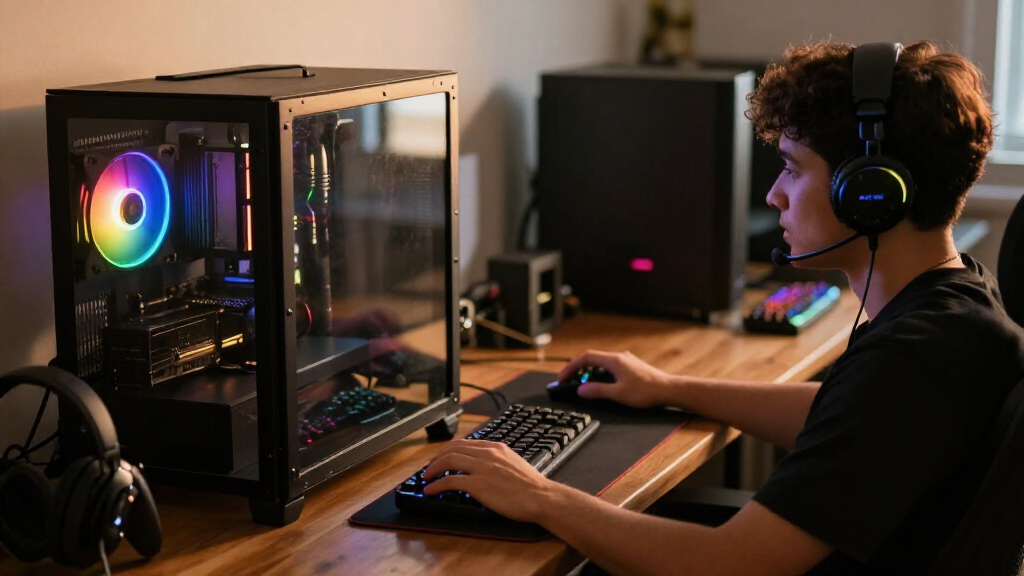
I compared the 15 systems by the parts that most shape a gaming PC purchase: graphics processor, gaming-relevant CPU, memory, storage, and upgrade context. The GPU tier helps indicate how much graphics headroom a system offers; the processor matters for high-frame-rate play and demanding games; and RAM and SSD capacity affect multitasking and how many games can stay installed. I also separated specs that look generous on paper from those that directly signal graphics performance, so large storage totals alone do not push a PC above a stronger gaming configuration.
The ranking favors balanced configurations with clear performance headroom, then considers how well each system suits a distinct buyer. RTX 5080 models rank as premium options, while RTX 5070 Ti PCs offer a compelling middle ground; RTX 5070 and RTX 5060-class systems serve buyers with less demanding performance needs or specific memory and storage priorities. Because the supplied specifications do not establish price, noise, thermals, warranty, or exact upgrade paths, I do not treat those factors as proven advantages and recommend verifying them before purchase.
| gaming PC | Operating system |
|---|---|
| iBUYPOWER Element Gaming Deskt | Windows 11 Home |
| Horizon Autherium Dragon RGB G | Windows 11 Pro |
| Skytech King 95 Gaming Desktop | Windows 11 Home 64-bit |
| CyberPowerPC Gamer Xtreme Gami | Windows 11 Home |
| Skytech Gaming Azure 3 Gaming | Windows 11 Home 64-bit |
| Skytech Gaming Desktop PC with | Windows 11 Home 64-bit |
| KOTIN Gaming Desktop with RTX | Windows 11 Home |
| Lenovo Legion Tower 5 Gaming D | Windows 11 Home |
| CyberPowerPC Gamer Master Gami | Windows 11 Home |
| Skytech Shadow 5 Gaming PC wit | Windows 11 Home 64-bit |
| STORMCRAFT Phantom Gaming PC w | Windows 11 Home |
| MSI Codex Z2 Gaming Desktop | Windows 11 Home |
| Skytech Crystal Gaming Desktop | Windows 11 Home 64-bit |
| YAWYORE Gaming Desktop PC with | — |
| Skytech King 95 Gaming Desktop | Windows 11 Home 64-bit |
Factors to Consider When Choosing Best Gaming PCs
Specs are useful only when they match your display, games, and plans for the PC. I’d use these broader checks to avoid paying for capacity you will not use or choosing a system that leaves too little room for the games you actually play.
Match the Graphics Tier to Your Display
Start with your monitor’s resolution and refresh rate, since a PC intended for high-refresh 1080p play faces a different workload than one driving a high-resolution display. Stronger graphics cards can help with demanding visual settings and provide more headroom, but pairing an expensive GPU with a basic monitor may leave much of that capability unused. Conversely, choosing the least powerful GPU while planning to play graphically intensive games at high resolution can mean lowering settings sooner. Treat GPU tiers as a starting point, not a guarantee of a particular frame rate; individual games vary widely. Check independent performance data for the games and resolution you care about before deciding how far up the graphics range to go.
Balance the CPU With the Graphics Card
A gaming PC is a system, so a high-end processor does not make up for a graphics card that falls short of your goals. CPU strength matters more in games with heavy simulation demands, competitive titles targeting high frame rates, and situations where several applications run alongside the game. For many graphics-intensive games, the GPU remains the more influential component, making an unusually expensive CPU a poor trade if it forces a weaker graphics card. Compare the processor and GPU together rather than ranking computers by the CPU name alone. If you also create content or stream, factor in those workloads, but avoid assuming that every gaming buyer needs the most powerful processor listed.
Choose Memory for Your Games and Other Apps
Memory capacity affects how comfortably a PC handles a game alongside voice chat, browsers, launchers, and creative software. A 16GB configuration can be adequate for many uses, but buyers who multitask heavily may prefer 32GB to leave more breathing room. Going from 32GB to 64GB is less likely to improve ordinary gaming on its own, so treat the Horizon Autherium’s larger memory capacity as a capacity advantage rather than proof of faster gameplay. Also check whether the listing specifies the memory type and whether the system leaves accessible slots for future upgrades. The useful amount depends on your routine, not just the largest number in a spec list.
Plan SSD Capacity Around Your Game Library
Storage affects how many games and large files you can keep installed, not the graphics performance of the PC. A 1TB SSD can fill faster than expected if you rotate among several large games, so a 2TB option can reduce the need to uninstall titles regularly. A listing with several terabytes may be convenient, but check whether all capacity is solid-state storage and how the drive is configured. Before buying, confirm the number of open storage slots and the supported drive types if you expect to expand later. Avoid paying extra for capacity you will not use when a smaller SSD plus a straightforward upgrade plan would fit better.
Check Upgrade Access and Service Details
Prebuilt PCs differ in how easily you can replace memory, storage, the graphics card, or the power supply. A standard-looking component list does not confirm that a particular part is easy to access or that the power supply can support a future GPU upgrade. Review the case dimensions, motherboard details, power supply capacity, cooling arrangement, warranty terms, and support process before ordering. These details matter most if you plan to keep the PC for years or want to upgrade instead of replacing the whole system. If the listing leaves them unclear, ask the seller or manufacturer rather than assuming every component follows a standard layout.
Pay for Headroom You Can Actually Use
Paying for a higher GPU tier makes sense when your monitor, games, and expected settings can make use of it. The RTX 5080 systems in this roundup are the performance-first choices, but buyers focused on less demanding games may get a better fit from a lower graphics tier and save budget for a display or storage upgrade. Likewise, large memory and storage figures are useful only when your workload needs them. Think about how long you expect to keep the PC and whether you prefer stronger performance now or a system that meets today’s needs with room for later upgrades. A realistic plan beats choosing the most imposing spec sheet by default.
Frequently Asked Questions
Should I choose an RTX 5070 Ti PC or spend more for an RTX 5080 system?
I’d choose between them based on your monitor and the games you play, rather than treating the higher GPU tier as an automatic need. The RTX 5070 Ti systems here pair strong graphics with the Ryzen 7 9800X3D, making them balanced picks for demanding gaming. The RTX 5080 options are better suited to buyers who want more graphics headroom for demanding settings or expect to keep the system through future game releases. If you play less demanding titles or use a more modest display, that extra graphics capability may not change your experience enough to justify the step up. Check performance results for your specific games before deciding.
Is 16GB of graphics memory worth choosing over 8GB?
More graphics memory can help with games and settings that use larger textures or demand more video memory, but it does not make a GPU faster by itself. In this lineup, the Skytech Azure 3 lists an RTX 5060 Ti with 16GB, while two other RTX 5060 Ti configurations list 8GB. Compare the complete GPU specification and independent game performance, not memory capacity alone. If you play newer graphics-heavy games or want extra room for high-resolution textures, the larger capacity may be appealing. For lighter games and more modest settings, other parts of the system may matter more to your choice.
Do I need 64GB of RAM for a gaming PC?
Most buyers should choose memory based on their actual workload rather than the largest available capacity. A 32GB configuration is a sensible target for many gaming setups, particularly if you keep other applications open while playing. The Horizon Autherium’s 64GB may suit heavy multitasking or demanding creative tasks, but that capacity alone does not indicate better gaming performance than a system with a stronger graphics card. If you mostly play games and use everyday applications, consider whether that extra memory would be put to work. Checking upgrade options can also make starting with less memory a reasonable choice.
Is a 1TB SSD enough for a gaming PC?
A 1TB SSD can be enough if you keep a limited number of large games installed and are comfortable uninstalling titles you no longer play. Players who maintain a broad library or store video and creative files on the PC may find 2TB more convenient. The systems in this roundup range from 1TB SSD listings to larger storage totals, but capacity does not directly improve frame rates. Confirm whether a listing’s total storage is all SSD and check for available expansion slots. That way, you can weigh immediate convenience against adding storage later.
What should I check if I might upgrade my prebuilt PC later?
Look beyond the headline processor and graphics card to the motherboard, power supply, case clearance, cooling, and open memory or storage slots. These details determine whether a future graphics card or drive can fit and operate properly. Ask whether the system uses standard components, since proprietary parts can limit replacement choices. Review the warranty and support terms before opening or modifying the PC, as upgrade rules vary by seller and manufacturer. If the listing does not provide these details, get them confirmed before treating the system as an upgrade-friendly purchase.
Conclusion
For most buyers seeking a strong mix of gaming performance and balanced components, my best overall recommendation is the Skytech King 95 with Ryzen 7 9800X3D and RTX 5070 Ti; its 2TB SSD also gives it an edge over the comparable Lenovo Legion Tower 5’s listed 1TB. For best value in capability, consider the Skytech Gaming Azure 3, which combines a Ryzen 7 7800X3D with an RTX 5060 Ti listing 16GB of graphics memory; compare its full configuration and seller terms before buying. The best premium choices are the STORMCRAFT Phantom and Skytech King 95 with RTX 5080, with the latter listing a Ryzen 7 9850X3D, 32GB RAM, and 2TB SSD. For beginners, the Skytech Crystal or YAWYORE RTX 5060 systems offer simpler entry points, though I’d verify their memory, storage, and upgrade details. If your specific priority is generous included capacity, the Horizon Autherium lists 64GB RAM and 5TB storage; choose it for those needs, not on capacity figures alone.