
TL;DR

Get the latest gadgets delivered free with Prime
- Fast, free delivery on millions of items
- Prime Video, Amazon Music and more included
- Member-only deals all year
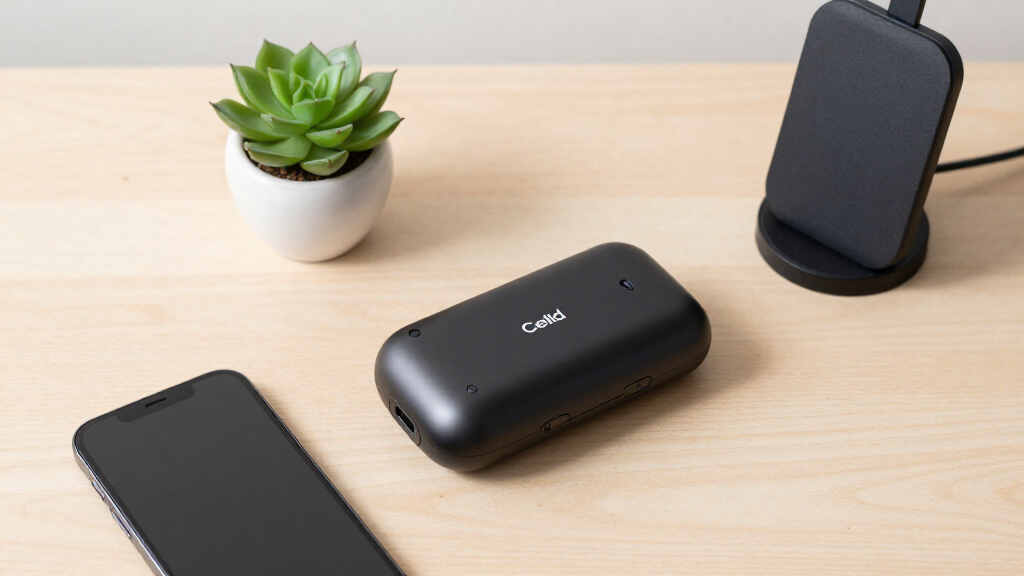
Celld has launched a platform allowing developers to deploy Durable Objects in a self-hosted, distributed environment. This development enhances control and scalability for serverless applications. The project is in early stages, with broader availability expected soon.
Celld has introduced a platform that enables developers to deploy self-hosted, distributed Durable Objects, a significant expansion of serverless architecture capabilities. This development allows for greater control, scalability, and customization in managing stateful applications, marking a notable step forward in serverless computing.
The platform, announced by Celld in October 2023, allows users to host Durable Objects on their own infrastructure rather than relying solely on cloud providers. This approach aims to address concerns around vendor lock-in, data sovereignty, and latency.
According to Celld, the system distributes Durable Objects across multiple nodes, providing resilience and scalability similar to cloud-based solutions but with increased control. The platform is designed to be compatible with existing serverless workflows and integrates with popular development tools.
While the core concept has been demonstrated in early prototypes, it is not yet generally available. Celld has indicated that a broader beta release is planned in the coming months, pending further testing and user feedback.
Why Self-Hosting Durable Objects Changes Serverless Architecture
This development matters because it offers developers the ability to run stateful, serverless applications on their own infrastructure, reducing reliance on third-party cloud providers. It also enhances control over data and operational policies, which is critical for organizations with strict compliance requirements.
By enabling distributed deployment, Celld’s platform could improve performance and resilience, especially for applications with high latency or data locality needs. This could influence how companies architect their serverless solutions, potentially shifting some workloads away from public clouds.
Products Worth Considering

Samsung Galaxy Tab A11 8.7-Inch Wi-Fi Tablet, 64GB, 4GB RAM, Silver

Logitech MX Master 4 Ergonomic Wireless Mouse with Haptic Feedback, Graphite

Anker SOLIX S2000 Portable Power Station, 2,010Wh, 1,500W
As an affiliate, we earn on qualifying purchases.
Background on Durable Objects and Serverless Computing
Durable Objects are a feature of Cloudflare Workers that provide persistent, stateful objects for serverless applications. They enable developers to maintain state across requests without managing infrastructure directly. Traditionally, these objects are hosted on a cloud provider’s infrastructure, limiting control and customization.
Celld’s initiative builds on this by proposing a self-hosted, distributed model, which has been a topic of interest among developers seeking more control and flexibility in serverless environments. Prior efforts have focused on cloud-only solutions, making Celld’s approach a notable shift.
The concept of distributed, self-hosted state management aligns with broader trends toward edge computing and hybrid cloud architectures, but practical implementations are still emerging.
Uncertainties Around Adoption and Technical Maturity
It is not yet clear how broadly Celld’s self-hosted, distributed Durable Objects will be adopted, or how mature the platform will be at launch. Details about performance, security, and integration are still emerging, and the project remains in early testing phases.
Additionally, questions remain about compatibility with existing cloud-based Durable Objects and how the platform will handle complex scenarios such as multi-region synchronization and failure recovery.
Next Steps for Celld and Developer Adoption
Celld plans to release a beta version of the platform in the upcoming months, inviting developers to test and provide feedback. The company will likely publish detailed documentation and case studies to demonstrate use cases and performance benchmarks.
Further updates are expected as the platform matures, with potential integrations into popular development tools and cloud services. Monitoring how the developer community responds will be key to understanding its future trajectory.
Key Questions
What are Durable Objects?
Durable Objects are persistent, stateful entities used in serverless environments to manage data across multiple requests without relying solely on cloud infrastructure.
How does self-hosting Durable Objects benefit developers?
Self-hosting provides greater control over data, customization, and potentially lower latency, especially for applications with strict compliance or data sovereignty needs.
Is Celld’s platform available now?
The platform is currently in early testing phases, with a broader beta planned for the coming months. It is not yet generally available.
What are the security implications of self-hosting Durable Objects?
Details are still emerging, but self-hosting shifts security responsibilities to the user, requiring careful management of infrastructure and data protection measures.
Will this replace cloud-based Durable Objects?
It is too early to tell. The platform aims to complement existing solutions by offering an alternative for specific use cases requiring self-hosting and distribution.
Source: hn