
Many beginners jump into buying advanced recovery tech too early, before establishing basic habits like good nutrition, hydration, and sleep. Relying on devices for real-time data can be overwhelming, lead to frustration, or cause unnecessary stress if you don’t understand your body’s signals. Over-monitoring might distract you from personal feelings of fatigue or soreness. If you want to build a strong foundation first, then discover the right recovery tools for your journey, keep exploring.
Key Takeaways
- Beginners may rely too heavily on devices before understanding their body’s natural recovery signals.
- Early tech adoption can lead to unnecessary stress and frustration from chasing incomplete or misinterpreted data.
- Focusing on foundational habits like nutrition and sleep is more effective than immediate tech investment.
- High-tech recovery tools can be expensive and overwhelming for those just starting their fitness journey.
- Over-monitoring with devices may hinder intuitive awareness and delay personalized recovery strategy development.
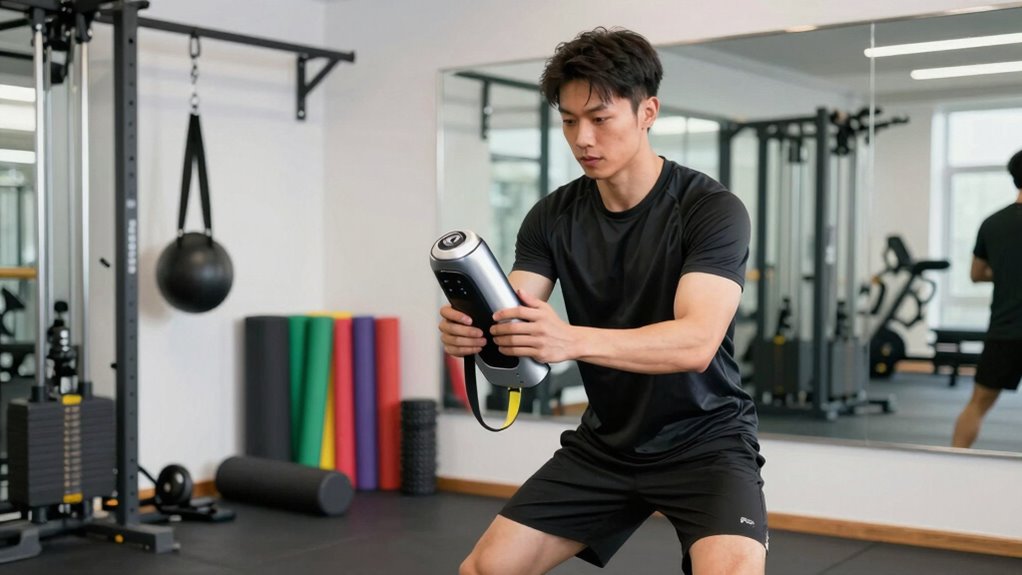
Have you ever wondered how top athletes bounce back so quickly after intense workouts? A big part of their quick recovery lies in the technology they use, especially wearable devices designed to enhance muscle recovery. These gadgets track your movements, monitor your heart rate, and sometimes even analyze your sleep patterns. They give you real-time data about how your body is responding to exercise, helping you optimize your recovery process. It’s tempting to jump into buying these devices early in your fitness journey, thinking they’ll fast-track your progress. But in reality, many beginners get caught up in the hype and spend money on tech that’s not quite right for where they are.
When you’re just starting out, your body needs time to adapt to new stresses, and recovery doesn’t always require the latest gadget. Instead, focus on foundational habits like proper nutrition, hydration, and sleep. Wearable devices for muscle recovery are fantastic tools, but they’re most effective once you’ve built a consistent routine and understand your body’s basic signals. If you buy one too early, you might become overly dependent on data rather than listening to your own feelings of fatigue or soreness. Over-monitoring can lead to unnecessary stress or even discourage you if the device suggests you’re not recovering fast enough, when in reality, your body is still adjusting. Developing an awareness of your body’s signals can be supported by understanding the importance of biodiversity and the variety of recovery methods that suit individual needs.
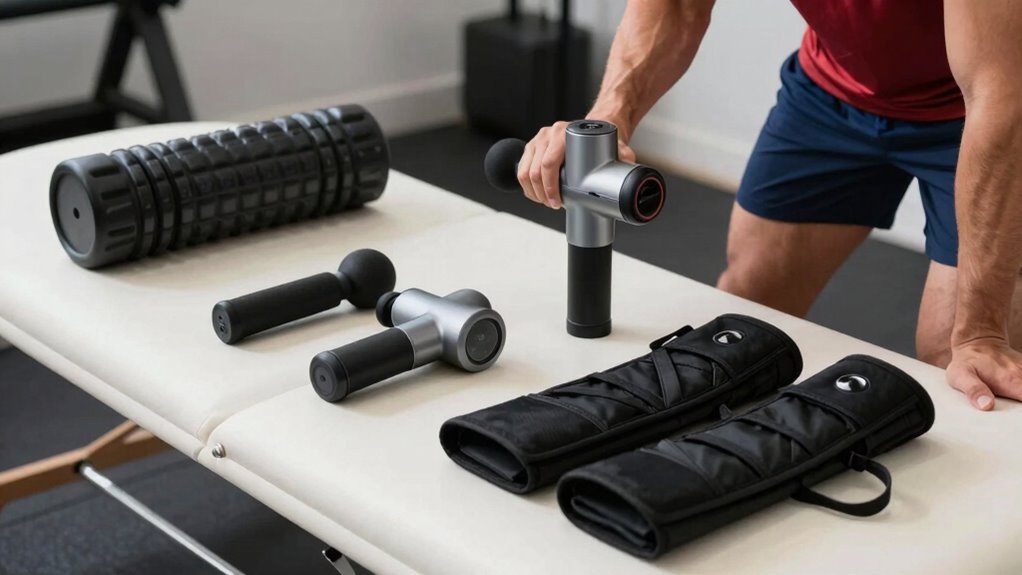
Additionally, these devices can be expensive, and their features can sometimes be overwhelming for beginners. It’s easy to get caught up in chasing every metric or trend instead of focusing on simple, effective recovery strategies like stretching, foam rolling, or light activity. Jumping into high-tech recovery tools too soon can lead to frustration or misinterpretation of data, especially if you’re unfamiliar with how your body responds to different recovery methods. You might start relying on technology instead of developing your own awareness, which is essential for long-term progress. Recognizing that recovery is highly individualized is a key aspect of recovery science, and incorporating diverse approaches can enhance your overall results. Understanding the individual variability in recovery helps you recognize that no single device or method applies universally, reinforcing the importance of personalized strategies.
basic foam roller for muscle recovery
As an affiliate, we earn on qualifying purchases.
As an affiliate, we earn on qualifying purchases.
Frequently Asked Questions
How Do I Know if Recovery Tech Is Right for My Fitness Level?
To know if recovery tech is right for your fitness level, start with personalized assessments to evaluate your current needs and recovery capacity. Consider technology compatibility—ensure the equipment suits your goals and lifestyle. If you’re experiencing persistent soreness or fatigue, recovery tech can help, but it’s best to consult a professional first. As you progress, these tools become more beneficial, so match your tech choices to your evolving fitness journey.
Are There Any Risks Associated With Early Use of Recovery Devices?
Jumping into recovery devices too soon is like rushing into the deep end—you risk overuse concerns and device dependency. If you rely too heavily on tech before building a solid foundation, you might neglect essential rest and proper training. Overusing these devices can lead to diminished returns, making your body dependent instead of resilient. Use recovery tech wisely and as a supplement, not a shortcut, to avoid potential risks.
How Much Should I Budget for Recovery Technology?
You should budget around $100 to $300 for basic recovery tech, but avoid falling for recovery myths and tech myths that overpromise results. It’s tempting to buy the latest devices early, but rushing into recovery tech without proper understanding can be inefficient. Focus on what genuinely helps, like foam rollers or massage guns, and invest gradually. Remember, effective recovery is more about consistency than expensive gadgets.
Can Recovery Tech Replace Proper Rest and Nutrition?
Recovery tech isn’t a magic wand that replaces proper rest and nutrition. Think of it as a helpful guide, easing muscle soreness and supporting better sleep quality, but it can’t fill the gaps left by good sleep and balanced eating. You need both to truly heal and perform. Relying solely on gadgets might leave you stranded in muscle fatigue, so prioritize rest and nutrition as your foundation for lasting progress.
What Signs Indicate I Should Stop Using Recovery Tech?
You should stop using recovery tech if you notice overuse side effects like increased soreness, skin irritation, or dizziness. If you feel more dependent on the technology, losing confidence in your natural recovery methods, it’s a sign to take a break. Over-reliance can lead to technology dependency, reducing your ability to recover naturally. Listening to your body and prioritizing proper rest and nutrition remains essential for safe, effective recovery.
hydration and sleep tracking wearable
As an affiliate, we earn on qualifying purchases.
As an affiliate, we earn on qualifying purchases.
Conclusion
As you explore recovery tech, remember that more isn’t always better. Nearly 60% of fitness enthusiasts buy recovery tools within the first six months, often before understanding their true needs. Jumping in too early can lead to unnecessary expenses and underused equipment. Focus on building a solid foundation first, then invest thoughtfully. Patience and knowledge will help you make smarter choices, ensuring your recovery tech truly supports your progress instead of becoming a costly distraction.
As an affiliate, we earn on qualifying purchases.
As an affiliate, we earn on qualifying purchases.