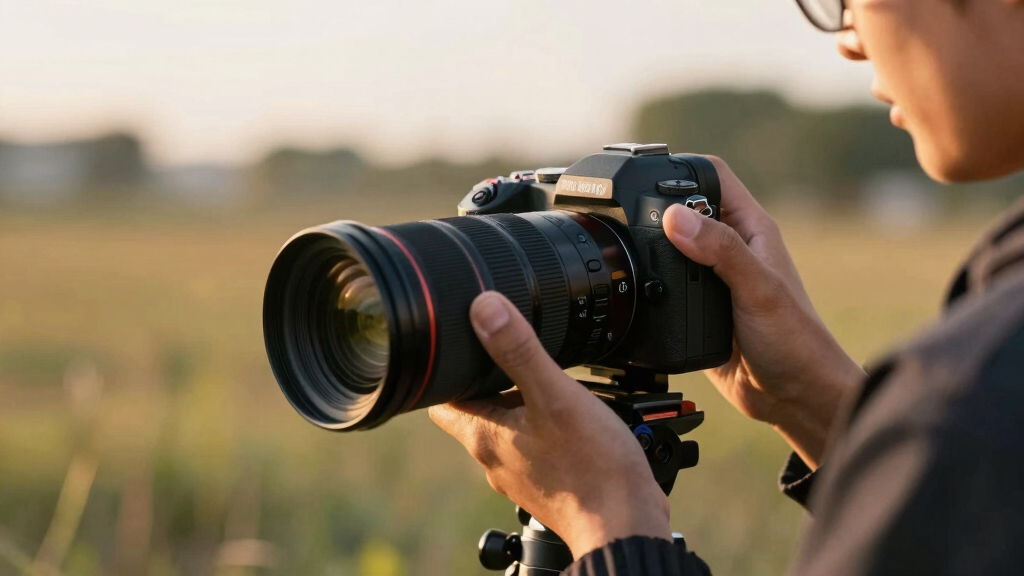

Choosing the right cinema lenses for mirrorless video can significantly elevate your footage quality and creative control. The best options balance image quality, handling, and compatibility, but they come with tradeoffs like cost and size. The Canon RF20mm F1.4 L VCM stands out for its ultra-wide perspective, ideal for immersive shots, while the Nikon NIKKOR Z 135mm f/1.8 S excels in telephoto portrait work. Budget constraints often mean sacrificing some build quality or aperture speed, so understanding your priorities is key. Keep reading for a detailed breakdown of these and other top cinema lenses for mirrorless video.
Key Takeaways
- Prime lenses dominate for their superior optical quality and wide apertures, essential for cinematic look.
- Versatile zoom lenses like the RF 24-105mm offer convenience but may compromise on maximum aperture and optical perfection.
- Specialty lenses such as anamorphic or telephoto options expand creative possibilities but often come with higher costs and size considerations.
- Compatibility and mount types remain critical—ensure your camera system aligns with the lens mount and sensor size.
- Price often correlates with build quality and optical performance, but budget-friendly options can still deliver impressive results for beginners.


More Details on Our Top Picks
Canon RF20mm F1.4 L VCM, Mirrorless Hybrid Lens, Ultra-Wide Angle Prime, Compatible with Full-Frame & APS-C Mirrorless Cameras, for Photo & Video
This lens stands out for its versatile ultra-wide perspective combined with professional durability and advanced coatings that significantly reduce ghosting and flare. Its manual iris ring is a welcome feature for video shooters, offering precise control similar to dedicated cinema lenses. Compared with the Nikon Z 135mm f/1.8 S, it provides a wider angle but at a tradeoff of less reach and more distortion at the edges, making it better suited for immersive landscapes or architecture rather than tight portraits. The Nano USM and VCM focus mechanisms ensure quiet operation, vital for professional video, though some may find the autofocus speed less snappy than more specialized photo lenses. Its weather-resistant build provides confidence in harsh environments, but the large size and weight could be a drawback for handheld shooting over long periods.Pros:- Excellent manual control with iris ring for cinematic precision
- Weather-sealed, durable construction for outdoor use
- Nano USM and VCM focus ensure quiet, high-speed operation
Cons:- Relatively bulky and heavy for extended handheld use
- Edge distortion and less suitable for tight portraits
Best for: videographers and photographers seeking a high-quality, wide-angle prime for both stills and cinematic video, especially in challenging environments.
Not ideal for: users needing a compact, lightweight lens for fast-paced handheld shooting or quick event coverage, where size and autofocus speed matter more.
- Mounting Compatibility:Canon RF
- Focus Mechanism:Floating focus, VCM
- Aperture Range:F1.4 manual iris
- Weather Resistance:Weather-sealed
- Coatings:ASC, SWC
- Weight:Approx. 1.2 lbs
Bottom line: This lens is a top choice for serious creators who want a versatile, reliable wide-angle prime for both photo and video in demanding conditions.
Canon EOS R5 C RF24-105mm F4 L is USM Lens Kit 8K/60P FF Sensor Pro Cinema/Photo Camera, RF Mount, Internal RAW, 8K HDMI RAW Out, 4K/2K Oversampling, Compact, Lightweight Design, Dual Pixel CMOS AF
This kit makes the most sense for professionals who need a versatile zoom capable of 8K recording and high-speed autofocus, outperforming the prime-focused Nikon Z 135mm in flexibility. Its constant F4 aperture and image stabilization help achieve sharp handheld footage, and the internal cooling fan supports extended high-res recording sessions. Compared to the Canon RF85mm f/1.8, it offers a broader zoom range but at the expense of a smaller maximum aperture, which can limit creative depth-of-field effects. The dual pixel CMOS AF with Eye/Head detection ensures accurate focus tracking, essential in dynamic shooting environments. However, its bulk and integrated system complexity might deter those looking for simplicity or ultra-light setups.Pros:- 8K/60P recording with internal RAW and HDMI out
- Constant F4 aperture with effective image stabilization
- High-precision Dual Pixel CMOS AF with subject detection
Cons:- Heavier and larger than prime lenses like the RF85mm
- Less shallow depth of field compared to prime options
Best for: cinematographers and videographers requiring a lightweight, all-in-one lens for 8K production and versatile framing.
Not ideal for: shooters who prioritize shallow depth-of-field effects or need a prime lens for cinematic portraiture, where aperture and bokeh are critical.
- Focal Length Range:24-105mm
- Maximum Aperture:F4
- Video Resolution:8K/60P
- Image Stabilization:Yes, 5-stop
- Focus System:Dual Pixel CMOS AF
- Compatibility:Canon RF mount
Bottom line: This lens kit is ideal for professional videographers who need flexible zoom capabilities with high-resolution output and reliable autofocus in a compact package.
Panasonic LUMIX G Lens, 25mm, F1.7 ASPH, Mirrorless Micro Four Thirds, H-H025K (USA Black)
This lens is a favorite for creators who need a lightweight, fast prime with a natural 50mm equivalent focal length, perfect for versatile shooting and run-and-gun scenarios. Its bright F1.7 aperture delivers a pleasing background blur and performs well in low-light conditions. Compared with the RF85mm f/1.8, it offers a wider field of view with less compression, making it suitable for general-purpose shooting, but it lacks stabilization and autofocus, which limits its use for fast-paced video or handheld work. Its small size and low weight are major advantages for gimbal or shoulder rig setups, though some may find the manual focus ring less smooth than more premium cine lenses.Pros:- Bright F1.7 aperture for low-light and depth-of-field control
- Lightweight and compact for easy handling
- Sharp image quality with nice background blur
Cons:- No image stabilization or autofocus
- Manual focus may be less smooth for video
Best for: amateur filmmakers and content creators looking for a compact, fast lens for handheld or gimbal use with excellent image quality.
Not ideal for: professionals requiring autofocus or stabilization for fast-moving scenes or solo run-and-gun shoots, where reliability and speed are key.
- Focal Length:25mm
- Maximum Aperture:F1.7
- Lens Construction:8 elements in 7 groups
- Weight:125g / 4.4 oz
- Minimum Focus Distance:0.2 meters
- Compatibility:Micro Four Thirds
Bottom line: This prime lens is a great choice for portable, low-light shooting scenarios but less suited for fast-action or autofocus-dependent video work.
RF 85mm f1.8 Portrait Lens -MF for Canon EOS R6 Mark II/R5 Mark II/R5/R3/R7/R8/R10/RP/R6/R50/R1/R5 C/R50 V/R100/R/Ra – Manual Focus Medium Telephoto Mirrorless Cameras Lenses(RF Mount)
This lens offers a fully manual focus experience with high precision, making it ideal for artistic portraiture and cinematic shots where control outweighs autofocus speed. Its smooth focus ring and internal focus mechanism facilitate fine-tuned adjustments, and the ultra multi-coating reduces flare and aberrations, providing crisp, dreamy backgrounds. Compared to autofocus primes like the Canon RF85mm f/1.8, it requires more skill but rewards with a unique creative process. The absence of electronic contacts means it’s incompatible with some camera autofocus and image stabilization features, limiting its use for run-and-gun or fast-paced video. Still, for controlled setups and studio work, it excels.Pros:- Full manual focus with precise control
- Smooth focus ring and internal focus system
- Excellent optical coatings minimize flare
Cons:- No autofocus or electronic contacts
- Requires more skill and practice to use effectively
Best for: serious portrait and cinematic shooters who prefer hands-on focus control and high artistic expression, especially in studio or tripod setups.
Not ideal for: videographers or event shooters needing rapid autofocus and quick focus pulls, where electronic control and speed are essential.
- Focal Length:85mm
- Maximum Aperture:f/1.8
- Focus Type:Manual
- Lens Coating:UMC
- Compatibility:Canon RF mount
- Weight:Approx. 350g
Bottom line: This lens is perfect for dedicated portrait and cinematic work where manual focus control enhances artistic vision, but not for fast-paced or autofocus-dependent shooting.
Nikon NIKKOR Z 135mm f/1.8 S Plena Lens | Telephoto for Z Series mirrorless Cameras | Nikon USA Model
This 135mm prime delivers stunning edge-to-edge clarity and a dreamy, circular bokeh that elevates portraiture and cinematic footage alike. Its fast, near-silent autofocus and advanced anti-reflective coatings make it ideal for capturing sharp, vibrant images without distracting noise or glare. Compared with the Canon RF20mm F1.4, it provides a much narrower field of view, focusing on subjects with exquisite compression and background separation, making it perfect for portraits or detail shots. Its high-quality build and manual control options suit professionals who want refined, artistic results. The main tradeoff is its fixed focal length, limiting framing options compared to zooms, and its weight can be a consideration for handheld work.Pros:- Astonishing sharpness and edge-to-edge clarity
- Beautiful circular bokeh ideal for portraits
- Near-silent autofocus with advanced coatings
Cons:- Fixed focal length limits framing flexibility
- Relatively heavy for handheld shooting
Best for: portrait and cinematic creators who desire exceptional detail and beautiful background separation at a flattering focal length.
Not ideal for: shooters needing a versatile zoom lens or those working in tight spaces where wider angles are necessary.
- Focal Length:135mm
- Maximum Aperture:f/1.8
- Focus System:Auto/Manual
- Lens Coating:Aero Bright Coating
- Compatibility:Nikon Z
- Weight:Approx. 870g
Bottom line: This lens excels in portrait and cinematic applications demanding superb image quality and artistic bokeh but isn’t suited for dynamic environments requiring zoom or flexibility.
SIRUI 24mm Anamorphic Lens F2.8 1.33X APS-C Camera Lens for MFT Mount, Blue Flare
This SIRUI 24mm Anamorphic Lens stands out for its ability to produce a cinematic 2.4:1 aspect ratio with a distinctive blue flare and oval bokeh, adding a stylized flair that many standard lenses can’t match. Compared with more traditional lenses, its anamorphic nature offers a unique, expansive horizon and distinctive light streaks, perfect for filmmakers seeking a vintage or stylized aesthetic. The lens’s nano-coating minimizes aberration and vignette, ensuring sharp resolution, while the reduced minimum focusing distance of 0.6m makes it versatile in tight spaces. However, the manual focus and lack of image stabilization limit its utility for run-and-gun shooting or fast-paced environments. Its solid aluminum housing and copper rings offer durability and smooth focus control, but the absence of auto-focus can be a drawback for fast workflow. This lens is ideal for creative shooters who prioritize stylized visuals and are comfortable with manual controls.
Pros:- Distinctive anamorphic 2.4:1 aspect ratio with unique blue flare
- Excellent resolution and sharpness thanks to high-quality Schott glass and Nano-coating
- Compact, durable aluminum housing with smooth focus rings
Cons:- Lacks image stabilization, limiting handheld use
- Manual focus only, which may be challenging for fast-paced shooting
- No autofocus or electronic controls, reducing versatility
Best for: Filmmakers seeking a distinctive anamorphic look for creative projects or music videos.
Not ideal for: Documentaries or run-and-gun shooting where quick focus adjustments and stabilization are critical.
- Focal Length:24mm
- Maximum Aperture:f/2.8
- Mount Compatibility:Micro Four Thirds
- Lens Design:Anamorphic, Fixed
- Focus Type:Manual Focus
- Nano Coating:Yes
Bottom line: This lens makes the most sense for stylized, cinematic projects where manual control and visual flair are prioritized over convenience.
Canon EOS R50 V Mirrorless Camera with RF-S14-30mm F4-6.3 IS STM PZ Lens, APS-C Sensor, 24.2 Megapixels, Ultra-Wide Zoom, Fast Autofocus, Vlogging and Live Streaming Kit for Content Creators, Black
This Canon EOS R50 V is a flexible option for those who want a compact, video-first camera with a versatile zoom lens. Its APS-C sensor and 4K recording capabilities make it suitable for both professional and hobbyist video work, rivaling the more feature-rich Canon R5 C but in a smaller, lighter package. The included RF-S 14-30mm F4-6.3 IS STM PZ lens offers reliable autofocus and excellent stabilization, making it ideal for handheld and run-and-gun shooting. Its redesigned interface and features like slow and fast motion modes provide creative control, especially for vloggers and streamers. A tradeoff is its modest maximum aperture, which may limit low-light performance compared to full-frame options. Additionally, its crop mode can be restrictive for wide shots at 4K. Still, for content creators seeking an all-in-one, portable solution, this camera delivers impressive video quality without sacrificing ease of use. This camera is perfect for vloggers and social media content creators who need portability combined with solid video features.
Pros:- Compact, lightweight design ideal for on-the-go shooting
- Reliable autofocus with deep subject detection and stabilization
- Includes versatile RF-S 14-30mm lens with zoom and stabilization features
Cons:- Limited maximum aperture (f/4-6.3), affecting low-light shooting
- Crop mode at 4K reduces wide-angle capabilities
- No built-in ND filters or advanced cinema controls
Best for: Vloggers, TikTokers, and social media influencers needing a lightweight, all-in-one video camera.
Not ideal for: Professional filmmakers requiring full-frame sensor benefits or extensive lens selection for cinematic work.
- Sensor Type:APS-C CMOS
- Megapixels:24.2 MP
- Video Resolution:4K/60p
- Lens:RF-S 14-30mm F4-6.3 IS STM PZ
- Autofocus:Dual Pixel CMOS AF II
- Stabilization:Yes
Bottom line: This camera provides excellent value for content creators prioritizing portability and decent 4K video in a compact package.
Canon EOS R50 V Mirrorless Camera (Body Only) – APS-C Digital Camera, Flip Screen 4K Video, Interchangeable Lens Camera for Vlogging, Content Creation, Streaming, Filming, Podcasts, TikTok
The Canon EOS R50 V (Body Only) offers a compelling entry point into interchangeable lens video with a focus on vlogging and social media. Its 24.2 MP APS-C sensor and 4K video capabilities provide sharp footage suitable for streaming and quick edits. Unlike the more advanced R5 C, it’s designed with simplicity, featuring a flip screen and easy-to-access record button that appeal to beginner and intermediate creators. The camera’s Dual Pixel CMOS AF II ensures smooth subject tracking, making it ideal for handheld and dynamic shot setups. The main tradeoff is its limited low-light performance due to the smaller sensor and modest maximum aperture, which might challenge users shooting in dim environments. Still, its affordability and user-friendly interface make it a strong choice for casual content creators. This camera is best suited for vloggers and social media users seeking an affordable, easy-to-use camera for 4K video.
Pros:- Affordable price point for entry-level creators
- Flip-out LCD screen perfect for vlogging
- Fast, reliable autofocus with subject detection
Cons:- Limited low-light performance due to APS-C size
- No in-body stabilization, relying on lens stabilization
- Maximum aperture of f/4-6.3 limits depth control and low-light use
Best for: Beginner vloggers and social media content creators on a budget needing reliable autofocus and 4K video.
Not ideal for: Professional filmmakers or those requiring extensive manual controls and full-frame image quality.
- Sensor Type:APS-C CMOS
- Megapixels:24.2 MP
- Video Resolution:4K/60p
- Screen:Flip-out LCD
- Autofocus:Dual Pixel CMOS AF II
- Connectivity:Wi-Fi, Bluetooth
Bottom line: This camera is ideal for beginners and casual creators who want a straightforward, budget-friendly 4K vlogging camera.
Canon RF100-400mm F5.6-8 USM Telephoto Lens, Black
This Canon RF100-400mm F5.6-8 USM stands out as a lightweight, highly portable telephoto zoom lens perfect for wildlife, sports, or distant subjects. Its long zoom range of 100-400mm offers impressive reach, rivaling larger lenses but in a compact design. The lens’s optical image stabilization with up to 5.5 stops of shake correction makes handheld shooting feasible, especially when paired with EOS R series cameras that feature In-Body Image Stabilization, boosting correction to 6 stops. The fast, quiet Nano USM autofocus makes it suitable for capturing moving subjects without noise distraction, a key advantage over older USM or STM lenses. However, the aperture range of f/5.6-8 limits low-light performance and depth of field control, making it less ideal for cinematic or low-light environments. It’s best for outdoor, daylight shooting where portability and high image quality are priorities. This lens is ideal for outdoor enthusiasts or wildlife photographers seeking a lightweight, versatile telephoto solution.
Pros:- Compact, lightweight design for easy portability
- Versatile zoom range suitable for wildlife and sports
- Effective stabilization with high correction when used with IBIS cameras
Cons:- Aperture range of f/5.6-8 limits low-light and depth control
- Variable aperture can be less consistent for cinematic work
- Less suited for indoor or low-light environments
Best for: Wildlife photographers and outdoor shooters needing a flexible, portable telephoto lens for daytime use.
Not ideal for: Cinematic filmmakers or low-light shooters who require constant aperture and wider control.
- Focal Length Range:100-400mm
- Maximum Aperture:f/5.6-8
- Image Stabilization:Yes, up to 5.5 stops
- Focus Motor:Nano USM
- Lens Mount:RF
- Minimum Focus Distance:2.89 feet
Bottom line: This lens makes a strong choice for outdoor and wildlife photography where portability and reach are key priorities.

How We Picked
Our selection process focused on lenses that are explicitly designed or well-suited for mirrorless video production. We evaluated each product based on optical performance, such as sharpness, bokeh, and chromatic aberration, as well as usability factors like focus breathing, size, weight, and autofocus performance. Compatibility with popular mirrorless mounts (Canon RF, Nikon Z, Micro Four Thirds) was essential, along with build quality for professional use. We also considered value, balancing cost against features, to recommend options suitable for different budgets. The ranking reflects a combination of image quality, versatility, and user experience tailored to mirrorless video workflows.
Factors to Consider When Choosing Cinema Lenses For Mirrorless Video
Choosing the right cinema lens for your mirrorless camera involves more than just optical quality. Factors like sensor size compatibility, aperture speed, and focusing mechanisms influence your footage and ease of use. Considering your primary shooting style—whether narrative filmmaking, vlogging, or documentary—can help narrow down options. It’s also wise to think about the size and weight of lenses, especially if you plan to shoot handheld for extended periods. Here are key factors to guide your decision beyond just specifications.
Sensor Compatibility and Mounts
Not all lenses fit every mirrorless camera, so verifying mount compatibility is the first step. Full-frame lenses work seamlessly with most full-frame mirrorless bodies, offering wider image circles and better low-light performance. Crop sensor models, like APS-C or Micro Four Thirds, often require lenses optimized for smaller sensors, which can reduce cost and size. Mismatched lenses can cause vignetting or require cropping, so double-check your camera’s sensor size and mount type before purchasing. Compatibility extends to electronic connections for autofocus and stabilization, which vary across brands.
Aperture Speed and Light Handling
Wide apertures (f/1.2 to f/2.8) allow more light, which is vital for low-light scenes and achieving shallow depth of field. However, faster lenses tend to be more expensive and sometimes larger or heavier. For handheld or run-and-gun shooting, a lens with a consistent aperture and good image stabilization can make a significant difference. Conversely, if you’re working mostly in controlled lighting, a smaller aperture might suffice, saving costs and weight. Balancing aperture speed with your typical shooting environment is key to getting the look you want without overpaying or lugging around bulky gear.
Focus Mechanisms and Focus Breathing
Manual focus precision is crucial for cinematic footage, so look for lenses with smooth focus rings and minimal focus breathing—shifts in framing during focus pulls. Autofocus can be useful for run-and-gun or vlogging but may introduce noise or jitter that diminishes cinematic quality. Some lenses feature focus-by-wire systems, which can be less precise than mechanical focus rings. Test focus breathing characteristics if you plan to do complex focus pulls, as it impacts the overall professionalism of your shots. Prioritize lenses with focus control suited to your shooting style and post-production needs.
Size, Weight, and Handling
Large, heavy lenses can be unwieldy for handheld shooting or long sessions, affecting stability and fatigue. Compact, lightweight lenses are easier to carry and operate but may sacrifice optical performance or aperture size. For gimbal or steadicam work, size and balance matter significantly—small lenses improve mobility and reduce setup time. Think about your typical shooting setup and whether you’ll prioritize portability or optical excellence, as often the two are at odds. Choosing a lens that matches your camera rig’s weight capacity can prevent frustration and improve overall footage quality.
Cost and Value
High-end cinema lenses offer exceptional image quality and build but come with hefty price tags. Budget options can still deliver good results, especially with modern mirrorless sensors that enhance image quality even with less expensive glass. Consider whether investing in a premium lens will substantially improve your workflow or if a mid-range option provides enough quality for your needs. Additionally, factor in potential future upgrades—buying a versatile lens now might save money later if it remains compatible with your evolving camera system. Aim for a balance that satisfies your creative goals without overextending financially.
Frequently Asked Questions
Can I use cinema lenses for vlogging on mirrorless cameras?
Yes, many cinema lenses can be used for vlogging, especially if they are compact and lightweight. However, traditional cinema lenses tend to be larger and focus manually, which can be less convenient for handheld or on-the-go shooting. Some manufacturers now produce smaller, cinema-style lenses optimized for mirrorless systems, combining cinematic quality with portability. If you plan to vlog frequently, look for lenses with smooth focus rings and good autofocus performance, or consider dedicated compact cinema lenses designed for mirrorless cameras.
Is autofocus reliable enough for professional cinema work?
Autofocus technology has improved significantly in recent years, and many modern cinema lenses offer fast, accurate focusing suitable for certain professional workflows. However, for narrative filmmaking or scenes requiring precise focus pulls, manual focus is still preferred due to its greater control and predictability. Autofocus can be useful for run-and-gun scenarios or documentary work where speed matters more than perfect focus transitions. Always test autofocus behavior on your specific camera system to ensure it meets your cinematic standards.
Do I need anamorphic lenses for mirrorless cinema video?
Anamorphic lenses offer a distinctive cinematic look with unique lens flares and a wider aspect ratio, making them popular among filmmakers seeking a stylized aesthetic. However, they are often larger, more expensive, and require specific sensor adaptations. For mirrorless systems, dedicated anamorphic lenses are less common, but adapters can enable their use. If your project demands a classic anamorphic aesthetic, investing in a quality anamorphic lens is worthwhile, but for most general cinematic work, spherical lenses provide ample flexibility and easier handling.
How important is lens stabilization for mirrorless cinema lenses?
Lens stabilization can greatly improve handheld footage, especially with longer or heavier lenses. Many cinema lenses include built-in stabilization, but not all do, and some rely on camera stabilization systems instead. For mirrorless video, combining stabilized lenses with in-body stabilization often yields the best results. If you frequently shoot handheld or on gimbals, prioritize lenses with effective stabilization to reduce shake and improve image smoothness without needing excessive post-production stabilization.
Should I prioritize prime or zoom lenses for mirrorless cinema work?
Primarily, primes are favored for their superior optical performance, wider apertures, and lower distortion, making them ideal for cinematic image quality. Zoon lenses offer convenience and flexibility, allowing you to cover multiple focal lengths with a single lens, which can save time and gear weight. The choice depends on your workflow: if you often shoot in controlled environments and can plan shots carefully, primes are the better choice. For dynamic shooting scenarios or documentary work, zooms provide essential versatility without sacrificing too much image quality.
Conclusion
For filmmakers prioritizing overall image quality and professional control, the Canon RF20mm F1.4 L VCM makes an excellent choice. Beginners or content creators on a budget will find the Canon EOS R50 V with RF-S14-30mm a versatile and affordable option. Those seeking the best value without sacrificing too much quality may consider the Panasonic LUMIX G 25mm F1.7 for Micro Four Thirds systems. For specialized needs like portrait or telephoto work, the Nikon Z 135mm f/1.8 S and Canon RF100-400mm cover different creative angles. Ultimately, your choice depends on your budget, shooting style, and camera system—use these insights to find the lens that best supports your filmmaking ambitions.