Finding the right podcast microphone for professional audio involves balancing sound quality, versatility, and ease of use. The Shure MV7+ stands out as the overall best, offering a robust combination of digital and analog connectivity, ideal for versatile setups. The Blue Yeti remains a popular choice for its variety of pickup patterns and user-friendly features, perfect for streamers and content creators. Meanwhile, the MAONO PD200W appeals to those seeking wireless convenience without sacrificing sound clarity. Readers should consider tradeoffs like price, connectivity options, and whether they need XLR or USB compatibility. Continue reading for a detailed breakdown of these top picks and what makes each one suitable for different professional podcasting needs.
Key Takeaways
- The most versatile microphones combine both USB and XLR outputs, offering flexibility as your setup evolves.
- Sound quality often correlates with features like multiple pickup patterns and advanced digital processing.
- Wireless options, like the MAONO PD200W, provide mobility but may introduce latency or require software updates.
- Build quality and durability are essential for professional use, especially in dynamic recording environments.
- Price varies significantly; investing in higher-end models generally yields better audio clarity and feature sets, but some budget options still deliver solid performance.



More Details on Our Top Picks
Shure MV7+ Podcast Dynamic Microphone with Stand – OBS Certified, Enhanced Audio, LED Panel, USB-C & XLR Outputs, Auto Level Mode, Digital Pop Filter – for Podcasting, Streaming, and Recording, Black
The Shure MV7+ stands out for its professional-grade audio clarity combined with versatile connectivity options, making it ideal for serious content creators. Compared to the Blue Yeti, it offers more advanced noise reduction, Auto Level Mode, and customizable RGB LED levels, providing a more polished broadcast experience. Its dual USB-C and XLR outputs ensure it can grow with your setup, from beginner to professional studio. The onboard DSP, virtual pop filter, and customizable look via the MOTIV app mean less post-production edits and more time producing content. However, this premium build comes with a higher price point and slightly larger footprint, which might be less ideal for compact desk setups. Overall, this mic is best suited for podcasters and streamers who prioritize studio-quality audio and flexible control without sacrificing convenience.
Pros:- Exceptional audio clarity with Voice Isolation Tech
- Flexible USB-C and XLR connections for growth
- Customizable RGB LED display and mute controls
Cons:- Higher cost compared to entry-level mics like the Blue Yeti
- Larger size may be cumbersome on small desks
Best for: Professional podcasters, serious streamers, and content creators needing studio-grade sound with flexible connectivity
Not ideal for: Casual hobbyists or those with limited desk space who prefer plug-and-play simplicity without extra controls
- Connectivity Technology:USB-C, XLR
- Polar Pattern:Unidirectional
- Sound Sensitivity:40 Decibels
- Built-In Features:LED Panel, Mute Control, DSP
- Color:Black
- Item Dimensions:15.9 x 7.8 x 7.7 inches
Bottom line: This mic is perfect for creators who want professional audio quality and adaptable connectivity in a sleek, customizable package.
The ZealSound K66 makes a compelling choice for newcomers and casual creators, offering easy setup and effective noise cancellation. Unlike the Blue Yeti, it incorporates intelligent noise reduction modes that help block out background chatter, fan noise, and room echo—great for those recording in less-than-ideal environments. Its physical gain, volume, and echo controls provide immediate tactile adjustments without relying on software, making it highly accessible. The compatibility with multiple devices, including smartphones and tablets via adapters, makes it ideal for on-the-go content and multi-platform use. Although it doesn’t match the sound fidelity of higher-end mics like the Shure MV7+, it delivers clear, balanced audio suited for streaming, TikTok videos, or voiceovers. Its straightforward design and price point make it a smart entry-level option for aspiring creators.
Pros:- Effective noise cancellation and background noise blocking
- Plug-and-play with multiple devices including smartphones
- Physical controls for gain, volume, and echo adjustments
Cons:- Sound quality is good but less detailed than premium mics
- Build quality and mic fidelity might limit professional use
Best for: Beginners, online streamers, and mobile content creators who need an easy-to-use, noise-canceling mic
Not ideal for: Professional broadcasters or podcasters requiring studio-level audio and extensive control features
- Connectivity Technology:USB
- Polar Pattern:Unidirectional
- Frequency Response:40Hz–18kHz
- Special Features:Noise Cancellation, Gain, Volume, Echo Control
- Color:Black
- Item Dimensions:8.78 x 7.4 x 4.84 inches
Bottom line: A user-friendly, adaptable mic that’s perfect for beginners seeking decent audio without complex setup or high cost.
Logitech Creators Blue Yeti USB Microphone for PC, Mac, Gaming, Recording, Streaming, Podcasting, Studio and Computer Condenser Mic with Blue VO!CE effects, 4 Pickup Patterns, Plug and Play – Blackout
The Blue Yeti remains a popular choice for its versatility, offering four pickup patterns—cardioid, omni, bidirectional, and stereo—that cover a wide range of recording needs. Compared to the Shure MV7+, it provides more pattern options, making it ideal for multi-person interviews, musical recordings, or ambient sound captures. Its simple plug-and-play setup and onboard controls for gain, mute, and headphone volume make it accessible for beginners and experienced users alike. The Blue VO!CE effects and HD samples enhance your streaming or podcasting with professional-sounding vocal effects. While it lacks the built-in noise isolation tech of more premium mics, it performs reliably in controlled or quiet environments. Its affordability and flexibility make it a go-to for content creators who need a versatile, easy-to-use mic that adapts to different scenarios.
Pros:- Four selectable pickup patterns for versatile use
- Integrated Blue VO!CE effects for enhanced audio
- Simple USB plug-and-play setup
Cons:- Limited noise isolation features
- Bulkier desktop footprint compared to smaller mics
Best for: YouTubers, streamers, and podcasters needing flexible recording patterns and creative effects
Not ideal for: Podcasters or streamers in noisy environments who need advanced noise reduction
- Connectivity Technology:USB
- Polar Pattern:Multipattern (4 options)
- Frequency Response:20 Hz – 20 kHz
- Special Features:Blue VO!CE Effects, 4 Pickup Patterns
- Item Dimensions:4.92 x 4.72 x 11.61 inches
- Color:Blackout
Bottom line: A highly adaptable microphone ideal for multi-purpose recording and streaming in a variety of environments.
USB Microphone, MAONO 192KHZ/24Bit Plug & Play PC Computer Podcast Condenser Cardioid Metal Mic Kit with Professional Sound Chipset for Recording, Gaming, Singing, YouTube (AU-A04)
The MAONO AU-A04 offers impressive sound resolution at an accessible price, making it ideal for hobbyists and semi-professional content creators. Its 192kHz/24Bit chipset ensures high-quality audio reproduction, comparable to more expensive models like the Blue Yeti, but at a fraction of the cost. The cardioid pattern and flat frequency response of 30Hz-16kHz deliver clear vocals suitable for streaming, gaming, and voice-overs. The included accessories, like the pop filter, foam windscreen, and sturdy boom arm, provide a professional setup right out of the box. While it doesn’t have the multi-pattern flexibility of the Blue Yeti, its straightforward plug-and-play design and reliable audio make it an excellent choice for those on a budget or setting up a home studio. It’s a practical, all-in-one kit that balances quality and affordability.
Pros:- High-resolution 192kHz/24Bit audio quality
- Complete kit with stand, pop filter, and accessories
- Plug-and-play setup with no external software needed
Cons:- Limited frequency range compared to high-end mics
- Less versatile pickup pattern options
Best for: Budget-conscious streamers, hobbyists, and home studio enthusiasts seeking solid sound quality
Not ideal for: High-end professional broadcasters or multi-pattern recording needs
- Sampling Rate:192kHz/24Bit
- Frequency Response:30Hz–16kHz
- Connection Type:USB
- Included Accessories:Boom arm, pop filter, foam windscreen
- Color:Black
- Item Dimensions:8.78 x 7.4 x 4.84 inches
Bottom line: A great value microphone kit offering professional sound quality for budget-minded creators and home studios.
MAONO PD200W Hybrid Wireless Podcast Microphone for PC, Dynamic XLR USB Mic with Desktop Stand, Software, Noise Cancellation, for Vocal Recording, Streaming, Content Creation, Home Studio, Voiceover
The MAONO PD200W excels in offering wireless freedom combined with professional-grade recording, making it perfect for podcasters and content creators who value mobility. Unlike the Blue Yeti or ZealSound, it supports a hybrid setup with wireless, USB, and XLR options, providing maximum flexibility for different recording environments. Its advanced noise cancellation and cardioid pattern deliver clear, broadcast-quality vocals even in less soundproofed spaces. The ability to connect two wireless mics to the same receiver for duets or interviews, each recorded on separate tracks, is a standout feature. The app-based control over sound profiles and reverb adds a layer of customization that’s rare in wireless microphones. Despite the higher complexity and weight, it’s a strong choice for mobile content creators who need reliable, studio-quality sound on the go and in the studio.
Pros:- Wireless, USB, and XLR connectivity options
- Supports dual microphones with independent recording
- Effective noise cancellation and long battery life
Cons:- More complex setup compared to plug-and-play mics
- Heavier and bulkier for portable use
Best for: Mobile podcasters, duet interviewers, and creators who want wireless freedom with professional sound
Not ideal for: Streamers or podcasters who prefer a simple, wired setup without the need for app-based adjustments
- Connectivity Technology:Wireless, USB, XLR
- Signal-to-Noise Ratio:82 dB
- Frequency Response:16 KHz
- Power Source:Battery
- Additional Features:Noise Cancellation, MaonoLink App for Customization
- Item Dimensions:Varies with setup
Bottom line: A versatile, wireless hybrid microphone ideal for dynamic podcasting and mobile content creation with studio-level quality.
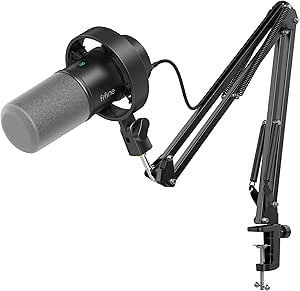
FIFINE K688 Podcast Microphone Kit, USB/XLR Dynamic Microphone with Boom Arm for PC/XLR Mixer, Gaming Mic with Mute Button, Headphone Jack for Vocal, Voice-Over, Streaming, Music Recording -K688CT
This pick stands out for combining USB convenience with XLR flexibility, making it suitable for both entry-level creators and seasoned professionals. Compared with the ZealSound USB mic, the K688 offers dual connectivity, enabling seamless transition from simple plug-and-play to more advanced studio setups. Its 130dB SPL dynamic capsule ensures clear, distortion-free recordings even at high volumes, while the cardioid pattern minimizes background noise effectively. The included boom arm and shock mount contribute to stable, vibration-free positioning, but the robust setup also introduces a more complex configuration process when switching between connections. The mute button and gain control improve usability during live sessions, although note that function keys are disabled in XLR mode. This model is perfect for streamers, voice-over artists, and podcasters needing both flexibility and quality in a single package.
Pros:- Dual USB and XLR connectivity for flexible use in different setups
- High SPL with distortion-free audio at loud volumes
- Includes durable boom arm and shock mount for stable placement
- Intuitive mute and gain controls for live adjustments
Cons:- Function keys on the mic are disabled in XLR mode, limiting on-the-fly control
- Setup can be more involved when switching between connections
- XLR connection requires additional audio interface or mixer
Best for: podcasters and streamers who want versatile connectivity options and professional sound quality without complex setup.
Not ideal for: beginners who only need a simple plug-and-play microphone, as the XLR setup adds complexity and cost.
- Connectivity:USB and XLR
- Max SPL:130dB
- Polar Pattern:Cardioid
- Included Accessories:Boom arm, shock mount, windscreen
- Weight:Approx. 1.1 kg
- Dimensions:Not specified
Bottom line: This microphone suits professionals who need both simplicity for casual use and advanced options for studio-grade recordings.
FIFINE USB/XLR Dynamic Microphone for Podcast Recording, PC Computer Gaming Streaming Mic with RGB Light, Mute Button, Headphones Jack, Desktop Stand, Vocal Mic for Singing YouTube-AmpliGame AM8
This model makes the most sense for newcomers and gamers who want easy USB connectivity combined with fun RGB lighting, but it also offers upgradeability via XLR for more advanced audio setups. Unlike the Shure MV7+, which is geared for professional podcasting, the AM8 emphasizes user-friendly features like customizable RGB lights and simple controls, making it perfect for hobbyists. Its 50Hz-16KHz frequency response provides balanced sound suitable for voice and casual music, while the tap-to-mute button and headphone jack add practical convenience. The RGB lighting, with multiple modes and memory function, enhances gaming aesthetics but is only active in USB mode, which might disappoint users seeking full XLR integration. This makes the AM8 ideal for streamers who prioritize style and straightforward operation over ultra-high-fidelity recording.
Pros:- Easy USB plug-and-play with built-in RGB lighting
- Simple tap-to-mute button for quick control during streams
- Compatible with XLR for future upgrade to studio-grade audio
- Includes desktop stand and headphone jack
Cons:- Limited frequency response for professional vocal clarity
- RGB lighting only active in USB mode, lacking full XLR features
- Build quality is decent but not as premium as dedicated studio mics
Best for: beginners, gamers, and content creators who want a visually appealing mic with easy controls and potential for future upgrades.
Not ideal for: professional podcasters or studio engineers looking for studio-level fidelity and advanced control features.
- Connectivity:USB and XLR
- Frequency Response:50Hz-16KHz
- Lighting:RGB with 3 modes
- Controls:Mute button, gain knob
- Included Accessories:Desktop stand, windscreen
- Weight:Approx. 600 grams
- Dimensions:3.35 x 4.96 x 9.65 inches
Bottom line: This microphone is best for beginners and gamers who want a fun, easy-to-use device with upgrade potential for casual professional use.

How We Picked
These microphones were selected based on a combination of performance, build quality, usability, and value for professional podcasting. We prioritized models that offer clear, broadcast-quality sound and reliable connectivity options—whether USB, XLR, or wireless. Ease of setup and versatility across different recording scenarios also influenced rankings. To ensure relevance, we considered user reviews, brand reputation, and feature sets that match the needs of professional content creators. Our goal was to identify options suitable for both seasoned podcasters and those seeking to upgrade from entry-level gear, with a clear emphasis on sound fidelity and durability.Factors to Consider When Choosing Podcast Microphones For Professional Audio
Choosing a podcast microphone for professional audio involves evaluating several factors that impact sound quality, usability, and future-proofing. Beyond features, understanding how each aspect aligns with your recording environment and goals helps avoid costly mistakes. The right microphone can elevate your voice clarity, reduce background noise, and provide a seamless experience whether you record at home or in a studio. This guide highlights key considerations to help you make an informed decision tailored to your specific needs.Connectivity Options
Deciding between USB, XLR, or hybrid microphones is fundamental. USB microphones are plug-and-play, making them ideal for beginners or those who want quick setup. XLR models typically require an audio interface but offer superior sound quality and expandability, appealing to professionals. Hybrid options combine both, providing flexibility for evolving setups. Consider your current equipment and future plans—investing in an XLR or hybrid model can be more cost-effective long-term if you aim for high-end sound quality or plan to upgrade your recording studio.
Sound Quality and Pickup Patterns
High-quality audio is the cornerstone of professional podcasting. Look for microphones with multiple pickup patterns (cardioid, bidirectional, omnidirectional, and stereo), which allow you to adapt to various recording environments. Cardioid is standard for isolating your voice and reducing background noise. More advanced models with digital signal processing can enhance clarity and reduce sibilance or plosives. Beware of overly cheap microphones that may compromise audio fidelity, especially if your content is broadcasted or monetized.
Build Quality and Durability
Professional microphones endure frequent use and sometimes rough handling. Opt for models with metal housings, sturdy stands, and high-quality components. These features not only extend the lifespan but also maintain consistent sound quality over time. Consider whether a microphone includes a shock mount or pop filter—these accessories protect against vibrations and plosive sounds, respectively. Less durable models might require frequent replacements or maintenance, adding hidden costs to your setup.
Ease of Use and Features
Intuitive controls like gain adjustment, mute buttons, and monitoring options streamline the recording process. Features such as LED indicators for levels or built-in digital processing can save time during editing. Wireless microphones offer mobility but may require software configuration or app management, adding complexity. For beginners, straightforward setups and minimal required adjustments help ensure consistent, high-quality recordings without frustration. Advanced users might prioritize customization options and software integration.
Price and Long-Term Value
While budget options can suffice for casual podcasts, investing in a higher-quality microphone often results in better sound clarity, durability, and future readiness. Consider the total cost, including accessories like stands, shock mounts, or pop filters, which can enhance performance. Think about your long-term goals: if you plan to upgrade your studio or expand your content production, a slightly higher initial investment may pay off with improved audio quality and flexibility. Beware of very cheap models that cut corners on essential features or build quality, which may lead to dissatisfaction and additional costs down the line.