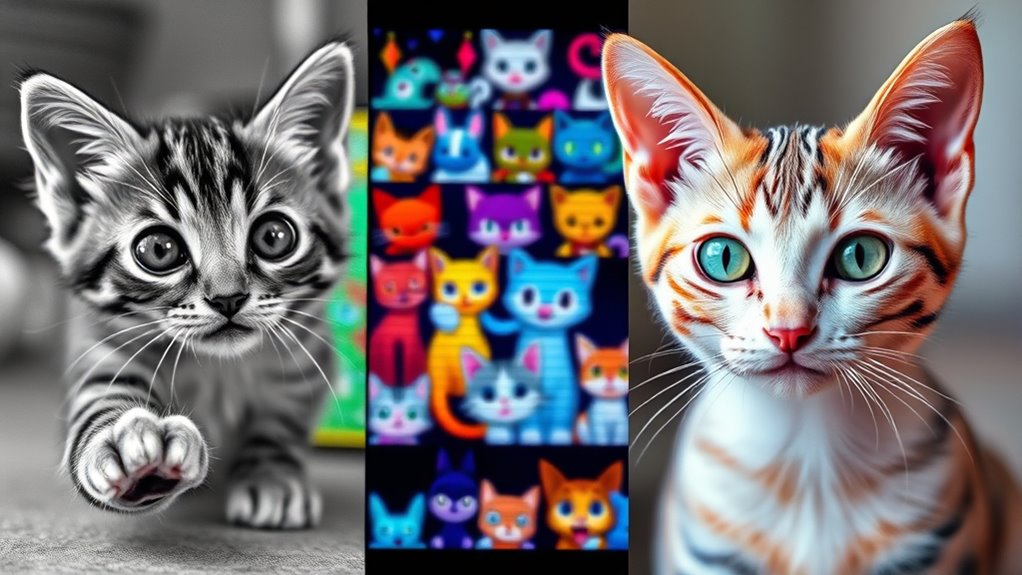

The online journey from Lolcats to AI-generated cats shows how technology and culture shape our love for cuteness. Early platforms with simple image-sharing made adorable animals a viral sensation. As smartphones and social media evolved, memes and videos fueled faster sharing and humor. Now, AI creates hyper-realistic and surreal cats, pushing the boundaries of cuteness further. If you keep exploring, you’ll discover how these digital trends keep reinventing what we find adorable.
Key Takeaways
- Early online platforms prioritized simple image sharing, making adorable animal pictures widely accessible and setting the stage for viral cat content.
- Meme culture, especially Lolcats, introduced humor and relatability, fueling the popularity of cute cat images across social media.
- Technological advances like smartphones, GIFs, and videos enabled rapid, diverse sharing of adorable content, increasing its online reach.
- AI-generated cats and advanced visual tech now produce hyper-realistic and surreal images, expanding the concept of online cuteness.
- The evolution reflects a shift from static images to interactive, algorithm-driven content, continuously redefining what is considered “cute” online.
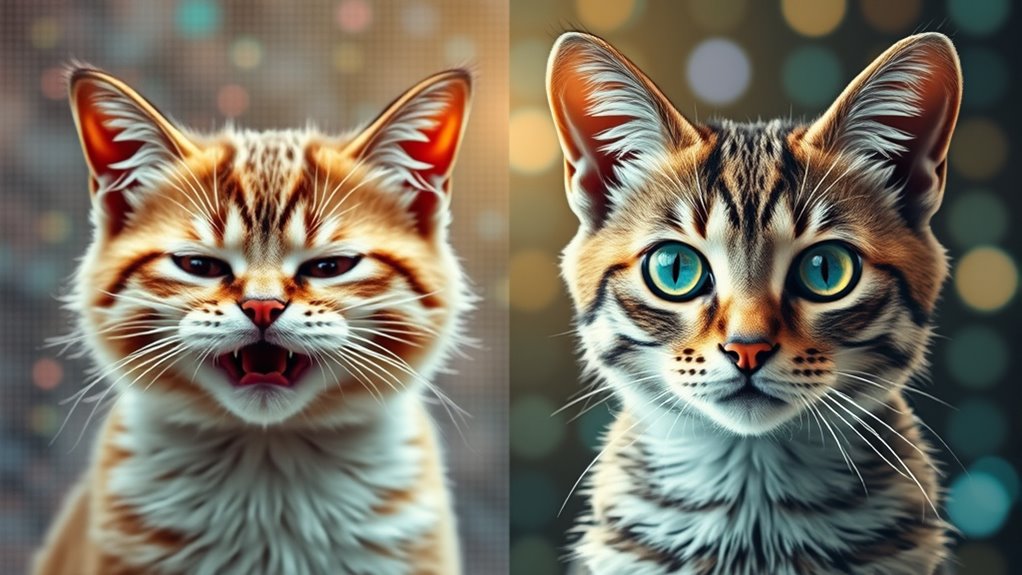
The concept of “cute” online has transformed dramatically over the years, driven by changing internet culture and technological advances. Early on, the user interface played a significant role in shaping how we experienced and shared cuteness. Websites like Neopets and early forums had simple, pixelated designs that made sharing images of adorable animals feel straightforward. As the internet evolved, so did the ways we interacted with these images. The user interface became more sophisticated, allowing for easy uploading, commenting, and sharing of pictures, turning cute content into a social phenomenon. This shift made it easier for meme culture to flourish around adorable images. Memes started as simple jokes but quickly embedded themselves into the fabric of online cuteness, transforming ordinary images into viral sensations. Lolcats, with their captioned images of cats with funny, misspelled text, exemplified this trend. These memes didn’t just make people laugh—they created a shared language of cuteness that spread rapidly across platforms like 4chan, Reddit, and later, Facebook. The user interface’s simplicity enabled users to produce and distribute these memes effortlessly, fostering a sense of community and collective humor. Over time, meme culture began to prioritize relatability and humor, making cute animals like cats and dogs the perfect subjects for viral content. As technology advanced, the rise of smartphones and instant sharing further accelerated this trend. Today, the user interface of social media apps is optimized for quick, engaging content, encouraging users to post daily doses of cuteness that often go viral within hours. The evolution from static images to animated gifs, and now to short videos and live streams, has expanded what we consider cute online. Meme culture continues to influence this shift, with creators remixing and adding humor to new formats, keeping the concept of “cute” fresh and dynamic. As artificial intelligence enters the scene, the definition of cute is being redefined once again. AI-generated cats, for example, are transforming the landscape by producing images that blend realism with surreal creativity. These images are shared through the same user interfaces that once hosted Lolcats but now leverage algorithms to generate entirely new, adorable visuals on demand. This ongoing evolution shows how technology and culture intertwine, constantly reshaping what we see as cute online. Whether it’s a simple meme, a viral video, or an AI-crafted image, the core idea remains the same: cuteness captivates us, and the way we experience it is forever changing alongside the tools and communities we build around it. Additionally, advancements in visual technology continue to enhance the realism and appeal of AI-generated images, further fueling the evolution of online cuteness.
Frequently Asked Questions
How Did Lolcats Influence Internet Culture Beyond Images?
Lolcats shaped internet culture beyond just images by fueling meme evolution and shaping online humor. You find their playful captions and cat antics inspiring new meme formats, encouraging community participation and creativity. Their popularity helped normalize sharing funny content, making humor more accessible and widespread online. As a result, lolcats influenced how people craft and enjoy memes today, fostering a culture that values humor, relatability, and shared online experiences.
What Are the Ethical Concerns With Ai-Generated Cat Images?
Ever imagined an adorable cat photo that isn’t real? You might wonder about the ethics behind AI-generated images. These raise privacy concerns if they mimic real animals without consent. Copyright issues also come into play, as creators worry about their work being used without permission. Are we crossing a line when we produce convincing but artificial images? It’s essential to contemplate these ethical concerns before sharing or creating AI-generated cat pictures.
How Do Algorithms Determine Which Cute Cat Images Go Viral?
You might wonder how algorithms pick cute cat images to go viral. They analyze factors like meme virality, user engagement, and trending content. However, algorithm bias can influence these choices, favoring certain images over others. Your interactions, shares, and comments help determine what spreads widely. Ultimately, the algorithm amplifies images that resonate emotionally or fit current trends, making some cat pictures more likely to go viral than others.
Can AI Create Truly Unique and Authentic Cat Memes?
Like a painter mixing new colors, AI can craft unique cat memes, but they may lack true authenticity. Neural networks analyze vast data to generate content that feels fresh, yet it often misses the genuine charm of human creativity. While AI can produce novel images, the meme authenticity might fall short, as these creations can sometimes feel manufactured rather than heartfelt. So, AI creates interesting memes, but not necessarily the most authentic ones.
What’S the Future of Cute Online Content Beyond Cats?
You’ll see the future of cute online content expand into virtual pet communities and augmented reality experiences. Instead of just images and memes, you’ll interact with digital pets in immersive environments, making the experience more personal and engaging. AI will help create unique, adorable virtual companions, fostering community bonds and shared joy. This evolution will make cute content more interactive, social, and lifelike, transforming how you connect with digital cuteness.
Conclusion
So, now you’re living in a world where cats can be AI masterpieces, internet stars, and viral sensations all at once. The evolution from adorable lolcats to mind-blowingly realistic AI-generated felines is nothing short of miraculous—like witnessing the Renaissance of cuteness! Brace yourself, because the future promises even more astonishing, adorable, and downright unbelievable online cat creations. Get ready, because your screen is about to become the universe’s most adorable, pixel-perfect kitty playground!