
To draw expressive eyes, start by studying their anatomy and practicing different shapes and emotions. Focus on how eyelids, pupils, and reflections change with feelings like happiness or sadness. Use shading and highlights to add depth and realism. Observe real eyes or tutorials that show step-by-step methods, gradually adding details to boost expression. Keep practicing and experimenting — the more you explore, the better you’ll become at capturing nostalgia and emotion in your drawings.
Key Takeaways
- Study real eyes to understand subtle cues like eyelid folds and reflections that evoke nostalgia and emotion.
- Practice sketching various eye shapes and expressions to effectively convey feelings of longing or sentimentality.
- Use tutorials to learn step-by-step techniques for adding depth, shading, and highlights that enhance emotional impact.
- Focus on eye details such as iris placement, pupil size, and reflections to create a nostalgic, expressive look.
- Incorporate emotional cues like slightly drooped eyelids or soft shading to evoke a sense of nostalgia in your artwork.
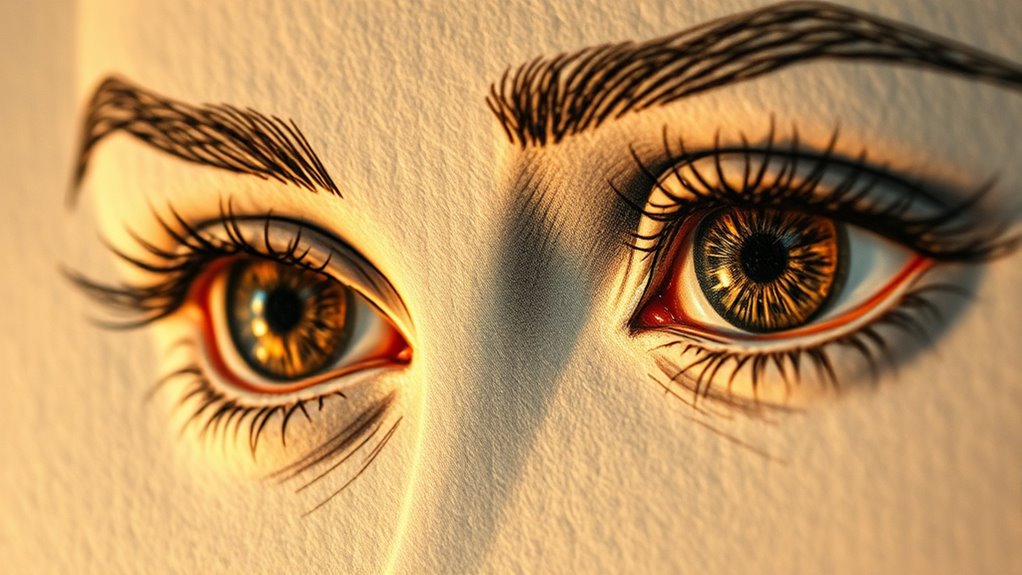
Expressive eyes are the key to bringing your drawings to life, capturing emotion and personality with just a glance. When you focus on conveying emotion through the eyes, you create a connection between your artwork and the viewer, making your characters feel real and relatable. To do this effectively, understanding eye anatomy is essential. Knowing the structure beneath the surface helps you depict depth, movement, and subtle expressions more convincingly. The eye isn’t just a simple circle; it’s a complex organ with layers, muscles, and bones that influence how it looks and moves. When you grasp the anatomy, you can exaggerate or simplify features appropriately to enhance emotion conveyance.
Master eye anatomy to craft expressive, emotionally impactful characters.
Start by observing how different emotions influence the shape and positioning of the eyes. For example, happiness often lifts the outer corners, creating slight creases, while sadness might cause the eyelids to droop, and anger can tighten the muscles, narrowing the eye. Recognize these cues and practice reproducing them. To capture these nuances, sketch the basic eye shape—an almond or oval—and then add details like the iris, pupil, and eyelids. Pay attention to the eyelid creases and the way they fold over the eye, as these small details greatly impact expression. Remember, the sclera (white of the eye) isn’t always fully visible; sometimes, the upper or lower eyelid covers part of it, which can intensify a certain emotion.
When drawing, keep in mind the importance of the iris and pupil placement. Slight shifts in their position can convey suspicion, curiosity, or fear. For instance, dilated pupils suggest surprise or fear, while constricted pupils might indicate focus or anger. Use shading to add depth—highlight the curvature of the cornea and the reflection of light to make the eyes appear more three-dimensional. These highlights are vital for conveying emotion because they reflect the character’s mood—bright and wide eyes suggest innocence or excitement, whereas narrowed eyes can imply suspicion or disdain. Additionally, understanding emotional cues can help you better interpret and portray different expressions convincingly.
Practicing different eye shapes and expressions will sharpen your ability to communicate emotion effectively. Use tutorials to guide you through building up from simple sketches to detailed, expressive eyes. Study real eyes and try to replicate their subtleties, then exaggerate those features to heighten emotion. Remember, the key lies in understanding how eye anatomy influences appearance, and how small adjustments can evoke powerful feelings. With patience and observation, you’ll learn to draw eyes that not only look realistic but also resonate emotionally, making your characters truly come alive on the page.
Frequently Asked Questions
What Colors Best Convey Nostalgia in Eye Drawings?
To convey nostalgia in eye drawings, you should choose soft, muted colors like warm browns, gentle hazel, or faded blues. These colors evoke feelings of warmth and longing based on color psychology. Use color blending to seamlessly shift between shades, adding depth and a sense of reminiscing. The subtle, subdued palette helps viewers feel the emotional weight of nostalgia, making your expressive eyes more evocative and heartfelt.
How Do Different Cultural Styles Influence Expressive Eyes?
Like a painter with a palette, you’ll find that cultural symbolism deeply influences expressive eyes. Different styles, from Japanese manga’s large, shimmering eyes to African art’s bold lines, reflect diverse cultural identities and emotions. These stylistic variations help you convey specific feelings and stories. By understanding cultural nuances, you can make your drawings more authentic and resonate more profoundly, capturing the unique essence behind each cultural style’s expressive eyes.
Can Digital Tools Enhance Emotional Depth in Eye Illustrations?
Digital tools can definitely enhance emotional depth in eye illustrations. You can use digital brush techniques to add subtle textures and highlights, making the eyes more expressive. Emotional shading lets you convey feelings like nostalgia or longing more vividly. By experimenting with layers and blending modes, you can create nuanced, mesmerizing eyes that communicate complex emotions, making your artwork more powerful and engaging.
What Common Mistakes Should Beginners Avoid When Drawing Eyes?
So, you think you’re an eye-drawing prodigy? Watch out for proportional inaccuracies that make your eyes look like misplaced marbles and avoid neglecting detail, or your masterpiece will scream “amateur hour.” Beginners often forget the subtlety of eyelids or the sparkle in the iris, which kills all emotion. Keep practicing, double-check proportions, and add those tiny details—your viewers will thank you with a tear of admiration.
How Do Age and Gender Affect the Depiction of Expressive Eyes?
You should consider how age-related expressions influence eye features, like crow’s feet or sagging skin, which add realism and depth. For gender-specific features, note that male eyes tend to be more angular with thicker eyebrows, while female eyes often appear softer with longer lashes. By paying attention to these details, you make your expressive eyes more authentic and emotionally engaging, regardless of the character’s age or gender.
Conclusion
Now that you’ve learned how to draw expressive eyes, you’re like an artist wielding a magic wand, bringing emotions to life on paper. Remember, practice transforms sketches into windows to the soul. Don’t be afraid to experiment with different styles and expressions—each eye tells a story waiting to be uncovered. Keep honing your skills, and soon your drawings will speak volumes, turning blank space into a vibrant tapestry of feelings.