Before buying a drone, make sure you understand airspace restrictions and local laws to avoid fines or confiscation. Know your battery limits—hot or poorly maintained batteries reduce flight time and safety. Think about your goals—are you into aerial photography, racing, or casual flying? Choosing the right drone and accessories that match your skills will save you headaches later. Stick with safe, legal, and well-planned flights to enjoy your drone safely; there’s more to discover to maximize your experience.
Key Takeaways
- Research local airspace restrictions and regulations to ensure legal flying areas and avoid penalties.
- Assess your skill level and intended use (e.g., photography, racing) to choose the right drone features.
- Prioritize battery life and management, including proper storage and regular performance checks.
- Consider the drone’s durability, upgrade options, and accessory compatibility for long-term satisfaction.
- Stay informed about evolving laws and best practices to fly safely, legally, and responsibly.
What Are the Essential Drone Regulations You Need to Know?

Before you buy a drone, it’s essential to understand the fundamental regulations that govern drone use. Many countries require drone owners to register their devices, especially for larger models, to guarantee accountability. You should also be aware of local rules about flying height limits and restricted zones, such as airports or government buildings. Drone insurance isn’t always mandatory but is highly recommended to protect against potential damages or accidents. Privacy concerns are crucial—avoid flying over private property without permission to prevent legal issues. Familiarize yourself with regulations related to recording or photographing people, as misuse can lead to fines or lawsuits. Staying informed about these rules helps you fly responsibly, minimizes risks, and ensures you enjoy your drone safely and legally. Additionally, understanding airspace restrictions can help you avoid unintended violations and enhance your flying experience. Being aware of the regulations related to drone technology, such as battery safety and use case limitations, further ensures safe operation.
How to Choose the Right Drone for Your Skills and Goals

To choose the right drone, start by honestly evaluating your flying experience—are you a beginner or more advanced? Then, clarify your goals—are you after aerial photography, racing, or just casual flying? Knowing both your skill level and objectives helps you pick a drone that fits your needs perfectly. Additionally, consider how your intended use aligns with the available digital content and research topics to ensure you select a drone suited for exploring new frontiers in digital concepts.
Assess Your Flying Experience
Understanding your flying experience is essential when choosing a drone that matches your skills and goals. Start with a skill assessment to determine your experience levels. If you’re a beginner, opt for a drone with simple controls, stability features, and safety features like obstacle avoidance. Intermediate flyers can handle more advanced models with better camera quality and autonomous flight options. Experienced pilots should look for drones offering customization, higher speeds, and longer flight times. Recognizing where you stand helps you avoid frustration and guarantees safe, enjoyable flying. Choosing a drone that aligns with your skill level means you’ll be more confident and able to progress without feeling overwhelmed. Always match your current experience to the drone’s capabilities for a rewarding flying experience. Assessing your airspace knowledge can also ensure safer flights and help you select appropriate models based on your flying environment. Additionally, understanding HRV insights can aid in optimizing your recovery routines after long flights or intensive flying sessions.
Define Your Drone Objectives
Once you’ve assessed your flying experience, the next step is to define what you want to achieve with your drone. Are you aiming for stunning aerial photos, recreational flying, or professional videography? Your goals will shape the drone you choose. Consider drone aesthetics—sleek designs and intuitive controls can boost your confidence and ease of use. Also, research brand reputation; trusted brands often offer better durability, service, and features suited to your needs. If you’re a beginner, opt for a simple, user-friendly model. For advanced users, look for drones with advanced camera capabilities and flight modes. Clarifying your objectives helps you select a drone that matches your skills and ambitions, ensuring you get the most value and enjoyment from your investment.
Practical Uses for Drones: Is It a Good Investment for Beginners?

Thinking about how a drone can be useful, you’ll want to take into account whether the learning curve is manageable for you. While drones can be a fun investment, they can also be costly if you’re just starting out and not sure how often you’ll use it. Weighing the practical benefits against the initial expense helps determine if a drone is a smart choice for beginners. Additionally, understanding drone airspace regulations can help prevent potential legal issues and ensure safe operation. Being aware of media literacy and how to verify online information about drones can also help you make informed decisions. Knowing the airspace restrictions and how they relate to drone safety can further help you avoid unintended violations.
Learning Curve Challenges
Starting with a drone can be more challenging than you might expect because mastering the controls takes time and patience. The learning curve can be steep, especially if you’re new to flying. You’ll need to develop skills through practice, making intentional adjustments as you learn what each control does. Initial flights might feel awkward or nerve-wracking, but consistent practice helps build confidence and precision. Expect to encounter setbacks, like crashes or misjudging distances, which are part of skill development. It’s important to stay patient and realistic about your progress. Over time, your ability to control the drone improves, but don’t underestimate the time it takes to become proficient. Investing in learning now sets a solid foundation for safer, more enjoyable flying experiences later.
Cost-Effectiveness for Beginners
Are drones a worthwhile investment for beginners? It depends on your goals and budget. Drone pricing varies widely, from affordable models to high-end options, so start with a budget-friendly drone to learn the basics. Beginner tips suggest choosing a drone with stable flight features and easy controls, making it more cost-effective in the long run. While cheaper drones may lack advanced features, they still offer valuable practice for new pilots. If your main interest is casual photography or exploring the hobby, a modest investment makes sense. However, if you plan to expand your skills or use the drone professionally, be prepared to spend more on higher-quality models. Overall, starting with a budget-conscious drone can be a smart way to explore whether drones suit your interests before committing to bigger costs.
Understanding Battery Life: How Long Can You Fly and How to Maximize It

Battery life is a crucial factor to take into account because it directly determines how long your drone can stay in the air. To maximize your flight duration, focus on effective battery optimization techniques. Here are three tips:
- Keep batteries cool: Store and charge batteries at room temperature to prevent overheating, which can reduce capacity.
- Optimize flying habits: Avoid sharp turns and sudden accelerations, as these drain power faster. Maintain steady, smooth movements.
- Use the right settings: Lower camera quality, reduce drone speed, or disable unnecessary features to conserve energy.
- Monitor battery performance regularly: Regularly checking your batteries can help identify signs of degradation and ensure optimal operation. Additionally, understanding how airspace conditions impact drone stability can help prevent unnecessary power drain during turbulent conditions.
- Becoming familiar with landscape features can also assist in planning more efficient flight paths, reducing energy consumption.
- Regularly inspecting your LiFePO4 batteries for signs of wear can help extend their lifespan and maintain overall performance.
- Being aware of filter maintenance techniques for your drone’s components can also help maintain overall performance and extend flight times.
Legal Restrictions in Different Areas That Could Affect Your Flights

Before flying your drone, you need to know about local laws and restricted zones that can limit where you fly. Different areas may have specific rules you must follow, and ignoring them can lead to fines or confiscation. Always check the regulations in your area before taking off to avoid unnecessary problems. Being aware of nail hygiene practices can also help ensure your hands are clean and safe when handling your drone and equipment. Additionally, understanding airspace restrictions can prevent accidental violations of no-fly zones and ensure safe operation.
Local Drone Laws
When flying a drone, it’s crucial to understand that local laws and regulations can vary considerably from one area to another, and ignoring them can lead to fines or other penalties. Knowing your local drone laws helps you avoid trouble and makes sure you stay compliant. For instance:
- Some areas restrict aerial photography or require permits for commercial use.
- Certain locations ban drone racing or restrict flying near stadiums and events.
- Privacy laws may limit filming or capturing images over private property.
- Being aware of airspace regulations can prevent accidental violations that disrupt your flights or cause safety issues.
- Recognizing the cultural and historic significance of certain regions can influence where and how you fly, especially in areas with rich heritage like Salem or Washington D.C.
- Additionally, understanding fuel injection cleaning procedures and the importance of maintaining your drone’s power system can enhance flight performance and longevity, especially for longer or more complex missions.
- Staying informed about local community standards can help you navigate areas with sensitive environmental or social concerns, ensuring respectful and lawful flying.
Always check your local regulations before flying, especially if you plan to capture aerial photography or participate in drone racing. Staying informed keeps your flights safe, legal, and enjoyable while respecting community rules.
Restricted Flight Zones
Have you ever wondered why certain areas are off-limits for drone flying? These are often designated as restricted flight zones due to airspace restrictions. Airports, military bases, and government buildings are common examples where flying drones is prohibited or highly regulated. Ignoring these restrictions can lead to legal issues or safety hazards. Before you fly, check for any local or national restrictions that may apply. Proper battery management is also essential, especially since flying in restricted zones might require longer flight times or multiple attempts. Always plan your flights carefully, respecting no-fly zones, and guarantee your drone’s batteries are fully charged and well-maintained. Being aware of these rules keeps your flights safe, legal, and enjoyable. Additionally, understanding the airspace regulations helps prevent accidents and ensures compliance with safety standards.
Flying Safely in Different Weather Conditions
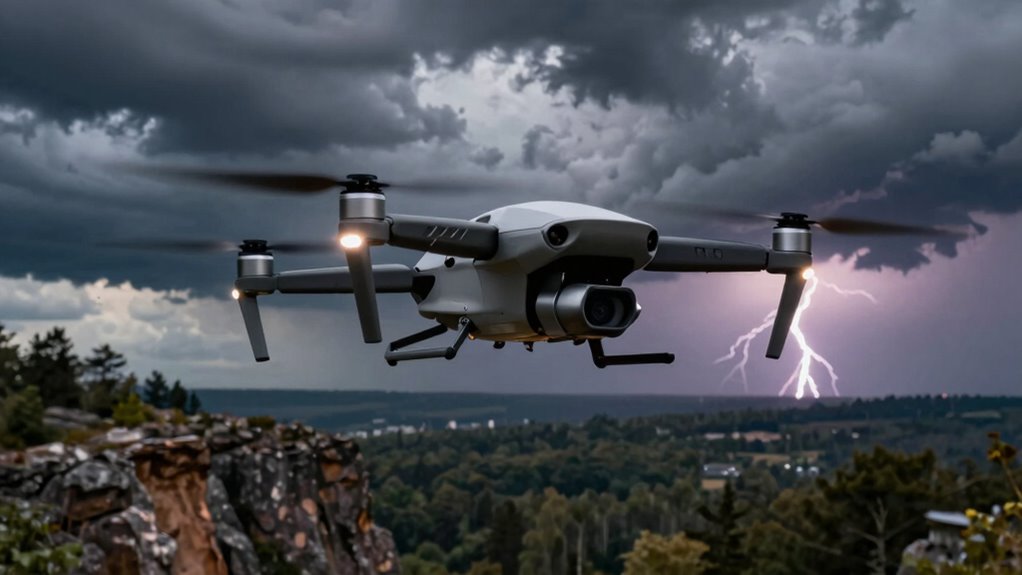
Flying your drone safely in different weather conditions requires careful attention and preparation. Weather hazards like wind, rain, and fog can considerably impact flight stability. To stay safe:
- Check the forecast before flying, avoiding high winds and storms.
- Avoid flying in rain or snow, as moisture damages electronics and reduces visibility.
- Keep an eye on temperature changes, which can affect battery performance and flight control. Properly managing battery health can prevent unexpected power loss during flights.
- Cultivating curiosity about weather patterns can help you better anticipate and respond to changing conditions. Developing an understanding of weather impacts on drones enhances your ability to make informed decisions.
Understanding how weather affects your drone helps you prevent crashes and damage. Wind can cause instability, making precise control difficult. Fog or rain reduces visibility, increasing risk. Always prioritize safety, and if conditions seem uncertain, wait for better weather. Proper awareness ensures your flights are safe and enjoyable.
Key Features for Safe and Easy Drone Flying

To guarantee safe and easy drone flying, focusing on key features that enhance control and stability is essential. Features like GPS stabilization help keep your drone steady during drone photography and aerial mapping, ensuring clear shots and accurate data. Obstacle avoidance sensors protect your drone from crashes, making navigation safer in complex environments. Return-to-home functions automatically bring your drone back if signal is lost or battery runs low, preventing loss. Headless mode simplifies controls, especially for beginners, allowing easier maneuvering. Understanding drone technology is crucial for making informed decisions and choosing the right features for your flying needs. Additionally, battery life significantly impacts flight duration, so selecting drones with longer-lasting batteries can enhance your experience.
Common Buying Mistakes and How to Avoid Them

Many beginners make the mistake of rushing into a drone purchase without thoroughly researching their needs and the product’s capabilities. This can lead to buying a drone that doesn’t suit your goals, especially for drone photography or aerial videography. To avoid this, consider:
Rushing into a drone purchase without research can lead to tools that don’t meet your photography or videography needs.
- Ignoring flight time and battery life, which limits your shooting sessions.
- Overlooking camera quality, essential for capturing sharp drone photography and smooth aerial videography.
- Choosing a drone without checking local airspace regulations, risking legal issues or crashes.
When to Upgrade Your Drone or Add Accessories

Knowing when to upgrade your drone or add accessories can substantially enhance your flying experience and the quality of your footage. If you notice your drone’s performance no longer meets your needs, or if certain accessories improve functionality or aesthetics, it’s time to contemplate an upgrade. Check for issues like reduced flight time, camera quality, or stability. When selecting accessories, make sure they are compatible with your drone model to avoid installation problems. Upgrades can boost drone aesthetics and performance, making flights more enjoyable. Use the table below as a quick guide:
| Situation | Action |
|---|---|
| Better camera needed | Upgrade drone or add a camera gimbal |
| Longer flight time | Upgrade batteries or add power accessories |
| Improved aesthetics | Add skins, lights, or new propellers |
Staying Up-To-Date With Drone Laws and Best Practices

Staying up-to-date with drone laws and best practices is vital to guarantee safe and legal flying. Regulations vary by location, so it’s important to stay informed. Here are three key steps:
- Regularly check local and national drone regulations, especially for aerial photography, to avoid fines or penalties.
- Maintain proper drone insurance to protect against accidents and liability.
- Follow best practices like avoiding restricted airspace and respecting privacy to promote responsible flying.
Frequently Asked Questions
What Are the Hidden Costs of Owning a Drone Beyond the Purchase Price?
Beyond the purchase price, you’ll face hidden costs like ongoing battery maintenance, which includes replacements and proper storage. Insurance requirements can also add up, especially if you need liability coverage for flying in certain areas. Additionally, you might incur costs for repairs, software updates, and accessories. These expenses can quickly add up, so plan for them to make sure you enjoy flying without unexpected financial surprises.
How Do Different Airspace Classifications Impact Drone Flight Permissions?
Imagine flying your drone in a lawless sky—sounds impossible, right? That’s because airspace classifications dictate your flight permissions. Uncontrolled airspace often grants more freedom, but controlled zones, like near airports, impose strict Airspace restrictions, requiring special permissions. You must know these rules to avoid hefty fines or crashes. Understanding these classifications guarantees your drone adventures stay legal, safe, and enjoyable, without unexpected surprises!
Can Drones Operate Effectively in Extreme Weather Conditions?
Drones generally struggle in extreme weather because it threatens flight safety. High winds, rain, snow, and lightning can cause loss of control, damage, or crashes. If you want effective operation, avoid flying in such conditions. Always check weather forecasts before flying, and understand that extreme weather reduces your drone’s stability and battery life. Prioritize safety by waiting for calmer conditions to ensure maximum performance and protect your equipment.
What Are the Privacy Concerns Associated With Drone Usage?
You should be aware that drone usage raises significant privacy concerns, especially around data security and surveillance risks. When flying your drone, you might unintentionally capture private information or sensitive data, which could lead to privacy violations. It is crucial to respect others’ privacy rights and understand local regulations to prevent legal issues. Using secure data handling practices helps protect your footage and avoids escalating surveillance concerns.
How Do I Ensure My Drone Complies With Local and International Regulations?
To guarantee your drone complies with local and international regulations, you need to understand and follow the rules, respect no-fly zones, and register your drone where required. You must stay updated on legal restrictions, adhere to altitude limits, and avoid restricted airspace. Regulatory compliance involves researching laws, obtaining necessary permits, and flying responsibly. By doing so, you protect yourself legally, ensure safe operation, and promote responsible drone use everywhere you fly.
Conclusion
So, before you dive headfirst into drone ownership, remember: the skies are not your personal playground, and batteries won’t last forever—no matter how many cool tricks you learn. Avoid rookie mistakes, stay legal, and choose wisely. Otherwise, you might end up with a fancy paperweight, or worse, a visit from the drone police. Happy flying — or at least, attempting to! Because in the end, it’s all fun and games until someone loses a drone limb.