Digital pianos beat acoustic for many beginners because they’re affordable, portable, and packed with helpful features. You can practice quietly with headphones, try different sounds, and use built-in lessons or recording options to track your progress. The weighted keys mimic real piano feel, helping you build finger strength and technique. They also connect easily to devices for interactive learning and creative projects. Keep exploring, and you’ll discover even more ways these instruments support your musical journey.

Get the latest gadgets delivered free — and shop member deals
- Fast, free delivery on millions of items
- Access to Prime Big Deal Days deals on October 6–7
- Prime Video, Amazon Music and more included
Key Takeaways
- Digital pianos are more affordable and accessible for beginners compared to traditional acoustic instruments.
- They offer quiet practice options with headphones, ideal for learning without disturbing others.
- Built-in features like lesson modes and recording tools enhance interactive learning and motivation.
- Their portability allows practice anywhere, supporting consistent progress regardless of location.
- Modern digital pianos simulate acoustic feel with weighted keys, aiding technique development for beginners.
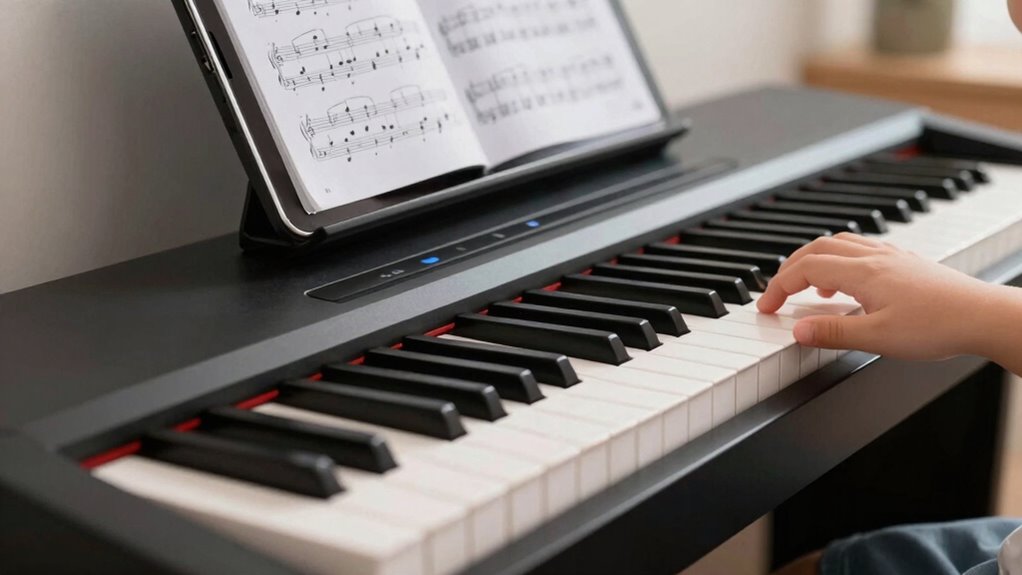
Are you considering learning the piano but unsure where to start? Digital pianos might be the perfect choice for you, especially if you’re just beginning your musical journey. Unlike traditional acoustic pianos, digital models offer a blend of convenience, affordability, and modern features that make learning more approachable. One of the biggest advantages is their ability to help you develop a solid foundation in music theory without the hassle of maintenance or space constraints. Many digital pianos come with built-in lesson modes, metronomes, and recording features, which are invaluable for understanding rhythm, harmony, and melody. As you progress, these tools support your grasp of performance techniques, allowing you to experiment with dynamics, articulation, and pedal use without the intimidation often associated with acoustic instruments.
You’ll find that digital pianos are also more versatile when it comes to practicing and performing. They can be plugged into headphones, so you can practice quietly without disturbing others—perfect if you live with family or in shared spaces. This quiet practice helps you stay consistent and focused on honing your skills. Plus, with a variety of sounds and accompaniments at your fingertips, you can explore different genres and styles, broadening your musical palate early on. This exposure fosters a deeper understanding of music theory, such as chord progressions and scales, which are essential for improvisation and composition. Additionally, many digital pianos feature weighted keys, which help you develop finger strength and technique similar to that of traditional pianos. This feature not only improves your touch but also prepares you for transitioning to an acoustic instrument if desired. Furthermore, the portability of digital pianos allows you to practice anywhere, making consistent practice more feasible regardless of your location.
Performance techniques become easier to learn on digital pianos because many models feature weighted keys that simulate the feel of an acoustic piano. This helps you develop proper finger strength and control, which translates well when you eventually switch to an acoustic instrument if you choose to do so. Additionally, the ability to connect to computers or tablets means you can use apps and software that offer interactive lessons, tutorials, and feedback. These resources accelerate your learning curve and make practicing more engaging. The interactive learning tools provided by digital pianos can significantly enhance your understanding of music fundamentals. Furthermore, the connectivity options allow for seamless integration with other devices, expanding your opportunities for creative collaboration. The built-in speakers and connectivity options also allow you to record your performances or share them online, helping you build confidence and a sense of accomplishment early in your journey.
Frequently Asked Questions
Are Digital Pianos Suitable for Classical Music Practice?
Yes, digital pianos are suitable for classical music practice. They offer excellent musical versatility, allowing you to explore various classical pieces with different sound options and adjustable touch sensitivity. Plus, they’re budget-friendly options compared to acoustic pianos, making them accessible for beginners. You can practice quietly with headphones and easily connect to music software for tutorials, helping you improve your skills efficiently without breaking the bank.
Can Digital Pianos Fully Replicate the Feel of Acoustic Keys?
You might be surprised, but digital pianos can’t fully replicate the feel of acoustic keys. While many models have advanced touch sensitivity and realistic key weight, they often fall short of the authentic hammer action of real pianos. Nearly 60% of players notice a difference, especially in touch response and resistance. Still, with high-quality digital pianos, you get close, making them great for practice without sacrificing too much realism.
Do Digital Pianos Require Regular Tuning Like Acoustic Pianos?
Digital pianos don’t require regular tuning like acoustic pianos do, which means lower maintenance costs overall. You won’t need to schedule tuning sessions or worry about string tension issues. Instead, you might spend some time adjusting settings or cleaning the keys occasionally. Tuning frequency isn’t a concern, making digital pianos more convenient for beginners who want to focus on learning without the hassle of ongoing maintenance.
What Is the Lifespan of a Digital Piano Compared to an Acoustic One?
Think of your digital piano as a smartphone—designed to last years with minimal fuss. Its lifespan typically exceeds that of an acoustic, mainly because it doesn’t need tuning and has lower maintenance costs. While acoustic pianos can last decades with proper care, digital pianos often stay in good sound quality for around 10-15 years, making them a reliable, long-lasting choice for beginners seeking durability and consistent sound longevity.
Are Digital Pianos More Portable Than Traditional Acoustic Pianos?
Yes, digital pianos are more portable than traditional acoustic pianos. Their lightweight design offers significant portability benefits, making it easier for you to move and transport them. They also have space-saving advantages, fitting comfortably in smaller rooms or tight spaces. Whether you’re gigging, practicing at different locations, or limited by space at home, digital pianos provide the convenience and flexibility that acoustic pianos simply can’t match.
Conclusion
As a beginner, choosing a digital piano can make your musical journey smoother and more enjoyable. With 85% of new players citing affordability and convenience as top reasons, digital pianos offer an accessible start without sacrificing quality. Plus, their silent practice feature means you can learn anytime without disturbing others. So, if you’re ready to explore music, a digital piano might just be your best first step—simple, practical, and perfect for your growth.
Fall Picks
fall essentials
As an affiliate, we earn on qualifying purchases.