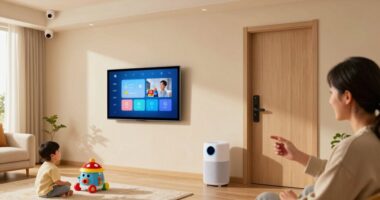
Smart homes feel helpful when devices work together smoothly, automate routines, and enhance your daily life without hassle. But they become annoying when privacy worries, security vulnerabilities, or device incompatibilities surface, causing frustration. Managing multiple apps and troubleshooting glitches can also add to the stress. If you want to discover how to make your smart home more helpful and less irritating, keep explore these key factors for a smarter living experience.
Key Takeaways
- Proper device compatibility and reliable setup ensure seamless operation, reducing frustration and enhancing helpfulness.
- Smart homes that automate routines and integrate devices improve convenience and daily life.
- Privacy safeguards and clear data boundaries prevent feelings of surveillance and annoyance.
- Managing technology fatigue through streamlined controls and fewer apps prevents overwhelm.
- Balancing control over data and device functions fosters trust and satisfaction in the smart home environment.
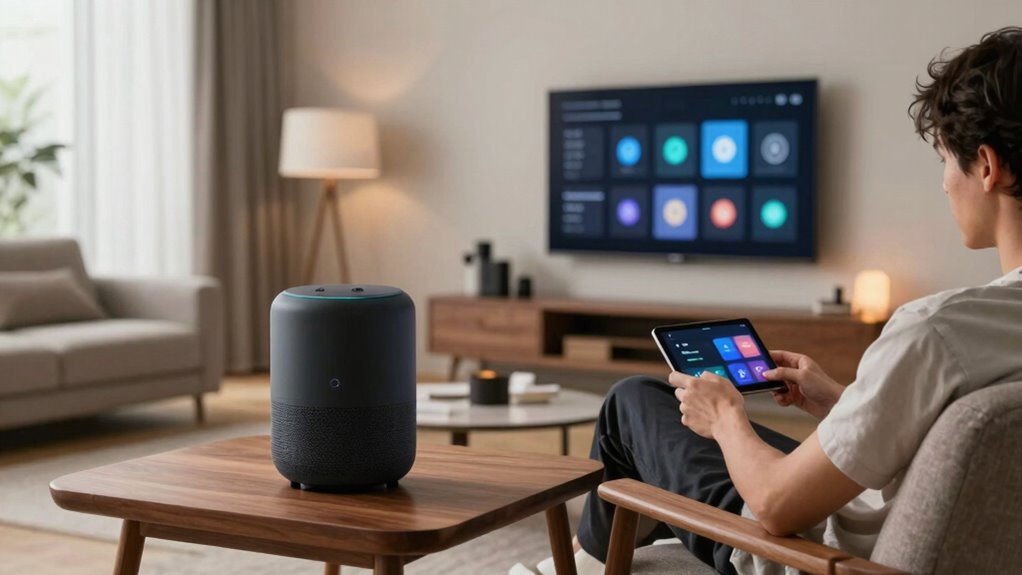
Have you ever wondered if smart homes truly make life easier or just add to your daily frustrations? It’s a question many people ask when considering the endless gadgets and interconnected devices that promise convenience. On one hand, smart homes can streamline your daily routines—lights that turn on at sunset, thermostats that adapt to your schedule, voice assistants that answer questions or play your favorite music. These features can feel like a step into the future, making everyday tasks effortless and freeing up your time. But on the other hand, the constant presence of these devices can lead to privacy concerns that might outweigh the benefits. You might worry about who’s collecting your data and how securely it’s stored. The fear of being constantly watched or listened to can make your home feel less like a sanctuary and more like a surveillance zone.
As these devices become more integrated into your life, you might also experience technology fatigue. It’s easy to feel overwhelmed by the sheer number of apps, updates, and commands needed to keep everything running smoothly. The more connected your home becomes, the more you might find yourself juggling multiple apps or troubleshooting glitches, which can turn what’s supposed to be helpful into a source of frustration. Sometimes, your smart devices don’t work as seamlessly as advertised, leading to delays or misunderstandings that interrupt your day. This disconnect between expectation and reality can make you feel more stressed, not less. Additionally, understanding the role of smart appliances in your overall home setup can help you make more informed decisions about which devices truly enhance your living space. Choosing reliable and compatible devices can greatly improve the smart home experience and reduce potential annoyances. Being aware of security vulnerabilities can help you take proactive steps to protect your data and maintain your peace of mind. To ensure your smart home remains a helpful tool, it’s important to consider device compatibility during setup. Recognizing potential privacy risks can help you establish boundaries and safeguard your personal information.
The difference between a helpful and an annoying smart home often comes down to how well the technology is integrated and how much control you retain. If your devices work together effortlessly and respect your privacy boundaries, you’re more likely to see your smart home as a helpful tool. But if you constantly worry about data breaches or find yourself battling device malfunctions, it’s natural to feel annoyed rather than assisted. The key is to find a balance—selecting devices that genuinely add value without overwhelming you with complexity or risk. When you’re in control of what’s connected and how your data is used, your smart home can be a genuine helper rather than a source of daily irritation. Proper setup and ongoing management are essential to ensuring your smart home remains a beneficial addition rather than a burden.

Smart Home Starter Kit | Includes Echo Hub, Amazon Smart Plug and 4 Amazon Basics Smart Bulbs, Designed for Alexa+
- Easy smart home setup: Quick guided installation for beginners
- Simple plug-and-play: Unbox, plug in, tap to start
- Versatile Echo Hub: Connects with thousands of smart devices
As an affiliate, we earn on qualifying purchases.
As an affiliate, we earn on qualifying purchases.
Frequently Asked Questions
How Do Smart Homes Impact Daily Routines?
Smart homes impact your daily routines by offering personalization options and routine automation that make life easier. You can customize settings to suit your habits, like adjusting lighting or temperature automatically. Routine automation saves you time, such as scheduling your coffee maker to start or doors to lock. However, if these features aren’t well-integrated or feel intrusive, they can also become sources of annoyance, disrupting your natural flow.
What Security Risks Are Associated With Smart Home Devices?
Smart home devices pose security risks like hacking vulnerabilities and privacy concerns. You might unknowingly give hackers access to your personal data or even control over your devices. To protect yourself, change default passwords, keep software updated, and use strong, unique passwords. Be cautious about the information you share through your devices, and consider enabling two-factor authentication to add an extra layer of security, ensuring your smart home stays safe.
How Can Users Customize Their Smart Home Experiences?
Think of your smart home as a blank canvas waiting for your brushstrokes. You can customize your experience by exploring personalization options, like setting routines or adjusting device settings. User control is key—turn devices on or off, change preferences, or create schedules with ease. By tailoring these features, you make your smart home work for you, transforming it from a source of annoyance into a seamless, helpful part of your daily life.
Do Smart Homes Increase Energy Efficiency?
Yes, smart homes can increase energy efficiency. They help you with energy conservation by automatically adjusting heating, cooling, and lighting based on your habits and preferences. This efficiency optimization reduces unnecessary energy use, saving you money and lowering your carbon footprint. With smart sensors and programmable devices, you gain better control over your energy consumption, making your home more eco-friendly and cost-effective without sacrificing comfort.
What Are the Costs of Installing Smart Home Technology?
You’ll find that installing smart home technology typically costs between $1,000 and $5,000, depending on the system’s complexity. A recent cost analysis shows that upgrades can add up quickly, especially when considering ongoing maintenance. You might face installation challenges, like compatibility issues or needing professional help, which can increase expenses. Despite the costs, many find the convenience and energy savings worth the investment over time.

Home Assistant Green | Smart Home hub with Advanced Automation | Official Home Assistant Hardware
- Easy Setup: Plug in power and Ethernet to start
- Official Hardware: Supported and developed by Nabu Casa
- Home-Friendly Design: Compact, fanless, silent with powerful specs
As an affiliate, we earn on qualifying purchases.
As an affiliate, we earn on qualifying purchases.
Conclusion
Ultimately, a smart home is like a finely tuned orchestra—you want each device to work in harmony, enhancing your life without drowning you out. When technology anticipates your needs and feels seamless, it becomes a helpful symphony. But if it’s chaotic or intrusive, it’s more like a noisy crowd disrupting the melody. Striking the right balance turns your smart home into a supportive partner, rather than an unwelcome distraction, letting you enjoy the harmony of comfort and convenience.

QLUNMOU Hidden Camera Detectors – 6-in-1 GPS Tracker & Bug Detector, Anti-Spy Device, Portable Privacy Protector for Solo Users/Hotel/Office/Home/Car with Intrusion Alert & SOS Flash Alert, Black
- All-Round 6-in-1 Protection: Multi-scenario privacy and security features
- High-Speed AI Signal Detection: 180° detection with AI chip and optical lens
- Adjustable Sensitivity Levels: 4 levels for precise detection
As an affiliate, we earn on qualifying purchases.
As an affiliate, we earn on qualifying purchases.

Python Troubleshooting for Smart Homes: Find Broken Devices, Failed Automations, Sensor Errors, and Home Assistant Problems Faster
As an affiliate, we earn on qualifying purchases.
As an affiliate, we earn on qualifying purchases.