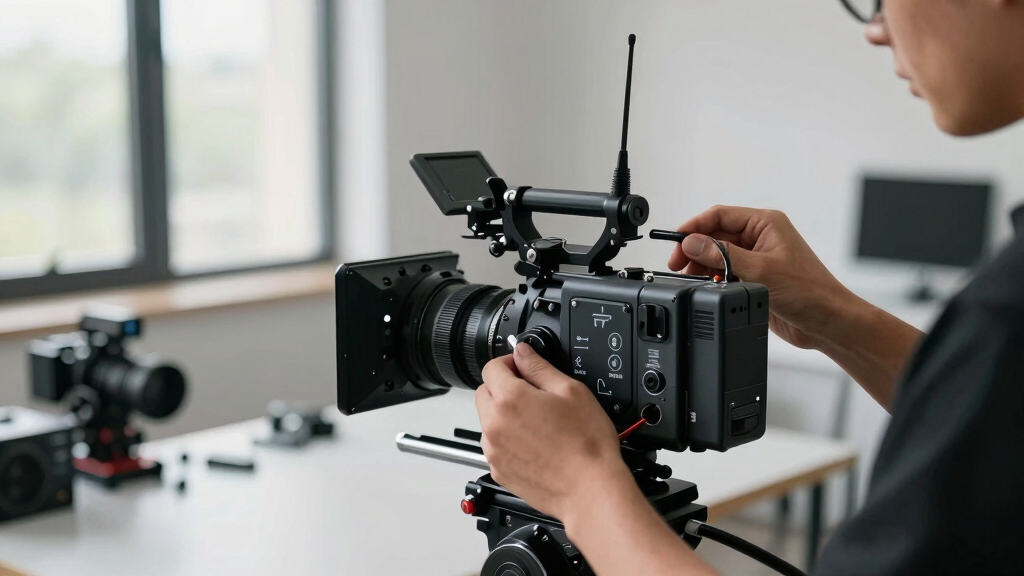

Wireless follow focus systems are essential tools for filmmakers and videographers seeking precise, remote control over focus and lens adjustments. The best options offer seamless connectivity, reliable range, and compatibility with a variety of camera setups. The Tilta Nucleus-M stands out as the overall top pick for its robust build and versatile features, while the SmallRig Wireless Follow Focus Kit offers excellent value for those on a budget. However, tradeoffs often involve balancing range, ease of use, and price—more advanced systems tend to be pricier and more complex, whereas simpler models may lack features or range. Keep reading to see how these options stack up and to find the best fit for your production needs.
Key Takeaways
- The most capable systems combine long-range wireless control with multi-motor setups for complex focus pulls.
- Value often hinges on compatibility with a wide range of lenses and ease of setup, especially for solo operators.
- Higher-end options typically offer better build quality, more precise control, and additional features like zoom and iris control.
- Compact and lightweight models are ideal for run-and-gun shooting but may sacrifice some range or motor power.
- Price varies widely; choosing the right system depends on balancing required features with budget constraints.


More Details on Our Top Picks
Tilta Nucleus-M Brushless Wireless Follow Focus Motor
The Tilta Nucleus-M stands out for its robust build quality, automatic lens calibration, and seamless daisy-chain power setup, making it ideal for professional setups requiring multiple motors. Compared to the SmallRig F60, it offers more advanced power management and easier attachment onto 19mm or 15mm rods, though it requires a dedicated power source and may be overkill for simple single-lens rigs. Its brushless motors deliver quiet, precise control, but the system’s complexity and higher cost are tradeoffs for high-end productions. This system is best suited for multi-motor applications in professional cinema environments.
Pros:- Robust, durable construction with easy clamping onto rods
- Automatic calibration simplifies setup with various lenses
- Daisy-chain power capability reduces cabling clutter
- Supports a wide voltage range (7.2V-24V)
Cons:- Requires external power source, adding complexity
- Higher price point may be prohibitive for hobbyists
- Less portable due to larger motor size
Best for: Professional filmmakers and cinematographers needing reliable multi-motor wireless focus control.
Not ideal for: Amateurs or solo shooters who prefer budget-friendly, simpler follow focus solutions without multiple motors.
- Power voltage range:7.2V-24V
- Motor type:Brushless
- Clamp compatibility:19mm or 15mm rods
- Included accessories:55cm 7-Pin to 7-Pin Nucleus-M Motor Cable
- Control type:Wireless
- Motor weight:Not specified
Bottom line: This pick makes the most sense for professional productions demanding multi-motor control and reliable power management.
SmallRig F60 Modular Follow Focus with A/B Stops, Allows Wide-Range (0.6kgf-1.8kgf) Stepless Damping Adjustment, with 15mm Rod Clamp and Snap-on Gear Ring Belt for DLSRs and Mirrorless Camera
The SmallRig F60 offers a finely tuned focus experience with its stepless damping adjustment and anti-slip wooden texture, making it ideal for users who want customizable focus control at a reasonable price. Compared to the Tilta Nucleus-M, it’s less suited for multi-motor setups but excels in single-lens precision, especially with its adjustable AB stops and wider focus angle. Its high-quality construction and user-friendly design make it appealing for enthusiasts and semi-professionals, though the silicone gear is limited to DSLR and mirrorless lenses and not cinema lenses. This follow focus makes the most sense for solo shooters or small crews focusing on precision and affordability.
Pros:- Stepless damping adjustment for customized focus feel
- Anti-slip wooden texture improves grip and control
- Adjustable AB stops for quick lens reversal
- Supports wide-range focus angles
Cons:- Limited to DSLR/mirrorless lenses due to silicone gear
- No motorized or wireless control capabilities
- Less suitable for complex multi-motor setups
Best for: Indie filmmakers and advanced hobbyists seeking accurate focus control without the complexity of multi-motor systems.
Not ideal for: Large productions or those using cinema lenses requiring motorized focus with multiple motors.
- Damping range:0.6kgf-1.8kgf
- Clamp size:15mm rods
- Focus angle:Wide-range
- AB stops:Support 2-step quick switching
- Material:Wood and silicone
- Compatibility:DSLR and mirrorless lenses
Bottom line: This follow focus is ideal for users prioritizing precision and adjustability on single-lens setups with a budget-friendly approach.
SmallRig Wireless Follow Focus Kit (Lite) with Handwheel Controller & Receiver Motor, A/B Stops & 15mm Rod Clamp, Compact Design, Widely Compatible with Cinema and Zoom Lenses with High Damping – 4296
The SmallRig Wireless Follow Focus Kit (Lite) is designed for ease of use, with a responsive handwheel, high torque motor, and wide lens compatibility, making it perfect for newcomers and small crews. Compared with the Tilta Nucleus Nano II, it offers less expansion but simplifies setup with its wireless control and quick lens calibration. Its high damping and low latency ensure smooth focus pulls, while the long 21-hour battery life and intuitive LEDs for connection status cater to those new to wireless systems. The compact size and wide lens compatibility make it a flexible choice for various shooting scenarios, but it may lack the multi-motor support needed for complex rigs. This pick is best suited for small productions or indie filmmakers starting to explore wireless focus control.
Pros:- Long-lasting 21-hour battery life
- High torque motor handles zoom lenses easily
- Intuitive LED indicators simplify operation
- Wide lens compatibility
Cons:- Limited expansion options compared to full systems
- No multi-motor support for complex rigs
- May lack some advanced features of higher-end systems
Best for: Beginners, small crews, or documentary shooters looking for an easy-to-operate wireless follow focus system.
Not ideal for: High-end productions requiring multi-motor setups or extensive expandability.
- Motor torque:4.3 kgf.cm
- Battery life:Up to 21 hours
- Wireless connection:Low latency
- Voltage input:5V-18V
- A/B stops:Supported
- Compatibility:Cinema and zoom lenses
Bottom line: This kit makes the most sense for solo or small-team operators seeking reliable wireless focus with minimal fuss.
Tilta Nucleus Nano II Base Kit – Wireless Lens Control System | Includes Handwheel, Motor + More | Wireless Zoom, Focus, Aperture Control | Follow Focus | Accurate Pulling | Touch Screen
The Tilta Nucleus Nano II Base Kit combines wireless focus, zoom, and aperture control with a touch screen interface, offering a versatile control solution for advanced users. Compared to the Tilta Nucleus-M, it is more compact and easier to deploy in tight spaces but still supports multiple motors and extensive camera compatibility. Its real-time lens mapping and adjustable focus pulling make it ideal for dynamic scenes requiring precise adjustments. The inclusion of a touch screen streamlines setup and control, but its reliance on Wi-Fi, Bluetooth, and USB-C may introduce connectivity issues in complex environments. This system suits those who want a balance of portability, multi-functionality, and control accuracy. This pick makes the most sense for professional operators needing flexible, multi-motor wireless control with an intuitive interface.
Pros:- Supports up to 4 motors with expansion
- Includes a high-resolution touchscreen for easy control
- Real-time focal distance display improves accuracy
- Wide camera and lens compatibility
Cons:- Relies on Wi-Fi/Bluetooth connection, which may be unstable
- Higher cost and complexity compared to single-motor systems
- Requires power and network management in busy sets
Best for: Cinematographers and camera operators requiring multi-motor wireless control with a touchscreen interface.
Not ideal for: Solo shooters or those on a tight budget preferring simpler, single-function follow focus systems.
- Motor support:Up to 4 motors
- Display:Touch screen
- Connectivity:Wi-Fi, Bluetooth, USB-C
- Lens control:Focus, zoom, aperture
- Control range:Not specified
- Included components:Handwheel, motor, cables
Bottom line: This system is best suited for professional productions needing multi-motor control and a versatile, integrated interface.
SmallRig Follow Focus F50 with Stepless Dynamic Damping Lever Adjustment and A/B Stops, Including 15mm Rod & Rod Clamp, for DSLR, for Sony FE/FE C, for Canon
The SmallRig F50 is tailored for users who prioritize tactile precision, with its stepless damping lever and adjustable focus backlash, ideal for solo operators and small crews. Compared with the SmallRig F60, it offers finer control and a more compact design, though it lacks wireless or motorized capabilities, making it less suitable for complex setups. Its 360-degree focus rotation and quick-release system facilitate rapid focus pulls, but the reliance on manual operation limits its use in high-end cinema workflows. It excels in scenarios where hands-on, precise control outweighs automation. This follow focus makes the most sense for DSLR shooters and small-scale productions focusing on manual focus.
Pros:- Stepless damping for smooth, customizable focus pulls
- Allows quick switch between AB stops
- Compact, lightweight design with 15mm rod compatibility
- Easy to disassemble for portability
Cons:- No motorized or wireless control options
- Limited to manual focus only
- Less suitable for multi-lens or multi-camera rigs
Best for: Solo filmmakers, DSLR shooters, and small crews needing precise manual focus control.
Not ideal for: Large productions or setups requiring motorized, wireless focus systems.
- Damping adjustment:Stepless, 0.3kgf-1.0kgf
- Focus rotation:360 degrees
- AB stops:Support
- Rod size:15mm
- Material:Aluminum
- Compatibility:DSLRs and mirrorless lenses
Bottom line: This follow focus is best for users who want precise manual control without added complexity or cost.
Tilta Nucleus Nano II Control Handle Kit – Wireless Lens Control System | Includes Hand Wheel, 2 Motors, Power Handle + More | Wireless Zoom, Focus, Aperture Control | Follow Focus | Touch Screen
This kit stands out for its comprehensive control options and versatility, making it ideal for professional setups needing expanded motor control. Compared to the Nano II Base Kit, the Control Handle Kit offers support for up to four motors and an advanced touch screen, streamlining workflow on complex shoots. The inclusion of multiple motors and expansion capabilities means it’s suited for multi-lens rigs or gimbals, but this comes with increased size and weight, making it less ideal for compact rigs. It excels in multi-motor control and real-time lens mapping, which improves focus accuracy and operational speed. However, the setup process can be complex for beginners, and the higher price point may be a barrier. This kit is best for professional filmmakers or camera assistants who need maximum control flexibility.
Pros:- Supports up to 4 motors for multi-lens control
- Includes a large, intuitive touch screen for advanced settings
- Supports lens mapping for precise focus pulls
- Compatible with a range of camera brands and motors
Cons:- Higher cost compared to basic systems
- Heavier and bulkier, less suitable for small rigs
- Setup can be complex for new users
Best for: Professional camera operators or focus pullers working on complex multi-motor rigs demanding reliable wireless control.
Not ideal for: Budget-conscious filmmakers or beginners who prefer simpler, more portable systems with fewer motors.
- Motor Control Support:Up to 4 motors
- Display:Touch screen
- Compatibility:Canon, Sony, Blackmagic, DJI
- Control Range:Not specified, assumed extended
- Expansion Options:Supports multiple motors
- Battery Type:F970 battery plate included
Bottom line: This kit is ideal for professionals needing expandable, high-precision wireless lens control in complex shooting environments.
Tilta Nucleus-M II Wireless Lens Control System Hand Wheel Kit | Multi-Motor Follow Focus for Focus, Iris & Zoom | FIZ Hand Unit | Cinema Camera Wireless Focus Control
This system makes a compelling choice for those needing to control focus, iris, and zoom wirelessly with multiple motors, offering excellent versatility for cinema lenses. It supports up to four motors and integrates seamlessly with previous Nucleus models, making it a flexible upgrade. The inclusion of a dedicated FIZ hand unit with programmable hard stops and focus marks provides precision control, especially useful for complex shots. Compared with the Nano II Control Handle Kit, this setup emphasizes manual control over multiple lens parameters, but it’s bulkier and less streamlined for gimbal use. Ideal for cinematographers working with cinema lenses requiring simultaneous focus, iris, and zoom adjustment, though it may be overkill for simple setups. This system is best suited for advanced users needing comprehensive multi-motor control.
Pros:- Controls focus, iris, and zoom simultaneously
- Supports up to 4 motors with multiple controllers
- Includes programmable focus marks and hard stops
- Long wireless control range up to 1000 feet
Cons:- Bulkier setup compared to simpler systems
- Requires batteries not included (18650 type)
- Complex setup for less experienced users
Best for: Cinematographers or focus pullers working with cinema lenses on multi-motor rigs demanding precise, wireless FIZ control.
Not ideal for: Run-and-gun shooters or those with minimal lens control needs who prefer lightweight, portable options.
- Motors Supported:Up to 4
- Control Range:Up to 1000 ft
- Control Type:Wireless via FIZ unit
- Compatibility:Cinema and photography lenses
- Includes:Hand unit, 2 motors, follow focus disks
- Battery:18650 batteries, not included
Bottom line: This system is perfect for professional cinematographers needing comprehensive wireless control over multiple lens parameters.
Tilta Nucleus Nano II Power Handle Kit – Wireless Lens Control System | Includes Hand Wheel, 2 Motors, Power Handle + More | Wireless Zoom, Focus, Aperture Control | Follow Focus | Touch Screen
This kit emphasizes portability and versatility, making it suitable for filmmakers working with smaller rigs or gimbals. The Power Handle Kit includes a compact hand wheel, two motors, and a touch screen that simplifies setup and operation, especially for those who want an all-in-one solution. Compared to the Control Handle Kit, it sacrifices some expansion capacity but gains in weight savings and mobility. The support for adjustable motors and lens mapping enhances focus accuracy, but the limited number of motors and absence of extensive expansion options restrict its use in larger setups. This pick is ideal for indie filmmakers or those on the move, but less suitable for multi-motor, complex rigs. It makes the most sense for small-scale productions needing reliable wireless focus control without extra bulk.
Pros:- Compact and lightweight design
- Includes touch screen for easy operation
- Supports up to 2 motors with lens mapping
- Versatile for focus, zoom, and aperture control
Cons:- Limited expansion support for more motors
- Higher cost than basic Nano systems
- Less suitable for large multi-motor rigs
Best for: Independent filmmakers or small crews who require lightweight, portable wireless follow focus with reliable control.
Not ideal for: Large productions or setups requiring multiple motors simultaneously for complex lens systems.
- Motors Supported:Up to 2
- Display:Touch screen
- Control Range:Not specified, suitable for typical set distances
- Compatibility:Focus, iris, zoom
- Weight:Approx. 4.95 lbs
- Battery:Included, power handle
Bottom line: This system is best for filmmakers seeking a portable, all-in-one wireless follow focus solution for small rigs and run-and-gun scenarios.
Tilta Nucleus-M Follow Focus WLC-T03 Lens Control System
This classic Nucleus-M system offers wired and wireless control options for focus, iris, and zoom, making it a versatile choice for setups that require manual or remote operation. Its endless control options and intuitive focus mark system make it well-suited for professional crews handling cinema lenses. Compared with the Nano II series, it provides more traditional manual control alongside wireless capabilities. The compact hand unit allows for precise focus pulls with programmable hard stops, but it lacks the extensive expansion support of the Nano II systems. It’s ideal for those who prefer a hybrid approach or need wired backup. It’s best for those who want dependable wireless focus control with the familiarity of manual operation, though it’s less favored for gimbal setups due to its size. This system suits professional film sets and focus pullers needing reliable, flexible control options.
Pros:- Supports wired and wireless control modes
- Endless control and programmable focus marks
- Compatible with cinema lenses
- Compact hand unit with intuitive controls
Cons:- Wired connection may limit mobility
- Larger footprint compared to Nano II kits
- Requires wired connection for some features
Best for: Professional focus pullers or cinematographers who want a hybrid wired/wireless system with manual control options.
Not ideal for: Filmmakers seeking ultra-lightweight or fully wireless systems for gimbal or handheld operation without wired backups.
- Control Type:Wired and wireless
- Supported Lenses:Cinema lenses
- Endless Control:Yes
- Size:Compact
- Range:Wireless up to 1000 ft
- Motors Supported:Multiple
Bottom line: Ideal for professional setups needing a hybrid wired and wireless focus system with precise manual control options.
Tilta Nucleus-M Wireless FIZ Lens Control System | Dual Hand Grips | FIZ Hand Unit | Two Motors | 1000ft Range | Run Stop Support | 0.8M Gear Compatibility | WLC-T03
This system emphasizes mobility, offering dual hand grips and a wireless FIZ control unit designed for use with gimbals and handheld rigs. Its support for two motors and a 1000ft range makes it suitable for dynamic shooting environments where quick adjustments are necessary. The dual handles provide ergonomic control over focus, iris, and zoom, making it ideal for gimbal operators and solo shooters. When compared with the Nano II Power Handle Kit, this system focuses more on mobility and ergonomic control rather than expandability. The inclusion of run-stop support enhances its usability for professional productions. It’s best for operators who need a wireless, portable solution for cinema lenses on gimbals or handheld rigs, but it might lack some advanced features for complex multi-motor setups. This setup is ideal for gimbal and handheld cinematography where quick, reliable lens control is critical.
Pros:- Wireless control up to 1000 ft
- Dual hand grips for ergonomic operation
- Supports run-stop functionality
- Ideal for gimbals and handheld rigs
Cons:- Limited to two motors
- Less suitable for complex multi-motor rigs
- Requires batteries (not included)
Best for: Gimbal operators and handheld shooters needing wireless focus, iris, and zoom control with mobility.
Not ideal for: Large multi-motor setups requiring extensive expandability or control over multiple lens parameters simultaneously.
- Motors Supported:Two
- Range:Up to 1000 ft
- Control Type:Wireless
- Control Handles:Dual grips
- Compatibility:Cinema lenses
- Additional Features:Run stop support
Bottom line: This system is perfect for dynamic, on-the-move cinema setups needing wireless, ergonomic lens control.
Tilta Nucleus-M II Wireless Lens Control System Ultimate Kit | Multi-Motor Wireless Follow Focus for Cinema Lenses | w/FIZ Hand Unit, Dual Hand Grips, Gears, Cables, Mounts, Hard Case
This system stands out for its multi-motor control, allowing wireless adjustment of focus, iris, zoom, and even camera settings like ISO and white balance. Compared with the smaller Nucleus Nano II, it offers more extensive ecosystem integration and compatibility with cinema lenses through different gear pitches, making it ideal for complex setups. The included FIZ hand unit and dual grips provide precise control, but the setup is more involved and pricier. Its ability to save and display focus, iris, and zoom info enhances workflow efficiency, making it suitable for high-end productions. However, its complexity may be overkill for casual shooters or those with simpler rigs.
Pros:- Multi-motor control for focus, iris, zoom, and camera settings.
- Compatibility with cinema lenses via gear pitch mapping.
- Ecosystem integration with previous Nucleus systems.
Cons:- Higher price point and more complex setup process.
- Bulkier and heavier compared to smaller follow focus systems.
Best for: Professional filmmakers and cinematographers needing advanced multi-motor control with ecosystem integration.
Not ideal for: Amateur videographers or solo shooters with minimal gear who prefer simplicity and lower cost.
- Motor Control:Wireless, multi-motor
- Compatibility:Cinema and photography lenses
- Control Features:Focus, iris, zoom, camera settings
- Ecosystem Compatibility:Previous Nucleus systems
- Range:Not specified, assumed extensive
- Included Accessories:FIZ hand unit, dual grips, gears, cables, case
Bottom line: This pick makes the most sense for professionals who require extensive control and integration features at a premium cost.
Fotodiox Replacement Gear Belt for Video Follow Focus Drives
Compared to complex electronic systems, this gear belt offers a straightforward, mechanical solution for follow focus needs at a very accessible price. Its universal size and adjustable sliding mechanism make it compatible with most DSLR lenses up to 105mm diameter, providing smooth focus control without the need for electronics. Made of soft rubber, it maintains grip even in cold weather, but lacks electronic precision or wireless control. This makes it an excellent choice for budget-conscious shooters or those preferring a simple, reliable gear-driven focus system. Tradeoffs include limited adjustability for very large lenses and no electronic features.
Pros:- Universal gear ring belt compatible with most lenses.
- Adjustable sliding mechanism for large lens diameters.
- Made of soft, durable rubber for consistent grip.
Cons:- No electronic or wireless control features.
- Limited to lenses up to 105mm diameter.
Best for: Budget-minded filmmakers or videographers seeking a reliable, simple gear-based follow focus upgrade.
Not ideal for: Professional productions requiring wireless control or complex lens adjustments.
- Compatibility:Lenses up to 105mm diameter
- Material:Soft rubber
- Teeth:33cm of teeth, 0.8 pitch
- Teeth Count:Approximately 141
- Adjustability:Sliding mechanism
- Warranty:2-year limited
Bottom line: Ideal for those wanting an affordable, straightforward gear solution without wireless complexity.
SmallRig Mini Follow Focus with A/B Stops & 15mm Rod Clamp and Snap-on Gear Ring Belt for DLSRs and Mirrorless Cameras, Fits Different Diameter Lenses Up to 114mm
This mini follow focus offers a lightweight, portable solution for quick focus adjustments, suitable for DSLR and mirrorless setups. Its compact design, weighing just over 200 grams, means it won’t bog down smaller rigs, making it ideal for run-and-gun shooting or travel. The adjustable A/B stops and snap-on gear ring belt support multiple lens diameters up to 114mm, providing flexibility for various lenses. The damping system and ergonomic grip ensure smooth, precise control, but its small size might limit control for very demanding focus pulls. While it lacks wireless features, it excels in ease of use and portability.
Pros:- Very compact and lightweight design.
- Adjustable A/B stops for precise control.
- Supports lenses up to 114mm with snap-on gear belt.
Cons:- Limited to manual focus control—no wireless features.
- May feel small for users with larger hands or demanding focus pulls.
Best for: Travel filmmakers and hobbyists needing a lightweight, reliable follow focus for small rigs.
Not ideal for: High-end productions requiring wireless, multi-motor control, or extensive ecosystem integration.
- Weight:204g / 7.2oz
- Lens Compatibility:Up to 114mm diameter
- Control:Manual focus with A/B stops
- Material:Composite construction
- Rod Clamp:15mm
- Additional Gears:Snap-on gear ring belt
- Build Quality:Solid, damping system
Bottom line: This pick is perfect for on-the-go shooters who prioritize portability and simplicity over advanced features.
Tilta Pocket Follow Focus | Precise Focus Ring with A/B Stops | Fluid Damping System | 15mm Rod & Rod Holder | Works with Most Cameras & Lenses | Lightweight, Comfortable, and Compact Design (FF-T07)
This small, affordable follow focus offers impressive control for its size, with a fluid damping system that mimics professional gear. Its compact form fits well with DSLR rigs, and the adjustable A/B stops allow quick setup for different focusing distances. The included 15mm rod clamp ensures compatibility with most cameras, and the smooth focus ring provides precise control. While it doesn’t include wireless or multi-motor capabilities, its ease of use and solid build make it a strong contender for budget-conscious shooters. The main tradeoff is the lack of electronic features, which limits use in larger, more complex setups.
Pros:- Compact, lightweight, and affordable.
- Fluid damping for smooth focusing.
- Supports most lenses with 15mm rods.
Cons:- No wireless or electronic control options.
- Limited to manual operation, less suitable for complex focus pulls.
Best for: Entry-level filmmakers or hobbyists working on small rigs seeking a reliable manual follow focus.
Not ideal for: Professional productions needing wireless control or multi-motor integration.
- Control:Manual with fluid damping
- Compatibility:Most cameras and lenses
- Gear Support:Interchangeable gears
- Rod Size:15mm
- Size:Lightweight and compact
- Stops:A/B stops adjustable
- Weight:12.96 oz
Bottom line: This is an excellent choice for beginners or casual shooters wanting a smooth, manual focus experience without added complexity.
SMALLRIG Handle with Follow Focus for DJI RS 2 / RS 3 Pro/RS 4 / RS 4 Pro/RS 5 Gimbal Stabilizer, Handle with 1/4″-20 locating Holes and a Cold Shoe Mount, Max Load 4.4lb
This handle with integrated follow focus is designed specifically for DJI RS series gimbals, combining control and stability in a compact form. Its 1/4″-20 holes and cold shoe mount allow versatile attachment options, making it a practical addition to stabilized rigs. The focus ring provides smooth adjustment, suitable for small lenses or quick focus tweaks during handheld or gimbal work. Its max load of 4.4 pounds suits lightweight to mid-weight camera setups, but it isn’t meant for heavy rigs. It’s a reliable choice for gimbal operators needing an integrated solution, though it lacks wireless or electronic motor control features.
Pros:- Designed specifically for DJI RS gimbals.
- Compact, lightweight, easy to mount.
- Includes smooth focus ring for manual control.
Cons:- Limited to gimbal setups, not a standalone follow focus.
- No wireless or electronic motor control.
Best for: Gimbal users seeking a simple, integrated follow focus for lightweight setups.
Not ideal for: Pro cinematographers requiring wireless, multi-motor control systems or large rigs.
- Compatibility:DJI RS series gimbals
- Max Load:4.4 lb
- Control:Focus ring
- Mounting:1/4″-20 holes, cold shoe
- Material:Aluminum alloy
- Size:Compact
Bottom line: This is a practical solution for gimbal operators needing manual focus control integrated into their stabilizer.
SMALLRIG Handle with Follow Focus for DJI RS 2 / RS 3 Pro/RS 4 / RS 4 Pro/RS 5 Gimbal Stabilizer, Handle with 1/4″-20 locating Holes and a Cold Shoe Mount, Max Load 4.4lb
This handle with integrated follow focus is designed specifically for DJI RS series gimbals, combining control and stability in a compact form. Its 1/4″-20 holes and cold shoe mount allow versatile attachment options, making it a practical addition to stabilized rigs. The focus ring provides smooth adjustment, suitable for small lenses or quick focus tweaks during handheld or gimbal work. Its max load of 4.4 pounds suits lightweight to mid-weight camera setups, but it isn’t meant for heavy rigs. It’s a reliable choice for gimbal operators needing an integrated solution, though it lacks wireless or electronic motor control features.
Pros:- Designed specifically for DJI RS gimbals.
- Compact, lightweight, easy to mount.
- Includes smooth focus ring for manual control.
Cons:- Limited to gimbal setups, not a standalone follow focus.
- No wireless or electronic motor control.
Best for: Gimbal users seeking a simple, integrated follow focus for lightweight setups.
Not ideal for: Pro cinematographers requiring wireless, multi-motor control systems or large rigs.
- Compatibility:DJI RS series gimbals
- Max Load:4.4 lb
- Control:Focus ring
- Mounting:1/4″-20 holes, cold shoe
- Material:Aluminum alloy
- Size:Compact
Bottom line: This is a practical solution for gimbal operators needing manual focus control integrated into their stabilizer.

How We Picked
I evaluated these wireless follow focus systems based on key factors such as performance reliability, wireless range, ease of use, build quality, compatibility, and value for the price. Systems with stable connections and minimal latency ranked higher, especially for professional use. I also considered how versatile each system is—whether it supports multiple motors, zoom, and iris control—and how user-friendly they are for solo operators or team-based setups. The ranking reflects a balance between advanced features and practical usability, ensuring each option serves a specific user need without unnecessary complexity or cost.Factors to Consider When Choosing Wireless Follow Focus Systems
Choosing the right wireless follow focus system involves understanding several important factors that impact your shooting experience. Beyond features and price, consider how the system integrates with your existing equipment, its reliability in real-world conditions, and whether it matches your skill level. Making informed decisions helps avoid costly missteps and ensures smooth operation during critical shoots.Wireless Range and Signal Stability
Range and signal stability are among the most critical factors. A system with a short range may limit your shooting options, especially on larger sets or outdoor locations. Look for systems that offer at least 300-500 feet of reliable control, and check user reviews for reports of connection dropouts. Systems with encrypted, frequency-hopping tech tend to deliver more stable signals, reducing latency and ensuring consistent focus pulls during takes.
Number of Motors and Control Capabilities
The number of motors a system supports determines its ability to control multiple axes like focus, zoom, and iris simultaneously. If you plan to operate complex rigs or multiple lenses, opt for multi-motor setups. However, more motors typically mean higher costs and setup complexity. For simpler needs, a single-motor system may suffice, but ensure it still offers precise control and adjustable damping for smooth operation.
Compatibility and Ease of Setup
Compatibility with your camera, lens, and other accessories is essential. Some systems are designed for professional cinema lenses, while others work better with smaller DSLR or mirrorless setups. Ease of setup and intuitive controls are equally important, especially if you’re working solo or in fast-paced environments. Check if the system includes mounting options, compatible gear rings, and clear instructions to avoid frustration during assembly.
Build Quality and Reliability
Durability matters when working in various environments. Look for rugged construction, weather-resistant features, and quality motors. Cheaper, plastic components may break or degrade quickly, leading to downtime during shoots. Investing in a well-built system can save money and hassle over time, especially on demanding projects or outdoor shoots where equipment is exposed to the elements.
Price and Overall Value
Price points vary widely, from budget-friendly options to comprehensive, multi-motor systems. The key is finding a balance between features and affordability that matches your production needs. Beware of systems that cut corners on essential features like range or motor power just to save money; these can hinder your workflow. Conversely, overpaying for features you won’t use might not be the best investment—focus on what truly enhances your shooting experience.
Frequently Asked Questions
Can I use a wireless follow focus system with any camera?
Most wireless follow focus systems are compatible with a wide range of cameras, from DSLRs to professional cinema cameras, but compatibility depends on the lens mount and power requirements. Many systems connect via standard gear rings and can be adapted to different lenses, but always check the specific compatibility details. Some advanced systems also support external power sources or have versatile mounting options, making them suitable for various setups.
What is the typical wireless range I should look for?
For most professional applications, a range of at least 300 to 500 feet provides enough flexibility for outdoor and large studio shoots. Some high-end systems offer ranges exceeding 1,000 feet, ideal for complex setups or remote operation. Keep in mind that obstacles, interference, and environment can affect actual range; systems with encrypted, frequency-hopping technology generally maintain better stability over longer distances.
Are multi-motor systems worth the extra cost?
Multi-motor systems offer significant advantages when controlling focus, zoom, and iris simultaneously, especially on complex rigs or high-end productions. They enable smoother, more precise adjustments across multiple axes, which is crucial for professional cinematography. However, they come with higher prices and potentially more complicated setups. For simpler projects or solo operators, a single-motor system might be sufficient, saving money without sacrificing essential control.
How important is build quality in a wireless follow focus system?
Build quality directly impacts the durability and longevity of your equipment. A sturdy, weather-resistant system can withstand challenging conditions, reducing the risk of breakdowns during critical shoots. Cheaper plastic components may fail or break under stress, leading to delays and additional costs. Investing in a well-made system ensures reliable performance over time, especially if you frequently shoot outdoors or in demanding environments.
Should I prioritize price or features when choosing a system?
While budget is always a consideration, prioritizing features that match your shooting needs ensures better value. For instance, if you require long-range control and multiple motors, spending more on a high-end system makes sense. Conversely, if you’re just starting or shooting simple projects, a more affordable model with essential features may suffice. The key is to match the system’s capabilities with your production demands to avoid overspending or under-equipping.