
When hurricane season hits, having a reliable generator can make all the difference between staying safe and being left in the dark. The best generators for hurricane season need to balance power output, fuel efficiency, portability, and safety features. The Westinghouse 12500 Watt Dual Fuel Generator stands out for its high capacity, while the Champion 4000-Watt Inverter offers quiet operation suited for outdoor use. Many models trade off between raw power and ease of use—choosing the wrong type can lead to frustration or inadequate backup. Continue reading for a detailed comparison to find the right fit for your needs.
Key Takeaways
- High-capacity dual-fuel models like the Westinghouse 12500 Watt provide enough power for entire homes but come with higher costs and larger size.
- Inverter generators excel in quiet operation and clean power, making them ideal for sensitive electronics during outages.
- Transfer switch compatibility is essential for seamless home backup integration, especially during prolonged outages.
- Portability varies widely; models with wheel kits and lighter weight are easier to move in emergency situations.
- Fuel versatility, such as propane or natural gas options, can extend run times and improve safety during extended power outages.



More Details on Our Top Picks
WEN 6800-Watt Dual Fuel RV-Ready Electric Start Portable Inverter Generator with Fuel Shut Off and CO Watchdog (DF680iX)
This WEN inverter stands out for its dual-fuel capability, allowing you to run on gasoline or propane, which makes it more adaptable than many single-fuel options like the WEN 475T. Its clean power output (less than 1.2% THD) ensures safe operation of sensitive electronics, and the electric start simplifies operation during outages. Compared to larger generators like the Westinghouse iGen11000DFc, it offers a good balance of portability and power, though it doesn’t match the peak wattage of bigger units. The fuel shutoff prolongs engine life, and the CO watchdog enhances safety, making it ideal for RVers or home backup. Its cons include a limited runtime (~6 hours at half load) and a weight of nearly 100 pounds, which may challenge portability for some users. This model makes the most sense for homeowners or campers needing reliable, quiet, and flexible power in various scenarios.
Pros:- Dual-fuel flexibility for fuel availability and safety
- Quiet operation at 64 decibels
- Includes safety features like CO watchdog and fuel shutoff
Cons:- Limited runtime of about 6 hours at half load
- Heavy weight and moderate portability challenges
Best for: Families seeking a dependable, quiet generator for home backup or RV use that can run on either gasoline or propane.
Not ideal for: Small households or those needing continuous longer runtime, as the tank capacity limits operation to around 6 hours at half load.
- Wattage:6800 surge / 5100 rated watts
- Fuel Type:Gasoline and Liquefied Petroleum Gas
- Tank Volume:2.9 Gallons
- Engine Displacement:224 Cubic Centimeters
- Output Power Outlets:8
- Runtime:6 hours at half load
Bottom line: This inverter is perfect for those who prioritize versatility and safety in a portable power solution for RVs or home backup.
Westinghouse 6500 Watt Dual Fuel Home Backup Portable Generator, Transfer Switch Ready 30A Outlet, RV Ready 30A Outlet, CO Sensor
Compared with the WEN 6800, this Westinghouse offers slightly less wattage but excels in runtime, running up to 14.5 hours on a 4.7-gallon tank, which is ideal for extended outages. Its dual-fuel capability adds convenience, and the built-in CO sensor enhances safety during use in enclosed spaces, surpassing many basic models. While it doesn’t reach the peak wattage of larger units like the Westinghouse iGen11000DFc, it provides enough power for essential household appliances. The included transfer switch-ready outlets make it suitable for home backup without complicated wiring. Drawbacks include a somewhat heavy weight of over 130 pounds and a limited number of outlets, which could be restrictive for complex setups. This generator makes sense for homeowners who need reliable backup power with long runtime and safety features without the highest wattage capacity.
Pros:- Long runtime of up to 14.5 hours
- Dual-fuel capability for convenience and safety
- Built-in CO sensor for added safety
Cons:- Heavy and less portable at over 130 pounds
- Limited outlets restrict complex power needs
Best for: Homeowners seeking an affordable, long-lasting generator with safety features and dual-fuel flexibility for power outages.
Not ideal for: Campers or those needing portable power on the go, due to its weight and size, or users requiring higher wattage for heavy-duty appliances.
- Wattage:6500 peak / 5300 running watts
- Fuel Type:Gasoline and Propane
- Tank Volume:4.7 Gallons
- Engine Displacement:274 Cubic Centimeters
- Run Time:Up to 14.5 hours
- Outlets:3
Bottom line: This unit offers excellent runtime and safety features, making it ideal for household backup during extended outages on a budget.
Westinghouse 11000 Peak Watt Dual Fuel Portable Inverter Generator, Remote Electric Start, Transfer Switch Ready, Gas and Propane Powered, Low THD – Safe for Electronics, Parallel Capable, CO Sensor
This Westinghouse inverter makes a strong case for large household or jobsite backup with its impressive 11,000 peak watts and 9,000 running watts, outperforming smaller models like the WEN 475T. Its remote electric start and digital data center offer convenience and real-time monitoring, while the low total harmonic distortion (less than 3%) ensures safety for sensitive electronics. The 457cc engine and 17-hour runtime on a large 9.8-gallon tank make it suitable for prolonged outages. The added parallel capability allows expansion, which is a significant advantage over less flexible units. However, the weight exceeds 180 pounds, limiting portability, and its high price point may be a concern for some budgets. This generator is best suited to users needing maximum power, remote operation, and long run times for critical home systems.
Pros:- High peak and running wattage for heavy loads
- Remote electric start and digital monitoring
- Parallel connection capability for increased power
Cons:- Heavy and less portable, over 180 pounds
- Higher cost compared to smaller models
Best for: Large households or contractors needing high wattage, remote start, and expandability for extensive power needs during outages.
Not ideal for: Campers or those with limited space, due to its heavy weight, or users seeking budget-friendly options for light emergency use.
- Wattage:11000 peak / 9000 running watts
- Fuel Type:Gasoline and Propane
- Tank Volume:9.8 Gallons
- Engine Displacement:457 Cubic Centimeters
- Run Time:Up to 17 hours
- Outlets:4
Bottom line: This unit is ideal for those requiring maximum power and remote operation for serious backup needs in large homes or work sites.
WEN 4,750-Watt 120V/240V Dual Fuel Portable Generator with Wheel Kit and Electric Start (DF475T)
As a compact and affordable alternative, the WEN 475T offers 4,750 surge watts and 3,800 running watts, making it suitable for small homes or RVs. Its dual-fuel feature allows flexible operation on gasoline or propane, which is a plus over single-fuel models like the WEN 6800. Its electric start and included wheel kit improve ease of use and portability, although its runtime (~11 hours at half load) is less than larger models. The unit’s size and weight make it manageable for one person, and the transfer switch-ready outlet simplifies emergency connection. Downsides include limited power capacity for larger appliances and fewer outlets, which may restrict use for more extensive setups. This generator makes the most sense for RV owners or small households needing reliable backup without excessive size or cost.
Pros:- Dual-fuel flexibility for convenience and safety
- Includes wheel kit for portability
- Electric start simplifies operation
Cons:- Limited wattage for heavy-duty appliances
- Runtime of about 11 hours at half load
Best for: RVers and small households seeking a portable, affordable backup generator capable of running essential appliances.
Not ideal for: Large homes or users needing to power multiple high-wattage appliances simultaneously, due to limited capacity.
- Wattage:4750 surge / 3800 rated watts
- Fuel Type:Gasoline and Liquefied Petroleum Gas
- Tank Volume:4 Gallons
- Engine Displacement:224 Cubic Centimeters
- Runtime:Up to 11 hours
- Outlets:4
Bottom line: This generator is best suited for RVers or small households needing portable and reliable backup power in moderate situations.
Westinghouse 12500 Watt Dual Fuel Home Backup Portable Generator, Remote Electric Start, Transfer Switch Ready, Gas and Propane Powered
This Westinghouse model leads in peak wattage at 12,500 watts and offers 9,500 continuous watts, making it ideal for powering entire homes or demanding job sites, surpassing smaller units like the WEN 475T. Its remote electric start and digital display provide convenience and real-time monitoring, and the robust 457cc engine with a 6.6-gallon tank ensures up to 12 hours of runtime. Its transfer switch-ready outlets simplify installation, and the dual-fuel capability offers flexibility. The unit’s weight exceeds 187 pounds, which limits portability, and its price is higher, but its power and features justify the cost for serious backup needs. The low THD (less than 3%) makes it safe for sensitive electronics. Drawbacks include its size and cost, which may be prohibitive for casual users. This generator makes sense for users who want maximum power, remote operation, and long-lasting backup for large homes or work sites.
Pros:- High peak and continuous wattage for heavy loads
- Remote electric start and digital display
- Parallel capability for increased power
Cons:- Very heavy (~187 pounds), limiting portability
- Higher price point
Best for: Large households, contractors, or serious backup users needing high wattage, remote start, and long runtime with expandability.
Not ideal for: Campers or small households with limited space and lower power needs, due to its weight and size.
- Wattage:12500 peak / 9500 running watts
- Fuel Type:Gasoline and Propane
- Tank Volume:6.6 Gallons
- Engine Displacement:457 Cubic Centimeters
- Run Time:Up to 12 hours
- Outlets:4
Bottom line: This unit is best for those requiring maximum wattage, remote operation, and long runtime in large or demanding backup scenarios.
Westinghouse 14500 Peak Watt Tri-Fuel Home Backup Portable Generator, Remote Electric Start, Transfer Switch Ready, Gas, Propane, and Natural Gas Powered
This model stands out for its impressive tri-fuel capability, offering flexibility in fuel sources, which is a major advantage over the WEN TF1450, especially in emergency situations where fuel options may be limited. Its large 36-gallon tank provides up to 19 hours of runtime, making it ideal for extended outages. The remote electric start and transfer switch readiness simplify operation and integration with home systems. Compared to the WEN TF1450, it produces higher peak wattage and is designed for larger homes or demanding job sites, but it involves a heftier price tag and larger footprint. The durable cast iron engine sleeve and copper windings ensure longevity and cleaner power for sensitive electronics. It’s best suited for homeowners needing dependable, long-duration backup power, and for those who prioritize fuel versatility and ease of use.
Pros:- Tri-fuel flexibility provides fuel source options during emergencies
- Long runtime of up to 19 hours on a full tank
- Remote electric start and transfer switch ready for seamless backup
Cons:- Bulky and heavy (230 pounds), requiring significant space and effort to move
- Higher price point compared to smaller or less versatile models
Best for: Large household owners, contractors, or campgrounds needing reliable, multi-fuel power with long runtime.
Not ideal for: Small apartment dwellers or users with limited storage space, due to its size and weight.
- Peak Wattage:14500
- Running Wattage:11500
- Fuel Types:Gasoline, Propane, Natural Gas
- Tank Volume:36 Liters
- Runtime:Up to 19 hours
- Engine Displacement:550cc
Bottom line: This generator is best for large homes or work sites where maximum fuel flexibility and runtime are crucial.
Champion Power Equipment 4000-Watt RV Ready Portable Inverter Generator with Quiet Technology and 3 Year Warranty
This pick makes the most sense for those prioritizing portability and quiet operation, with a weight under 50 pounds and noise levels of just 64 dBA at 23 feet, making it far quieter than the WEN TF1450. Its 4000 starting watts and 3000 running watts are sufficient for essential household items or RV appliances, but less power than the WEN TF1450 or Oxseryn OXOG10, which are better suited for bigger loads. The CO Shield technology adds safety by automatically shutting off the generator if dangerous CO levels are detected. Its parallel capability allows doubling power with another unit, which is a flexible feature for camping or small home backup. While it excels in quiet, portable operation, it’s less ideal for large power needs or extended outages. This generator is best for users who need a lightweight, easy-to-carry unit for camping, tailgating, or light emergency backup.
Pros:- Lightweight at less than 49 pounds for easy transport
- Quiet operation at 64 dBA, ideal for noise-sensitive environments
- Parallel-ready to double power output when needed
Cons:- Limited wattage makes it unsuitable for larger appliances
- Lacks the fuel versatility of tri-fuel models, runs only on gasoline
Best for: Campers, tailgaters, or small household owners needing portable, quiet power for essentials.
Not ideal for: Homes with high power demands or large appliances, due to its limited wattage capacity.
- Peak Wattage:4000
- Running Wattage:3000
- Noise Level:64 dBA
- Runtime:Up to 10 hours
- Fuel Type:Gasoline
- Parallel Capable:Yes
Bottom line: This inverter generator is perfect for those needing portable, quiet power for small loads and outdoor recreation.
WEN 14500-Watt 120V/240V Tri-Fuel Generator, Transfer-Switch Ready with Electric Start and Wheel Kit (TF1450)
The WEN TF1450 delivers impressive power at a more affordable price point, with surge wattage of 14,500 and runtime of up to 12 hours on a 2-gallon tank, making it suitable for emergency backup where fuel options are limited to gas, propane, or natural gas (with additional adapters). Its electric start and transfer switch readiness make it a convenient choice for homeowners looking for a straightforward, reliable unit. Compared to the Westinghouse 14500, it offers similar wattage but with a lighter weight of 249 pounds and included wheel kit for mobility. However, its smaller tank size means slightly shorter runtime, and it’s less suited for prolonged outages without refueling. This generator is ideal for budget-conscious users wanting high wattage and fuel versatility for emergency use.
Pros:- High surge wattage suitable for whole-house backup
- Tri-fuel capability adds fuel flexibility
- Transfer switch ready for quick connection to home circuits
Cons:- Smaller 2-gallon tank limits runtime to approximately 12 hours
- Some assembly required for wheel kit and connections
Best for: Homeowners seeking reliable, tri-fuel backup power without a premium price tag.
Not ideal for: Users needing extended runtime or large-scale industrial power, due to smaller fuel capacity.
- Peak Wattage:14500
- Running Wattage:11500
- Fuel Types:Gasoline, Propane, Natural Gas
- Tank Volume:2 Gallons
- Runtime:Up to 12 hours
- Engine Displacement:500cc
Bottom line: This generator offers a solid balance of power and affordability for home emergency preparedness.
Oxseryn 4400-Watts Inverter Generator, Open Frame Generator Gas Powered, Emergency Home Backup, RV Ready 30A Outlet, EPA Compliment
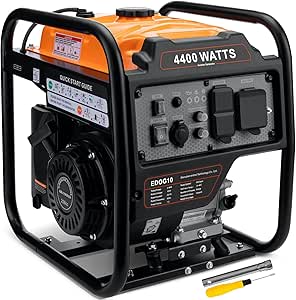
This lightweight, 57-pound inverter generator excels in portability and clean power, producing 4400 peak watts and 3400 running watts, making it suitable for RV use and small home essentials. Its inverter technology ensures less than 3% THD, safer for sensitive electronics like laptops and CPAP machines, unlike the larger, more traditional models. It features a 14-hour runtime on a 2-gallon tank, which is adequate for short-term backup or recreational activities. The 50A parallel capability and multiple outlets add flexibility, though it doesn’t match the wattage of larger, tri-fuel models like the Westinghouse 14500. Its compact size and EPA compliance make it ideal for outdoor adventures or small-scale emergency power, but it’s less suited for powering entire houses or high-demand appliances.
Pros:- Lightweight at only 57 pounds for easy transport
- Clean power suitable for sensitive electronics
- Parallel-ready for increased power
Cons:- Limited wattage compared to larger generators like Westinghouse 14500
- Smaller fuel tank limits runtime to about 14 hours
Best for: RV owners, campers, or small household users needing portable, clean power for essentials.
Not ideal for: Large homes or high-power tools, due to its lower wattage capacity.
- Peak Wattage:4400
- Running Wattage:3400
- Fuel Tank:2 Gallons
- Runtime:Up to 14 hours
- Noise Level:Less than 60.5 dBA
- Parallel Capable:Yes
Bottom line: This inverter generator is ideal for RVers and small backup needs where portability and clean power matter most.
ERAYAK 4500W Portable Inverter Generator for Home Use, Super Quiet Small Generator for Camping Outdoor Emergency Power Backup, Gas Powered Engine, ECO Mode, EPA Compliant
This inverter generator strikes a good balance between power and portability, with 4500 peak watts and 3500 running watts, making it suitable for small home backup or outdoor camping. Its ultra-quiet operation at 60.5 dB(A) outperforms larger, noisier models like the Westinghouse 14500, which can be critical in residential or camping settings. The ECO mode enhances fuel efficiency, and its 55-pound weight with telescoping handle and wheel kit make it easy to move. While it doesn’t match the high wattage of larger models, it provides enough power for essential appliances, laptops, and phones during outages or outdoor adventures. Its EPA compliance and multiple outlets add to its versatility, but it’s less suitable for powering large appliances or whole-house systems during extended outages. It’s best for users who need quiet, portable power for essentials.
Pros:- Super quiet operation at just over 60 dB
- Portable at only 55 pounds with wheel kit
- EPA compliant and eco mode for fuel efficiency
Cons:- Wattage lower than larger, tri-fuel units for heavy-duty use
- Limited fuel capacity limits runtime compared to larger models
Best for: Homeowners, campers, or RV users needing quiet, portable backup power for small loads.
Not ideal for: Users requiring high wattage for large appliances or whole-house backup during extended outages.
- Peak Wattage:4500
- Running Wattage:3500
- Fuel Type:Gasoline
- Runtime:Up to 14 hours
- Noise Level:60.5 dBA
- EPA Compliant:Yes
Bottom line: This inverter generator is best for those seeking quiet, portable power for small to medium essentials during outages.

How We Picked
These generators were evaluated based on a combination of performance, reliability, safety features, ease of use, and value. Power output was a primary factor, especially for those needing to run essential appliances or entire homes. We also considered startup convenience, noise levels, and fuel options, since these impact usability during emergencies. Durability and brand reputation played a role in ensuring long-term dependability, while price was balanced against features offered. The ranking reflects a mix of best overall performance, affordability, and suitability for different emergency scenarios.Factors to Consider When Choosing Best Generators For Hurricane Season
Choosing the best generator for hurricane season involves more than just looking at wattage. You need to consider how much power you’ll need, how easy it is to operate, and what safety features are in place. The right generator should fit your home size, budget, and emergency plans without becoming a burden or safety risk. Here are key factors to guide your decision:Power Capacity and Load Needs
Determine the total wattage of essential appliances and systems you’ll need to run during an outage. Larger homes or those with multiple devices require higher wattage, often favoring dual-fuel or portable home backup models. Smaller households or outdoor use might only need inverter generators with enough capacity for a few electronics. Overestimating your needs can lead to unnecessary expense, while underestimating risks leaving you unprotected.
Fuel Type and Efficiency
Fuel options like gasoline, propane, and natural gas influence convenience and safety. Propane and natural gas can provide longer, cleaner burns and reduce the need for frequent refueling, especially for standby units. Gasoline is more common but less stable for long-term storage. Consider your access to fuel sources and the generator’s fuel consumption rate to ensure running costs stay manageable during extended outages.
Portability and Size
If you need to move your generator around or take it outdoors, size and weight matter. Compact inverter models are easier to transport but usually offer less power. Heavier, wheeled units can supply more electricity but may require help to move. Think about where you’ll store the generator and how often you’ll need to relocate it, especially during a storm or emergency.
Ease of Use and Safety Features
Features like electric start, remote operation, and automatic transfer switches make generators more user-friendly during stressful situations. Safety features such as CO sensors and automatic shutoff protect against hazardous conditions, which are especially important in storm-damaged environments. Investing in models with clear instructions and straightforward controls can reduce setup errors during emergencies.
Noise Level and Environmental Impact
Quiet operation is often overlooked but vital if you’re in close proximity to neighbors or need to run the generator indoors or near living spaces. Inverter generators typically produce less noise and cleaner power, making them better suited for indoor or outdoor use in residential areas. Consider environmental regulations and emissions standards, especially if you plan to run the generator frequently or for long periods.
Frequently Asked Questions
How much power do I need for a whole-house backup during a hurricane?
To determine your power needs, list all essential appliances and their wattage. Most average homes require around 5,000 to 7,500 watts to run critical systems like refrigerators, lights, and small HVAC units. Larger homes or those with electric water heaters and central air conditioning may need upwards of 10,000 watts or more. Choosing a generator with a slightly higher capacity than your total needs provides flexibility and reduces the risk of overload.
Is a dual-fuel generator worth the extra cost?
Dual-fuel generators offer significant flexibility, allowing you to switch between gasoline and propane depending on availability and safety considerations. Propane tends to burn cleaner and can be stored longer, making it a safer choice for extended outages. The added convenience and fuel options often justify the higher price, especially if you live in an area prone to long storms where fuel availability might be limited.
Should I prioritize quiet operation or maximum power?
This depends on your typical use case. If you plan to run the generator in close proximity to your home or neighbors, a quieter inverter model will minimize disturbances. On the other hand, if your goal is to power large appliances or run a whole house, higher-capacity models may produce more noise but are necessary for sufficient backup. Balancing noise levels with power output is key, and some models offer both high capacity and quieter operation—though at a premium.
How important are safety features like CO sensors?
Safety features such as CO sensors and automatic shutoff are vital, especially during extended outages when generators may be operated in enclosed or semi-enclosed spaces. CO sensors detect dangerous carbon monoxide levels and shut the unit down before a hazard occurs. While these features add to the cost, they significantly reduce health and safety risks, making them a worthwhile investment for most households.
Can I run my generator indoors or in enclosed spaces?
Most portable generators, especially those with open frames and higher power ratings, should never be run indoors or in enclosed spaces due to the risk of carbon monoxide poisoning. Inverter generators are somewhat safer outdoors close to living spaces due to lower emissions and noise, but proper ventilation is always required. Consider installing a transfer switch for safe indoor connection to your home’s electrical system, which allows the generator to power essential circuits without dangerous backfeed risks.
Conclusion
For those needing maximum power and reliability, the Westinghouse 12500 Watt Dual Fuel Generator makes the most sense. If budget-conscious buyers want good performance, the WEN 4750-Watt Dual Fuel Generator delivers solid value with portability. Beginners or small households should lean toward inverter models like the Champion 4000-Watt Inverter for ease and quiet operation. Families with long-term outage plans might prioritize dual-fuel setups with transfer switch capability, like the Westinghouse 14500 Peak Watt Tri-Fuel Generator. Choose based on your home size, safety needs, and how much power you’ll require during hurricane season.