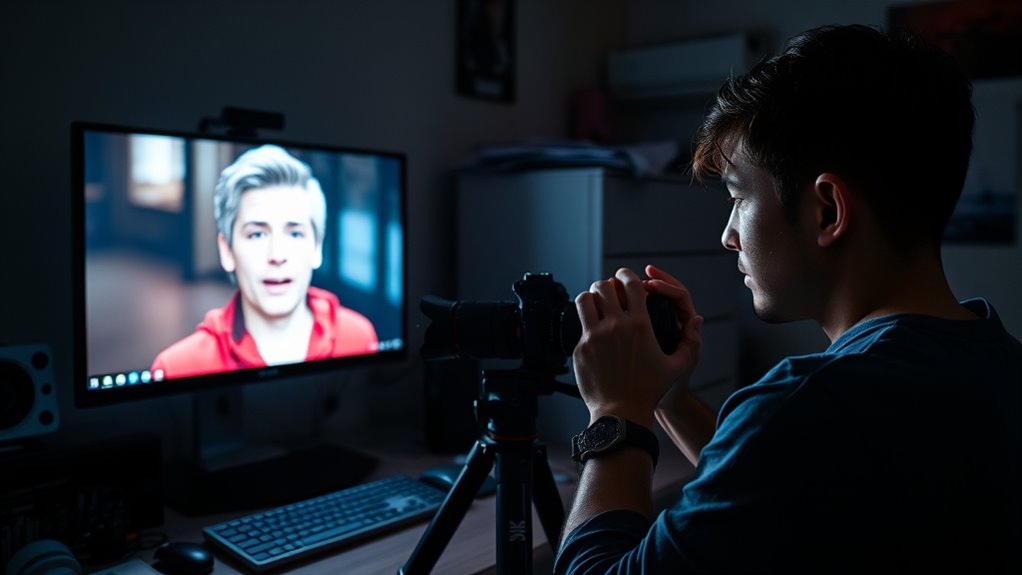

Deepfake memes can be funny or frightening, but they raise serious ethical concerns. When you create or share these memes, you risk infringing on people’s privacy, manipulating perceptions, and spreading misinformation. Without consent, deepfakes can cause emotional harm and damage reputations. If you’re not careful, you might contribute to societal distrust or unintentionally support harmful content. To understand how to navigate this tricky landscape responsibly, keep exploring the ethical challenges behind deepfake memes.

Get the latest gadgets delivered free — and shop member deals
- Fast, free delivery on millions of items
- Access to Prime Big Deal Days deals on October 6–7
- Prime Video, Amazon Music and more included
Key Takeaways
- Deepfake memes raise ethical concerns when created or shared without consent, potentially harming individuals’ reputations and privacy.
- While they can be humorous, deepfakes can also mislead viewers, spreading misinformation and causing real-world harm.
- Responsible use requires awareness of the potential for deception and a commitment to verifying content before sharing.
- Creating or disseminating non-consensual deepfakes violates ethical boundaries and can contribute to emotional or reputational damage.
- Balancing entertainment with respect and accountability is essential to navigate the moral implications of deepfake memes.

Deepfake memes have become a popular form of online entertainment, but their rapid rise raises important ethical questions. When you create or share these videos, you might not always think about the consent issues involved. Using someone’s likeness without their permission can harm their reputation or invade their privacy. For example, a deepfake of a celebrity saying something embarrassing could spread quickly, damaging their image. If the person depicted hasn’t consented to this use, it crosses an ethical line. You might argue that it’s all just for fun, but the potential for harm is real. People have different comfort levels regarding how their images are used, and ignoring consent can contribute to feelings of violation or exploitation. Furthermore, these memes can be weaponized to spread misinformation risks, making it harder to distinguish fact from fiction. When you see a deepfake of a politician making controversial statements, it might seem convincing enough to influence opinions or sway elections. The danger lies in the fact that deepfakes can be incredibly realistic, blurring the line between truth and fabrication. When misinformation spreads through deepfake memes, it can lead to real-world consequences, like damaging trust or inciting violence. This issue becomes even more troubling when you consider that many viewers might not realize they’re watching a fabricated video. The rapid dissemination of such content amplifies the risk of misinformation going viral, making it difficult to correct false narratives once they’ve taken hold. As a user, you need to be aware of how easily deepfakes can manipulate perceptions and influence public discourse. The ethical dilemma intensifies when creators intentionally craft deepfakes to deceive or manipulate audiences, raising questions about accountability. Sharing a deepfake without verifying its authenticity can contribute to the spread of falsehoods, further muddying the information landscape. Overall, while deepfake memes can be hilarious and creative, they come with significant ethical responsibilities. Respecting consent and being cautious about misinformation risks should guide your interactions with this content. Recognizing the potential harm and acting responsibly helps ensure that technology remains a tool for entertainment rather than a weapon for deception. The more aware you are of these issues, the more you can make informed decisions about what to share and believe online, balancing the fun with ethical integrity. Additionally, understanding how fetal development occurs during pregnancy can help you appreciate the importance of ethical considerations in media and technology.
As an affiliate, we earn on qualifying purchases.
Frequently Asked Questions
Can Deepfake Memes Be Used for Educational Purposes Ethically?
You might wonder if deepfake memes can be used ethically for education. While they can illustrate complex ideas or historical events, consent challenges arise when using someone’s likeness without permission. It’s crucial to respect artistic boundaries and guarantee transparency about the content’s nature. If you address these issues carefully, deepfake memes can be a powerful, ethical tool for learning, fostering understanding without crossing moral lines.
How Do Laws Vary Internationally Regarding Deepfake Content?
Oh, the joy of traversing international laws on deepfake content—it’s like a global game of hide and seek. You’ll find that legal boundaries vary wildly, shaped by cultural differences that influence what’s acceptable or criminal. While some countries crack down hard, others turn a blind eye. So, you must stay informed, respecting these differences, because what’s legal in one nation might land you in hot water somewhere else.
What Are the Psychological Impacts of Deepfake Memes on Viewers?
You might find that deepfake memes can subtly manipulate your psychology, leading to emotional desensitization over time. As you view increasingly realistic content, it becomes harder to distinguish fact from fiction, which can dull your emotional responses. This psychological manipulation can erode trust and increase anxiety or confusion, making you more vulnerable to misinformation. Recognizing these impacts helps you stay aware of how deepfake memes influence your mental health.
Are There Technological Solutions to Detect Deepfake Content Reliably?
While there’s no perfect solution, technological detection and AI verification are improving ways to identify deepfake content reliably. You can rely on advanced algorithms that analyze inconsistencies in videos or images, helping differentiate genuine from fabricated media. These tools continue to evolve, offering a promising layer of security. Yet, stay cautious, as deepfake creators also refine their techniques, making it essential to combine tech solutions with critical thinking.
How Can Creators Ensure Their Deepfake Memes Are Ethically Responsible?
To guarantee your deepfake memes are ethically responsible, you need to prioritize consent and transparency. Always seek permission from individuals whose likenesses you use, and clearly disclose when a meme is a deepfake. This way, you respect privacy and avoid misleading viewers. Being transparent about your creation process builds trust and shows you’re committed to ethical standards, helping you create content that’s both entertaining and responsible.
As an affiliate, we earn on qualifying purchases.
Conclusion
While deepfake memes can entertain and surprise, it’s vital to contemplate their ethical implications. You might think they’re harmless fun, but they can easily cross boundaries of consent and privacy. By respecting individuals’ rights and being mindful of potential harm, you help maintain a responsible digital culture. After all, humor shouldn’t come at the expense of someone’s dignity, and recognizing these boundaries ensures that technology serves us ethically, not destructively.
AI-generated video authenticity checker
As an affiliate, we earn on qualifying purchases.
As an affiliate, we earn on qualifying purchases.
As an affiliate, we earn on qualifying purchases.
Halloween Picks
halloween
As an affiliate, we earn on qualifying purchases.