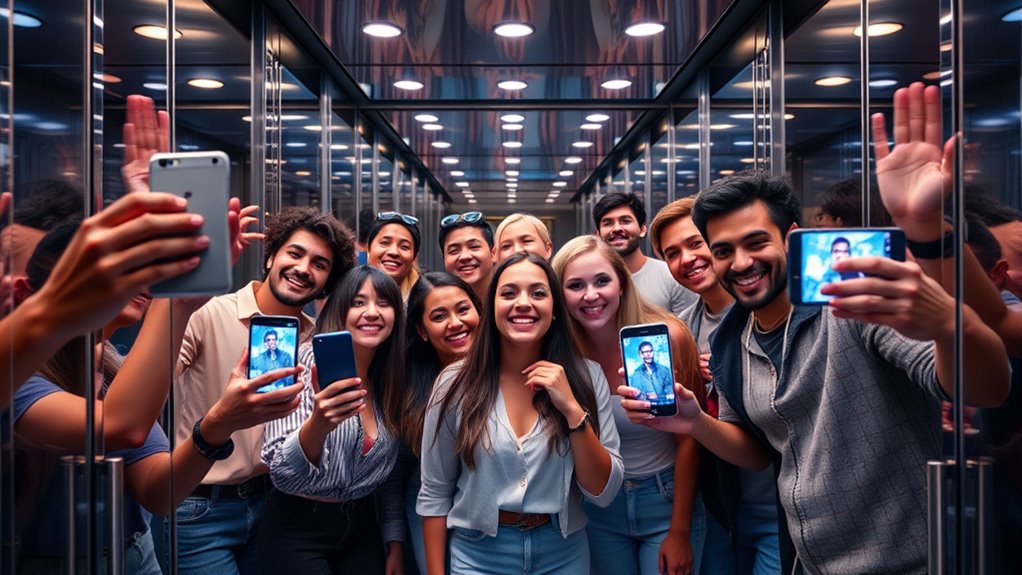

AI elevator selfies with celebrities have become a popular viral trend where fans create realistic images of themselves with stars using AI technology. People often enhance selfies taken in elevators, sharing witty captions to engage audiences. While some celebrities find the trend amusing, others feel uncomfortable about privacy and misrepresentation. This phenomenon blurs the lines between fandom and boundaries, raising ethical questions. Continuing on, you’ll discover how this trend impacts celebrity culture and why responsible participation matters.
Key Takeaways
- The trend involves users creating AI-enhanced selfies with celebrities in elevator settings and sharing them online.
- It leverages AI technology to digitally manipulate images, often with witty captions, to mimic celebrity appearances.
- Celebrities have mixed reactions, ranging from amusement to discomfort, raising privacy and ethical concerns.
- The phenomenon blurs boundaries between fandom, privacy, and consent, prompting discussions on responsible AI use.
- Participants should respect celebrities’ boundaries and consider ethical implications when engaging in this viral trend.

In recent years, AI technology has transformed the way fans interact with celebrities, and one of the latest trends is taking AI-generated selfies in elevators. You might step into an elevator after a long day and notice a new viral challenge: creating AI-enhanced images that make it appear as if you’re sharing a selfie with a celebrity. This trend has caught fire on social media, with users uploading these digitally manipulated photos, often with witty captions. The appeal is clear—you get a taste of fame without leaving your phone, and the novelty of seeing yourself next to a star is irresistible. However, as this trend spreads, some important issues come into focus, especially regarding celebrity reactions and privacy concerns.
Celebrity reactions vary widely. Some stars find the trend amusing, sharing humorous comments or even participating in the meme themselves. Others might feel uncomfortable or annoyed, especially if they feel the AI images misrepresent them or intrude on their personal space. Celebrities are accustomed to media scrutiny, but AI-generated images raise new questions about consent. When fans create and share these selfies, celebrities might worry about being seen in a false light or having their likeness used without permission. This can lead to mixed reactions, with some stars appreciating the playful homage while others see it as crossing a line.
Celebrities have mixed feelings about AI selfies—some enjoy the fun, others feel their likeness is used without permission.
Privacy concerns are at the heart of the controversy. These AI-generated selfies often involve manipulating images of celebrities without their knowledge, which raises ethical questions. Even if the images are clearly labeled as AI creations, the fact remains that the celebrity’s likeness is being used without consent. This can feel invasive, especially when the images are shared widely and circulated rapidly. Fans may argue that it’s harmless fun, but many celebrities and privacy advocates see it as a breach of personal boundaries. The situation becomes more complicated when considering the use of AI to generate images that could be misleading or potentially damaging.
As you delve into this trend, you should be aware of the ethical implications. While it’s tempting to participate and create these AI selfies, it’s important to consider how your actions affect celebrities’ privacy and their comfort with such images. Respecting their boundaries doesn’t mean you have to stop enjoying the trend; it simply means being mindful of the potential consequences. Moreover, understanding the color accuracy and its role in creating realistic images can help you appreciate the skill involved in making convincing AI-generated photos. Overall, AI elevator selfies are a fascinating example of how technology blurs the lines between fandom and privacy, creating new norms in celebrity culture—and raising questions that aren’t easy to answer.
Frequently Asked Questions
How Do Ai-Generated Elevator Selfies Impact Celebrity Privacy?
AI-generated elevator selfies raise significant privacy concerns, especially around consent issues. As you view or share these images, you might unknowingly contribute to the invasion of celebrities’ privacy, since these photos often appear without their permission. This trend blurs boundaries, making it harder for celebrities to control their image, and highlights the need for stricter regulations to protect their rights and maintain respect for their privacy.
Are There Legal Concerns With Using AI for Celebrity Images?
Yes, there are legal concerns with using AI for celebrity images. You might infringe on intellectual property rights if you create or share images without proper authorization. Additionally, using AI-generated images of celebrities without their consent can lead to legal issues related to privacy and publicity rights. Always guarantee you have the necessary rights and consent before producing or distributing AI-created celebrity images to avoid potential lawsuits.
Can AI Create Realistic Selfies Without Celebrity Consent?
AI can create realistic selfies without celebrity consent, but doing so raises serious ethical issues. When you use AI art to generate images of celebrities, you’re bypassing their right to control their likeness. Without their consent, these images can infringe on privacy rights and lead to legal trouble. Always consider the importance of celebrity consent before creating or sharing AI-generated selfies to avoid potential misuse and ethical violations.
How Does AI Ensure Image Authenticity in Viral Trends?
AI guarantees image authenticity in viral trends mainly through digital manipulation detection and deepfake detection methods. You can rely on these tools to identify whether an image has been altered or faked. By analyzing inconsistencies in pixel patterns, facial features, and metadata, AI systems help verify if a photo is genuine or manipulated. This process helps maintain trust and transparency in viral content, preventing misinformation from spreading.
What Are the Ethical Implications of AI Celebrity Images?
Imagine a world where your perception is a fragile illusion—AI celebrity images raise serious ethical questions. You must consider deepfake detection to prevent deception and protect celebrity endorsement integrity. These images can mislead audiences, infringing on privacy and fueling misinformation. Ethically, you should advocate for transparency and responsible use, ensuring AI enhances rather than harms trust, and that celebrities’ rights aren’t exploited in the pursuit of viral fame.
Conclusion
As this viral trend takes off, you’re stepping into a digital elevator that connects you with stars in a blink. These AI-generated selfies are like secret doors to Hollywood, giving you a glimpse behind the velvet curtain. So, keep snapping, keep dreaming—because in this elevator ride, every click is like pressing a button to a world where fantasy and reality blend seamlessly. Who knows what celebrity you’ll meet in the next digital floor?