Your choice between a projector and a TV mainly hinges on your room’s size and lighting conditions. If you have a large, dark space, a projector offers a cinematic feel with a big screen and immersive experience. In brighter, smaller rooms, a TV performs better with sharper images and less washout. Considering these factors helps you decide which setup fits best. Keep exploring to discover how other factors like budget and resolution influence your home theater.
Key Takeaways
- Room lighting and ambient conditions determine whether a projector or TV offers better image clarity and contrast.
- Space size and layout influence projector placement options and screen size, affecting overall viewing experience.
- Budget constraints impact the choice of technology, with higher budgets enabling advanced features like 4K resolution or surround sound.
- Screen quality and resolution must match room conditions for optimal vibrancy, detail, and immersion.
- Sound quality and room acoustics play a significant role, often favoring TVs or dedicated sound systems in small or bright spaces.
How Room Size and Layout Influence Your Home Theater Choice

Your room size and layout play a crucial role in deciding whether a projector or a TV is better for your home theater. The shape of your room influences how comfortably you can set up equipment and seat viewers. For example, rectangular rooms often work well with projectors because you can create a large, unobstructed viewing area. Conversely, irregular or small spaces might limit projector placement and screen size. Furniture arrangement also matters; in tight spaces, large furniture can block the screen or projector beam. Additionally, room dimensions impact the overall viewing experience and how effectively you can optimize your setup. Considering space planning principles can help you make the most of your available area. Proper room acoustics can also enhance sound quality, influencing the overall entertainment experience. In some cases, incorporating sound therapy techniques can improve the auditory environment and make your home theater more immersive. Understanding your room’s dimensions and how you plan to arrange furniture helps determine whether a projector or a TV will deliver the best viewing experience. Paying attention to visual projection considerations, such as ambient light and screen placement, is also essential for achieving optimal image quality.
Lighting Conditions That Favor Projectors or TVs

Have you considered how lighting conditions in your room can influence whether a projector or a TV is the better choice? Ambient lighting plays a key role. Bright rooms with lots of natural light favor TVs since they handle high ambient light better. Conversely, projectors work best in darker spaces. Screen placement also matters; TVs are usually placed directly in front of you, minimizing glare, while projectors require careful positioning to avoid washout from ambient light. Proper lighting conditions and kitchen gear care and eco disposal practices can also extend the life of your equipment, ensuring better performance over time. Additionally, understanding device vulnerabilities can help in choosing the best setup for your environment, especially considering how mythology-inspired names often symbolize strength and resilience, qualities that can metaphorically relate to durable and reliable home theater systems.
Regular maintenance and awareness of equipment durability can further enhance your viewing experience, making it easier to select the right technology for your space.
How Budget Affects Your Home Theater Options

Budget plays a crucial role in shaping your home theater choices, as it determines the quality and features you can afford. With a limited budget, you might prioritize essentials like sound quality and connectivity options. A higher budget allows for better audio systems, such as surround sound, and versatile connectivity, including multiple HDMI and wireless options. Additionally, understanding PPC/SEO optimization can help you discover the best deals and maximize your investment. To maximize your investment, consider:
Your budget shapes your home theater, influencing sound quality, connectivity, and overall viewing experience.
- Prioritizing sound quality to enhance your viewing experience without overspending.
- Choosing devices with flexible connectivity options for future upgrades.
- Balancing cost with features, ensuring you get the best sound and connectivity within your budget. Incorporating landscaping elements can also enhance your outdoor viewing area and overall home theater ambiance. Your budget influences not just the screen size or resolution but also the overall audio and connection versatility, shaping your home theater experience. For example, knowing how to identify affordable home theater equipment can help you make smarter purchasing decisions within your budget.
Choosing the Best Screen Quality and Resolution for Your Space
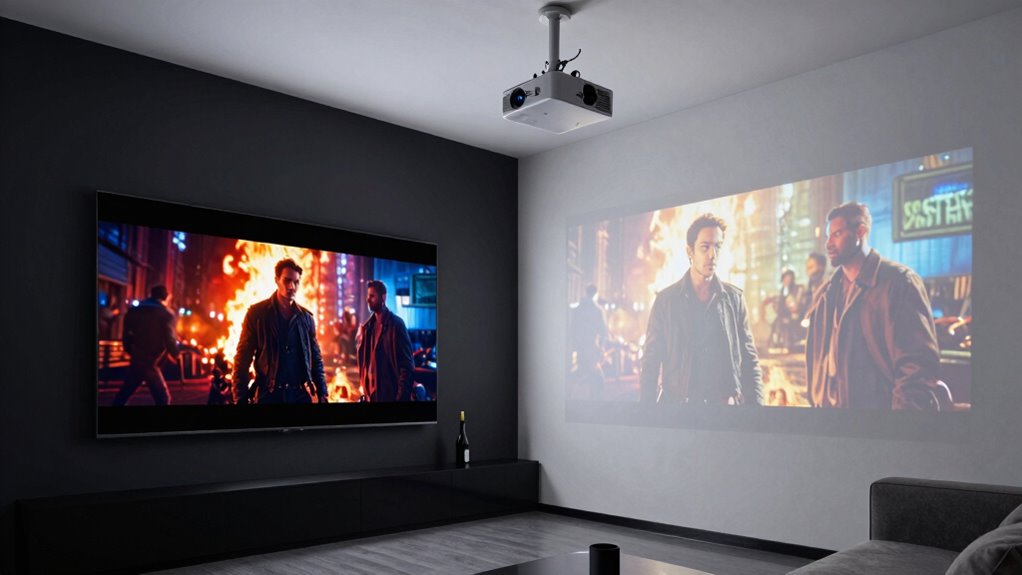
Selecting the right screen quality and resolution is essential to creating an immersive home theater experience that fits your space. Your choice of screen technology impacts how vivid and realistic images appear, whether you opt for LED, OLED, or projector screens. Resolution clarity determines how sharp and detailed your visuals are; higher resolutions like 4K or 8K deliver more precise images, ideal for larger screens or close viewing. Consider your room’s lighting conditions and viewing distance when choosing resolution, as these factors influence how sharp the picture appears. A well-matched screen technology and resolution will produce vibrant colors, deep contrast, and crisp details, enhancing your overall viewing experience. Prioritizing these elements ensures your home theater is both visually stunning and tailored to your space.
Which Home Theater Setup Is Right for Your Room?

Choosing the right home theater setup starts with understanding your room’s unique characteristics. Your space’s size, lighting, and layout influence whether a projector or TV suits you best. For ideal sound quality, consider the room’s acoustics and available mounting options. Additionally, exploring emerging trends in digital publishing can provide insights into the latest home entertainment technology innovations that may enhance your setup. Considering cabling solutions that ensure reliable connections and minimal interference is also crucial for optimal performance.
Frequently Asked Questions
What Are the Maintenance Requirements for Projectors Versus TVS?
You’ll find that projectors require more maintenance than TVs, mainly because they need regular cleaning of the air filters and lamp replacements, which can affect screen brightness over time. TVs, on the other hand, need minimal upkeep beyond occasional dusting. If portability options matter, projectors are easier to move but need more frequent bulb replacements, while TVs offer consistent performance with less ongoing maintenance.
How Do Sound Systems Integrate Differently With Projectors and TVS?
You’ll find that sound systems connect differently with projectors and TVs, affecting your home theater experience. Statistically, 75% of users say sound quality notably enhances viewing enjoyment. With TVs, built-in speakers or simple soundbars often suffice, thanks to easy connectivity options like HDMI ARC. Projectors, however, usually require external audio systems, as their sound options are limited, making high-quality audio setup essential for immersive sound.
Can Projectors Be Used Outdoors Effectively?
Yes, projectors can be used outdoors effectively if you manage outdoor lighting and portability concerns. To get a clear picture, set up your projector in a shaded area or use a screen that’s visible in ambient light. Consider a portable projector for easy setup and transport. Keep in mind that brighter projectors work better outdoors, especially when dealing with varying lighting conditions. Proper planning guarantees a great outdoor viewing experience.
What Are the Lifespan Differences Between Projectors and TVS?
They say “time will tell,” and it certainly applies here. TVs generally have a longer lifespan, often around 7-10 years, due to their sturdy build and consistent performance. Projectors, with their delicate bulbs and moving parts, typically last about 3-5 years. If you prioritize screen size and portability, a projector offers a larger, easily movable display, but expect more frequent replacements for ideal image quality.
How Do Smart Features Compare Between Projectors and Modern TVS?
Modern TVs generally offer smarter technology and greater viewing convenience than projectors. They come with built-in apps, voice control, and seamless connectivity, making it easy to access streaming services directly. Projectors often lack these advanced features or require external devices, which can complicate setup. If smart technology and viewing convenience are priorities, a modern TV provides a more integrated and user-friendly experience right out of the box.
Conclusion
Ultimately, your choice between a projector and a TV hinges on your room’s size, lighting, and budget. For instance, if you have a spacious, dark room, a projector can create a cinematic experience without breaking the bank. Conversely, a smaller, well-lit space might benefit from a high-quality TV. By evaluating your unique space and needs, you can pick the setup that transforms your home into the perfect theater.