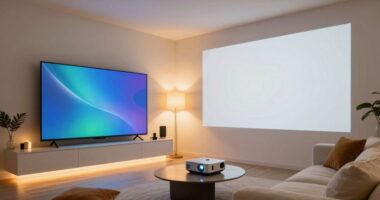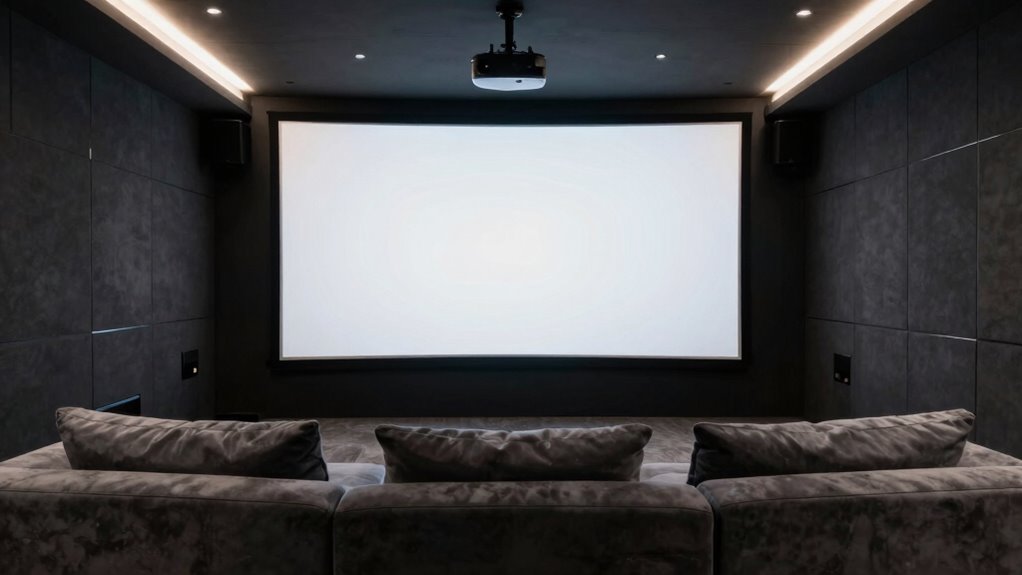

The key rule is to prioritize balancing your room’s lighting, projector specs, and screen material over size and price alone. Pick a screen that matches your ambient light conditions—matte white for bright rooms or high-contrast gray for darker spaces—and guarantee your projector’s throw distance and lens shift align properly. Getting these factors right transforms your home cinema into an immersive experience. Stick with us to discover how to optimize every element for stunning visuals.

Get the latest gadgets delivered free with Prime
- Fast, free delivery on millions of items
- Prime Video, Amazon Music and more included
- Member-only deals all year
Key Takeaways
- Prioritize matching screen material and placement to your room’s ambient lighting conditions for optimal contrast and color accuracy.
- Focus on projector placement and alignment first, as they significantly impact image quality before selecting a screen.
- Avoid choosing screens solely based on size or price; consider room lighting, projector specs, and material compatibility.
- Use proper projector throw ratio calculations to determine the ideal distance and screen size for your space.
- Remember that a well-optimized setup, combining placement and material, enhances picture quality more than screen features alone.
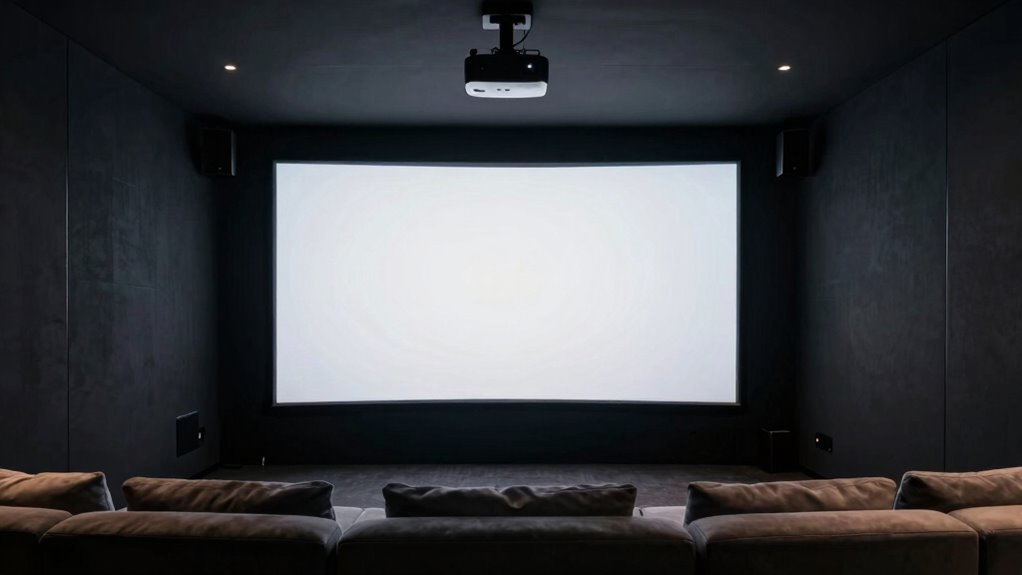
Creating the perfect home theater experience starts with choosing the right projector screen, and there are several key tips to keep in mind. First, pay close attention to the screen material. The material you select directly impacts image clarity, color accuracy, and brightness. For bright rooms, a matte white screen is usually best because it reflects light evenly and maintains image sharpness. If you want a more vibrant picture with deeper blacks, consider a high-contrast gray screen. For ultra-high-definition or 4K content, specialized screen materials designed to enhance detail can make a noticeable difference. The right screen material enhances the visual experience without requiring you to crank up the projector’s brightness, which can cause eye strain or wash out colors.
Choosing the right screen material enhances clarity, color, and brightness without increasing projector brightness.
Next, consider projector placement carefully. Proper placement isn’t just about where you position the projector itself; it’s about aligning the projector at the essential distance from the screen to achieve the desired size and focus. Too close, and the image will be blurry or distorted; too far, and the picture might become too small or lose sharpness. Measure your room’s dimensions and choose a projector that can be positioned to produce the ideal image size without compromising focus or clarity. Keep in mind that the placement affects the keystone effect—distortion caused when the projector isn’t perpendicular to the screen. To minimize this, position your projector directly in front of the screen at the correct height and distance. This ensures a crisp, rectangular image without the need for complex adjustments or image warping. Additionally, proper projector placement can help optimize image quality by reducing distortions and ensuring even focus across the screen surface. Proper projector alignment also reduces the need for post-installation adjustments, saving time and effort. It’s also beneficial to consider lens shift features on your projector, which can provide more flexibility in placement without sacrificing image quality. Moreover, understanding your projector’s throw ratio can help you plan the ideal setup for your space.
Another vital aspect is to think about ambient light and how it interacts with your projector placement and screen material. If your room has windows or bright lighting, you’ll want a screen material that can handle higher ambient light levels without washing out. Positioning your projector away from direct light sources also helps in maintaining contrast and brightness. Additionally, understanding your room’s ambient light conditions can help you choose the best screen and placement setup for optimal viewing quality. The right combination of projector placement and screen material makes a huge difference in picture quality, especially if you’re aiming for cinema-like clarity.
Ultimately, the home theater rule that changes how you buy projector screens is simple: don’t just pick a screen based on size or price. Instead, prioritize understanding your room’s lighting conditions, the projector’s capabilities, and how the screen material and placement work together. When you get this right, your home cinema transforms from a basic setup into an immersive entertainment hub, with stunning visuals and vibrant colors that truly bring movies and shows to life.
matte white projector screen for bright rooms
As an affiliate, we earn on qualifying purchases.
As an affiliate, we earn on qualifying purchases.
Frequently Asked Questions
What Is the Ideal Projector Screen Size for Small Rooms?
For small rooms, you should choose a projector screen size of about 100 to 120 inches. Consider the screen material, opting for a matte finish to reduce glare, especially if room lighting isn’t fully controllable. It’s crucial to balance size with viewing distance—too large can cause eye strain. Adjust the screen size based on your room lighting conditions to ensure bright, clear images without washing out the picture.
How Does Screen Gain Affect Picture Quality?
Screen gain impacts picture quality by affecting brightness and contrast, depending on your screen material. Higher gain screens reflect more light, providing brightness enhancement ideal for well-lit rooms, but can cause glare or hot spots if too high. Lower gain screens offer more even picture quality, perfect for darker rooms. Understanding how screen gain interacts with your projector’s brightness helps you choose the best screen material for ideal image clarity.
Are There Budget-Friendly Projector Screens With High Performance?
Yes, you can find affordable options with high performance features. Look for screens made from quality materials that offer good gain and wide viewing angles, even at lower prices. Brands like Elite Screens and Silver Ticket often provide budget-friendly choices with excellent image clarity and brightness. By prioritizing screens with high gain and durable surfaces, you’ll get a satisfying home cinema experience without overspending.
How Often Should I Clean or Replace My Projector Screen?
You should clean your projector screen regularly, roughly once every few months, depending on your environment and usage. Use a soft, damp cloth to remove dust and smudges, avoiding harsh cleaners. Replacement timeline varies; if you notice persistent stains, warping, or decreased image quality, it’s time to contemplate replacing your screen. Regular cleaning prolongs its lifespan, but don’t delay replacing it when performance declines to guarantee ideal viewing experiences.
Can I Use a Regular Wall as a Projector Screen?
Like a blank canvas awaiting a masterpiece, a regular wall can work as a projector screen, but it’s not perfect. You’d need a special wall paint designed for projection or choose a dedicated screen material for maximum clarity and color accuracy. Without these, your images may look dull or blurry. For the best experience, investing in a quality screen or proper wall paint makes all the difference.
high contrast gray projector screen
As an affiliate, we earn on qualifying purchases.
As an affiliate, we earn on qualifying purchases.
Conclusion
By following this home theater rule, you’ll transform your viewing experience into something extraordinary. Remember, choosing the right projector screen isn’t just about specifications—it’s about creating a space where every movie feels like a blockbuster premiere. Think of it as upgrading from a dusty, old VHS to a sleek, modern setup. With this approach, your home cinema will become the star of your entertainment universe, shining brighter than a neon sign in Times Square.
ultra HD 4K projector screen material
As an affiliate, we earn on qualifying purchases.
As an affiliate, we earn on qualifying purchases.
projector with lens shift and throw ratio
As an affiliate, we earn on qualifying purchases.
As an affiliate, we earn on qualifying purchases.
Halloween Picks
halloween
As an affiliate, we earn on qualifying purchases.