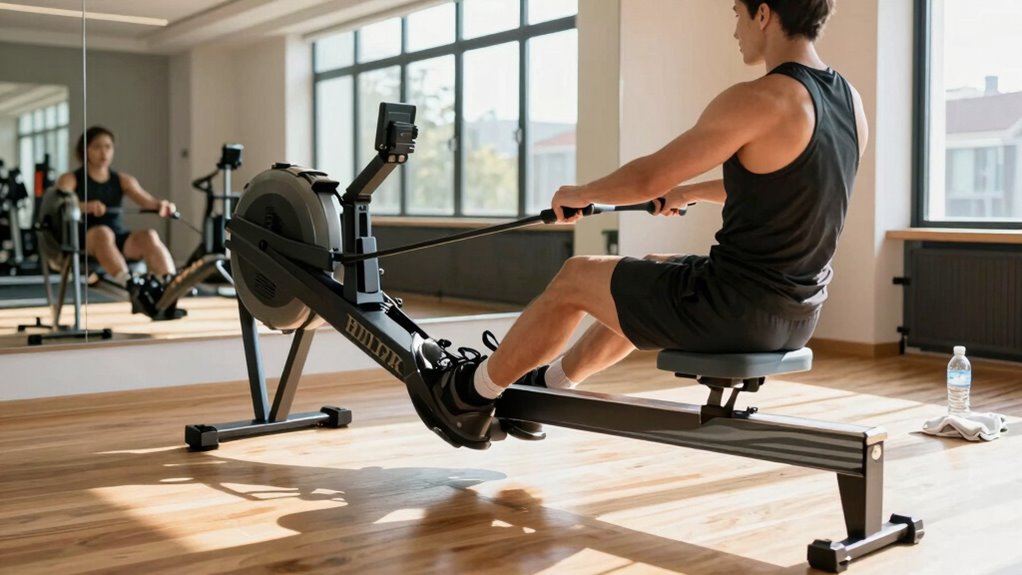

To test a rowing machine at home, sit on it to check comfort and support, making sure the seat and handle are within easy reach without causing strain. Listen for noise during operation to verify it runs quietly, and test its stability by rowing smoothly to feel how it responds to your movements. Adjust footrests to fit your feet securely, and pay attention to the machine’s durability during use. For more tips on evaluating your perfect rowing machine, keep exploring.

Get the latest gadgets delivered free with Prime
- Fast, free delivery on millions of items
- Prime Video, Amazon Music and more included
- Member-only deals all year
Key Takeaways
- Assess ergonomic design by ensuring seat support and handle placement promote proper posture and comfort during extended use.
- Test noise levels by sitting on the machine and rowing to detect squeaks, rattles, or loud motor sounds.
- Check stability and resistance response for smooth, natural feel without jerks or lag during vigorous rowing.
- Verify foot support and adjustability features to ensure a secure, comfortable fit for various foot sizes.
- Examine material quality and durability through at-home testing to confirm long-term performance and safety.
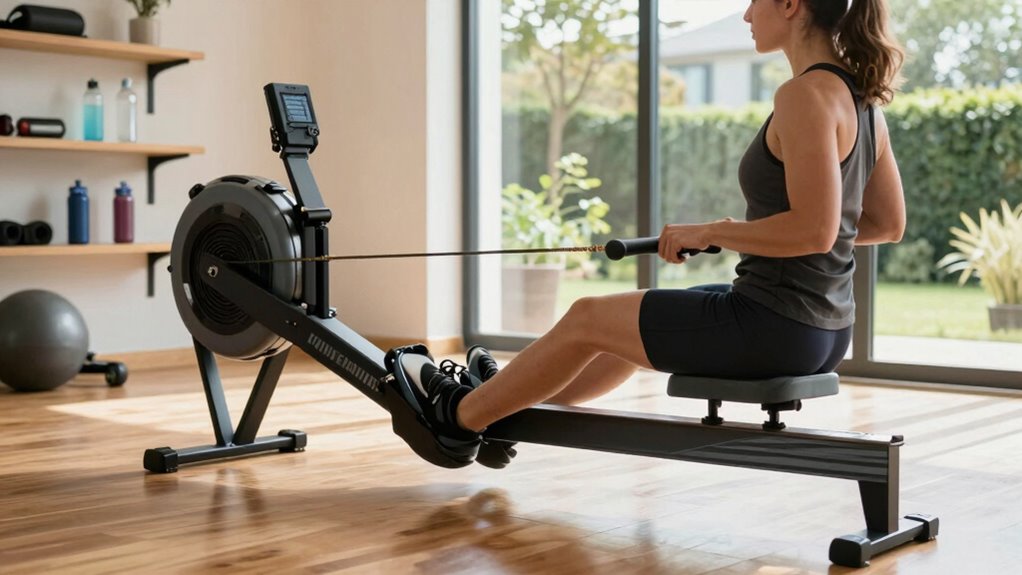
Choosing the right rowing machine for home use can be challenging, but testing different models helps you find one that fits your needs. When you’re in the market, you want a machine that feels comfortable during prolonged workouts. Pay close attention to its ergonomic design—does the seat support your body comfortably? Is the handle within easy reach without straining your arms or shoulders? These details make a significant difference in how enjoyable and sustainable your workouts become. An ergonomic design ensures proper posture, reducing the risk of strain or injury, especially if you plan to use the machine frequently.
Next, consider noise levels. Whether you live in an apartment or a house with thin walls, a quiet rowing machine lets you work out without disturbing others or being distracted by loud noises. When testing models, sit on the machine and row a few strokes. Pay attention to how much sound it produces, listening for any squeaks, rattles, or loud motor noises. Some models feature quieter flywheels or magnetic resistance systems, which operate smoothly and quietly. This allows you to keep your rhythm without the distraction of excessive noise, making it easier to focus on your form and pace.
During your test, observe how the machine responds to your movements. Does it feel stable and sturdy? Notice the resistance as you pull back—does it feel natural, or does it jerk or lag? A well-designed rowing machine offers consistent resistance that mimics real rowing, which keeps your workout effective and engaging. Also, check the footrests—are they adjustable and non-slip? Proper foot support prevents discomfort and helps you maintain proper form throughout your session. Additionally, understanding the science of resistance can help you choose a machine that provides the right challenge for your fitness level. Incorporating knowledge of material durability can further ensure that your investment remains safe and reliable over time. Furthermore, testing the machine’s adjustability features can help you customize your workout for optimal comfort and progression. Considering the long-term durability of the equipment is essential to ensure it remains functional as you progress in your fitness journey.
To make an informed decision, consider the durability of materials, as this impacts the longevity and safety of your investment over time. Ultimately, the best machine for you combines ergonomic comfort, quiet operation, stability, and durability. Testing models at home gives you a real sense of how they perform during actual workouts, not just in a showroom. When you find a machine that ticks all these boxes, you’ll be more motivated to incorporate regular rowing sessions into your routine, making your home gym a place where you actually enjoy working out.
As an affiliate, we earn on qualifying purchases.
Frequently Asked Questions
How Loud Are Rowing Machines During Operation?
Rowing machines typically produce moderate noise levels during operation, but this varies based on their design and sound insulation. You might notice the sound of the flywheel or water resistance, which can be loud in poorly insulated spaces. To reduce noise, look for machines with good sound insulation or consider placing them on a rubber mat. This helps contain sound and minimizes disturbance, making your workout quieter and more enjoyable.
Are There Any Safety Concerns With Home Rowing Machines?
Think of your home gym as a delicate ecosystem, where safety is the anchor. Home rowing machines are generally safe if they feature ergonomic design, which minimizes strain and prevents injuries. Always follow the manufacturer’s instructions, guarantee proper setup, and check for loose parts. By prioritizing user safety and choosing a well-designed machine, you reduce risks and enjoy a smooth, injury-free workout at home.
Do Rowing Machines Require Regular Maintenance?
Rowing machines do require regular maintenance to guarantee their durability and smooth operation. You should check the moving parts, like the chain or belt, and lubricate them as needed, typically every few months. Also, inspect the seat, rails, and foot straps for wear. Regular maintenance frequency helps prevent breakdowns, extends the lifespan of your machine, and keeps your workouts safe and effective.
Can Beginners Easily Learn Proper Rowing Technique?
Getting the hang of rowing is a walk in the park for beginners once you focus on proper form. With some practice, you’ll master beginners’ technique quickly, making your workouts more effective and safe. Just remember, Rome wasn’t built in a day, so take your time to learn the correct movements. Watching tutorials and seeking guidance helps you avoid bad habits and build confidence on the machine.
What Is the Typical Lifespan of a Rowing Machine?
A rowing machine typically lasts between 5 to 10 years, depending on its durability and how often you use it. You can extend its lifespan by choosing a model with high rowing machine durability and ensuring user comfort. Proper maintenance, like regular cleaning and checking for worn parts, also helps. If you prioritize quality and upkeep, your machine can serve you well for many years, providing consistent workouts.
As an affiliate, we earn on qualifying purchases.
Conclusion
Now that you’ve navigated the waters of rowing machines for your home gym, it’s clear they’re more than just a workout tool—they’re your ticket to a full-body adventure. Think of it as steering your own ship toward better health, with each stroke bringing you closer to your goals. So, choose the one that feels like smooth sailing, and get ready to make waves in your fitness journey—your home gym’s about to become your personal ocean.
adjustable footrest rowing machine
As an affiliate, we earn on qualifying purchases.
As an affiliate, we earn on qualifying purchases.
As an affiliate, we earn on qualifying purchases.
Halloween Picks
halloween
As an affiliate, we earn on qualifying purchases.