
Colors in social thumbnails quickly influence how viewers feel and react. Bright reds create urgency or excitement, drawing attention fast, while calming blues build trust and credibility. Using high contrast helps key messages stand out and grab eyes amidst busy feeds. Cultural meanings also matter—they can change how your audience perceives your message. Consistent colors boost brand recognition over time. Keep exploring to learn how mastering color psychology can boost your engagement and craft more compelling thumbnails.
Key Takeaways
- Colors evoke specific emotions and reactions, influencing viewer engagement before clicking on social thumbnails.
- Bright, contrasting colors draw attention and enhance thumbnail visibility in crowded social feeds.
- Consistent color schemes strengthen brand identity and foster viewer recognition over time.
- Cultural meanings of colors impact how global audiences perceive thumbnails, requiring cultural awareness.
- Strategic use of color psychology aligns messaging with desired emotional responses, increasing click-through rates.
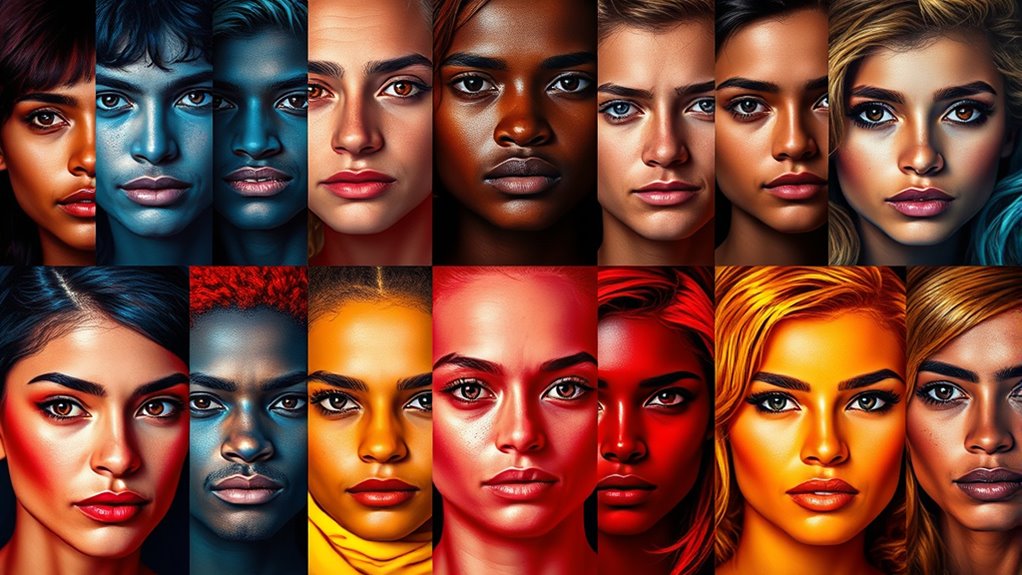
Colors in social thumbnails do more than just catch the eye—they influence how viewers perceive and engage with your content. When you design your thumbnail, understanding the principles of color psychology can make all the difference. The colors you choose evoke specific emotions and associations, shaping viewers’ first impressions before they even click. For example, red often signals urgency or excitement, making it ideal for sales or limited-time offers. Blue, on the other hand, conveys trust and calmness, perfect for educational or professional content. By thoughtfully applying color psychology, you can craft thumbnail design that aligns with your message and encourages clicks.
Your choice of colors can also impact how your audience perceives your brand. Bright, vibrant hues tend to create a sense of energy and enthusiasm, which works well for entertainment or youth-oriented content. Conversely, muted or monochrome palettes can communicate sophistication or seriousness, suitable for serious topics or luxury brands. When you consider your target audience and the emotional response you want to evoke, selecting the right color palette becomes a strategic step in your thumbnail design process. It’s not just about aesthetics; it’s about guiding viewers’ perceptions and prompting specific behaviors.
Moreover, contrasting colors in your thumbnails can make key elements stand out, grabbing attention in crowded feeds. For example, a bold yellow text on a dark background can be highly effective for emphasizing a call-to-action or important message. This use of color contrast taps into the psychological impact of visibility and prominence, making your thumbnail more clickable. Pay attention to the cultural connotations of colors as well, especially if you’re targeting a global audience. Red might symbolize danger in one culture but good luck in another. This awareness helps you tailor your thumbnail design to resonate universally or to specific demographics.
Finally, consistency in your color scheme helps build brand recognition. When viewers see a particular color pattern associated with your content, they start to recognize it instantly, increasing trust and familiarity. Over time, your strategic use of color psychology in thumbnail design can create a visual identity that stands out amidst countless other posts. By choosing colors intentionally, you’re not just making your thumbnails look appealing—you’re shaping viewer perceptions, emotions, and actions. In the end, mastering the psychology of color enhances every aspect of your social media strategy, making your content more engaging and effective. Additionally, understanding the contrast ratio in your thumbnails can significantly improve their visibility and impact, ensuring key messages are easily seen by viewers.
Frequently Asked Questions
How Do Cultural Differences Influence Color Perception in Social Thumbnails?
Cultural differences greatly influence how you perceive colors in social thumbnails. Cultural symbolism and regional preferences shape your emotional responses and interpretations of colors. For example, red might evoke passion in one culture but signify danger in another. These variations mean you should consider your target audience’s cultural background when choosing colors, as what resonates positively in one region could have unintended negative connotations elsewhere.
Can Color Choices in Thumbnails Predict Video Engagement Levels?
You might wonder if color choices in thumbnails can predict video engagement levels. Color psychology plays a key role here, as certain colors evoke specific emotions that attract viewers. By aligning thumbnail branding with effective color schemes, you can boost click-through rates and engagement. Using strategic color choices helps your thumbnails stand out, encouraging viewers to click and watch, ultimately increasing your video’s success and audience interaction.
How Do Individual Personality Traits Affect Color Preference in Thumbnails?
Think of your personality as a palette that paints your color preferences, shaping the thumbnails you choose. Your individual trait influences, like openness or extraversion, drive personality-driven color preferences, guiding your choices to reflect your true self. You naturally gravitate toward hues that resonate with your inner traits, making your thumbnails authentic and appealing. Embracing these influences helps you craft visuals that truly mirror who you are.
What Role Does Color Contrast Play in Thumbnail Effectiveness?
Color contrast plays a vital role in thumbnail effectiveness by enhancing visual hierarchy and creating color harmony. When you use strong contrast, it helps your thumbnail stand out, drawing viewers’ attention quickly. Balancing contrast ensures the main subject remains clear without clashing, making your thumbnail more appealing. You should focus on achieving a harmonious color scheme while emphasizing key elements through strategic contrast to boost engagement.
Are There Any Ethical Considerations in Manipulating Thumbnail Colors?
When considering color manipulation in thumbnails, you’re faced with ethical implications. You should guarantee your use of color doesn’t deceive or mislead viewers about the content. Manipulating colors to artificially boost clicks may raise concerns about honesty and transparency. Always prioritize authenticity and respect your audience, avoiding tactics that intentionally manipulate emotions or perceptions through color contrast or saturation. Ethical choices build trust and sustain long-term engagement.
Conclusion
Understanding the psychology of color in social thumbnails can boost your engagement—did you know that images with red tend to increase click-through rates by up to 21%? By choosing colors thoughtfully, you influence viewers’ emotions and decisions subconsciously. So, next time you’re designing a thumbnail, consider how color impacts perception. Small changes can make a big difference in attracting attention and driving interaction, helping you stand out in a crowded digital world.